

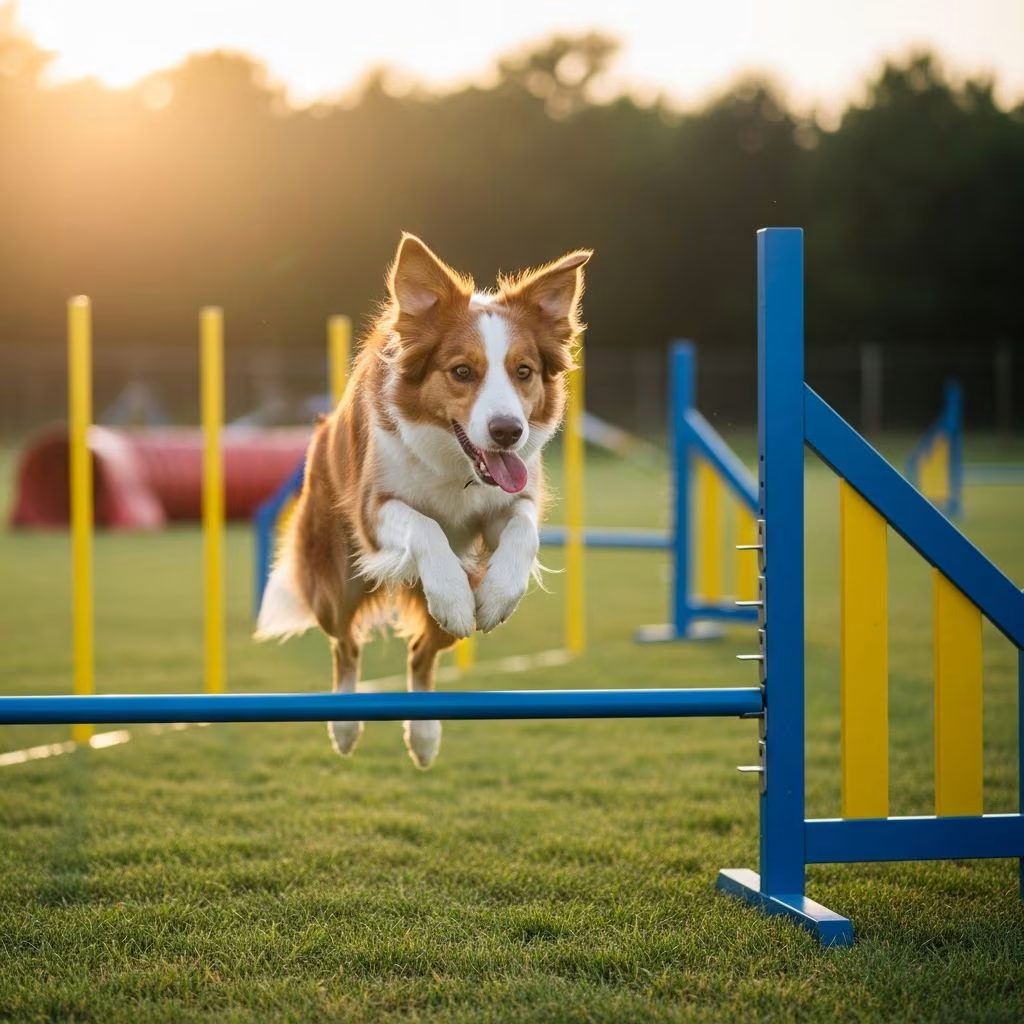
What is Dog Agility Training?
Dog agility training is more than just a fun sport—it’s a comprehensive discipline that combines physical and mental skills in an engaging, fast-paced environment where you and your dog work together as a seamless team. This training approach goes beyond traditional obedience, creating an interactive experience that deepens your bond while improving your dog’s overall well-being. Whether your dog is a purebred or mixed breed, agility training offers benefits that extend far beyond the competition ring.
At its core, agility training teaches dogs to navigate obstacle courses while responding to directional cues from their handlers. The sport requires dogs to jump, weave, crawl, and balance on various equipment while maintaining focus on their handler. This dynamic interaction creates a unique learning experience that engages multiple aspects of your dog’s intelligence and athleticism.
Benefit 1: Physical and Mental Exercise
One of the most significant advantages of agility training is its dual benefit of providing both physical and mental stimulation. While regular walking is beneficial, it often doesn’t provide the comprehensive exercise that many dogs require, especially those with higher energy levels or working-breed backgrounds. Agility training offers an all-purpose workout that engages your dog’s entire body and mind simultaneously.
During agility sessions, your dog must process commands, make quick directional changes, and navigate obstacles while maintaining physical endurance. This combination of cognitive demands and physical exertion creates an ideal scenario for tiring out excess energy that might otherwise manifest as destructive or undesirable behaviors. Dogs that receive adequate mental and physical stimulation through agility training often demonstrate fewer behavioral problems, including reduced jumping, chewing, and excessive barking.
The beauty of agility training is its accessibility—you don’t need to be a track star, and your dog doesn’t need to be a Border Collie. Dogs of any breed or mixed heritage can participate and thrive in agility if they possess an eager-to-please attitude. This inclusive nature makes agility training available to a wide range of dogs and their handlers.
Benefit 2: Healthy Weight and Mobility
Maintaining a healthy weight is crucial for your dog’s long-term health, and agility training serves as an excellent tool for weight management and mobility improvement. The activities involved in agility work require sustained physical activity that burns calories effectively while building lean muscle mass. This is particularly important for dogs prone to weight gain or those recovering from injuries.
A fundamental aspect of agility training is teaching your dog body awareness—the understanding that their front legs and back legs move independently. This awareness is essential for navigating obstacles efficiently and safely. A skilled trainer will guide you in supporting your dog’s smooth, safe movement during agility work, which contributes not only to immediate performance but also to healthy mobility throughout your dog’s entire lifespan.
Teaching body awareness begins with foundational exercises like targeting, where dogs learn to touch specific objects with different paws. This seemingly simple exercise develops the proprioceptive skills necessary for complex agility maneuvers. As dogs progress through agility training, their overall muscle tone improves, joints strengthen, and their ability to move efficiently increases significantly.
Benefit 3: Improved Focus and Attention
Agility training fundamentally transforms the way your dog interacts with you by building their ability to maintain focus and respond to your directional cues. Through agility work, dogs develop impulse control and learn to interpret subtle body language and movements from their handlers. This improved attention span extends beyond the agility course and into daily life.
As your dog progresses through agility training, they become increasingly attuned to your slightest movements and cues. This enhanced communication creates a telepathic-like connection where your dog anticipates your intentions and responds with precision. The practical applications of this improved focus are numerous—from better recall in off-leash situations to more reliable obedience in high-distraction environments.
The handler-dog relationship is fundamentally strengthened through agility training because the sport requires constant communication and cooperation. Your dog learns that paying attention to you leads to rewards and exciting activities, naturally increasing their desire to engage with you. Over time, this creates a dog that is genuinely interested in what you’re doing and eager to follow your lead.
Benefit 4: Building Confidence and Resilience
Many dogs, particularly those with anxious or nervous temperaments, gain significant confidence through agility training. Successfully navigating obstacles, overcoming fears of moving objects, and learning new skills all contribute to a dog’s sense of accomplishment and self-assurance. This confidence building is especially important for rescue dogs or those with behavioral challenges.
Agility training uses positive reinforcement methods that emphasize reward-based learning, creating a safe environment where dogs feel supported and encouraged. When a dog conquers a feared obstacle or successfully completes a sequence, the sense of achievement builds their confidence. This growing self-assurance often translates into reduced anxiety in other areas of life and increased willingness to try new experiences.
For dogs that struggle with motion sensitivity or environmental anxiety, agility training provides controlled exposure to challenging situations. For example, seesaws are often intimidating because they move beneath a dog’s feet, but with gradual, patient training and heavy rewards, even nervous dogs can learn to navigate them safely. This gradual exposure, combined with positive reinforcement, helps desensitize dogs to stimuli that previously triggered anxiety.
Benefit 5: Strengthening Your Bond
Perhaps the most rewarding benefit of agility training is the profound strengthening of your relationship with your dog. When you and your dog work together as a team to navigate courses, solve problems, and achieve goals, you create shared experiences that deepen your emotional connection. The sport requires trust—your dog must trust that you’ll guide them safely through obstacles, and you must trust that your dog will follow your directions.
Agility training is fundamentally about partnership. You’re not simply commanding your dog to obey; you’re collaborating with them to accomplish something together. This collaborative dynamic creates a bond that extends beyond the training environment into your everyday life. Dogs that engage in agility training with their handlers often demonstrate increased affection, better behavior at home, and stronger loyalty.
The shared journey of learning agility together, with all its challenges and successes, creates memories and experiences that strengthen your relationship. Your dog learns that you have their backs in challenging situations, building trust and security. This emotional foundation benefits both you and your dog in countless ways.
Getting Started with Agility Training
Before beginning agility training, it’s helpful to establish a foundation of basic obedience training. Dogs should be comfortable with fundamental commands like sit, down, stay, and recall. This foundational work helps dogs understand the concept of positive reinforcement and prepares them for the more complex learning involved in agility.
You don’t need to invest in expensive equipment to start agility training at home. Simple makeshift equipment using household items like boxes, cushions, and poles can teach basic agility concepts. Starting with simple obstacles at home builds your dog’s confidence before moving to more complex courses or group classes.
At-Home Agility Training Exercises
Creating an at-home agility program allows you to work at your dog’s pace and build skills progressively. Here are practical exercises to begin with:
Practice Jumping
Start with objects just five inches off the ground. Toss a treat on the other side of the obstacle to encourage your dog to jump over it. If your dog tries to walk around the object, lower the height or block the sides so jumping becomes the only option. Repeat this exercise multiple times, gradually increasing the height as your dog’s confidence grows.
Increase Body Awareness
Create a yellow cardboard target circle approximately eight to ten inches in diameter. Begin by rewarding your dog for looking at the circle, then gradually encourage them to touch it with their front paws. Once they master this, progress to more complex body movements like weaving and spinning. These exercises teach your dog to understand how their body moves through space.
Build Comfort with Moving Objects
Seesaws are often the scariest obstacle for dogs because they move unpredictably. Start with a low, stable platform and heavily reward your dog each time they step on it, especially if they’re nervous. As comfort increases, gradually introduce gentle movement. This slow progression prevents fear and builds the confidence necessary to navigate actual seesaws safely.
Teach Directional Cues
Practice sending your dog in different directions using verbal cues and body language. This skill is fundamental to agility competition but also useful in everyday life. Use treats and toys to mark correct responses and build reliability.
Training Progression and Levels
Most comprehensive agility programs offer structured progression through different levels, allowing dogs to build skills systematically. Understanding these levels helps you gauge your dog’s progress and identify appropriate next steps.
Sports Prep Level
This introductory level is designed for dogs and handlers wanting to enter agility, obedience, rally, or other dog sports. Topics covered include body awareness, targeting, confident interaction with objects, handler focus, and engagement. Dogs in this level are building foundational skills necessary for more complex agility work.
Agility Foundation
Dogs must be at least 12 months old and able to work off-leash with reliable sit, down, stay, and recall commands to enter this level. Foundation training covers body awareness, core strength, obstacle navigation, handler focus, shadow handling, and introduction to various obstacles including tables, tunnels, jumps, contacts, and weaves.
Intermediate Level
Intermediate agility introduces full-height contact obstacles, weaves in line, and sequences of up to 10 obstacles with multiple crosses. Dogs at this level demonstrate solid obstacle understanding and can handle more complex combinations.
Competition Level
In competition agility, teams work on full-length sequences of 20 obstacles. Training involves walking courses, analyzing handling choices, and practicing under realistic competition conditions.
Important Prerequisites and Safety Considerations
Before enrolling in agility training, whether at home or in classes, ensure your dog meets certain prerequisites. Dogs must be at least 12 months old to begin formal agility training. This age requirement allows bones and joints to develop sufficiently to handle the impact and movement demands of agility work.
Your dog should have a solid obedience foundation including reliable recall, even when distracted. This is crucial because agility training typically occurs in stimulating, high-energy environments where distractions abound. Without reliable recall, your dog may run off or injure themselves.
Always move at your dog’s pace during training. If your dog is nervous, start with just one obstacle, then take a break and try again another day. Nervous dogs need time to build confidence gradually. Use treats and toys liberally to reinforce desired behaviors, and remember that your primary goal is strengthening your bond with your dog.
Special Considerations for Reactive or Sensitive Dogs
Dogs that are reactive or sensitive to other dogs need specialized approaches to agility training. Beginning with private sessions on familiar terrain helps these dogs build confidence without the added stress of a group environment. As your dog becomes comfortable with agility itself, you can gradually introduce group settings if desired.
Some training facilities offer specialized classes like Control Unleashed Agility specifically designed for reactive or sensitive dogs, teaching them to apply proven behavior modification techniques while learning agility skills.
Frequently Asked Questions
Q: At what age can I start agility training with my dog?
A: You can begin introducing agility concepts like body awareness and basic jumping at home with younger dogs, but formal agility classes typically require dogs to be at least 12 months old to ensure proper bone and joint development.
Q: Do I need special equipment to start agility training?
A: No. You can create effective agility training using household items like boxes, cushions, poles, and cardboard targets to teach basic concepts before investing in professional equipment.
Q: What breed of dog is best suited for agility training?
A: Any breed or mixed breed dog with an eager-to-please attitude can participate in and benefit from agility training. Border Collies and other herding breeds are popular in competition, but dogs of all types can excel in agility.
Q: How long does it take to see results from agility training?
A: Dogs often begin showing improved focus and confidence within a few weeks of consistent training. More significant physical improvements and complex skill development typically take several months of regular practice.
Q: Is agility training suitable for senior dogs?
A: Senior dogs can benefit from modified agility activities, but consult your veterinarian first. Lower obstacles and slower-paced training can help maintain mobility and mental stimulation appropriate for older dogs.
Q: Can reactive dogs participate in agility training?
A: Yes. Dogs with reactivity issues can benefit from specialized agility classes designed for sensitive dogs, or begin with private training sessions before joining group classes.
Q: How much does agility training cost?
A: Costs vary widely depending on location and training facility. Group classes typically range from $25-50 per session, while private training is more expensive but offers personalized instruction.
References
- Agility Training Program — Kinship Dog and Puppy Training. Accessed January 2026. https://www.kinshipdogs.com/agility
- How to Agility Train Your Dog—Steps to Take — Kinship. Accessed January 2026. https://www.kinship.com/dog-behavior/how-to-agility-train-your-dog
- 5 Benefits of Dog Agility Training — Kinship. Accessed January 2026. https://www.kinship.com/dog-behavior/dog-agility-training



