

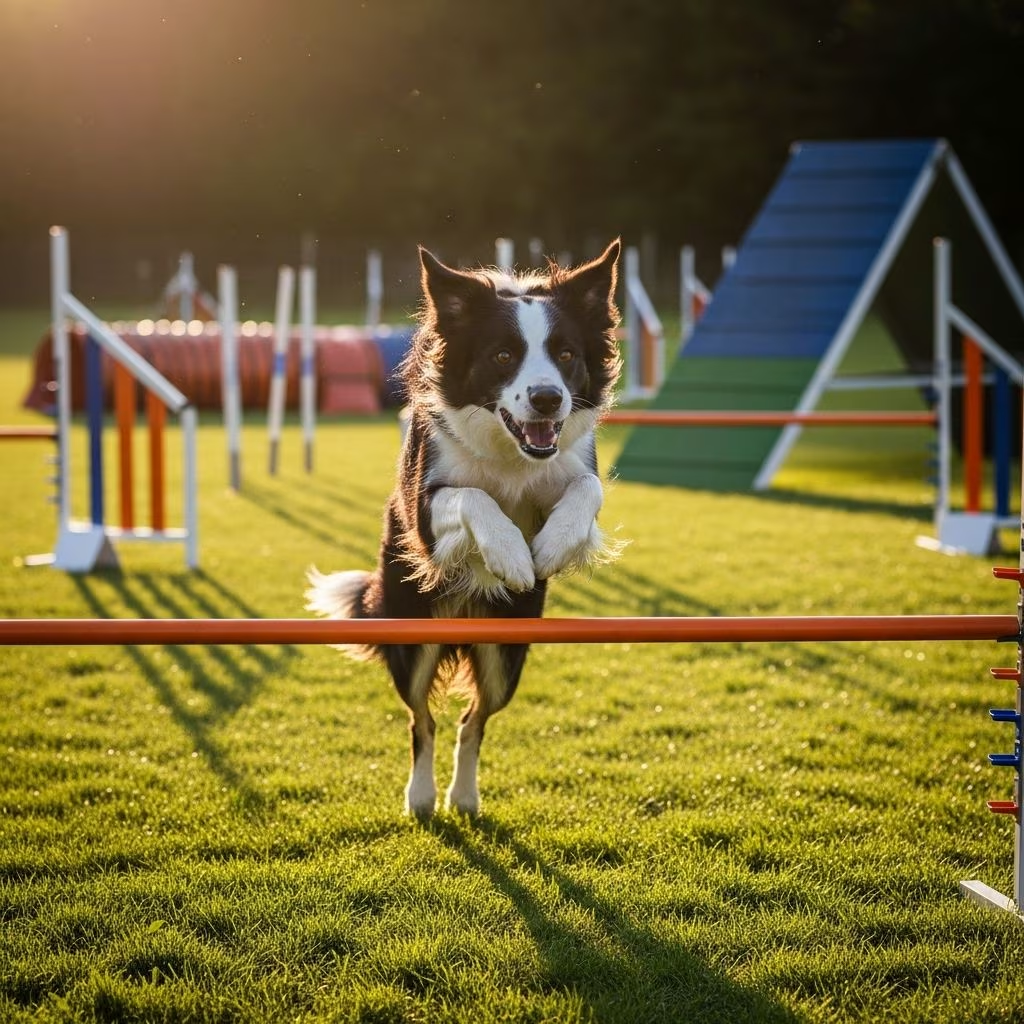
Dog agility training turns everyday exercise into a dynamic partnership, where dogs navigate obstacle courses under handler guidance, enhancing physical prowess, mental sharpness, and mutual trust. This sport suits dogs of all breeds and sizes, provided they are healthy, offering a thrilling way to channel energy and strengthen bonds.
Why Pursue Dog Agility Training?
Engaging in agility provides multifaceted benefits. It boosts cardiovascular health, improves muscle tone, and enhances flexibility through high-intensity movements. Mentally, it sharpens focus, problem-solving, and quick decision-making as dogs respond to cues amid distractions. For owners, it fosters deeper communication and shared joy, often leading to competition success.
- Physical Gains: Builds endurance and coordination, reducing obesity risks.
- Mental Boost: Reduces anxiety via purposeful activity and achievement.
- Bonding Power: Non-verbal cues create intuitive teamwork.
- Socialization: Exposes dogs to new environments and peers.
Studies from veterinary sources affirm agility’s role in holistic wellness, with participants showing improved joint health when trained progressively.
Assessing Your Dog’s Readiness
Not every dog starts at the same level. Evaluate age, health, and temperament. Puppies under 18 months should avoid high-impact obstacles to protect growing joints; consult a vet for clearance. Energetic breeds like herding dogs thrive, but mixed breeds excel with tailored approaches.
| Breed Type | Strengths in Agility | Training Focus |
|---|---|---|
| Herding (e.g., Border Collie) | Speed, intelligence | Precision on weaves |
| Hunting (e.g., Labrador) | Endurance, drive | Tunnel confidence |
| Small (e.g., Jack Russell) | Agility, quick turns | Low-height jumps |
| Large (e.g., Golden Retriever) | Power, steadiness | Contact zone accuracy |
Begin with a fitness check: observe stamina during walks and responsiveness to commands.
Building the Essential Foundation: Obedience Basics
Success hinges on core obedience. Master sit, stay, come, heel, and down in varied settings before obstacles. These ensure safety and control during exciting runs.
- Daily Drills: Practice 10-15 minutes amid distractions like parks.
- High-Value Rewards: Use treats or toys to maintain motivation.
- Proofing: Test in windy, noisy areas to mimic trial conditions.
Enroll in group classes for socialization; reliable responses prevent faults like knocked bars.
Enhancing Coordination Through Fun Tricks
Tricks bridge obedience to agility, developing body awareness and flexibility. Start with nose touches for targeting, spins for turns, and backing up for spatial sense.
- Nose targeting: Dog touches hand/target; progresses to obstacle entries.
- Figure-eights: Weaves around legs for tight maneuvers.
- Bow stretches: Loosens back for A-frames.
- Hoop jumps: Preps for tires.
Incorporate into sessions for confidence; these build the coordination vital for weaves and contacts.
Gearing Up: Essential Equipment and Setup
Acquire or DIY gear safely. Prioritize stability and adjustability.
- Jumps: PVC poles, start at knee height.
- Tunnels: Collapsible fabric, 10-15 feet long.
- Weave Poles: 12 poles, 24-inch spacing initially.
- Contacts: Mini A-frame, dogwalk, teeter with grip zones.
- Accessories: Clicker, timer, treats, harness.
Home setups work wonders; ensure non-slip surfaces. Clubs offer rentals for trials.
Mastering Individual Obstacles Step-by-Step
Introduce one obstacle weekly, using positive reinforcement. Sessions: 15-20 minutes, 3-5x/week.
Jumps
Lure over low bars with toys, fade aids gradually. Height scales with shoulder measurement.
Tunnels
Shorten initially, toss treats through; praise blasts out the end.
Weave Poles
Wide spacing, channel with hands; narrow over weeks.
Contact Obstacles
Low ramps first; teach 2-on/2-off rule for zones. Use peanut butter smears.
Progress when 90% success rate achieved.
Handler Skills: The Art of Guiding Without Touching
Handlers direct via voice, motion, and signals—no contact in trials. Teach sides (left/right), fronts, and wraps.
- Side Switches: Toss treats to shift positions.
- Arm Signals: “Out” for curves, “Here” for straights.
- Timing Drills: Shadow runs off-leash.
Practice mirrors course flow; clear cues cut faults.
From Single Runs to Full Sequences
Link 2-3 obstacles: tunnel-jump-weave. Add complexity: 8-12 elements. Time runs, aim for fluidity.
- Simple: Jump-tunnel.
- Moderate: Weave-A-frame-jump.
- Advanced: Full 18-obstacle mock courses.
Video sessions for analysis; adjust for dog’s pace.
Common Hurdles and Fixes
Challenges arise; troubleshoot patiently.
| Issue | Symptom | Solution |
|---|---|---|
| Fearful Approach | Hesitates at entry | Lower height, more treats |
| Bar Knocks | Rushes jumps | Slow pace drills |
| Weave Misses | Skips poles | Offset entries |
| Contact Errors | Flies off |
Consistency resolves 80% of issues.
Training Schedules for Peak Performance
Structure prevents burnout. Weekly plan:
- Monday/Wednesday: Obstacles (15 min).
- Tuesday/Thursday: Handling (20 min).
- Friday: Sequences (25 min).
- Weekend: Fun runs/mock trials.
- Rest: Active recovery walks.
Track progress in a journal; peak 4-6 weeks pre-trial.
Entering Competitions: From Novice to Pro
Trials feature 14-20 obstacles, scored on time/faults. Join USDAA/AKC; classes by height/jumpers.
- Prep: Club practice, scout courses.
- Day-Of: Warm-up, stay calm.
- Advanced: Gamblers, snookers for strategy.
First runs build experience; celebrate quals.
Health and Safety Priorities
Monitor for fatigue, limps; annual vet checks essential. Hydrate, cool-down stretches. Avoid overtraining.
Frequently Asked Questions
What age can dogs start agility?
Puppies from 12 months for light intro; full gear at skeletal maturity (18-24 months).
Do I need a fancy yard?
No—rent fields or use clubs; portable kits suffice.
Best treats for motivation?
Soft, smelly like liver; vary to prevent pickiness.
How often to train?
4-5 short sessions weekly; quality over quantity.
Can lazy dogs do agility?
Yes, with motivation; build drive gradually.
Nutrition and Recovery for Agility Stars
Fuel with protein-rich diets for muscle repair. Joint supplements aid longevity. Post-run ice packs soothe.
References
- Mastering Canine Agility: A Step-by-Step Guide — Benefab Products. 2023. https://benefabproducts.com/blogs/blog/mastering-canine-agility-a-step-by-step-guide
- The Ultimate Guide to Dog Agility Training — Ultimate Pet Food. 2024. https://www.ultimatespetfood.com/the-ultimate-guide-to-dog-agility-training/
- Agility Training for Dogs: How to Get Started — Purina. 2025-03-15. https://www.purina.com/articles/dog/behavior/training/agility-training-for-dogs
- Mastering Dog Agility Training: A Comprehensive Guide for Beginners — San Antonio Dog Trainers. 2024. https://sanantoniodogtrainers.com/mastering-dog-agility-training-a-comprehensive-guide-for-beginners/
- Complete Guide to Dog Agility | Beginner Training & Trials — Sniffspot. 2024. https://www.sniffspot.com/blog/dog-enrichment/beginners-guide-to-agility-with-dogs
- Agility Training For Dogs: The Ultimate Beginners Guide — Vital Vet. 2023. https://vitalvet.org/blogs/news/agility-training-for-dogs-the-ultimate-beginners-guide
- Dog Agility 101 — PetMD. 2025-01-10. https://www.petmd.com/dog/training/dog-agility-101



