

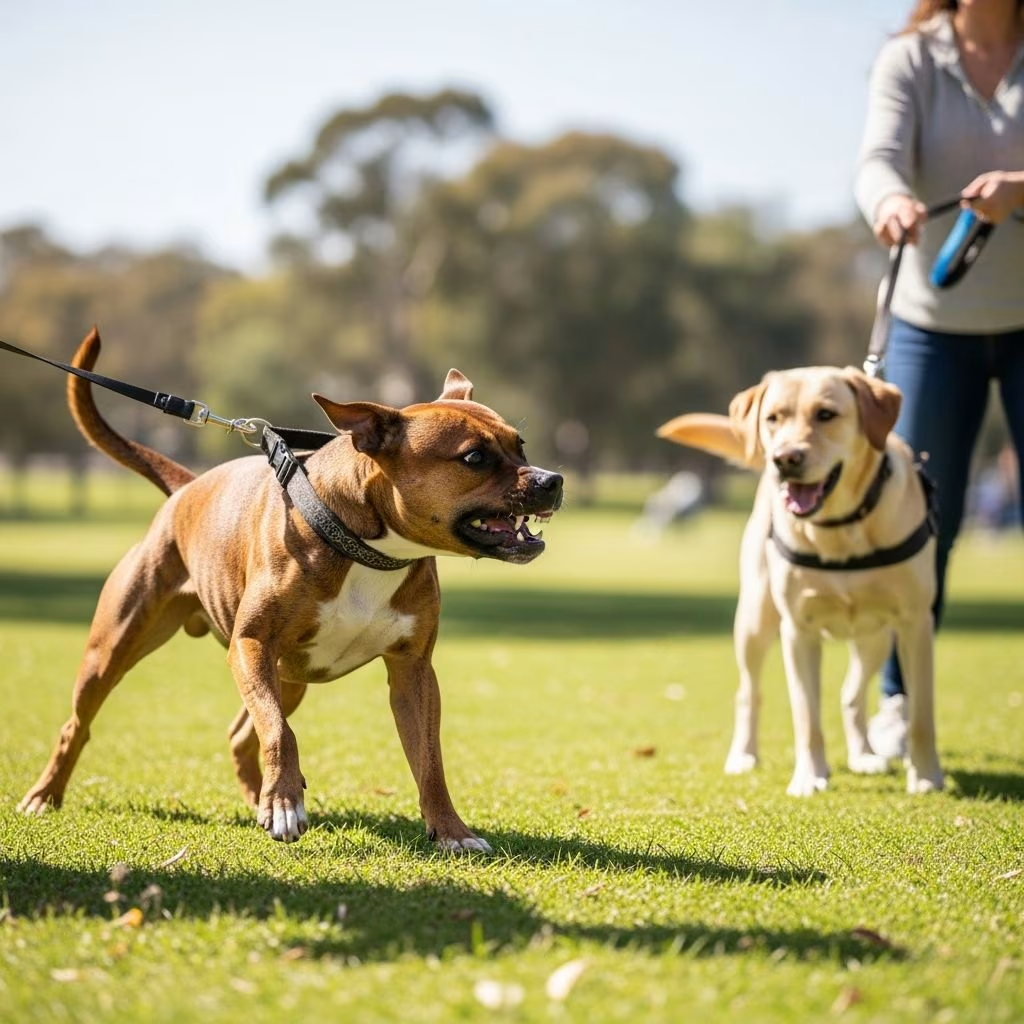
Understanding Dog Aggression Toward Unfamiliar Dogs
Dog aggression toward unfamiliar dogs is one of the most common behavioral concerns faced by pet owners today. Research indicates that aggression toward unfamiliar dogs is widespread among the canine population. This type of aggressive behavior can range from mild posturing and barking to serious incidents involving lunging and biting. Understanding the underlying causes, recognizing warning signs, and implementing proper diagnosis and management strategies is essential for the safety of your pet and those around them.
Aggression toward unfamiliar dogs differs significantly from other types of canine aggression because it specifically targets unknown dogs rather than family members or strangers. Many dogs who are well-socialized with familiar household pets may still display aggressive behaviors when encountering unfamiliar dogs, indicating that the issue often stems from inadequate socialization with the broader dog population rather than a generalized lack of social skills.
Identifying the Warning Signs of Aggression
Recognizing the early warning signs of aggression is crucial for preventing dangerous situations. Dogs typically display a progression of behavioral signals before an aggressive incident occurs, and understanding these signals allows owners to intervene before the situation escalates.
Body Language Indicators
Dogs communicate their discomfort and aggressive intent through specific body language cues. These physical manifestations serve as important diagnostic tools for identifying dogs with aggression problems:
- Rigid stance with the dog positioned up on toes, prepared for action
- Hair standing up on the back of the neck and along the spine (piloerection)
- Ears held erect or pinned back tightly against the head
- Direct, hard eye contact or staring
- Lip lifting and snarling to display teeth
- Growling or guttural vocalizations
- Stiffening of the entire body as another dog approaches
- Forward-leaning posture toward the unfamiliar dog
Vocalization Patterns
Vocal signals are often the first noticeable signs of aggression. Dogs may begin barking when they see another dog at a distance, and this barking often escalates as the unfamiliar dog approaches. The bark associated with aggression typically sounds threatening and guttural rather than the playful barks associated with excitement or greeting. Some dogs display continuous barking and pacing behavior, particularly when observing unfamiliar dogs through windows, fences, or in passing vehicles.
Escalation of Aggressive Displays
If warning signs are not heeded, aggressive behavior typically escalates through distinct stages. Dogs may progress from barking and stiffening to lunging forward or charging at the unfamiliar dog without making contact, mouthing behaviors designed to control the other dog without applying significant pressure, and eventually snapping or biting if the situation continues to escalate.
Underlying Causes and Motivations
Diagnosing aggression toward unfamiliar dogs requires understanding the various motivations that drive this behavior. Unlike simple lack of friendliness, true aggression involves a dog’s attempt to distance itself from the perceived threat or to assert control over the situation.
Fear-Based Aggression
Fear represents one of the primary motivations for aggression toward unfamiliar dogs. Dogs that are fearful of other dogs may react with rapid nips or bites, often without providing clear warning signals beforehand. A fearful dog’s motivation is to bite and then retreat, creating a potential safety hazard because observers may not recognize the fear-driven nature of the aggression. These dogs typically display fearful postures, including attempts to retreat from the unfamiliar dog, lowered body position, and tail tucking. The challenge with fear aggression is that dogs may not show their teeth or growl to warn others, meaning the only visible warning might be the dog’s fearful body language and attempts to escape.
Territorial and Protective Motivations
Some dogs display aggression toward unfamiliar dogs because they perceive the other dog as a threat to their territory or property. This territorial aggression may be intensified when the unfamiliar dog approaches what the dog considers to be their protected space, such as their home, yard, or immediate vicinity. Dogs may also display protective aggression if they believe their owner is being threatened by the unfamiliar dog.
Genetic and Breed Predisposition
Certain breeds were historically developed for dog-fighting or protection purposes, and these dogs may have genetic predispositions toward difficulty in getting along with unfamiliar dogs. However, breed tendency is just one factor among many, and individual dogs within any breed can vary significantly in their social proclivities.
Lack of Adequate Socialization
Dogs that have not been properly exposed to other dogs during critical developmental periods often lack the social skills necessary to interact peacefully with unfamiliar dogs. When dogs’ only interactions with other dogs involve straining at the leash during walks or being barked at through fences, they may develop negative associations with unfamiliar dogs and consequently display aggressive behaviors. Early socialization experiences significantly influence how dogs respond to novel dogs throughout their lives.
Age, Gender, and Hormonal Factors
Aggression toward unfamiliar dogs is influenced by gender, with both male and female dogs capable of displaying this behavior. Hormonal status also plays a role, with intact (unneutered or unspayed) dogs sometimes displaying more intense aggression. Previous learning experiences and early-life events similarly contribute to the development of this behavioral problem.
Medical Considerations in Diagnosis
A comprehensive diagnostic evaluation must include medical assessment, as certain health conditions can contribute to or cause aggression. Veterinarians should rule out medical factors before attributing aggression solely to behavioral causes.
Pain and Physical Discomfort
Dogs experiencing pain or physical discomfort may display sudden aggressive reactions, particularly when anticipating or reacting to being touched. Conditions affecting the nervous system, musculoskeletal system, or sensory organs can increase a dog’s propensity for aggressive responses. Any sudden change in aggressive behavior warrants a veterinary examination to assess for underlying pain conditions.
Neurological and Hormonal Disorders
Certain medical conditions can influence aggressive behavior. Organ dysfunction affecting the kidneys or liver, neurologic diseases, and hormonal disorders affecting the adrenal, sex, or thyroid glands can all potentially lead to increased aggression. Idiopathic aggression, which is aggression with unknown or unclear triggers, may have neurological underpinnings and requires veterinary investigation.
Lifestyle and Environmental Factors
Sudden changes in a dog’s environment or lifestyle can trigger or exacerbate aggression. Unfamiliar people in the home, construction noise, schedule disruptions, or changes in housing can push a dog to react with aggression if they are already predisposed to this behavior.
Diagnostic Process and Assessment
Properly diagnosing aggression toward unfamiliar dogs involves a systematic evaluation that includes behavioral history, observation, and sometimes professional behavioral assessment.
Detailed Behavioral History
Veterinarians and animal behaviorists typically begin by obtaining detailed information about incidents involving aggression. This includes when the aggression first occurred, specific triggering situations, the dog’s behavioral progression, and whether the behavior has escalated over time. Understanding whether the dog displays aggression exclusively toward unfamiliar dogs or shows aggression in other contexts helps determine the specific nature of the problem.
Observation of Body Language
Professional evaluation includes careful observation of the dog’s body language in controlled situations. Watching how the dog responds when seeing unfamiliar dogs at various distances provides valuable diagnostic information about the severity and specific type of aggression. Recording the sequence of behavioral escalation—from initial awareness through vocalization to potential physical aggression—helps determine the dog’s threshold and reactivity level.
Identifying Specific Motivations
The diagnostic assessment must identify whether the aggression is primarily fear-motivated, territorial, protective, dominance-based, possessive, or redirected from another source. This determination is based on the dog’s body postures, facial expressions, and the context in which aggression occurs. A dog displaying offensive, forward-leaning postures with ears erect and tail up suggests different motivations than a dog displaying fearful, withdrawn postures with ears back and tail tucked.
Risk Assessment and Safety Considerations
Understanding the severity and predictability of a dog’s aggression is essential for developing appropriate management strategies and protecting public safety.
Severity Classification
Dogs displaying aggression toward unfamiliar dogs may be classified on a spectrum ranging from mild (barking and lunging without contact) to severe (biting with significant force). The severity of aggression influences the recommended management strategies and the timeline for improvement.
Predictability Factors
Some dogs display predictable aggression patterns—they consistently react to unfamiliar dogs in specific situations. Others may demonstrate unpredictable aggression, particularly in cases of idiopathic aggression, making management more challenging. Dogs with unpredictable aggression require stricter safety protocols and may benefit from working with specialized behavioral professionals.
Recommended Management Strategies
While diagnosis is crucial, the practical management of aggression toward unfamiliar dogs involves several evidence-based approaches.
Avoiding Triggers and Situations
The first step in management typically involves helping owners avoid situations that trigger the aggressive behavior. This may include modifying walking routes, adjusting timing of outdoor activities, and preventing the dog from approaching unfamiliar dogs until proper training is underway.
Training and Desensitization
Professional training can help dogs learn alternative behaviors and gradually become desensitized to unfamiliar dogs. This process requires patience and consistency but can yield significant improvements over time.
What NOT to Do
Certain training methods should be strictly avoided, as they can worsen aggression. Harsh corrections, choke collars, pinch collars, and remote-controlled electronic collars should not be used, as these aversive techniques can actually increase aggression rather than resolve it. Additionally, using the dog’s pulling on the leash as an opportunity to correct can inadvertently create negative associations with approaching other dogs, thereby increasing aggression.
Frequently Asked Questions
Q: Is aggression toward unfamiliar dogs common?
A: Yes, aggression toward unfamiliar dogs is widespread among the canine population. Many dogs are not well-socialized to other dogs and may display aggressive behaviors despite being friendly with familiar dogs.
Q: Can dogs suddenly become aggressive toward unfamiliar dogs?
A: While it may appear sudden, dogs typically display subtle warning signs before obvious aggression. Owners often miss these early indicators, so what appears sudden may actually represent escalation of building tension.
Q: Should I use dominance-based training methods to address aggression?
A: No. Aggression toward unfamiliar dogs is not caused by a lack of dominance, and attempting “alpha rolls” or using dominance-based techniques can worsen the problem and create additional behavioral issues.
Q: Is a wagging tail always a sign of friendliness?
A: No. Dogs may wag their tails while displaying aggression, so tail wagging alone should not be interpreted as a definitive sign that a dog is friendly or non-threatening.
Q: When should I seek professional help for my dog’s aggression?
A: Early intervention is important. Any signs of aggression warrant consultation with a veterinarian to rule out medical causes and to discuss appropriate management and training strategies with qualified professionals.
References
- Aggression — ASPCA. Accessed 2025. https://www.aspca.org/pet-care/dog-care/common-dog-behavior-issues/aggression
- Dog Aggression to Unfamiliar Dogs — Animal Behavior Associates, Inc. 2008. https://www.paws4training.com/wp-content/uploads/2019/12/P4T-Dog-Aggression-to-Unfamiliar-Dogs-Full-Sheet.pdf
- Protocol For Dogs With Inter-dog Aggression — Pablo River Veterinary. Accessed 2025. https://www.pablorivervet.com/protocol-for-dogs-with-inter-dog-aggression
- 7 Types of Dog Aggression and How to Nip Them in the Bud — Salish Veterinary. Accessed 2025. https://www.salishvet.com/services/dogs/blog/7-types-dog-aggression-and-how-nip-them-bud
- Aggression in Dogs — PetMD. Accessed 2025. https://www.petmd.com/dog/behavior/aggression-in-dogs
- Dog Aggression: Signs, Causes, and How to Manage — Best Friends Animal Society. Accessed 2025. https://bestfriends.org/pet-care-resources/dog-aggression-signs-causes-and-how-manage
- Behavior Problems in Dogs — Merck Veterinary Manual. Accessed 2025. https://www.merckvetmanual.com/dog-owners/behavior-of-dogs/behavior-problems-in-dogs
- Canine Aggression — AKC Canine Health Foundation. Accessed 2025. https://www.akcchf.org/disease-history/canine-aggression/



