

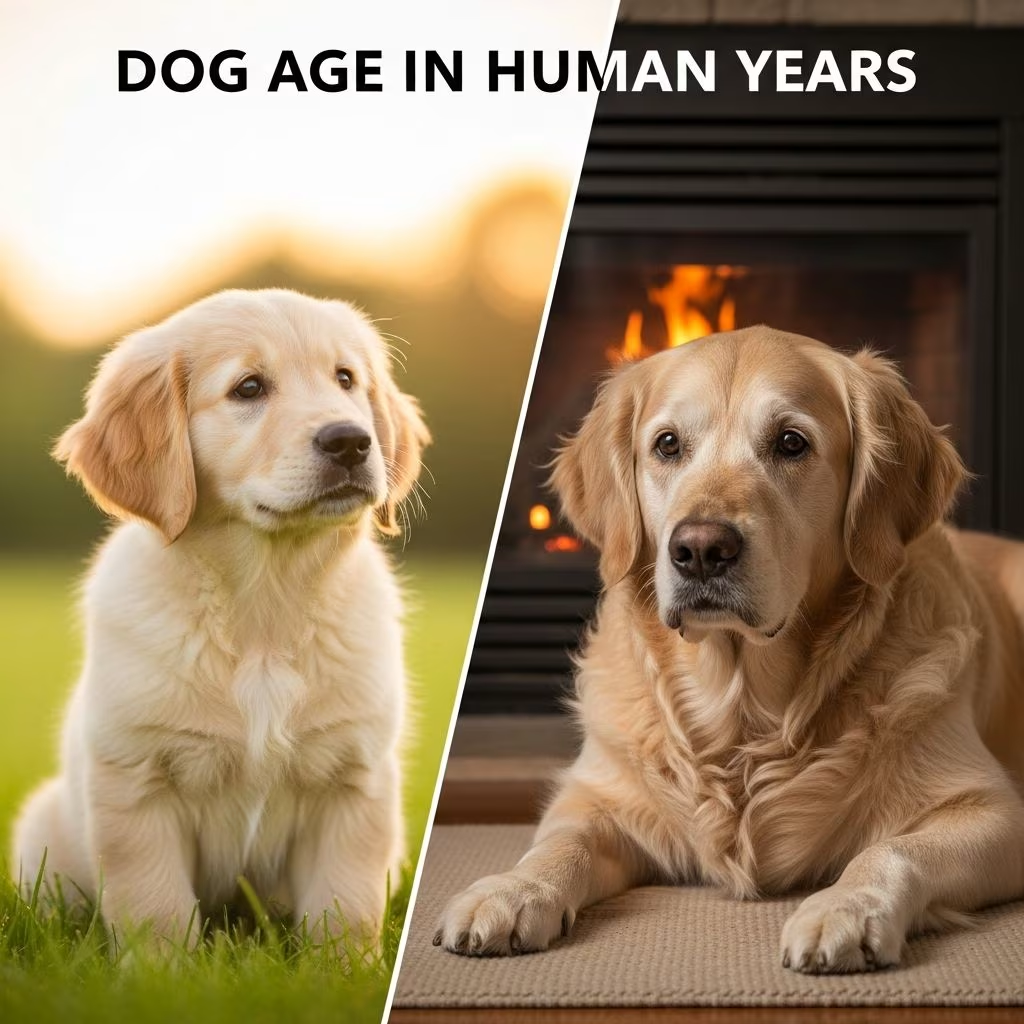
Determining a dog’s age in human terms helps owners anticipate health needs, adjust care routines, and plan for life stages. Traditional methods like multiplying by seven oversimplify canine aging, which accelerates rapidly in youth and varies by size later on. Modern approaches use epigenetic research and veterinary charts for precision.
Why the Old 7:1 Rule Falls Short
The notion that one dog year equals seven human years emerged decades ago as a rough average based on lifespan differences—dogs live about 10-13 years on average, humans around 70-80. However, this linear formula ignores key biological realities. Puppies mature faster than the rule suggests; a one-year-old dog is already an adult capable of reproduction, akin to a young human adult, not a child.
Research shows dogs age quickly in their first two years—equivalent to 15 and then additional 9 human years—before slowing. Large breeds age even faster than small ones due to higher metabolic rates and genetic factors. Sticking to 7:1 can mislead owners about when to start senior screenings or adjust diets.
Modern Formula: Epigenetic Clock for Precision
Scientists at the University of California San Diego developed a breakthrough in 2019 by studying DNA methylation patterns—chemical tags on genes that change predictably with age in both dogs and humans. This “epigenetic clock” reveals non-linear aging: dogs under two years age at triple the human rate, then decelerate.
The formula is: human_age = 16 × ln(dog_age) + 31, where ln is the natural logarithm. For a 2-year-old dog: ln(2) ≈ 0.693, so 16 × 0.693 = 11.09, plus 31 = 42 human years. A 5-year-old: ln(5) ≈ 1.609, 16 × 1.609 ≈ 25.74, plus 31 ≈ 57 years. This applies best to dogs over one year and Labrador-sized breeds but offers broad utility.
Online calculators simplify this math, but understanding it empowers owners to verify results.
Size-Based Age Conversion Charts
Since breed size profoundly affects longevity—small dogs often reach 15+ years, giants under 8—veterinarians recommend size-specific charts. These draw from American Kennel Club (AKC) data and clinical observations.
| Dog Age | Small (<20 lbs) | Medium (21-50 lbs) | Large (51-90 lbs) | Giant (>90 lbs) |
|---|---|---|---|---|
| 1 | 15 | 15 | 15 | 15 |
| 2 | 24 | 24 | 24 | 24 |
| 3 | 28 | 28 | 30 | 32 |
| 4 | 32 | 33 | 35 | 37 |
| 5 | 36 | 37 | 40 | 42 |
| 7 | 44 | 47 | 50 | 56 |
| 10 | 56 | 60 | 66 | 78 |
| 12 | 64 | 69 | 77 | 93 |
| 15 | 76 | 83 | 93 | 115 |
This table illustrates divergence: a 10-year-old giant breed nears 78 human years, while a small dog is 56. Use weight at maturity for categorization.
When Does a Dog Become a Senior?
Senior status signals shifts in metabolism, joint health, and organ function, prompting earlier vet visits. Timelines vary:
- Small/toy breeds (<20 lbs): 9-11 years, benefiting from longer puppy-like vigor.
- Medium breeds (21-50 lbs): 8-10 years.
- Large breeds (51-90 lbs): 7-9 years.
- Giant breeds (>90 lbs): 6-7 years, due to rapid growth straining hearts and joints.
The AVMA endorses these ranges, noting early intervention extends quality life.
Factors Influencing Canine Aging Speed
Breed Genetics and Size
Larger dogs have shorter telomeres—protective chromosome caps that shorten with cell divisions—leading to quicker aging. Great Danes average 7-10 years; Chihuahuas 15-20. Selective breeding for size amplifies this.
Lifestyle and Environment
Neutering before maturity may add 1-3 years by reducing cancer risks, per longevity studies. Obesity shortens life by 2+ years; regular exercise and quality nutrition counteract this. Avoid secondhand smoke and toxins.
Health Monitoring Milestones
Annual checkups suffice for adults, but seniors need biannual exams. Bloodwork detects kidney issues early; dental care prevents systemic inflammation.
Caring for Dogs at Different Life Stages
Puppyhood (0-2 Years): Rapid Growth
Equivalent to human teens to mid-30s. Focus on vaccination, socialization, and balanced high-protein diets for bone development.
Adulthood (3-6 Years): Prime Time
Human 30s-50s. Maintain weight, provide mental stimulation to prevent boredom-related behaviors.
Senior Years (7+): Gentle Support
Human 50s+. Switch to joint supplements (glucosamine), lower-calorie food, and ramps for mobility. Monitor for cognitive decline like disorientation.
Tools and Calculators for Easy Reference
Free online tools from AKC and vets input breed, weight, and age for instant conversions. Apps track trends over time, reminding for senior protocols.
Frequently Asked Questions (FAQs)
How accurate is the epigenetic formula?
Highly, for Labradors and similar; adjust for extremes via size charts. Validated across 104 dogs.
Does mixed breed change calculations?
Use average adult weight; genetics blend effects.
Can diet slow aging?
Antioxidant-rich foods support cellular health, per vet studies.
What’s the oldest recorded dog age?
31 years for a mixed breed, but exceptional.
Should I treat my 8-year-old Lab as geriatric?
Yes, start senior wellness plans.
Conclusion: Empower Your Dog’s Longevity
Accurate age assessment tailors care, from nutrition to screenings, maximizing joyful years. Consult vets for personalized advice, as individuals vary.
References
- Dog Years to Human Years: Calculate Your Dog’s Age — Chewy. 2023. https://www.chewy.com/education/dog/general/dog-years-to-human-years
- How to Calculate Dog Years to Human Years — American Kennel Club. 2023-10-18. https://www.akc.org/expert-advice/health/how-to-calculate-dog-years-to-human-years/
- How Old Is Your Dog in Human Years? Scientists Develop Better Method — UC San Diego. 2019-07-02. https://today.ucsd.edu/story/how-old-is-your-dog-in-human-years-scientists-develop-better-method-than-multiply-by-7
- Here’s a better way to convert dog years to human years, scientists say — Science.org. 2019-07-03. https://www.science.org/content/article/here-s-better-way-convert-dog-years-to-human-years-scientists-say
- How Old Is My Dog in Human Years? Calculating Dog Age — PetMD. 2023. https://www.petmd.com/dog/general-health/how-old-is-my-dog-in-human-years



