

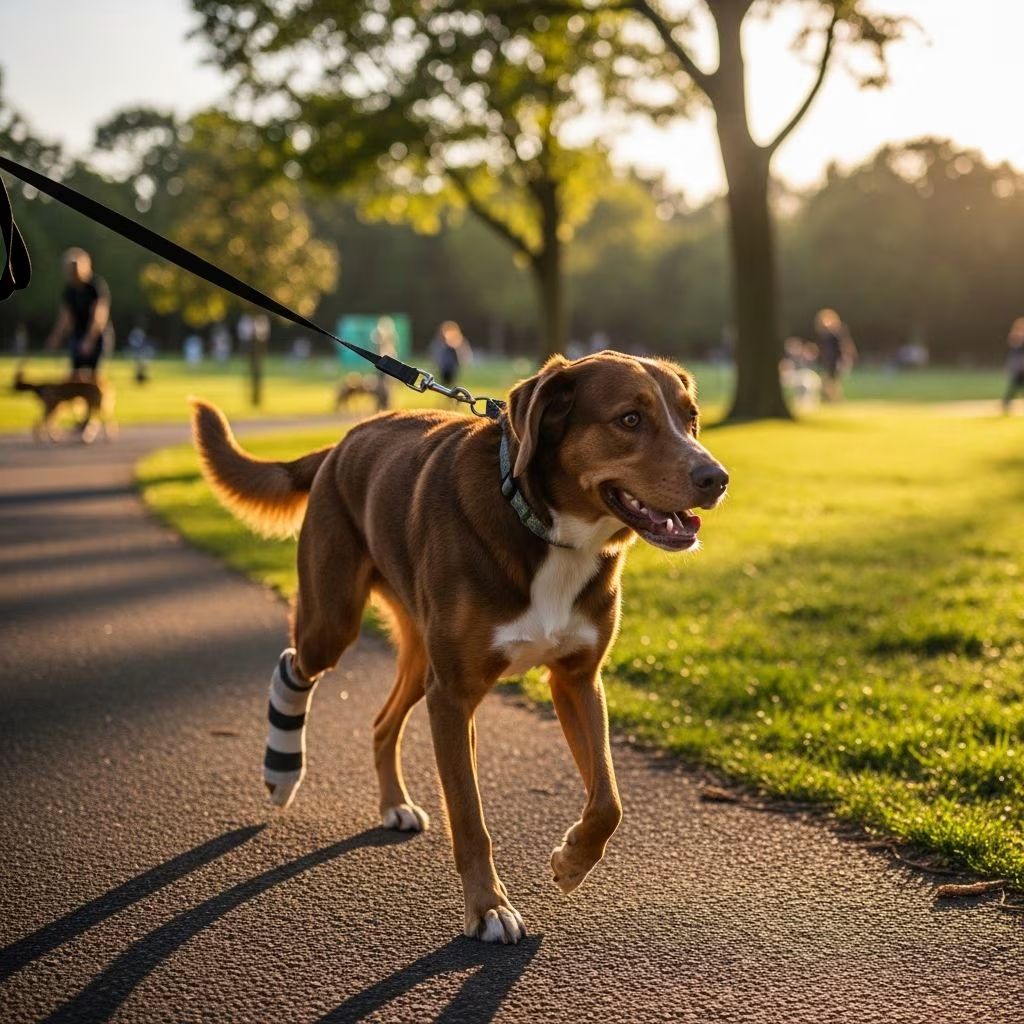
Your dog’s anterior cruciate ligament (ACL), also known as the cranial cruciate ligament (CCL) in veterinary terms, is vital for knee stability. When it tears, surgery like TPLO or TTA becomes necessary for many dogs, especially larger breeds. Recovery demands patience, strict adherence to protocols, and gradual progression to rebuild strength and prevent re-injury. Full healing typically spans 12-16 weeks for bone fusion, with muscle recovery extending to 3-6 months.
Understanding ACL Injuries and Surgical Options
ACL tears often result from trauma, obesity, or degenerative changes, leading to limping, pain, and instability. Surgery stabilizes the joint by altering bone geometry (TPLO) or advancing the tibial tuberosity (TTA), promoting natural healing without replacing the ligament. Post-surgery, the focus shifts to immobilization for bone healing, then controlled rehabilitation to restore function.
Success hinges on factors like age, weight, and concurrent conditions such as arthritis. Younger, lean dogs heal faster, while seniors may need 6 months or more.
Immediate Post-Operative Phase: First 48 Hours
The initial 24-48 hours post-surgery are critical. Dogs emerge groggy from anesthesia, experiencing swelling and pain managed by prescribed medications like NSAIDs and opioids. Keep your pet in a quiet, confined space to minimize movement.
- Monitor vital signs: Watch for excessive panting, vomiting, or lethargy; contact your vet immediately if noted.
- Administer pain relief strictly per schedule to maintain comfort.
- Use an Elizabethan collar (e-collar) to prevent licking the incision.
- Offer small, bland meals to avoid nausea; ensure hydration.
Discharge includes detailed instructions on meds, rest, and follow-ups. Most dogs go home the same day, stable but subdued.
Weeks 1-2: Strict Confinement and Monitoring
This period prioritizes bone healing at the surgical site. Enforce crate rest or extreme confinement—leash walks only for bathroom breaks, no more than 5 minutes on flat surfaces.
Expect toe-touching on the affected leg by week’s end, but full weight-bearing is premature. Swelling peaks then subsides; incision care involves keeping it clean and dry.
| Daily Routine | Guidelines |
|---|---|
| Walks | 3-5 min, 3-4x/day, leash only, flat ground |
| Rest | Crate 90% of time; no stairs, jumping, playing |
| Incision Check | Daily: Redness, discharge? Call vet if yes |
| Medications | Pain meds, antibiotics as prescribed |
Passive range-of-motion (PROM) exercises, gently flexing/extending the joint 10-15 reps 2-3x/day, aid circulation without stress—vet-approved only.
Weeks 3-4: Introducing Gentle Mobility
With incision healed and sutures often removed, e-collar use decreases. Dogs begin partial weight-bearing; walks extend to 10-20 minutes, 3x/day on even terrain.
- Incorporate slow figure-8 walks to promote balance.
- Avoid slips: Use non-skid surfaces or booties.
- Ice packs (10 min, 2-3x/day) reduce residual swelling.
Monitor for limping post-walk; if present, revert to prior restrictions. This phase builds confidence in the leg.
Weeks 5-6: Building Balance and Endurance
A key milestone: Introduce low-incline hill walks (2-5 degrees) for 5-10 minutes to shift weight rearward, enhancing stability. Total walks reach 20-30 minutes, up to 35 by week 6.
Vet recheck at week 6 assesses bone healing via radiographs. Continue PROM and add sit-to-stand reps (5-10x, 2x/day).
| Exercise | Reps/Duration | Purpose |
|---|---|---|
| Hill Walking | 5-10 min, 1-2x/day | Strengthens hindquarters |
| Figure-8 Leash Walks | 10 min | Improves coordination |
| Sit-to-Stand | 5-10 reps | Builds quad muscles |
Confinement remains; unsupervised freedom risks setbacks.
Weeks 7-10: Strength Conditioning Phase
Bone healing advances; vet clearance allows intensified rehab. Walks: 30-45 minutes with moderate inclines (up to 10 degrees), adding weave patterns or cavaletti poles.
- Hydrotherapy (underwater treadmill) if available—low-impact strengthening.
- Balance boards or wobble cushions for proprioception.
- Weight management: Keep lean to reduce joint stress.
By week 10, supervised off-leash in small, secure areas—no running or turns.
Weeks 11-16: Transition to Functional Activity
Radiographs confirm bone fusion. Gradually lift restrictions: Off-leash walks, light play, swimming. Full activity by 12-16 weeks for most, but monitor for fatigue.
Continue PT 2-3x/week focusing on agility: Gentle fetch, controlled zooming.
Beyond 16 Weeks: Long-Term Maintenance
Full athletic return may take 3-6 months. Osteoarthritis risk necessitates ongoing joint supplements (glucosamine), weight control, and low-impact exercise.
- Annual vet checks for joint health.
- Avoid high-impact sports initially.
- Contralateral leg strengthening prevents opposite tears.
Common Challenges and Troubleshooting
Issues like licking, swelling flares, or non-weight-bearing demand prompt vet attention. Infection signs: Fever, pus. Overactivity leads to plate loosening—stick to protocol.
Nutritional support: High-protein diet aids muscle rebuild; omega-3s combat inflammation.
Physical Rehabilitation Techniques
Professional rehab accelerates recovery:
- Land Treadmill: Controlled speed/incline.
- Pools: Buoyancy unloads joints.
- Laser Therapy: Reduces pain, speeds healing.
- Acupuncture: For chronic pain cases.
Home tools: Therapy bands, balance discs—under guidance.
Nutrition and Supplements for Optimal Healing
Caloric restriction prevents weight gain during rest. Key nutrients:
| Nutrient | Benefit | Sources |
|---|---|---|
| Protein | Muscle repair | Lean meats, eggs |
| Omega-3 | Anti-inflammatory | Fish oil |
| Glucosamine/Chondroitin | Joint support | Supplements |
FAQs
How long until my dog walks normally after ACL surgery?
Basic walking resumes in 8-12 weeks; normal gait by 3-4 months.
Can my dog climb stairs during recovery?
No stairs weeks 1-8; introduce slowly post-vet approval.
What if my dog won’t use the leg after 4 weeks?
Consult vet—may need PT or pain reassessment.
Is crate rest really necessary?
Yes, prevents catastrophic setbacks; 90% success with compliance.
Will my dog need surgery on the other leg?
50% chance; maintain bilateral strength.
Success Stories and Pro Tips
Owners report thriving post-recovery with diligence. Tip: Track progress in a journal—walks, weight-bearing, energy—for vet discussions.
References
- A Complete Timeline for Dog ACL Surgery Recovery: What to Expect — LickSleeve. 2023. https://www.licksleeve.com/blogs/news/dog-acl-surgery-recovery-week-by-week-timeline
- Dog ACL Surgery Recovery: A Week by Week Timeline — Paws and More Vet. 2023. https://pawsandmorevet.com.au/dog-acl-surgery-recovery-week-by-week/
- How Long Should Dogs Rest After CCL Surgery? A Complete Recovery Timeline — AZ Vet Direct. 2024. https://azvet.direct/low-cost-pet-surgery-in-mesa-and-the-entire-southeast-valley-of-phoenix/how-long-should-dogs-rest-after-ccl-surgery-a-complete-recovery-timeline/
- Recovery Timeline for ACL Surgery in Dogs — Zoetis Petcare. 2024. https://www.zoetispetcare.com/blog/article/recovery-timeline-acl-surgery-dogs
- From Surgery to Sprint: TPLO Recovery Timeline — Animal Outpatient Surgery. 2023. https://animaloutpatientsurgery.com/blog/from-surgery-to-sprint-tplo-recovery-timeline/
- TPLO Surgery Recovery Timeline: Week by Week Support — Vet Care Creekside. 2024. https://www.vetcarecreekside.com/post/tplo-surgery-recovery-timeline-week-by-week-support-for-your-dog-s-healing-journey
- Dog CCL (ACL) Surgery: Cost and Recovery Timeline — PetMD. 2025. https://www.petmd.com/dog/procedure/acl-surgery-in-dogs



