

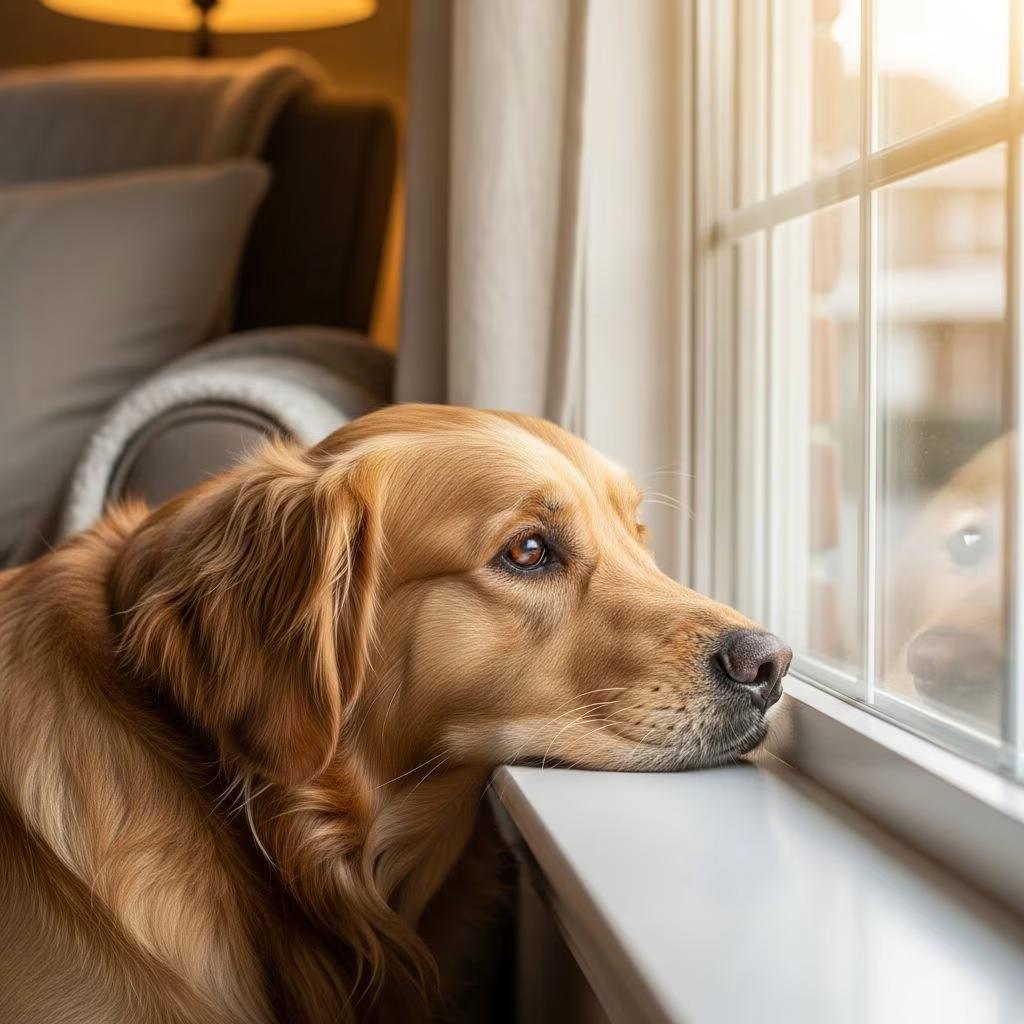
Most dog guardians feel a pang of guilt when they close the door and leave their pup at home. Those eyes, that whine, the excited greeting when you return — it is natural to wonder whether your dog truly misses you or is just reacting to the routine of comings and goings. Modern research into dog cognition and emotion suggests that dogs form strong social bonds with humans and can experience distress when separated from them. At the same time, not every vocalization or chewed shoe is proof of a deep emotional crisis; some dogs simply dislike being bored or alone.
This article explores what science says about whether dogs miss us, how they perceive time apart, how to tell the difference between normal attachment and separation anxiety, and practical ways to make your departures and returns calmer for both of you.
How Dogs Bond With Their Humans
Dogs evolved alongside humans for thousands of years, developing a unique ability to read our social cues, facial expressions, and routines. Attachment research comparing dogs and human infants has found that many dogs behave toward their caregivers in ways that resemble a secure child–parent bond: they seek proximity, use the caregiver as a safe base, and show preference for their guardian over strangers.
Everyday signs that your dog is strongly bonded to you can include:
- Following you from room to room or resting where they can see you
- Checking in with you visually or physically during walks
- Choosing to settle near you even when other people or pets are around
- Looking to you for reassurance in new or mildly stressful situations
- Greeting you more enthusiastically than they greet unfamiliar people
These behaviors reflect social attachment and emotional connection, which is the foundation for a dog being able to miss their person when that person is not available.
Do Dogs Really Miss Us When We Leave?
There is no way to ask dogs directly how they feel, but several lines of research suggest that they do form enduring social memories and can react emotionally to a guardian’s absence. Studies using odor recognition have shown that dogs respond more strongly to the scent of familiar humans, even when the person is not physically present. Other work monitoring behavior and physiology indicates that many dogs show signs of distress when left alone compared with when their person is present.
In practical terms, missing you may look like:
- Mild restlessness, pacing, or watching the door after you leave
- Spending time near entrances or windows where they last saw you
- Settling after a while but reactivating when they hear sounds that resemble your return
- Displaying clear joy and relief when you come back (wagging, spinning, vocalizing)
Many of these behaviors overlap with separation-related problems, but a key distinction is intensity. A dog who “misses you” in a healthy way may be briefly unsettled and then able to rest; a dog with separation anxiety often shows persistent panic or distress that does not resolve until you return.
How Dogs Experience Time When You Are Gone
Dogs do not read clocks, but they can track patterns, routines, and environmental cues. They learn that certain times of day or specific sequences (like you picking up keys and putting on shoes) reliably predict your departure.
Research has found that dogs may respond differently depending on how long they have been left alone, suggesting that they are sensitive to the duration of separations. Many guardians also report that their dogs behave more excitedly when they have been away for longer versus shorter periods. While this does not prove that dogs understand hours in the human sense, it aligns with the idea that they can perceive changes in routine and the buildup of expectation over time.
For some dogs, anticipation of being left — called pre-departure cues — is the most stressful part. These are the subtle clues in your routine that alert your dog that you are about to leave, such as:
- Picking up keys, bag, or coat
- Putting on work shoes instead of casual footwear
- Turning off lights in specific rooms
- Ignoring or disengaging from your dog as you rush out
Dogs experiencing separation-related anxiety often start to pant, pace, whine, or cling more closely as soon as they notice these cues.
Normal Missing You vs. Separation Anxiety
It is important to distinguish between a dog who is mildly disappointed or bored when alone and a dog who has separation anxiety, a condition in which the dog experiences significant distress when separated from a specific person or from people in general. Understanding the difference helps you choose appropriate strategies and determine when professional help is needed.
| Normal “Missing You” | Separation Anxiety / Separation-Related Behaviour |
|---|---|
| Dog may watch you leave, whine briefly, then settle. | Dog becomes highly agitated before and after you leave; difficulty settling at all. |
| Occasional barking or pacing, then periods of quiet rest. | Prolonged howling, barking, or whining for much of the absence. |
| No damage or only minor chewing on available toys. | Destructive behavior focused around doors, windows, or barriers. |
| Normal eating, drinking, and toileting patterns. | House-soiling despite being normally house-trained; loss of appetite when left alone. |
| Happy to relax alone in other rooms when you are home. | Follows you constantly, distressed by any separation, even indoors. |
Common Signs of Separation Anxiety
Animal welfare organizations describe separation-related behavior as occurring mainly when a dog is left alone and often starting within the first 5–30 minutes of your departure. Some typical signs include:
- Destructive chewing, especially near doors or windows
- Persistent barking, howling, or whining shortly after you leave
- Indoor urination or defecation despite being otherwise house-trained
- Panting, drooling, trembling, or pacing
- Attempts to escape confinement that may result in self-injury
- Refusing food or treats only when alone
- Excessive excitement or clinginess when you return
These signs can be distressing to witness and may also cause property damage, but they are rooted in fear and panic, not spite or “bad behavior.”
Why Some Dogs Struggle More Than Others
Not all dogs react to separation in the same way. Several factors can increase the likelihood of separation-related problems:
- Genetic predisposition: Some dogs may be temperamentally more anxious or more dependent on close social contact.
- Early experiences: Dogs that were weaned too early, poorly socialized, or experienced repeated changes in home may be more vulnerable.
- Changes in routine: Sudden shifts, such as guardians returning to work after extended time at home, can trigger or worsen problems.
- Lack of gradual alone-time training: Puppies who are rarely left alone and then suddenly face long separations may struggle to cope.
- Other anxiety issues: Noise phobias or confinement anxiety can intersect with separation anxiety and complicate the picture.
Even dogs that seem confident in other contexts can develop difficulty being left alone, especially after life changes such as moves, schedule shifts, or the loss or addition of family members.
How to Tell What Your Dog Does When You’re Gone
Because many signs of distress happen after you walk out the door, you might not be aware of them. Animal welfare organizations often recommend using technology to check on your dog when you are not home.
To understand how your dog truly copes with your absence:
- Set up a camera, baby monitor, or laptop that records sound and video.
- Leave as you normally would and review the first 30 minutes of footage.
- Note exactly when your dog begins to show signs of stress (vocalizing, pacing, scratching at the door).
- Observe whether they settle down after a few minutes or remain distressed.
- Repeat these observations occasionally, especially after routine changes.
This information will help you distinguish between mild missing, boredom, and clinically significant separation anxiety. It also gives you a baseline to measure progress if you work on training or behavior modification.
Helping Your Dog Feel Better When You Leave
The goal is not to stop your dog from caring about you, but to teach them that being alone is safe and that you will reliably return. Evidence-based approaches focus on reducing anxiety, changing the dog’s emotional response to departure cues, and gradually building confidence with short separations.
1. Make Comings and Goings Low-Key
Big emotional rituals around leaving and returning can increase a dog’s arousal and anticipation. Instead, aim for calm and predictable transitions:
- Keep greetings gentle and brief until your dog has settled.
- Avoid long, emotional goodbyes at the door.
- Wait for calm behavior before giving attention when you walk back in.
Over time, this helps your dog learn that departures and arrivals are just normal parts of the day, not major events.
2. Change the Meaning of Pre-Departure Cues
When your dog has learned that picking up keys predicts a stressful separation, you can gently re-teach them that these cues are neutral or even positive. Behavior specialists call this process desensitization and counterconditioning.
- Pick up your keys or put on your coat several times a day but do not leave.
- Pair these actions with something pleasant, like calmly giving a treat or toy.
- Vary your routine so that not every cue leads directly to going out the door.
- Gradually reintroduce short departures once your dog remains relaxed during these cues.
3. Build Up Time Alone Gradually
For dogs with significant separation anxiety, experts recommend structured practice that keeps the dog below their anxiety threshold. This often starts with very short absences and increases in tiny increments.
- Begin by stepping out of sight for just a few seconds, then return before your dog becomes distressed.
- Repeat several times, slowly increasing the duration as long as your dog stays relaxed.
- Use video monitoring to identify the exact point at which anxiety starts and avoid exceeding it.
- Schedule practice sessions frequently; consistency is more important than making big jumps in duration.
This process can be slow, especially in severe cases, but it helps your dog learn that being alone is safe and temporary.
4. Improve Your Dog’s Daily Enrichment
Some behaviors that look like separation problems are driven by boredom or excess energy. Ensuring your dog’s daily needs are met can significantly reduce unwanted behaviors.
- Provide age- and breed-appropriate physical exercise such as walks, play, or structured activities.
- Add mental enrichment through food puzzles, scent games, or training sessions.
- Rotate safe chew items and interactive toys so that alone-time activities stay interesting.
- Establish predictable routines for meals, walks, and rest.
When a dog is mentally and physically satisfied, it is easier for them to rest when you are away.
5. Create a Safe, Comfortable Resting Area
Many dogs cope better when they have a consistent, cozy place associated with relaxation. However, some dogs are more anxious when confined, so individual temperament matters.
- Provide a soft bed or crate (only if your dog is crate-comfortable) in a quiet area of the home.
- Consider leaving an item that smells like you, such as an unwashed T-shirt, for comfort.
- Mask external noises with gentle background sound, such as soft music or white noise, if it helps your dog relax.
Observe your dog’s behavior to determine whether they prefer being near windows and doors or in a more sheltered space, and adjust their environment accordingly.
When to Seek Professional Help
If your dog shows strong signs of separation anxiety or their behavior is worsening, consulting professionals is important. Separation anxiety can significantly affect welfare, but it is treatable in many cases with appropriate support.
Consider seeking help when:
- Your dog injures themselves trying to escape or is at risk of injury.
- Destruction, vocalization, or house-soiling is frequent or severe.
- Attempts at gradual training have not improved the situation.
- Your schedule or living situation makes structured training difficult to do alone.
Your veterinarian can rule out medical causes (such as urinary tract infections or pain) and may refer you to a qualified behavior professional. In some cases, vets may suggest behavior medications alongside training to reduce anxiety and make learning easier; these should always be used under veterinary guidance.
Frequently Asked Questions (FAQs)
Q: How can I tell if my dog just misses me or has separation anxiety?
A: Dogs who simply miss you may show brief whining or pacing and then settle, with little or no damage or prolonged vocalization. Dogs with separation anxiety typically display intense, lasting distress, such as continuous barking, destruction near doors or windows, house-soiling, or self-injury, beginning soon after you leave and resolving only when you return.
Q: Is it okay to leave my dog alone all day while I work?
A: Welfare organizations generally advise limiting how long dogs are left alone and ensuring they receive adequate exercise, interaction, and mental stimulation each day. Some dogs may cope with workday absences if their needs are met and they have been gradually trained to be alone. Others struggle with much shorter separations. Monitoring your dog’s behavior while you are out helps you gauge what is appropriate for your individual dog.
Q: Can puppies be left alone, or do they always need someone with them?
A: Puppies have shorter bladder control and are still learning that being alone is safe. They should not be left for long periods, but brief, positive alone-time sessions can start early and gradually increase in duration. This careful exposure helps prevent future separation-related problems.
Q: Will getting a second dog stop separation anxiety?
A: Separation anxiety is often about being separated from a specific person, not from company in general. Some dogs with separation anxiety remain distressed even with another dog present. Adding another pet should not be seen as a quick fix and may introduce additional responsibilities. Behavior modification and professional guidance are usually more effective approaches.
Q: Does my dog remember how long I have been gone?
A: Dogs are sensitive to routines and can respond differently to short versus long absences, but they do not measure time like humans do. They may use cues such as light changes, daily rhythms, and learned patterns (for example, when neighbors come and go) to anticipate your return.
References
- Separation Anxiety — Animal Rescue League of Iowa. 2023-06-01. https://arl-iowa.org/pet-help/separation-anxiety/
- Your Dog Doesn’t Just Miss You When You Leave, They ‘Panic Like a Toddler who Lost Their Mum’ — Country Living / Medivet commentary. 2024-01-05. https://www.countryliving.com/uk/wildlife/pets/a69943151/why-dog-miss-you-panic-toddler/
- Separation Anxiety in Dogs — RSPCA. 2022-09-15. https://www.rspca.org.uk/adviceandwelfare/pets/dogs/behaviour/separationrelatedbehaviour
- Behavior Challenges: Separation Anxiety — San Diego Humane Society. 2023-04-10. https://sdhumane.org/resources/behavior-challenges-separation-anxiety/
- Separation Anxiety in Dogs — PAWS Chicago. 2022-11-20. https://www.pawschicago.org/news-resources/all-about-dogs/understanding-dog-behavior/help-with-canine-behavior-challenges/separation-anxiety-in-dogs
- Separation Anxiety — Humane Colorado. 2021-08-30. https://humanecolorado.org/resources/separation-anxiety/



