

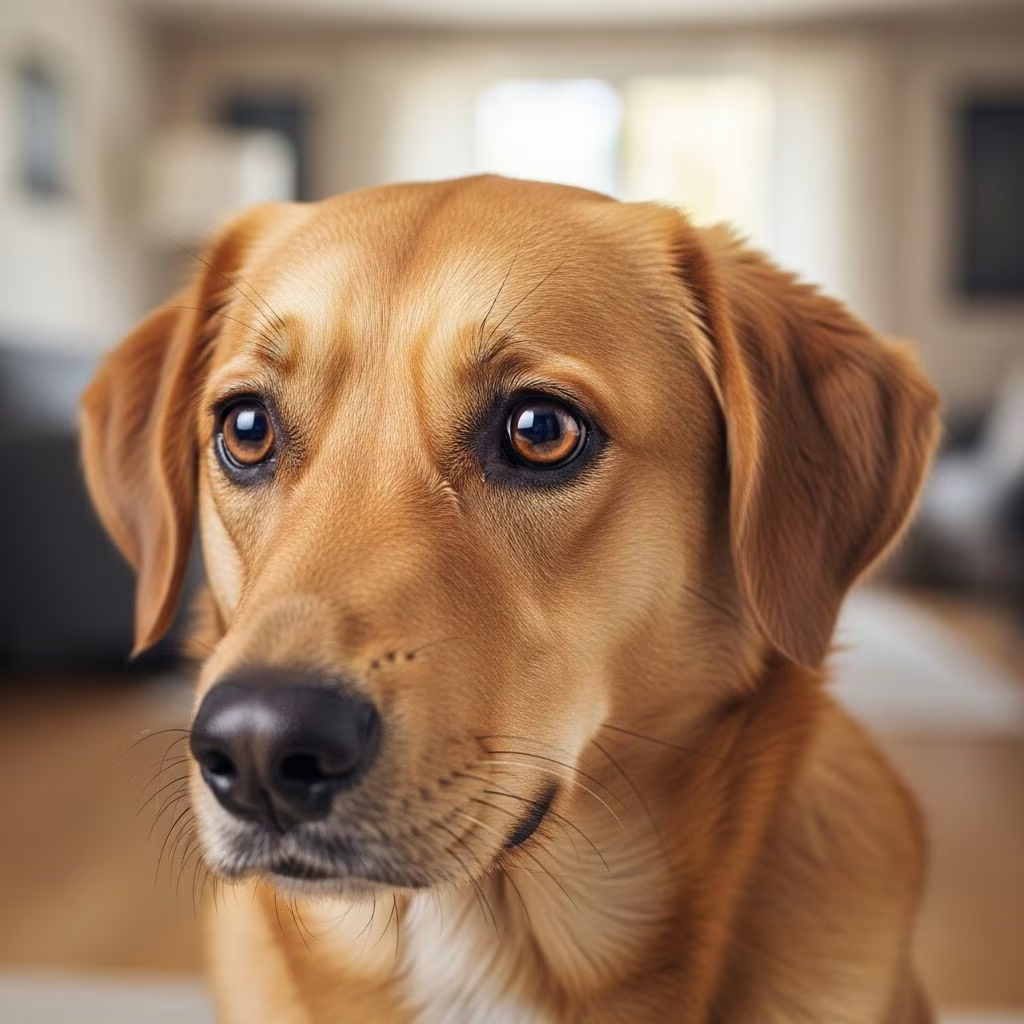
Some dogs seem to fall apart whenever someone walks through the door. They may leap, bark, whine, spin, pee, or cling desperately, as if they have waited a lifetime for this one moment. Others freeze, slink away, or hide, clearly overwhelmed by what should be a simple interaction. When greeting rituals consistently look intense, out of control, or distressed, many trainers refer to this cluster of behaviors as a greeting disorder.
Greeting disorder is not an official veterinary diagnosis, but a practical way to describe dogs whose emotional responses to arrivals and departures are exaggerated or dysfunctional. These dogs are often not just being “naughty” or “overexcited”—they are struggling with fear, anxiety, or poor impulse control that shows up most clearly when people appear or disappear from their world.
What Is a Greeting Disorder in Dogs?
A greeting disorder describes a pattern where a dog regularly reacts to people coming or going with excessive excitement, anxiety, or shutdown, instead of brief, flexible social behavior. The dog’s emotional state is so intense that normal learning and polite interaction are difficult.
Greeting disorder often includes:
- Over-the-top excitement (jumping, mouthing, barking, spinning) when people arrive
- Submissive or excitement urination during greetings, especially in puppies and young dogs
- Clingy, frantic behavior before or after an owner leaves the home
- Fearful or conflicted body language such as cowering, ears pinned back, or avoiding touch
- In some dogs, shutting down or hiding instead of approaching at all
In healthy, well-adjusted dogs, greetings are usually short, flexible social exchanges that match the context. The dog can greet, settle, and move on. In greeting disorder, the dog seems unable to shift gears.
How Greeting Disorder Differs from Normal Enthusiasm
| Normal Greeting | Greeting Disorder |
|---|---|
| Dog is briefly excited, then calms within a minute or two. | Dog remains highly aroused or distressed for several minutes or more. |
| Body language stays loose, wiggly, and relaxed. | Body language is tense, crouched, or conflicted. |
| Dog can respond to basic cues (sit, down, go to mat). | Dog appears unable to listen or think; cues are ignored or seem unknown. |
| Dog can settle and disengage from the person. | Dog continues to jump, paw, cling, or pace, unable to disengage. |
Signs Your Dog’s Greeting Behavior Is a Problem
Many dogs jump up or bark when someone comes to the door. The question is not whether the behavior is imperfect, but whether it is functionally disruptive or a sign of poor welfare.
Warning signs that your dog’s greetings go beyond normal enthusiasm include:
- Intense jumping up at visitors or family members that is hard to interrupt or redirect
- Nipping, mouthing, or scratching during greetings
- Urination during greetings together with signs of fear or extreme excitement
- High-pitched whining, howling, or frantic barking whenever someone arrives or leaves
- Clawing, pawing, or body-slamming doors and baby gates when people move between rooms
- Cowering, rolling onto the back, or trying to escape when greeted by people
- Inability to settle long after the person has arrived or departed
If greetings are consistently causing stress to your dog or the people around you, or if anyone is getting injured or frightened, it is time to treat greeting behavior as a training and welfare priority.
Why Some Dogs Struggle with Greetings
Greeting disorder is usually not about stubbornness. It reflects the intersection of temperament, early experiences, environment, and learning.
1. Genetics and Temperament
Some dogs are simply born with a higher baseline of arousal, sensitivity, or anxiety. Research suggests that genetic factors influence neurotransmitters such as serotonin and dopamine, which affect how easily a dog becomes excited, fearful, or impulsive.
- Dogs with a naturally excitable temperament may tip into chaos during greetings.
- Dogs with a timid or fearful temperament may show appeasement or fear urination when approached.
2. Incomplete or Negative Socialization
Puppies need early, controlled exposure to different people, sounds, and environments. When this is lacking or negative, social situations like greetings can feel unpredictable or threatening.
- Puppies who are overwhelmed or forced into petting or handling can grow into adolescents who bark, lunge, or avoid greetings.
- Repeatedly being restrained while anxious (for example, on a tight leash) can increase reactivity during social encounters.
3. Fear, Anxiety, and Stress
Many greeting problems are rooted in fear and anxiety, especially when dogs display low body posture, tucked tail, lip licking, or panting without heat or exercise.
- Fear urination may occur when a dog perceives the person as threatening, often accompanied by crouching, ears back, and avoidance of eye contact.
- Generalized anxiety can cause hypervigilance and difficulty settling in many situations, including greetings.
- Separation-related distress often shows up as over-the-top greetings when the owner returns, along with signs of stress when they leave.
4. Learned Patterns and Reinforcement
Greeting behavior is heavily shaped by what has “worked” for the dog in the past. If jumping, pawing, or whining reliably leads to attention, eye contact, or touching, those behaviors are reinforced and become stronger over time.
- Family members who sometimes reward jumping and sometimes punish it create inconsistent learning, which can increase arousal and frustration.
- Scolding a fearful or conflicted dog can make greetings even more stressful, increasing appeasing behaviors or fear aggression over time.
5. Pain and Medical Issues
Any medical condition that causes pain, discomfort, or urgency can change greeting behavior. The Merck Veterinary Manual notes that pain can lower a dog’s threshold for fear and aggression, and medical problems can contribute to behavior problems in general.
- Dogs with orthopedic pain may growl or snap when greeted, especially if people lean or reach over them.
- Urinary tract infections or bladder issues can worsen urination during greetings.
- Chronic discomfort can make dogs irritable and less tolerant of social contact.
Because of this, persistent or intense greeting problems warrant a veterinary exam to rule out underlying medical causes.
Types of Problematic Greeting Behaviors
Greeting disorder is a broad description. Within it, several distinct behavior patterns often appear.
Overexcited “Hyper-Greeter” Dogs
Hyper-greeters are social and often friendly, but their behavior is overwhelming and difficult to manage. They may:
- Launch themselves at people as soon as they come in
- Scramble, wiggle, and claw to get closer to faces
- Ignore cues they otherwise know well
- Whine, bark, or spin in circles for several minutes
These dogs usually do not mean harm, but the behavior can frighten visitors, knock over children, or injure older adults.
Submissive or Fear Urination During Greetings
Some dogs, especially puppies and young adults, urinate when greeted by people or other dogs. The San Francisco SPCA distinguishes between fear/conflict urination and excitement urination:
- Fear or conflict urination often appears with:
- Approaching with crouched body and low posture
- Ears flattened, head lowered, avoiding eye contact
- Rolling onto side or back, exposing belly
- Excitement urination usually occurs in highly animated, friendly dogs who simply can’t hold their bladder during arousal.
In most young dogs, this problem improves with age and thoughtful handling, but medical causes should be excluded if it persists.
Anxious, Clingy, or Desperate Greetings
Dogs with separation-related problems often greet their caregivers with extreme intensity, as if they are trying to close an emotional gap that feels intolerable. According to the ASPCA, dogs with separation anxiety frequently show signs like pacing, salivating, and exuberant greeting, in addition to destructive behavior or house soiling when left alone.
These dogs may:
- Follow their person from room to room
- Panic when doors close between them
- Claw, bark, or howl when the person prepares to leave
- Explode into intense, prolonged greetings when the person returns
Shutdown or Avoidant Greetings
Not all greeting disorders are loud. Some dogs freeze or retreat:
- Cowering or hiding when people enter
- Refusing to approach familiar visitors
- Tensing, lip licking, or yawning when people lean in
- Approaching cautiously, then darting away if someone reaches out
These dogs are often anxious, under-socialized, or have a history of rough handling or punishment.
How to Help a Dog with Greeting Disorder
Helping a dog with greeting issues means addressing both emotion and behavior: reducing fear or overarousal while teaching clear, reinforced alternatives.
Step 1: Rule Out Medical Problems
Start with a veterinary visit if you notice sudden changes, severe urination issues, or signs of pain. A vet can investigate for urinary tract infections, orthopedic pain, neurological issues, or other conditions that may contribute to greeting problems.
Step 2: Manage the Environment
Management prevents your dog from practicing unwanted behaviors while you work on training:
- Use baby gates, pens, or leashes so the dog cannot launch at people or crowd the doorway.
- Ask visitors to ignore the dog at first: no talking, no touching, no eye contact, until the dog is calmer.
- Provide a safe station (bed, mat, or crate) at a comfortable distance from the door.
- For fearful dogs, create a retreat space where they are not required to engage with visitors at all.
Step 3: Teach an Alternative Greeting Routine
Replace chaos with a structured pattern that you and your dog can repeat consistently. For example:
- Door sound occurs (knock, bell, or key in lock).
- Handler calmly guides dog to a mat or designated spot.
- Dog earns rewards for sitting or lying down on the mat while the door opens.
- Visitor enters slowly. Dog continues to earn treats for staying on the mat.
- When the dog is calm, they may be invited to say hello, or they continue to relax on the mat.
Short, frequent practice sessions with low-intensity setups (familiar people, slow entrances) help the dog associate door events with predictable, reinforced calm behavior rather than panic or frenzy.
Step 4: Support Emotional Change
Training alone is not enough if a dog’s primary problem is anxiety or fear. Emotional support may include:
- Predictable routines for feeding, walks, and play to reduce overall stress.
- Desensitization and counterconditioning to door sounds, departures, and arrivals, pairing them with calm, low-value reinforcement rather than chaos.
- For separation-related cases, structured programs to gradually increase tolerance for being alone, starting with very short absences.
- In some cases, behavioral medication prescribed by a veterinarian or veterinary behaviorist can lower anxiety enough for training to be effective.
Step 5: Work with Qualified Professionals
Dogs with intense fear, aggression, or separation-related distress benefit from personalized help. Look for:
- Veterinary behaviorists (board-certified) when medical and behavioral factors are intertwined.
- Certified professional trainers or behavior consultants who use evidence-based, humane methods.
- Professionals familiar with low-stress handling and positive reinforcement, especially for fearful or shutdown dogs.
Living with a Dog Who Has Greeting Disorder
Progress with greeting disorder is often gradual. Many dogs can learn far better skills, but some may always need extra management during high-intensity moments like parties or long absences. What matters most is improving welfare and safety for everyone involved.
Helpful long-term strategies include:
- Keeping expectations realistic and celebrating small improvements.
- Explaining the greeting plan to guests before they enter.
- Always giving your dog a clear job to do when people come or go (go to mat, chew a toy, search for scattered treats).
- Continuing to monitor for changes that might suggest new anxiety or medical issues.
Frequently Asked Questions (FAQs)
Q: Is greeting disorder an official diagnosis?
A: No. Greeting disorder is an informal term used by trainers and behavior professionals to describe dogs whose greeting behaviors are consistently extreme or dysfunctional. Underlying issues may include fear, generalized anxiety, or separation-related problems, which can be formally diagnosed by a veterinarian or veterinary behaviorist.
Q: Will my dog just grow out of overexcited greetings?
A: Some puppies naturally settle as they mature, but many do not unless humans change the environment and reinforcement patterns. Without training and management, jumping, pawing, or anxious behaviors can become stronger habits over time because they are repeatedly rewarded with attention.
Q: What should I do if my dog pees when greeting people?
A: First, schedule a veterinary exam to rule out urinary tract infections or bladder issues. Then, ask people to greet your dog calmly or ignore them at first, avoid leaning over or scolding, and keep interactions low-key. For many young dogs, fear or excitement urination improves with gentle handling, predictable routines, and time.
Q: Can greeting disorder be related to separation anxiety?
A: Yes. Dogs with separation-related distress often react intensely to departures and arrivals, showing pacing, vocalizing, or destruction when alone and exuberant greeting when their person returns. Addressing the anxiety around being alone usually improves greeting behavior as well.
Q: When should I seek professional help?
A: Get professional support if your dog’s greetings involve aggression, severe fear, persistent urination, self-injury, property damage, or distress that lasts more than a few minutes. A veterinarian, veterinary behaviorist, or qualified behavior professional can assess medical and behavioral factors and design a tailored treatment plan.
References
- Excitement and Fear Urination During Greeting — San Francisco SPCA. 2018-06-01. https://www.sfspca.org/resource/excitement-and-fear-urination-during-greeting/
- Behavior Problems of Dogs — Merck Veterinary Manual. 2023-02-15. https://www.merckvetmanual.com/behavior/behavior-of-dogs/behavior-problems-of-dogs
- Dog Behavior Problems – Greeting Behavior – Jumping Up — VCA Animal Hospitals. 2022-09-20. https://vcahospitals.com/know-your-pet/dog-behavior-problems-greeting-behavior-jumping-up
- Causes of Canine Reactivity — Canine Behavior Counseling. 2021-11-05. https://caninebehaviorcounseling.com/causes-of-canine-reactivity/
- Dog Anxiety: Signs, Causes, and Treatment — PetMD. 2023-04-10. https://www.petmd.com/dog/conditions/behavioral/dog-anxiety
- Separation Anxiety in Dogs — ASPCA. 2021-08-30. https://www.aspca.org/pet-care/dog-care/common-dog-behavior-issues/separation-anxiety
- Greeting Behavior and Separation Anxiety–Any Effects? — Patricia McConnell, PhD. 2019-07-22. https://www.patriciamcconnell.com/theotherendoftheleash/greeting-behavior-and-separation-anxiety-any-effects/



