

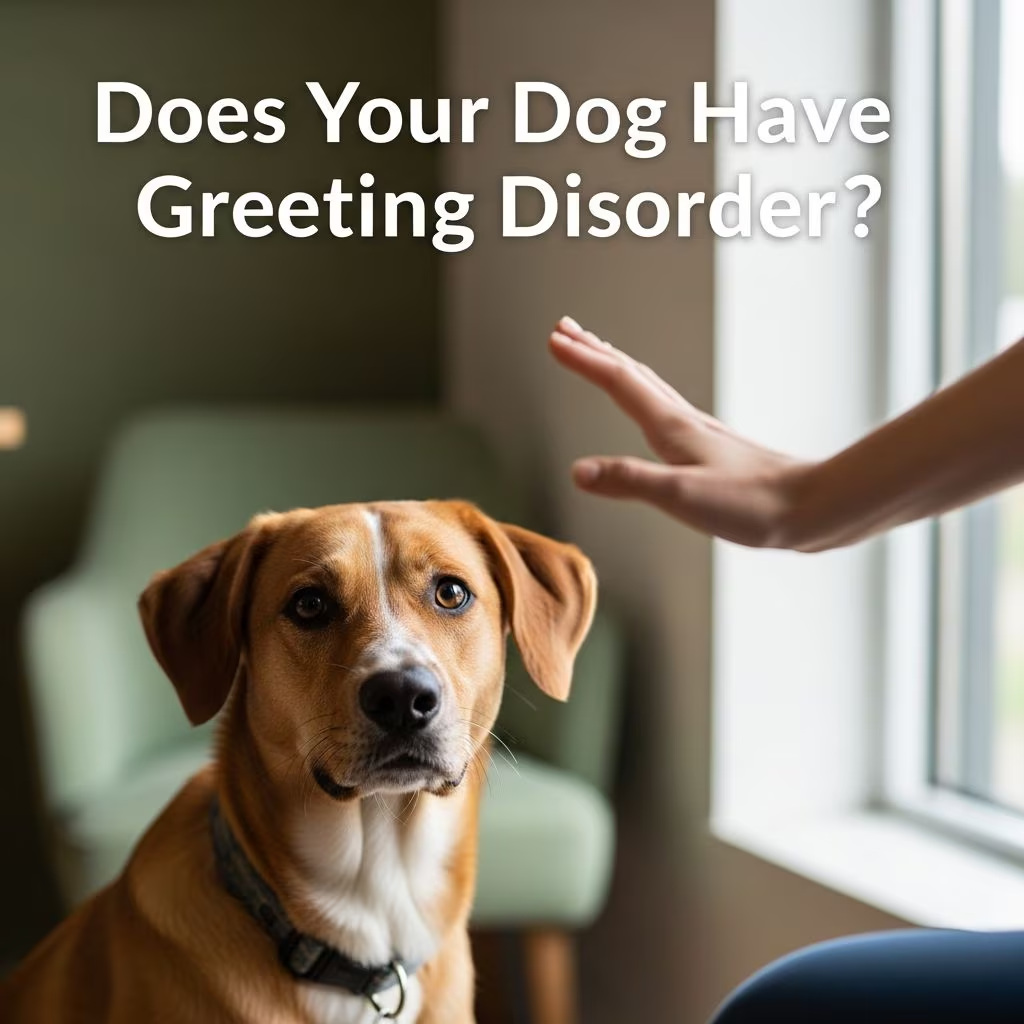
Your dog lights up the moment guests arrive, but instead of a polite wag, you get chaos: paws on laps, leaks on the floor, frantic jumping, or even growling lunges. This isn’t just ‘excitement’—it could be **greeting disorder**, a common behavioral issue where dogs struggle to handle social interactions calmly. Affecting puppies to adults, it stems from high arousal, fear, anxiety, or poor socialization, leading to unwanted behaviors like jumping up, excitement urination, shaking, or reactivity.
Recognizing greeting disorder helps you intervene early, preventing escalation to aggression or separation anxiety. This guide breaks down the signs, root causes, and step-by-step management strategies, drawing from veterinary behaviorists and animal welfare experts.
What Is Greeting Disorder in Dogs?
**Greeting disorder** describes excessive, uncontrolled behaviors during social encounters with people or other dogs. Unlike balanced greetings (tail wag, brief sniff), disordered ones involve over-arousal: dogs become overwhelmed, displaying jumping, vocalizing, urination, trembling, or defensive reactions.
It often masquerades as ‘joy,’ but high arousal floods the body with stress hormones like adrenaline and cortisol, impairing rational responses and encoding negative memories. On-leash greetings amplify this, restricting natural movement and mixing excitement with frustration. Puppies and young dogs are prone, but without correction, it persists into adulthood.
Key distinction: Excitement urination happens during animated play or standing greetings (no fear signals), while fear-based ‘submissive’ urination pairs with appeasement like crouching or tail-tucking. Both signal bladder control loss from emotional overload.
Signs Your Dog Has Greeting Disorder
Dogs communicate via body language. Watch for these escalating signs during greetings:
- Mild arousal: Lip licking, yawning, head turning, fidgeting, panting, refusing treats.
- Moderate: Ears back, furrowed brow, whining, pacing, drooling.
- Severe: Tail tucking, trembling, wide eyes (whites showing), slinking away, growling, lunging, biting, potty accidents.
Common manifestations include:
- Jumping up: Natural for short dogs seeking face-level contact, but turns problematic if anxious or overstimulated.
- Urination: Excitement type during high energy; fear type with crouched posture, ear flattening, belly exposure.
- Shaking/trembling: Indicates stress, pain, or anxiety; paired with panting, hiding, or snapping.
- Reactivity: Barking, lunging at dogs/people due to leash frustration or boundary violations.
Rule out medical issues like UTIs or pain first—consult a vet if persistent.
Causes of Greeting Disorder
Greeting issues rarely stem from one factor; genetics, experiences, and environment interplay.
1. High Arousal and Emotional Overload
Dogs enter ‘fight-or-flight’ from adrenaline surges, prioritizing impulse over control. The amygdala dominates, sidelining the prefrontal cortex. On-leash greetings spike frustration, mimicking threats.
2. Improper Socialization and Learned Behaviors
Puppies need gradual exposure respecting boundaries. Forced interactions (e.g., petting shy pups) teach that signals like ear-back or peeing are ignored, leading to escalation: barking, snapping. Learned helplessness from inescapable stress causes shutdown or aggression.
3. Genetics and Sensory Sensitivity
Breeds vary in noise/movement sensitivity; neurotransmitter imbalances (low serotonin/GABA) heighten anxiety. Herding or terriers often show hyper-vigilance.
4. Anxiety and Fear
Negative past events condition fear of strangers, leashes, or dogs. Symptoms overlap: loss of interest, destructiveness, whining. Links to separation anxiety exist, though not always causal.
5. Pain or Medical Factors
Hidden pain mimics stress: tensing, vocalizing, reluctance to move. Always vet-check.
| Excitement vs. Fear Greeting | Excitement Urination/Jumping | Fear/Anxiety Greeting |
|---|---|---|
| Body Language | High energy, standing/walking, no fear signals | Crouched, ears flat, tail tuck, belly exposure |
| Triggers | Play, guests, over-stimulation | Approaching/reaching, loud voices, punishment history |
| Outcome | Involuntary leak during bounce | Appeasement leak + avoidance |
How to Manage and Train for Calm Greetings
Consistency and prevention work best. Avoid reinforcing chaos.
Step-by-Step Training Plan
- Prevent Practice: No greetings until calm. Gate or leash at door.
- Teach ‘Sit for Greeting’: Reward sits with treats/attention. Practice with family first.
- Desensitize Arousal: Enter/exit calmly—no big hellos/goodbyes to curb SA links.
- Leash Management: Parallel walks, no head-on meets. Reward calm.
- Counter-Condition Urination: Ignore mildly excited leaks; clean without fuss. For fear, build confidence via positive associations.
- Exercise/Mental Stimulation: Tire dogs pre-greeting to lower baseline arousal.
For hyper-greeters (jumping extremes), use ‘leash pressure melting’: Dog pulls, handler stops neutrally until slack. Progress to off-leash with thresholds.
Management Tools
- Front-clip harnesses reduce pulling.
- Calming aids (pheromones, vetted supplements).
- Professional help for reactivity/anxiety.
When to Seek Professional Help
If behaviors intensify (biting, persistent accidents), involve a vet behaviorist. Rule out pain/anxiety disorders. Early intervention prevents lifelong issues.
Frequently Asked Questions (FAQs)
Why does my dog pee when excited during greetings?
Young dogs lose bladder control from adrenaline surges during high-energy hellos. It resolves with age and training if unmanaged.
Is jumping up always bad?
No, but it scares guests and reinforces arousal. Train alternatives like sit.
Can greeting issues lead to aggression?
Yes—frustrated arousal + poor control risks bites, especially on-leash.
How long until training works?
Weeks to months with consistency. Pups improve fastest.
Does neutering help?
May reduce marking but not arousal-based greeting disorder.
References
- Excitement and Fear Urination During Greeting — San Francisco SPCA. 2023. https://www.sfspca.org/resource/excitement-and-fear-urination-during-greeting/
- Dog Anxiety: Signs, Causes, and Treatment — PetMD. 2024-05-15. https://www.petmd.com/dog/conditions/behavioral/dog-anxiety
- Causes of Canine Reactivity — Canine Behavior Counseling. 2023. https://caninebehaviorcounseling.com/causes-of-canine-reactivity/
- Excitement or Stress: Decoding Your Dog’s Arousal Levels — Instinct Dog Training. 2024. https://www.instinctdogtraining.com/excitement-or-stress-decoding-your-dogs-arousal-levels/
- Dog Behavior Problems – Greeting Behavior – Jumping Up — VCA Animal Hospitals. 2023. https://vcahospitals.com/know-your-pet/dog-behavior-problems-greeting-behavior-jumping-up
- Greeting Behavior and Separation Anxiety–Any Effects? — Patricia McConnell. 2022-10-10. https://www.patriciamcconnell.com/theotherendoftheleash/greeting-behavior-and-separation-anxiety-any-effects/
- Why is My Dog Shaking? 6 Reasons for Trembling or Shivering — Peak Veterinary. 2024. https://www.peakveterinary.com/blog/why-is-my-dog-shaking



