

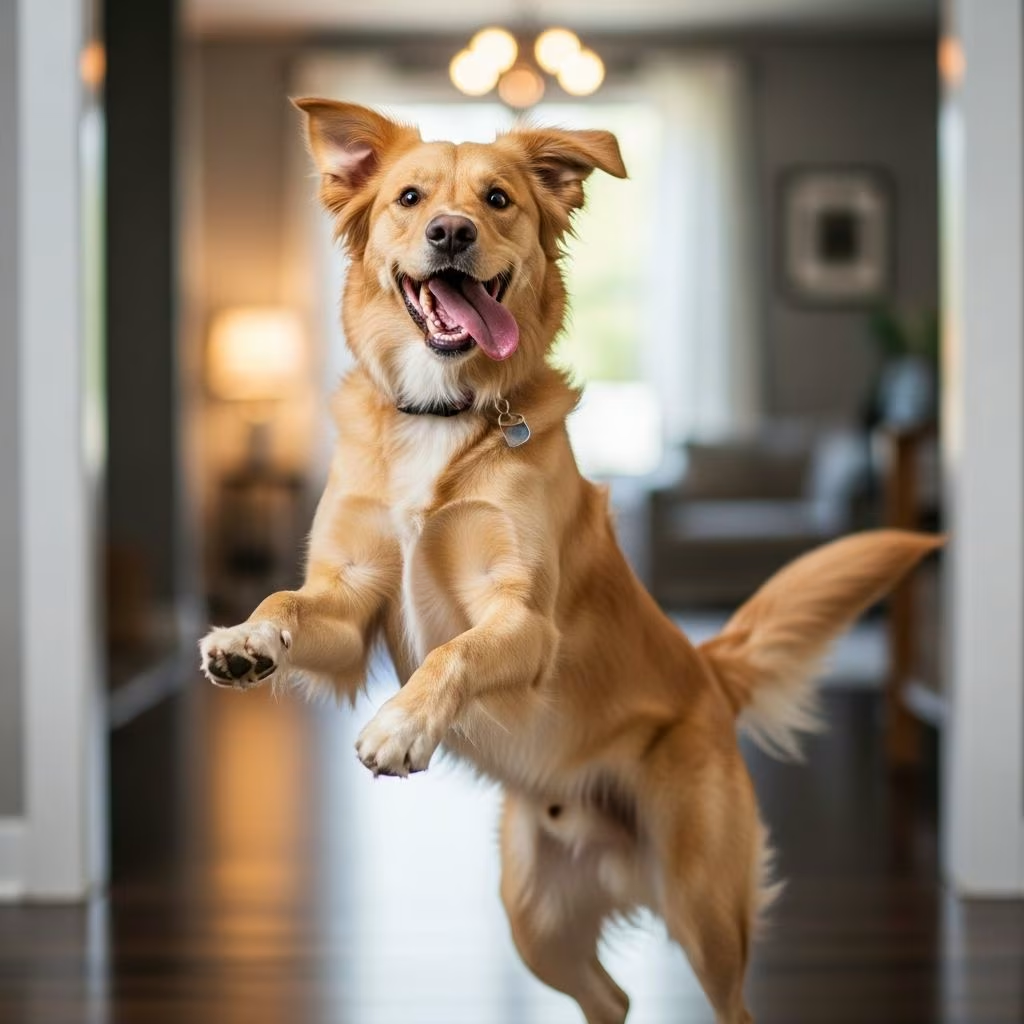
Your dog lights up the moment guests arrive, but instead of a polite tail wag, you get a whirlwind of jumping, barking, and maybe even a puddle on the floor. This isn’t just “enthusiasm”—it could be greeting disorder, a common behavioral issue where dogs lose control during social interactions. Greeting disorder encompasses over-excited behaviors like leaping on people, excessive vocalization, spinning, or involuntary urination triggered by greetings from humans or other dogs. While endearing at first, it can lead to scratched guests, damaged relationships, and frustration for owners.
Understanding this stems from a dog’s natural social wiring. Dogs are pack animals evolved to communicate through body language and proximity, but modern life—leashes, doorways, and unpredictable visitors—disrupts this. Puppies and young adults are especially prone, as their impulse control lags behind their energy. Left unchecked, it risks escalating to anxiety-driven reactivity or aggression. This guide breaks down the signs, causes, and science-backed solutions to foster calmer, confident greetings.
What Is Greeting Disorder in Dogs?
Greeting disorder refers to dysregulated arousal states during social encounters, where dogs exhibit extreme excitement, fear, or conflict rather than balanced interactions. Unlike casual tail wags, affected dogs can’t self-regulate: they jump relentlessly, bark hysterically, or leak urine from sheer overload.
It’s not a formal veterinary diagnosis but a descriptor for patterns seen in behavior clinics. Core features include:
- Hyperarousal: Frenzied jumping, mouthing, or circling to reach greeters.
- Vocal overload: Non-stop barking or whining that drowns out commands.
- Loss of bladder control: Excitement or submissive urination, often in puppies.
- Leash reactivity: Lunging or pulling when spotting people/dogs from afar.
These behaviors spike at transitions—like door openings—because dogs associate arrivals with rewards (attention, play). Over time, this creates a feedback loop: more excitement yields more attention, reinforcing the chaos.
Signs Your Dog Has Greeting Disorder
Spotting greeting disorder early prevents escalation. Watch for these clustered signs during greetings:
| Mild Signs | Moderate Signs | Severe Signs |
|---|---|---|
| Lip licking Yawning Head turning | Ears pinned back Panting Fidgeting/refusing treats | Shaking/drooling Potty accidents Growling/lunging |
| Avoiding eye contact | Whining/barking | Destructive outbursts post-greeting |
Excitement urination differs from fear-based: excited dogs stand/walk while leaking amid play, lacking fear postures like crouching or tail tucking. Fear greetings show appeasement: flattened ears, belly exposure, high-pitched whines. Both signal poor emotional regulation.
Context matters—on-leash greetings amplify issues due to restricted movement, blending frustration with arousal. If your dog paces before doors open or regresses in training during visits, it’s likely disorder-related.
Causes of Greeting Disorder
Greeting issues rarely stem from one factor; it’s a mix of biology, history, and environment.
Genetic and Developmental Factors
Some breeds (e.g., herding or terriers) are wired for high arousal due to sensory sensitivity or impulsivity. Puppies under 2 years often outgrow it as bladder control and prefrontal cortex (impulse center) mature. Prenatal stress or poor neonatal care heightens risk.
Improper Socialization and Learned Behaviors
Without gradual exposure to strangers, dogs form negative associations. Forcing shy pups into petting teaches boundaries are ignored, leading to defensive snaps later. High-arousal home greetings (e.g., owners matching excitement) condition dogs to amp up for attention. Leash restraint fosters “learned helplessness,” turning greetings threatening.
Anxiety and Stress Overload
Underlying separation anxiety correlates with intense reunions: dilated pupils, trembling, exuberant jumping. Stress hormones (cortisol, adrenaline) hijack the amygdala, prioritizing fight/flight over calm assessment. Medical pain or UTIs mimic/exacerbate via irritability.
Environmental Triggers
Doorway bottlenecks, unpredictable visitors, or on-leash walks prime reactivity. Dogs encode negative high-arousal events deeply, perpetuating cycles.
Is It Excitement, Fear, or Something Else?
Differentiate to treat right:
- Pure Excitement: Bouncy, playful, standing urination. Body loose, tail high.
- Fear/Conflict: Crouched, ears back, sitting/cowering leaks. Appeasement signals dominant.
- Anxiety-Driven: Pacing, drooling, post-greeting shutdown.
- Medical: Rule out UTIs, pain—vet check mandatory if persistent.
Hyper-greeters crave contact but sense disapproval, creating conflict. Aggression risk rises in overwhelmed states.
How to Manage and Train Greeting Disorder
Calm greetings require management + training. Patience yields results in weeks.
Immediate Management Strategies
- Prevent Rehearsal: Crate or separate dog pre-greeting. No door access till calm.
- Leash Control: Long-line training: reward sitting at distance.
- Visitor Protocol: Instruct guests to ignore until settled—no talking, petting.
- Exercise First: Tire dog pre-visits to lower baseline arousal.
Training Techniques
Use counter-conditioning: pair greetings with calm rewards.
- Threshold Training: Start far from trigger; reward eye contact/sit. Gradually close gap.
- “Place” Command: Dog stays on mat during arrivals. Reward heavily.
- Desensitization: Simulate doorbells/knock; practice sits amid noise.
- Impulse Games: “Wait” at doors, “leave it” for toys—builds self-control.
For urination: Frequent potty breaks, praise calm bladder holds.
Professional Help
If severe (biting, destruction), consult vet behaviorist. Meds like SSRIs aid compulsive cases.
Preventing Greeting Disorder in Puppies
Proactive socialization: controlled exposures from 8-16 weeks. Teach “four on the floor” early—turn away from jumps. Model calm owner greetings.
FAQs
Will my puppy outgrow greeting disorder?
Many do by 2 years with guidance, as maturity improves control. Inconsistent management prolongs it.
Why does my dog pee when excited?
Overstimulation overrides bladder sphincters. No punishment—train calm alternatives.
Is greeting disorder linked to separation anxiety?
Yes, exuberant reunions signal distress. High-arousal transitions correlate.
Can medication fix it?
For anxiety roots, yes—combined with behavior mod. Vet assesses first.
How long until training works?
2-6 weeks with consistency. Track progress via video.
Final Thoughts
Greeting disorder is manageable with science: decode signals, prevent practice, reward calm. Your dog wants connection—guide them to polite ways. Persistent issues? Vet rules out health; trainer refines skills. Transformed greetings await.
References
- Excitement and Fear Urination During Greeting — San Francisco SPCA. Accessed 2026. https://www.sfspca.org/resource/excitement-and-fear-urination-during-greeting/
- Dog Anxiety: Signs, Causes, and Treatment — PetMD. Accessed 2026. https://www.petmd.com/dog/conditions/behavioral/dog-anxiety
- Causes of Canine Reactivity — Canine Behavior Counseling. Accessed 2026. https://caninebehaviorcounseling.com/causes-of-canine-reactivity/
- Excitement or Stress: Decoding Your Dog’s Arousal Levels — Instinct Dog Training. Accessed 2026. https://www.instinctdogtraining.com/excitement-or-stress-decoding-your-dogs-arousal-levels/
- Behavior Problems of Dogs — Merck Veterinary Manual. Accessed 2026. https://www.merckvetmanual.com/behavior/behavior-of-dogs/behavior-problems-of-dogs
- Dog Behavior Problems – Greeting Behavior – Jumping Up — VCA Animal Hospitals. Accessed 2026. https://vcahospitals.com/know-your-pet/dog-behavior-problems-greeting-behavior-jumping-up



