

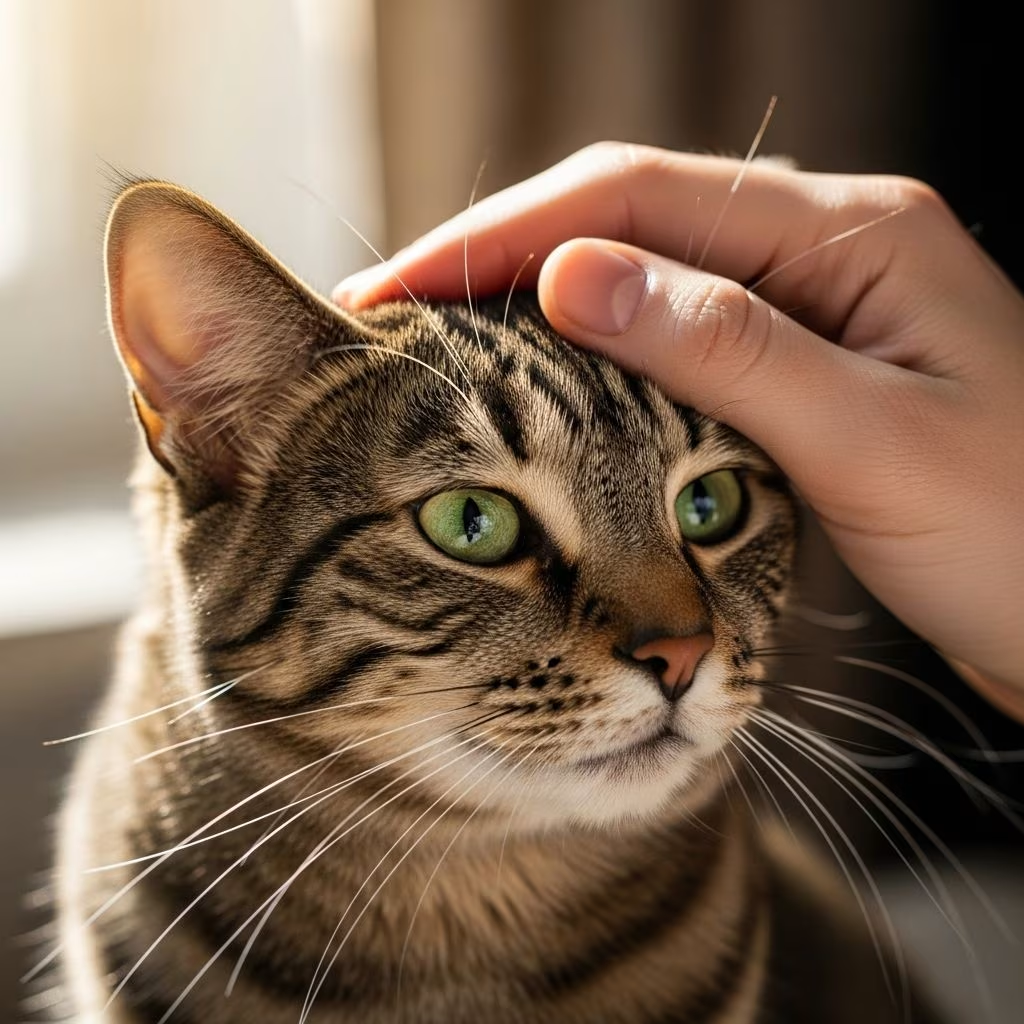
Cats develop profound emotional connections with their human companions through a process akin to imprinting, where they recognize you as a core part of their social world, offering safety and comfort.
The Science of Feline Attachment
Unlike birds that rigidly imprint on the first moving object they see, cats form flexible bonds shaped by early experiences and ongoing interactions. During kittenhood, a critical socialization window opens, typically in the first few weeks, allowing felines to learn trust and social cues from their mother, littermates, and humans. Positive exposures during this phase foster confident, affectionate adults, while disruptions can lead to wariness.
Research highlights how these early bonds influence lifelong behavior. Well-socialized kittens require multiple negative encounters to distrust humans, but rebound quickly with positive reinforcement from a new owner. This adaptability underscores cats’ capacity for nuanced attachments rather than a singular, irreversible imprint.
Household studies reveal patterned interactions between cats and owners, where behaviors like approaching, rubbing, and vocalizing create synchronized ‘t-patterns’ of communication. Personality traits, gender, and age further modulate these dynamics, with some cats initiating contact more readily.
Key Indicators of a Deep Bond
Observing your cat’s actions provides clear evidence of attachment. These behaviors signal that you are their chosen safe haven.
- Constant Companionship: Your cat shadows your every move, from room to room, not out of curiosity but a need for proximity, reflecting deep trust.
- Grooming Rituals: Licking your hair or skin mirrors how they care for family, integrating you into their colony.
- Slow Blinking: This deliberate eye closure conveys relaxation and affection, a feline ‘I love you’ backed by expert observations.
- Tail-Up Greeting: An upright tail with a slight hook signals joy and familiarity upon your return.
These signs emerge from instinctual survival mechanisms, where imprinting ensures access to reliable care and protection.
Interpreting Sleep and Resting Habits
When a cat curls up on your lap, chest, or beside you during sleep, it exposes its most vulnerable state, indicating absolute security in your presence. Experts note this as a hallmark of imprinting, as felines are wired to seek elevated, guarded spots instinctively—but choosing you overrides that for emotional closeness.
Not all close sleeping denotes imprinting; warmth or convenience plays a role. However, consistent preference for your side, especially during deep sleep phases with purring or kneading, points to emotional reliance.
How Early Experiences Shape Lifelong Ties
The foundational period for bonding spans 2-7 weeks, when kittens’ brains are primed for social imprinting. Interaction with gentle humans during this time imprints positive human associations, leading to bolder, more interactive adults. Separation from the mother before 8 weeks risks underdeveloped social skills, manifesting as shyness or aggression later.
| Age Window | Key Developments | Impact on Bonding |
|---|---|---|
| 0-2 weeks | Sensory awakening, mother reliance | Baseline trust formation |
| 2-7 weeks | Social play, human exposure | Critical imprinting phase |
| 8+ weeks | Independence growth | Bonds solidify or adapt |
Beyond kittenhood, cats remain capable of forming attachments at any age through consistent positive reinforcement like play and feeding.
Mutual Emotional Synchronization
Cats astutely read human cues, adjusting behaviors to our moods. Studies show they vocalize more and rub affectionately when owners exhibit depressive signals, effectively alleviating anxiety and boosting mood—effects comparable to human partnerships, particularly for women.
This reciprocity extends to emotion recognition: cats distinguish joy from anger via facial expressions and voices, especially from familiar owners, forming mental models of our emotional states.
Can Cats Bond with Multiple People?
Yes, felines often form attachments to several household members, with bond strength varying by interaction quality. Your cat might prefer you for lap time but seek another for play. Gifts like dead prey or toys targeted at specific people highlight personalized affections.
Strengthening Your Feline Connection
To encourage imprinting-like bonds:
- Engage daily in interactive play using wand toys to mimic hunting.
- Respect boundaries—let them approach first.
- Provide consistent routines for meals and affection.
- Use pheromone diffusers for stress reduction during bonding sessions.
- Groom them gently to build trust.
Patience is key; independent cats may take months to show overt signs, but subtle cues like head-butts reveal growing attachment.
Addressing Behavioral Challenges
Imprinted cats might display stranger anxiety or territorial marking as protective instincts. Positive reinforcement training mitigates these, while early socialization prevents extremes. If aggression arises, consult a vet to rule out pain or health issues.
FAQs on Cat Imprinting
What if my cat doesn’t show these signs?
Many cats are aloof by nature; attachment shows in quieter ways like quiet observation. Build trust gradually without forcing interaction.
Does neutering affect bonding?
No, it typically enhances focus on human companionship by curbing mating urges.
Can rescue cats imprint?
Absolutely—with time and consistency, they often form even stronger bonds due to gratitude for security.
How long does imprinting take?
Weeks to months, depending on the cat’s history and your interactions.
Is purring always a bond sign?
Mostly yes for contentment, but can also signal pain—context matters.
Recognizing these bonds transforms cat ownership, revealing the depth beneath their enigmatic exteriors. Your cat’s subtle devotion enriches both lives profoundly.
References
- Do Cats Imprint? Exploring the Science Behind Feline Attachment — UAH Pet. 2023. https://www.uahpet.com/blogs/hydration-health/do-cats-imprint-exploring-the-science-behind-feline-attachment
- 11 Signs Your Cat Has Bonded With You, According to Experts — Parade Pets. 2023. https://paradepets.com/cats/signs-your-cat-has-imprinted-on-you
- The Mechanics of Social Interactions Between Cats and Their Owners — PMC (Peer-reviewed). 2021-04-15. https://pmc.ncbi.nlm.nih.gov/articles/PMC8044293/



