

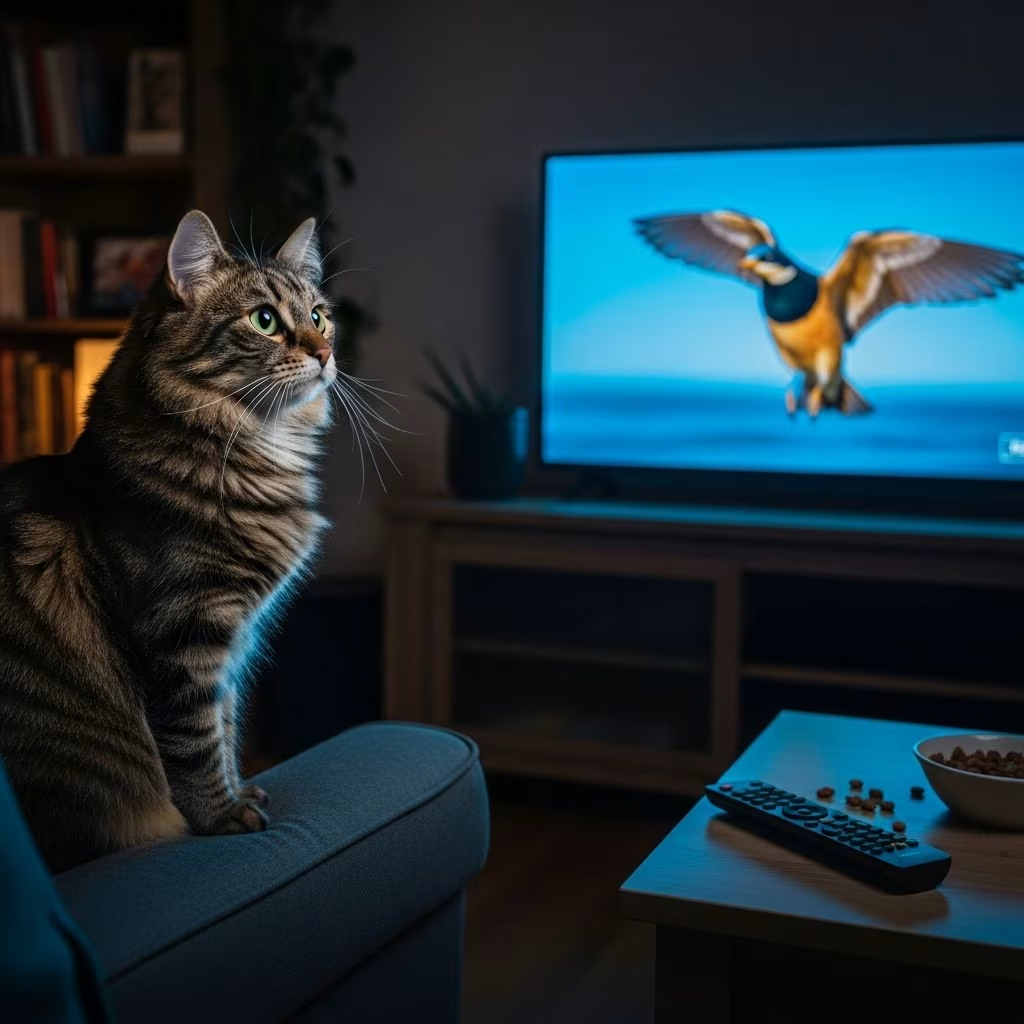
Cats often perch near screens, eyes fixed on flickering images, suggesting television might offer more than background noise for felines. While not all cats show interest, many respond to specific visuals and sounds, indicating TV can serve as a form of enrichment, particularly for indoor dwellers lacking outdoor stimulation.
Feline Vision and Screen Perception
Cats possess unique visual capabilities that influence how they perceive television. Their eyes feature a higher flicker fusion rate compared to humans, meaning standard video refresh rates—typically 60Hz—may appear as a series of still images or rapid flickers to them rather than smooth motion. This explains why some cats ignore screens while others fixate on quick movements.
Despite this, cats detect motion effectively due to specialized cone cells that help discern colors and speed. Bright primary colors like red, green, and blue, combined with fast-paced action, capture their attention more readily. Indoor cats, evolutionarily wired for hunting, may interpret on-screen prey-like figures as potential targets, triggering instinctive tracking behaviors.
The Role of Sound in Captivating Cats
Auditory cues play a pivotal role in drawing cats to television. Felines hear frequencies up to three times farther than humans and pinpoint sounds with remarkable precision—locating sources within inches from three feet away in fractions of a second. Chirps, rustles, or flapping wings from nature documentaries elicit perked ears and alert postures.
Studies on shelter cats without window access showed television acting as an auditory and visual substitute, with birds, rodents, and fish eliciting the strongest responses. This superior hearing range makes TV a multisensory experience, blending sight and sound to mimic environmental stimuli.
Observing Your Cat’s Reactions to TV
Not every cat engages with screens identically; individual temperament and past experiences dictate responses. Common signs of interest include:
- Staring intently with head tracking moving objects, especially prey simulations like birds or mice.
- Chirping or meowing in excitement, akin to window-watching behaviors.
- Pawing or scratching at the screen, driven by hunting urges.
- Relaxed observation without aggression, indicating passive entertainment.
Some cats habituate quickly, watching more in initial exposure hours than later ones. Others mimic human viewing habits, lounging during sports or action genres but ignoring quieter content. Monitor for stress indicators like dilated pupils, tail lashing, or obsessive pawing, which suggest overstimulation.
Optimal Content for Feline Viewers
Selecting appropriate programming maximizes engagement while minimizing frustration. Cats prefer dynamic, prey-focused videos over static or complex narratives.
| Content Type | Why Cats Like It | Examples |
|---|---|---|
| Prey Animals | Triggers hunting instincts via motion and familiar sounds | Birds flitting, rodents scurrying, fish swimming |
| Fast-Moving Objects | Matches flicker sensitivity for detectable action | Snooker balls, animated chases |
| Nature Documentaries | Realistic audio of wildlife | Wildlife shows with chirps and rustles |
| Avoid: Other Cats | May cause territorial stress | Cat fight videos or multi-cat scenes |
YouTube offers cat-specific channels with optimized high-frame-rate videos (over 100Hz) to counter flicker issues, featuring laser pointers, insects, or squirrels. Children’s shows with vibrant colors and rapid cuts also appeal unexpectedly.
Benefits of TV as Enrichment Tool
For exclusively indoor cats, screens provide a ‘false window’ to the outside world, reducing boredom and supporting mental health. Research indicates such visual stimuli substitute for inaccessible views, with prey videos proving most captivating.
Hartz notes that less-stimulated environments—lacking toys or perches—prompt cats toward screens for recourse. This passive activity indulges hunting drives without physical exertion, potentially lowering stress hormones. However, it complements, not replaces, interactive play or environmental complexity.
Potential Drawbacks and Precautions
Overreliance on TV risks obsession or frustration if cats paw screens excessively or search for ‘prey’ post-viewing. High volumes might startle sensitive felines, and prolonged exposure could habituate them to sedentary habits.
- Limit sessions to 1-2 hours daily to prevent dependency.
- Position screens safely to avoid scratches or jumps.
- Combine with toys, scratching posts, and human interaction for balanced enrichment.
- Observe for fear responses like hiding or aggression toward on-screen cats.
Veterinarians emphasize monitoring for behavioral shifts; if TV induces anxiety, discontinue immediately.
Enhancing TV Time with Technology
Modern solutions cater to cats’ sensitivities. High-refresh-rate monitors (120Hz+) render smoother motion, while apps deliver looped prey videos. Tablet mounting at cat-eye level simulates ground-level hunts.
Some cats respond to computer screens during gaming, tracking first-person shooters with intent focus. Integrate TV into rotation: 20-minute sessions amid play, feeding, and rest to mimic natural rhythms.
Individual Differences in TV Preferences
Personality shapes viewing habits. High-hunt-drive cats chase screen action vigorously, while laid-back ones observe calmly. Outdoor-experienced felines may prefer neighborhood wildlife mirrors, indoor-raised ones broader genres like sports.
Anecdotes reveal strategic viewing: cats securing prime spots near humans or enjoying petting during stationary sessions. Age factors in—kittens engage more playfully, seniors seek soothing sounds.
Scientific Insights into Feline Screen Interaction
Studies confirm cats allocate about 6% of time to screens, peaking with animal or dynamic content. Shelter research underscores TV’s role in window-less settings. Yet, cats lack human-like comprehension, reacting instinctively rather than narratively.
North Carolina State University’s veterinary insights link interest to stimulation deficits or innate predation. These findings position TV as a supplementary tool, not a cognitive enhancer.
Practical Tips for Introducing TV to Your Cat
- Start with short, low-volume sessions of proven content like bird videos.
- Observe reactions over days; adjust based on engagement.
- Pair viewing with positive associations, like treats nearby.
- Rotate content to sustain novelty and prevent habituation.
- Ensure overall environment includes vertical spaces, puzzles, and companionship.
Frequently Asked Questions
Why does my cat only watch certain shows?
Cats prioritize motion, prey sounds, and colors matching their vision; static or unfamiliar content bores them.
Is it safe for my cat to paw the TV screen?
Occasional curiosity is harmless, but persistent scratching risks damage or injury—redirect to toys.
Can TV replace outdoor time?
No, it supplements but doesn’t replicate real hunting, exercise, or socialization.
Do older cats enjoy TV?
Many do, especially for calming sounds, though mobility limits interaction.
What if my cat ignores the TV entirely?
Not all cats perceive or care for screens due to flicker rates or personality—focus on other enrichments.
References
- Watching TV with your cat — Hartz. Accessed 2026. https://www.hartz.com/watching-tv-with-your-cat/
- Does your cat like to watch tv? — What Your Cat Wants. Accessed 2026. https://whatyourcatwants.com/does-your-cat-like-to-watch-tv
- Can Cats Understand TV? — WagWalking. Accessed 2026. https://wagwalking.com/sense/can-cats-understand-tv
- Why ‘My’ Cats Watch TV (Maybe) — Robert Vanwey, Substack. Accessed 2026. https://robertvanwey.substack.com/p/why-my-cats-watch-tv-maybe
- Can Cats See or Watch TV? — Hill’s Pet Nutrition. Accessed 2026. https://www.hillspet.com/cat-care/behavior-appearance/can-cats-see-or-watch-tv



