

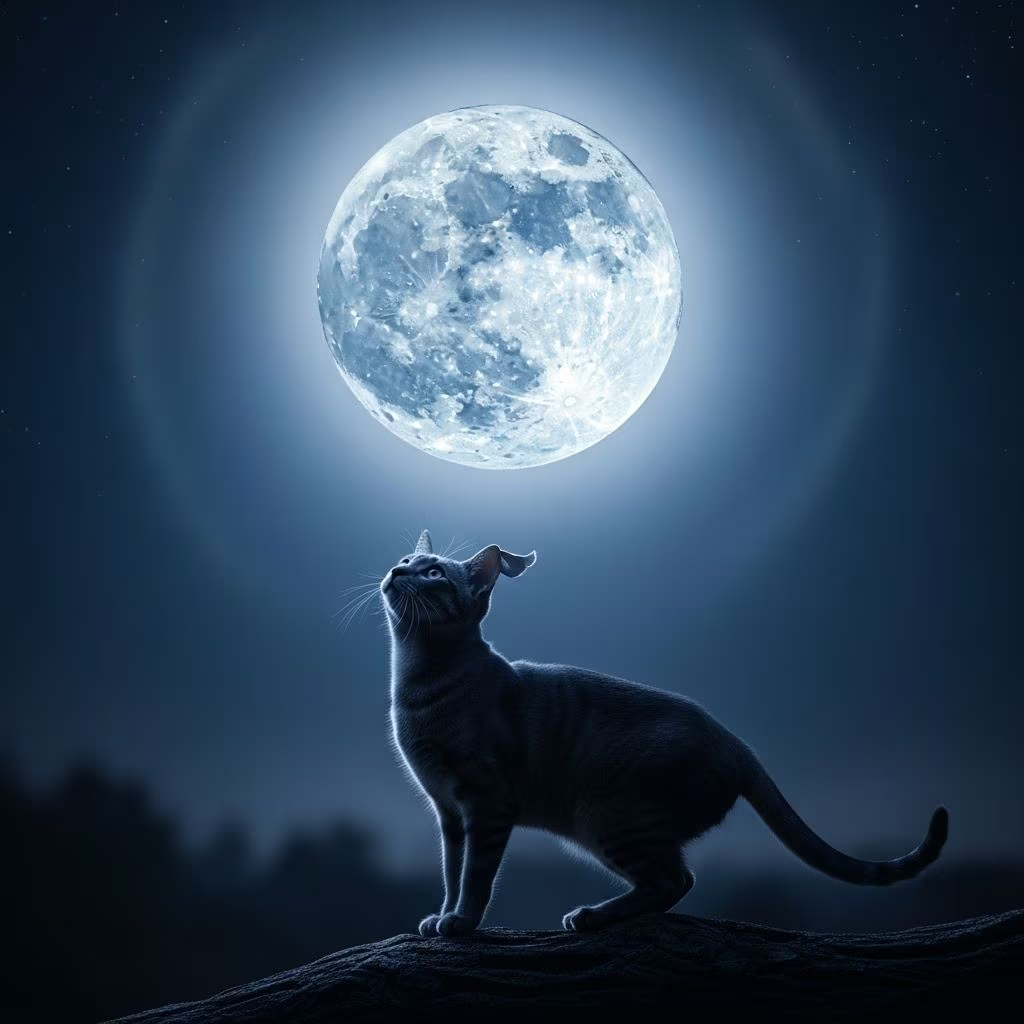
Cats have long been associated with mystery and the supernatural, and tales of them behaving oddly during full moons are common among pet owners. From sudden zoomies and excessive meowing to hiding in strange spots or becoming unusually clingy, many wonder if the lunar cycle truly impacts feline behavior. While folklore abounds, scientific studies offer intriguing insights, including a notable increase in emergency veterinary visits during full moons. This article examines the evidence, potential explanations, and practical advice for managing your cat during these luminous nights.
The Lunar Effect on Cats: Myth or Reality?
The idea that full moons affect animals dates back centuries, rooted in folklore where cats were seen as lunar companions due to their nocturnal nature. Modern anecdotes from cat owners mirror ancient beliefs: cats pacing restlessly, engaging in midnight play sessions, or vocalizing more than usual. A study from Colorado State University analyzed nearly 12,000 emergency cases over 10 years and found cats were 23% more likely to require urgent care during full moon phases, compared to other nights. This pattern held for the waxing gibbous, full, and waning gibbous stages, involving issues like trauma, seizures, and cardiac events, though no spike in aggression was noted.
However, correlation does not imply causation. Critics point to confirmation bias—owners who believe in lunar effects may notice and report behaviors more during full moons. Additionally, brighter moonlight could simply make owners more aware of their cat’s natural nighttime antics, which they might otherwise sleep through. Despite inconclusive proof, the consistency across reports and studies suggests something noteworthy occurs.
Reported Behaviors in Cats During Full Moons
Cat owners frequently describe a range of quirky changes during full moons. These observations, while anecdotal, align across multiple sources:
- Restlessness and pacing: Cats prowl more, unable to settle, often disrupting household sleep.
- Increased playfulness or ‘zoomies’: Sudden bursts of high-energy running, leaping, and mischief, especially at night.
- Excessive vocalization: Louder meowing, yowling, or chattering, sometimes directed at windows or doors.
- Clinginess or hiding: Some become unusually affectionate; others retreat to odd hiding spots.
- Social shifts: Outdoor cats may seek more interaction with other felines.
- Altered appetite or sensitivity: Skipping meals, pickiness, or heightened reactions to touch.
These behaviors typically peak during the three nights around the full moon and subside quickly. Veterinarians report similar patterns, with emergency visits rising, potentially linked to increased activity leading to injuries.
Scientific Studies on Full Moons and Cat Behavior
Research provides the strongest evidence. The landmark Colorado State University study (2007), reviewing 11,738 cases, showed a 23% increase in cat emergencies during fuller moon phases. Dog visits rose 28%, but cat data was statistically significant. Emergencies included trauma (possibly from nocturnal hunting in brighter conditions) but not aggression.
Another analysis echoed this, noting higher trauma risks around full moons, speculating animals become more prone to incidents. A University of Colorado study cited a 30% injury uptick in cats, though specifics vary. No study confirms direct lunar causation, but patterns persist. For context, human ‘lunar effects’ like crime spikes lack robust proof, yet animal data is more compelling due to biological sensitivities.
| Study/Source | Sample Size | Key Finding (Cats) | Date |
|---|---|---|---|
| Colorado State Univ. | ~12,000 cases | 23% more emergencies (full phases) | 2007 |
| Univ. of Colorado | Not specified | 30% higher injury likelihood | Recent (unspecified) |
| PMC Maxillomandibular | Retrospective | Increased trauma pre/full moon | 2014 |
These findings remain relevant; no major contradicting studies have emerged, and recency favors patterns in veterinary data.
Possible Explanations: Why Might Full Moons Affect Cats?
Several theories explain these observations without invoking mysticism:
- Increased luminosity: Full moons provide extra light, extending ‘dusk’ activity for crepuscular cats, boosting hunting, play, and injury risk.
- Circadian rhythm disruption: Brighter nights confuse internal clocks, altering sleep, hormones, and energy levels. Cats’ sensitivity to light exacerbates this.
- Owner behavior: Humans stay up later under moonlight, interacting more and noticing cat antics.
- Environmental cues: Subtle shifts in barometric pressure, gravity, or prey activity may heighten instincts.
- Sensory overload: Cats’ acute hearing/sight amplifies moonlight’s effects, leading to overstimulation.
Gravitational pull is negligible for small animals like cats, per physics, but light and rhythm changes are plausible.
How to Calm Your Cat During a Full Moon
If your cat goes lunar loco, these vet-recommended strategies help:
- Maintain routine: Stick to feeding, play, and bedtime schedules to anchor circadian rhythms.
- Enhance playtime: Tire them out with interactive toys before dusk to curb zoomies.
- Create a calm space: Provide dark, quiet retreats with familiar bedding; use pheromone diffusers like Feliway.
- Limit stimuli: Close curtains to block moonlight; play soothing music or white noise.
- Monitor health: Check for underlying issues like hyperthyroidism mimicking ‘crazy’ behavior; consult a vet if persistent.
- Secure the home: Prevent escapes during heightened curiosity—check doors/windows.
Most episodes are harmless and brief; supplements like CBD (vet-approved) may aid anxiety, but evidence is emerging.
Full Moon FAQ: Cats and Lunar Behavior
Q: Are cats more likely to get injured during a full moon?
A: Yes, studies show 23-30% higher emergency visits, often from trauma during active nights.
Q: Why do cats meow more during full moons?
A: Likely overstimulation or disrupted sleep; extra light triggers vocal hunting instincts.
Q: Do full moons make cats aggressive?
A: No evidence supports this; studies found no aggression spike, unlike activity increases.
Q: Can indoor cats be affected?
A: Absolutely—light seeps through windows, disrupting rhythms even without outdoor access.
Q: Is it safe to let cats outside during full moons?
A: Riskier due to heightened activity; keep indoors to avoid injuries or escapes.
Q: Do all cats react the same way?
A: No—age, health, and personality influence responses; seniors or anxious cats may be more sensitive.
Debunking Common Full Moon Cat Myths
Myths persist: cats shapeshift (nope), predict disasters (unproven), or sync fertility with moons (weak evidence). Confirmation bias amplifies perceptions—owners recall full moon antics but forget normal ones. Science favors environmental explanations over supernatural ones. Still, respecting patterns improves care.
In summary, full moons likely amplify cats’ natural behaviors via light and rhythms, leading to more noticed changes and vet visits. Observe your cat, prepare accordingly, and enjoy the lunar spectacle safely.
References
- Do Full Moons Affect Cats? — Express Vet Pharmacy. Accessed 2026. https://expressvetpharmacy.com/blogs/news/do-full-moons-affect-cats-1
- Why Is My Cat Acting Crazy During Full Moon? — Bailey’s CBD. Accessed 2026. https://baileyscbd.com/blogs/cat-health/why-is-my-cat-acting-crazy-during-full-moon-scientific-explanation-mythology-tips-for-calming-down
- Bad Moon Rising? Lunar Cycle May be Linked to More Veterinary Visits — Colorado State University. 2007-07-16. https://newsmediarelations.colostate.edu/2007/07/16/bad-moon-rising-lunar-cycle-may-be-linked-to-more-veterinary-visits-according-to-colorado-state-university-study/
- Does the full moon affect behavior? It does in some animals — Genetic Literacy Project. 2020-07-09. https://geneticliteracyproject.org/2020/07/09/does-the-full-moon-affect-behavior-it-does-in-some-animals/
- Does the Full Moon Affect Cats? What Science Says — Catster. Accessed 2026. https://www.catster.com/lifestyle/does-the-full-moon-affect-cats/
- Retrospective Evaluation of Canine and Feline Maxillomandibular — PMC/NCBI. 2014. https://pmc.ncbi.nlm.nih.gov/articles/PMC4259578/



