

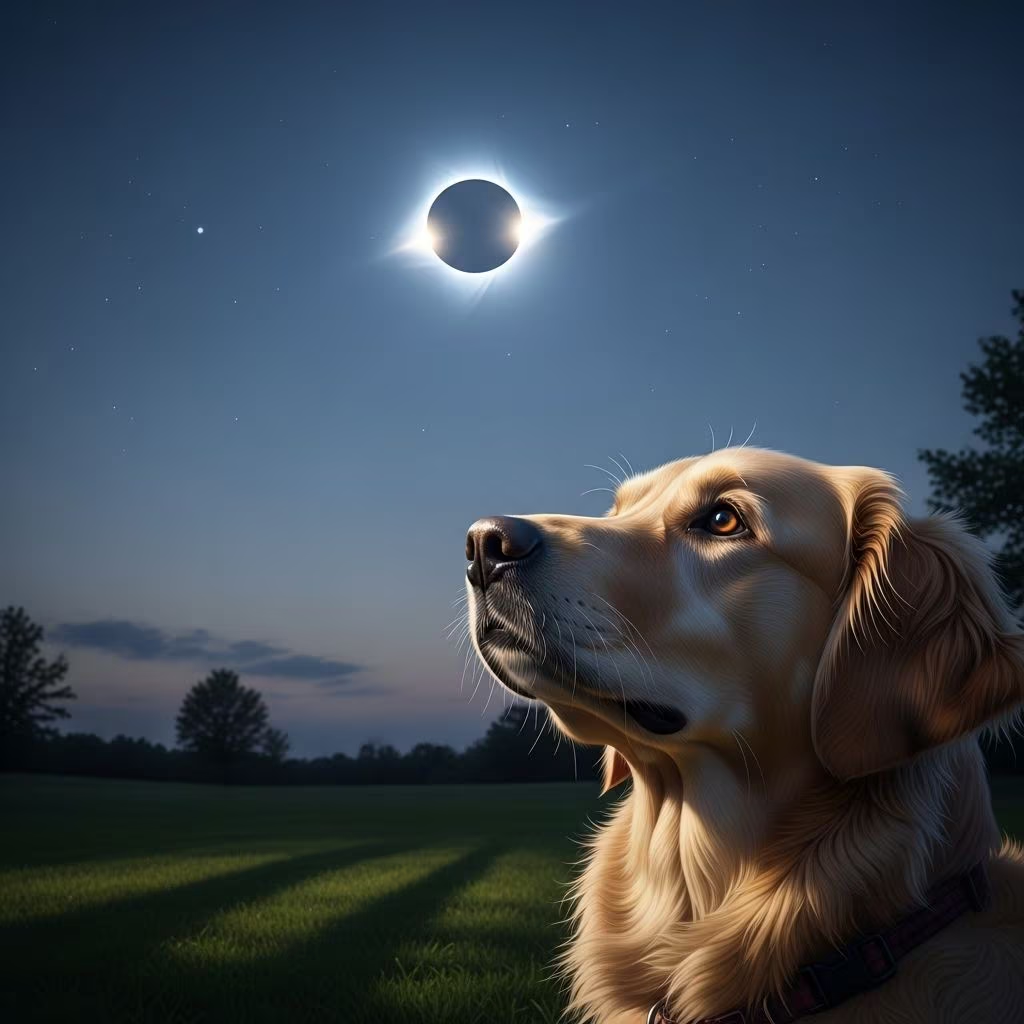
Solar eclipses are rare, exciting events for humans, but for dogs they can be confusing changes in light, noise, and routine. Veterinary behavior experts report that many pets show little or no reaction, while some may become anxious, disoriented, or unusually quiet as the daylight suddenly dims and crowds react around them.
This article explains how a solar eclipse can influence your dog’s behavior, what signs to watch for, and how to keep your pet calm and safe before, during, and after the event.
What Is a Solar Eclipse and Why Might It Affect Dogs?
A solar eclipse occurs when the moon passes between the Earth and the sun, casting a shadow and briefly darkening the sky in some regions. In a total solar eclipse, the sun is completely covered for a short period; in a partial eclipse, only part of the sun is obscured.
Although the eclipse itself is not dangerous to dogs if they are not forced to look at the sun, the rapid change in light and the unusual human activity around the event can influence how dogs feel and behave.
How Dogs Perceive Environmental Changes
Dogs rely heavily on predictable daily patterns of light, temperature, human schedules, and sounds. When the sky suddenly darkens in the middle of the day, their internal sense of time, or circadian rhythm, can be briefly disrupted.
- Many dogs associate dusk with winding down, eating, and sleeping.
- Sudden midday darkness may feel similar to approaching storms, especially to storm‑sensitive dogs.
- Large crowds and excited human reactions can be more stressful than the eclipse itself.
Because of this, dogs may react less to the astronomical event and more to the overall atmosphere: the dimming light, sudden quiet outdoors, or, conversely, the cheers and movement of nearby people.
How Solar Eclipses Can Influence Dog Behavior
Most healthy, well‑adjusted companion dogs are expected to show little or no significant behavioral change during a solar eclipse. However, veterinarians and behaviorists note several possible reactions in more sensitive animals.
Typical Reactions You Might See
Reported behavioral changes in some pets during eclipses include:
- Mild confusion – looking around, pausing activities, appearing unsure of what to do.
- Early “nighttime” behaviors – seeking their bed, asking for food early, or getting sleepy when the sky darkens.
- Curiosity – sniffing the air, watching people, or exploring unusual equipment like cameras and tripods.
- Staying close to owners – following you more than usual or leaning on you for reassurance.
Signs of Stress or Anxiety
Dogs that are naturally anxious, noise‑sensitive, or fearful of storms may be more likely to show stress during an eclipse, especially if large crowds or loud reactions are present.
Watch for these common stress signals in dogs:
- Pacing or restlessness
- Whining, howling, or excessive barking
- Panting when it is not hot
- Hiding, seeking a quiet spot, or trying to escape
- Clinginess, staying glued to your side
- Lip licking, yawning, or shaking off when not wet
In most cases, any stress response is short‑lived because the period of darkness is brief and normal daylight quickly returns.
Will the Eclipse Harm My Dog’s Eyes?
Eye safety is a major concern for humans during a solar eclipse because looking directly at the sun without proper protection can damage the retina. Veterinarians emphasize that dogs are unlikely to stare at the sun on their own and typically do not need special eclipse glasses.
| Question | What Experts Say |
|---|---|
| Do dogs naturally look at the sun? | Dogs generally avoid looking directly at the sun and are more focused on nearby sights and smells. |
| Should dogs wear eclipse glasses? | Experts do not recommend forcing dogs to wear eclipse glasses or to look up at the sky. |
| What is the real risk? | The main risk comes from owners encouraging dogs to participate in viewing or allowing them to chew or swallow glasses or equipment. |
The safest approach is to let your dog behave normally and avoid directing their attention toward the sun. Focus on keeping them comfortable at ground level rather than trying to involve them in the viewing experience.
Environmental and Crowd Factors That Affect Dogs
Behavior experts frequently point out that the human response to an eclipse often has more impact on pets than the astronomical event itself.
Crowds, Travel, and Noise
Major eclipses attract travelers, large gatherings, and public events. For many dogs, this unusual level of stimulation can be far more stressful than a short period of darkness.
- Long car rides or traffic can increase restlessness or motion sickness.
- Excited voices, cheering, or loudspeakers may startle noise‑sensitive dogs.
- Unfamiliar locations and loose or excited unfamiliar dogs can raise the risk of fights or escape.
Veterinary organizations and behavior experts often recommend not bringing dogs to large eclipse events, especially if they have a history of anxiety, crowd sensitivity, or reactivity to other dogs.
Changes in Light and Routine
The sudden dimming of the sky can send mixed signals to a dog’s body clock.
- Dogs may assume it is later in the day than it is and try to start evening routines early.
- Some may briefly stop play or outdoor activity, then resume once normal light returns.
- Storm‑anxious dogs may interpret sudden darkness as a sign that a storm is approaching.
Because dogs are creatures of habit, keeping their schedule as consistent as possible around the eclipse helps reduce unnecessary stress.
How to Prepare Your Dog Before a Solar Eclipse
A bit of planning can help ensure that your dog stays relaxed and safe throughout the event.
Decide Whether to Keep Your Dog at Home
For many families, the safest and least stressful option is to leave the dog at home in a familiar, quiet environment during peak eclipse viewing.
- Home environments allow you to control noise, lighting, and access to outdoor spaces.
- Dogs with separation anxiety may do best staying with a trusted person in the home rather than going to crowded viewing sites.
- If you must travel, consider a calm pet sitter or a trusted friend rather than bringing your dog to the event.
Create a Calm, Safe Space
Set up a comfortable area where your dog can retreat if they feel unsettled.
- Use a crate or quiet room with your dog’s bed, blankets, and favorite toys.
- Play soft music or white noise to muffle sudden outdoor sounds.
- Close curtains or blinds if the changing light seems to upset your dog.
Ensure your dog is wearing a collar with an ID tag and that microchip information is up to date in case they bolt in fear.
Talk to Your Veterinarian if Needed
Dogs with a known history of severe noise or situational anxiety may benefit from professional guidance ahead of the event.
- Ask your vet about short‑acting anti‑anxiety medications or supplements if your dog panics during storms or fireworks.
- Discuss behavior strategies such as desensitization or counter‑conditioning for future unusual events.
- Never give human medication to a dog without veterinary approval.
Keeping Your Dog Safe and Comfortable During the Eclipse
When the eclipse is happening, your goal is to maintain a normal, calm atmosphere for your pet.
Practical Safety Tips
- Stay indoors or in a secure yard so your dog cannot run off if startled.
- Do not force your dog to look at the sun or wear eclipse glasses.
- Keep leashes on if you must be outdoors, even in fenced areas, during peak activity.
- Avoid loud reactions directly around your dog; they may interpret cheering or shouting as a threat.
- Supervise interactions with other dogs, who may also be stressed by the event.
Reading and Responding to Your Dog’s Body Language
Closely watching your dog’s body language helps you intervene early if they become anxious.
- If your dog seems relaxed, allow them to continue their usual activities.
- If you notice pacing, panting, or whining, offer calm reassurance, treats, or gentle play to redirect their focus.
- If your dog hides, let them stay in that safe spot and avoid dragging them out.
Often, your own calm demeanor helps your dog feel that the situation is safe. Dogs are highly sensitive to human facial expressions, tone of voice, and body posture.
What to Expect After the Eclipse
Once sunlight returns to normal, most dogs quickly go back to their usual behavior and routine.
- Any eclipse‑related stress usually fades within minutes.
- Offer a meal, play session, or walk at the usual time to re‑anchor your dog’s schedule.
- Observe for lingering signs of fear, such as avoidance of certain rooms or outdoor spaces; this is uncommon but worth noting.
If your dog shows prolonged anxiety after the event, consult your veterinarian or a qualified veterinary behaviorist for additional support.
Special Considerations for Other Pets and Animals
While this article focuses on dogs, it is helpful to be aware that other animals may react differently to solar eclipses.
- Birds may stop singing, return to roosts, or become silent during peak darkness.
- Livestock and outdoor animals sometimes move toward barns or nighttime resting areas as the light fades.
- Nocturnal species may briefly emerge, mistaking the eclipse for twilight.
If your household includes multiple species, ensure each has a safe, secure place during the event, and avoid unnecessary handling while the environment is changing.
Frequently Asked Questions (FAQs)
Q: Will my dog definitely act strangely during a solar eclipse?
A: Not necessarily. Many dogs show little or no change in behavior during eclipses. A small number, particularly anxious or storm‑sensitive dogs, may show brief confusion or stress, especially if exposed to large crowds, noise, or unusual human activity.
Q: Do I need to buy eclipse glasses for my dog?
A: No. Experts advise that dogs do not need eclipse glasses and should not be forced to look at the sun. Dogs are unlikely to stare at the sun on their own, and the main risk is owners encouraging them to participate in viewing or letting them chew on glasses.
Q: Can an eclipse cause long‑term anxiety or trauma in dogs?
A: Long‑term effects from a single eclipse are considered unlikely. The period of darkness is brief, and most dogs return to normal once daylight and routine are restored. However, if a dog experiences extreme fear (for example, due to crowds, fireworks, or getting lost), that specific context could become a future trigger, so it is important to manage the environment carefully.
Q: Is it safer to keep my dog indoors during the eclipse?
A: For many dogs, yes. Keeping them indoors in a familiar environment reduces exposure to crowds, noise, and unusual outdoor activity. If you do go outside, use a leash, watch for stress signals, and avoid directing their attention toward the sky.
Q: Should I change my dog’s routine on eclipse day?
A: It is usually best to keep your dog’s routine as normal and predictable as possible. Feed, walk, and play at the usual times. The more consistent the day feels, the easier it is for your dog to take the brief period of darkness in stride.
References
- Animal Behavior During Solar Eclipses: What to Expect — Texas A&M School of Veterinary Medicine & Biomedical Sciences. 2024-03-25. https://vetmed.tamu.edu/news/pet-talk/animal-behavior-during-solar-eclipses/
- How Does the Solar Eclipse Affect Animals? Veterinarians Share What to Know — CBS News. 2024-04-04. https://www.cbsnews.com/news/total-solar-eclipse-animals-behavior-2024/
- How to Keep Your Pets Safe During the Solar Eclipse — TIME. 2024-04-05. https://time.com/6963997/how-to-keep-pets-safe-during-solar-eclipse/
- How to Keep Your Dog Safe During a Solar Eclipse — American Kennel Club. 2024-03-22. https://www.akc.org/expert-advice/travel/how-to-keep-dog-safe-during-eclipse/



