

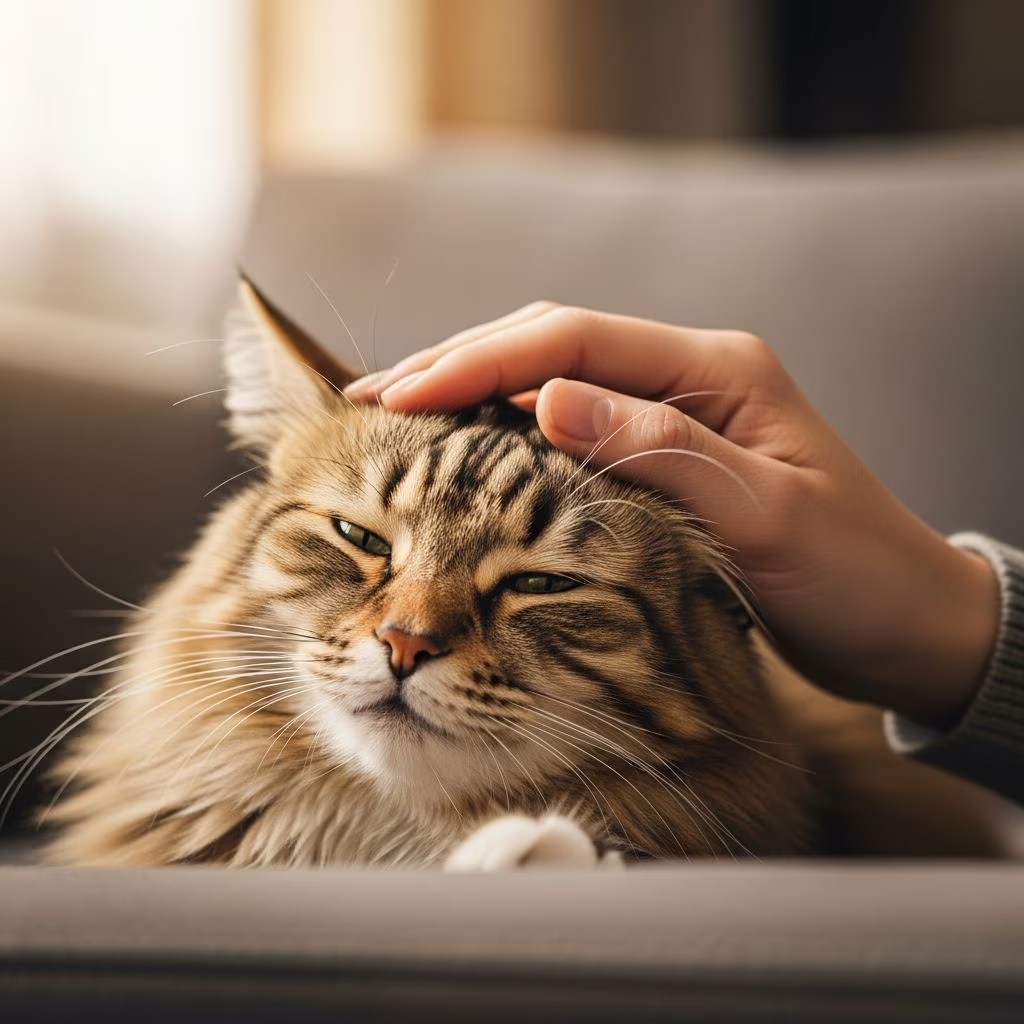
Petting cats can influence their stress levels through complex physiological pathways, often promoting relaxation via oxytocin release while sometimes eliciting mild excitatory responses depending on the context and individual cat.
The Physiology of Touch in Cats
Cats experience touch through specialized nerve endings in their skin and fur, which connect to the brain’s limbic system responsible for emotions. Gentle stroking activates mechanoreceptors, sending signals that can modulate the autonomic nervous system. Research on human-animal interactions reveals bidirectional effects; while owners often feel calmer, cats may show varied responses including purring, which indicates contentment but can also signal self-soothing during mild stress.
Key hormones play pivotal roles here. Oxytocin, known as the ‘bonding hormone,’ surges during affectionate contact, fostering trust and reducing perceived threats in a cat’s environment. Studies on pet owners interacting with cats demonstrate correlations between petting frequency and oxytocin elevation alongside cortisol fluctuations, suggesting cats likely experience similar neuroendocrine shifts. Cortisol, the primary stress marker, typically decreases with prolonged, preferred petting sessions, though initial contact might briefly elevate it as an arousal response.
Scientific Evidence on Petting and Feline Calmness
Investigations into cat-human tactile interactions highlight nuanced outcomes. One study observed that free interactions, including petting, decreased parasympathetic activity and increased heart rates in owners, interpreted as eustress—a positive form of stress enhancing resilience—rather than distress.1 This excitatory pattern, with positive links between heart rate, cortisol, and oxytocin, implies petting stimulates cats similarly, potentially building emotional fortitude without overwhelming them.
Conversely, controlled petting trials, such as those with stressed university students interacting with cats, showed cortisol reductions in saliva after 10 minutes of stroking, aligning with broader animal-assisted therapy benefits.2 Although focused on humans, these findings extend to cats, as reciprocal stress-lowering occurs in petting dyads. Petting negatively correlated with parasympathetic changes, meaning more stroking linked to stabilized nervous system activity, underscoring its role in daily stress management for felines.
Highly emotional individuals report stronger draws to cats for relief programs, with over 85% of university interventions dog-only, yet cat inclusion broadens reach, especially for those reactive to emotions.5 This suggests petting cats provides targeted stress mitigation, potentially more attuned to subtle feline cues than canine interactions.
Recognizing Stress Signals in Your Cat
To gauge if petting reduces stress, observe body language. Relaxed cats exhibit slow blinks, upright whiskers, tail loosely curled, and kneading paws. Purring accompanies these but isn’t foolproof—context matters, as it can denote pain or appeasement.
- Ears forward and relaxed: Indicates curiosity and comfort.
- Tail tip twitching mildly: Playful engagement, not agitation.
- Leaning into touch: Active solicitation for more petting.
Stress indicators include flattened ears, dilated pupils, low tail, skin rippling, or sudden freezing. If petting elicits these, cease immediately to avoid escalating anxiety.
Optimal Petting Techniques for Stress Reduction
Not all petting is equal; location and pressure matter. Cats prefer cheeks, chin, base of ears, and upper back—these scent-gland rich areas reinforce social bonds via pheromones.
| Preferred Areas | Avoid Areas | Why It Works |
|---|---|---|
| Cheeks & Chin | Belly (unless invited) | Stimulates facial pheromones for security |
| Shoulder Blades | Tail Base (if sensitive) | Mimics grooming, promotes relaxation |
| Neck Scruff (gently) | Paws | Releases endorphins without overstim. |
Use slow, rhythmic strokes with flat hands, matching your cat’s breathing rhythm. Sessions of 5-10 minutes suffice for hormone balancing, per interaction studies.1 Vary with brushing to distribute oils, enhancing coat health alongside mental ease.
Individual Variations in Cat Responses
Kittens socialized early respond best to petting, developing positive associations. Rescues or ferals may need gradual desensitization, starting with treats near-hand proximity. Age factors in—seniors benefit from arthritis-soothing massages, while energetic adults pair petting with play for comprehensive relief.
Health conditions influence reactions; hyperthyroid cats might overreact, mistaking touch for overstimulation. Monitor for chronic stress signs like overgrooming or hiding, consulting vets for underlying issues.
Enhancing Petting with Complementary Methods
Combine petting with pheromone diffusers or calming collars mimicking facial scents. Environmental enrichments like window perches reduce baseline anxiety, amplifying touch benefits. Interactive toys post-petting expend energy, preventing stress rebound.
- Feliway diffusers: Synthetic pheromones for ambient calm.
- Scent enrichment: Catnip or silver vine toys.
- Routine predictability: Fixed petting times build anticipation.
Potential Downsides and When to Stop
Overpetting leads to ‘petting-induced aggression,’ where initial pleasure flips to irritation. Watch for tail thrashing or ear pinning. Some cats are touch-averse due to past trauma; respect boundaries to preserve trust.
In multi-cat homes, petting one might stress others via resource guarding—rotate attention equitably.
Long-Term Benefits for Cat Health
Consistent petting lowers chronic cortisol, bolstering immunity and reducing behaviors like spraying. Stronger bonds decrease separation anxiety, vital for working owners. Longitudinal owner-cat studies link frequent tactile contact to owners’ cardiovascular health improvements, likely mirrored in cats’ longevity.1
Frequently Asked Questions
Why does my cat purr then bite during petting?
This signals overstimulation; purring starts as pleasure but shifts. Limit sessions to 3-5 minutes initially.
Can petting help aggressive cats?
Yes, gradually; pair with positive reinforcement, but consult behaviorists for severe cases.
How often should I pet my cat for stress relief?
2-3 times daily, 5-10 minutes each, attuned to your cat’s cues.
Does breed affect petting responses?
Somewhat—Ragdolls crave touch, Bengals prefer play—but individuals vary more.
Is petting better than medication for mild anxiety?
Often yes, as a first-line, holistic approach, per therapy parallels.2
Building a Stress-Free Routine
Integrate petting into twilight hours when cats are crepuscularly active. Track responses in a journal to personalize. This not only eases feline stress but deepens your companionship, yielding mutual wellness.
References
- Effects of Interactions with Cats in Domestic Environment on Physiological State of Owners — NIH/PMC. 2023-07-01. https://pmc.ncbi.nlm.nih.gov/articles/PMC10340037/
- Pet Your Cat to Reduce Stress — Cornell University College of Veterinary Medicine. 2023. https://www.vet.cornell.edu/pet-your-cat-reduce-stress
- Highly emotional people drawn to cats for stress relief programs — Washington State University via ScienceDaily. 2022-10-25. https://www.sciencedaily.com/releases/2022/10/221025090514.htm



