

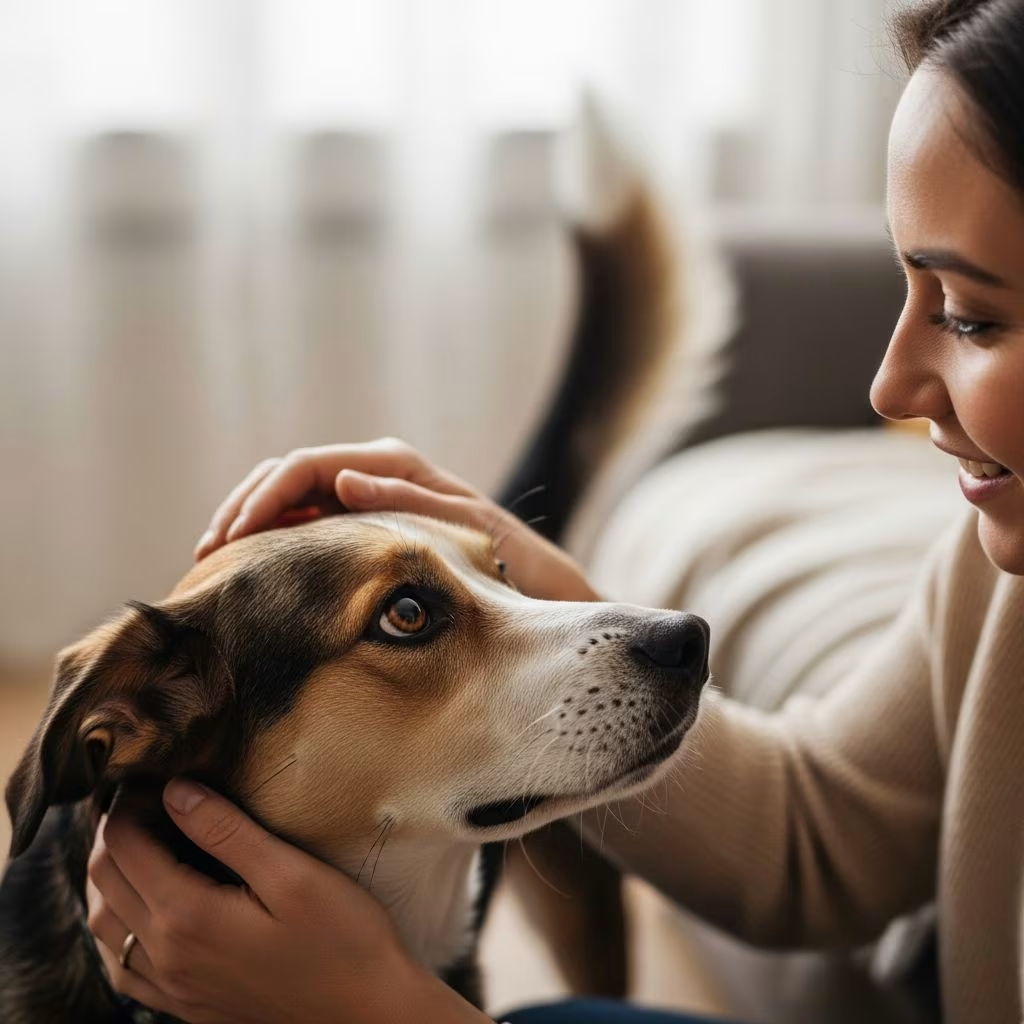
Many dog parents quietly wonder: “Will my dog ever truly love me?” The reassuring answer, backed by science and everyday experience, is yes. Dogs are capable of forming deep emotional bonds with humans that resemble the attachment between parents and children, and even romantic partners. Understanding how and why this happens can help you notice your dog’s love signals and strengthen your connection in thoughtful, practical ways.
Main Takeaways
- Dogs are capable of genuine social bonding with humans, supported by brain chemistry and attachment research.
- Oxytocin — the “bonding hormone” — plays a major role in dog–human attachment, similar to bonds in human families and couples.
- Your dog’s daily behavior (like leaning on you or bringing toys) often reveals the love they feel and their sense of security with you.
- You can actively help your dog love and trust you more through play, training, consistency, and respect for their emotional needs.
The Science of Whether Dogs Can Love
For a long time, people debated whether dogs simply act affectionate for food and safety or whether they experience something closer to human love. Modern research suggests that dogs form attachment bonds that are emotionally meaningful for both species.
Oxytocin: The Bonding Hormone
Oxytocin is a hormone closely linked to feelings of affection, trust, and bonding in humans. It is heavily involved in:
- Attachment between parents and children
- Bonding between romantic partners
- Feelings of closeness and safety in relationships
Studies of the human–animal bond report that interacting with familiar animals, including pet dogs, can increase oxytocin levels in humans and is associated with feelings of love, security, and reduced stress. Related work also shows that many owners view their dogs in a child-like role within the family, reflecting strong emotional attachment and caregiving behaviors.
Dogs as Family Members
Psychological and family-studies research has documented that many people treat dogs as full family members, integrating them into daily life, routines, and emotional support systems. This close integration is not one-sided; dogs also show behavior patterns that resemble secure attachment, such as:
- Seeking proximity to their caregiver when uncertain
- Relaxing when the caregiver is present
- Showing distress or searching behavior when separated
These patterns parallel aspects of child–caregiver attachment, supporting the idea that dogs participate in emotionally significant bonds with humans rather than only transactional relationships.
How Dogs Show That They Love You
Even when you believe your dog loves you, it can be hard to interpret their behavior correctly. Some signs are obvious and affectionate; others are subtle and easy to overlook. Not every dog shows every behavior, and personality, history, and breed all shape how love appears on the surface.
| Behavior | What It Can Mean | What To Watch For |
|---|---|---|
| Leaning against you | Seeking closeness, comfort, trust | Body relaxed, soft eyes, calm breathing |
| Sharing or bringing toys | Inviting play, sharing valued items, bonding | Loose, wiggly posture, play bows, tail wag |
| Following you around | Attachment, wanting to be near you | Calm shadowing vs. anxious pacing or whining |
| Relaxed sleep near you | Feeling safe and secure in your presence | Sleeping on side or back, fully relaxed muscles |
| Soft eye contact | Affection, attention, and trust | Blinking, gentle gaze (not hard staring) |
Leaning Against You
When your dog leans their body weight into your leg or side, it is often interpreted as a sign of trust and affection. Many dogs use leaning as a way to:
- Seek physical contact with someone they feel safe with
- Ask for comfort and reassurance during uncertainty
- Relax and rest while staying close to their favorite person
However, context matters. A dog that leans while panting, trembling, or avoiding eye contact might be nervous and using you as a safe base rather than expressing simple joy or affection. Paying attention to your dog’s overall body language (tail, ears, posture, facial expression) will help you tell the difference.
Sharing Toys and Inviting Play
Dogs often form especially strong bonds with the people who regularly play with them. When your dog brings you a favorite toy, drops it at your feet, or nudges you to throw it, they may be:
- Inviting you into a social game
- Sharing something they value — a sign of trust and closeness
- Associating you with fun, joy, and positive excitement
Across many species, individuals that play together tend to have closer social relationships. Play is not just entertainment; it is also a powerful way to build and maintain emotional connections.
Following You Everywhere
If your dog seems to be your shadow, quietly moving from room to room with you, it can be a sign of strong attachment and comfort in your presence. This behavior may include:
- Lying down nearby while you work or relax
- Waiting outside the bathroom door
- Checking where you are if you leave the room
Some following is normal and affectionate, but if your dog becomes excessively distressed when you leave, that could indicate separation-related issues rather than healthy bonding. In those cases, professional guidance from a behavior professional or veterinarian is important.
Recognizing Your Voice and Name
Research using brain imaging has shown that dogs’ auditory cortex responds strongly to emotionally positive vocal sounds, including those from their familiar human caregivers. Over time, many dogs appear to:
- React differently to your voice compared with strangers
- Learn and respond to their own name and possibly your name
- Show visible excitement (ear pricks, tail wags, orienting) when they hear you being called
These responses suggest that dogs not only recognize your voice but also assign it positive emotional value, consistent with a close relationship.
Soft Eye Contact and Mutual Gazing
Gentle, relaxed eye contact between a dog and a familiar human can be part of a warm, trusting interaction. Some research has found that mutual gazing between dogs and their owners increases oxytocin levels in both, supporting the idea of a bi-directional bonding effect.
Important safety note: While soft eye contact with a dog you know can be bonding, staring directly into the eyes of an unfamiliar or fearful dog may be perceived as a threat. Always respect a dog’s body language and avoid hard, unblinking stares, especially with dogs you do not know well.
How to Help Your Dog Love You More
Love is not only something that happens to you and your dog — it is something you build, moment by moment. Fortunately, many of the most effective bonding strategies are simple habits you can weave into daily life.
1. Consistent Play and Exercise
Regular, enjoyable activity is one of the strongest foundations for a deep, secure bond. Play and exercise help your dog:
- Burn physical and mental energy
- Reduce stress and frustration
- Associate you with fun and positive emotions
Types of bonding play can include:
- Fetch or tug games for energetic dogs
- Sniff walks where your dog can explore at their pace
- Puzzle toys or scent games that you set up and cheer them through
When dogs feel physically well and mentally stimulated, they are more likely to show relaxed, affectionate behavior — giving you more opportunities to notice and reciprocate their love.
2. Treats, Rewards, and Positive Training
Training that relies on positive reinforcement (rewarding desired behaviors with treats, praise, toys, or access to fun activities) is a powerful way to strengthen your relationship. In this kind of training, you become the reliable source of:
- Good things happening
- Clear communication
- Success and shared accomplishments
During training sessions, you and your dog are working as a team toward a shared goal. Your dog gets to:
- Use their brain and learn new skills
- Experience the joy of “getting it right”
- Link that positive feeling directly with your presence and guidance
Over time, this creates strong associations between you and feelings of confidence, reward, and safety — key ingredients in a loving bond.
3. Predictable Routines and Gentle Care
Dogs thrive on predictability. A reliable routine communicates safety and helps your dog relax, which in turn supports affectionate behavior. Helpful routines include:
- Regular feeding times and walking schedules
- Consistent sleep and quiet times
- Predictable interaction patterns (for example, a morning greeting ritual or evening cuddle time)
Gentle, respectful physical care — such as calm handling during grooming or vet visits, using positive methods as much as possible — also tells your dog that you are a safe, trustworthy presence in every context.
4. Respecting Your Dog’s Individual Personality
Not all loving dogs are clingy or exuberant. Some dogs are naturally more independent, reserved, or cautious, and their affection may show up as:
- Choosing to lie in the same room, but not on top of you
- Brief, gentle check-ins instead of long cuddle sessions
- Enjoying shared activities more than constant physical contact
Breed tendencies and personal history can both shape how your dog prefers to connect. For example:
- Guardian-type dogs may express love through watchfulness and protective positioning rather than overt snuggling.
- Companion and toy breeds often seek physical closeness, such as lap time and cuddling.
- Working or herding breeds may feel most satisfied when they can “partner” with you in tasks or active games.
The key is to notice your dog’s unique preferences and offer affection in ways that they clearly enjoy, without forcing interactions that make them uncomfortable.
Common Misunderstandings About Dog Love
Because humans naturally interpret the world through a human lens, it is easy to misread dog behavior. Trainers caution that signs we think always mean love can, in some contexts, reflect other emotions such as stress or learned habits.
- Jumping up may be excitement, habit, or a way to get attention — not purely a sign of affection.
- Licking can be a sign of affection, but it can also be a way to seek attention or relieve stress.
- Following you closely is often bonding, yet in severe cases it can signal anxiety about being alone.
- Leaning or touching is often loving, but in tense situations it may reflect nervousness and a need for safety.
To understand whether a behavior is a sign of love, pay attention to:
- Your dog’s overall body language (relaxed vs. tense)
- The context (calm setting vs. overwhelming environment)
- Patterns over time (does this behavior appear during happy, relaxed moments?)
Frequently Asked Questions (FAQs)
Q: How can I tell if my dog really loves me?
A: Look for relaxed, voluntary signs of connection such as choosing to be near you, leaning or resting against you, bringing you toys, soft eye contact, and greeting you with loose, wiggly body language. Consider the whole picture of your dog’s behavior and how they act around you compared with strangers.
Q: Does my dog love me or just the food and treats I give?
A: Food and treats certainly help your dog form positive associations with you, but research on attachment and brain activity shows that dogs respond to familiar humans as emotionally important individuals, not just sources of food. Dogs often seek their caregiver for comfort, reassurance, and social interaction even when food is not involved.
Q: Can a dog love more than one person?
A: Yes. Many dogs form attachments to multiple family members and even close friends, although they may show a stronger bond with the person who spends the most time caring for them, playing, training, and providing daily needs.
Q: What if my dog doesn’t like cuddling — does that mean they don’t love me?
A: Not at all. Some dogs simply prefer less physical contact. They may show love by choosing to rest in the same room, following you at a comfortable distance, or getting excited when you suggest a favorite activity. Respecting their boundaries and noticing the ways they do initiate contact will help your bond grow.
Q: Can I make my dog love me more?
A: You cannot force love, but you can nurture it. Use kind, reward-based training, provide regular play and exercise, keep a predictable routine, handle your dog gently, and learn what kind of interaction they genuinely enjoy. Over time, these habits usually lead to deeper trust and stronger attachment.
References
- Love, fear, and the human-animal bond: On adversity and multispecies relationships — Jeanne L. Ryan et al., Clinical Child and Family Psychology Review. 2021-08-26. https://www.ncbi.nlm.nih.gov/pmc/articles/PMC8415490/
- Redefining Parenting and Family – The Child-Like Role of Dogs in Family Life — Kerstin Meints et al., International Perspectives in Psychology. 2022-01-01. https://doi.org/10.1027/1016-9040/a000552
- Ecoexpansive kinship: A model for expanding conceptualizations of family to include companion animals — Andrea L. Miller & Jennifer M. First, Journal of Family Theory & Review. 2022-10-04. https://onlinelibrary.wiley.com/doi/10.1111/jftr.12569
- Do dogs love their human parents? — Kinship. 2023-01-01 (approx.). https://www.kinship.com/dog-behavior/do-dogs-love-their-human-parents
- How different dog breeds show that they love you — Kinship. 2023-01-01 (approx.). https://www.kinship.com/dog-behavior/how-dogs-show-love-based-on-breed
- Does my dog love me? How to interpret canine bonding behavior — Kinship. 2023-01-01 (approx.). https://www.kinship.com/dog-behavior/will-my-dog-ever-love-me



