

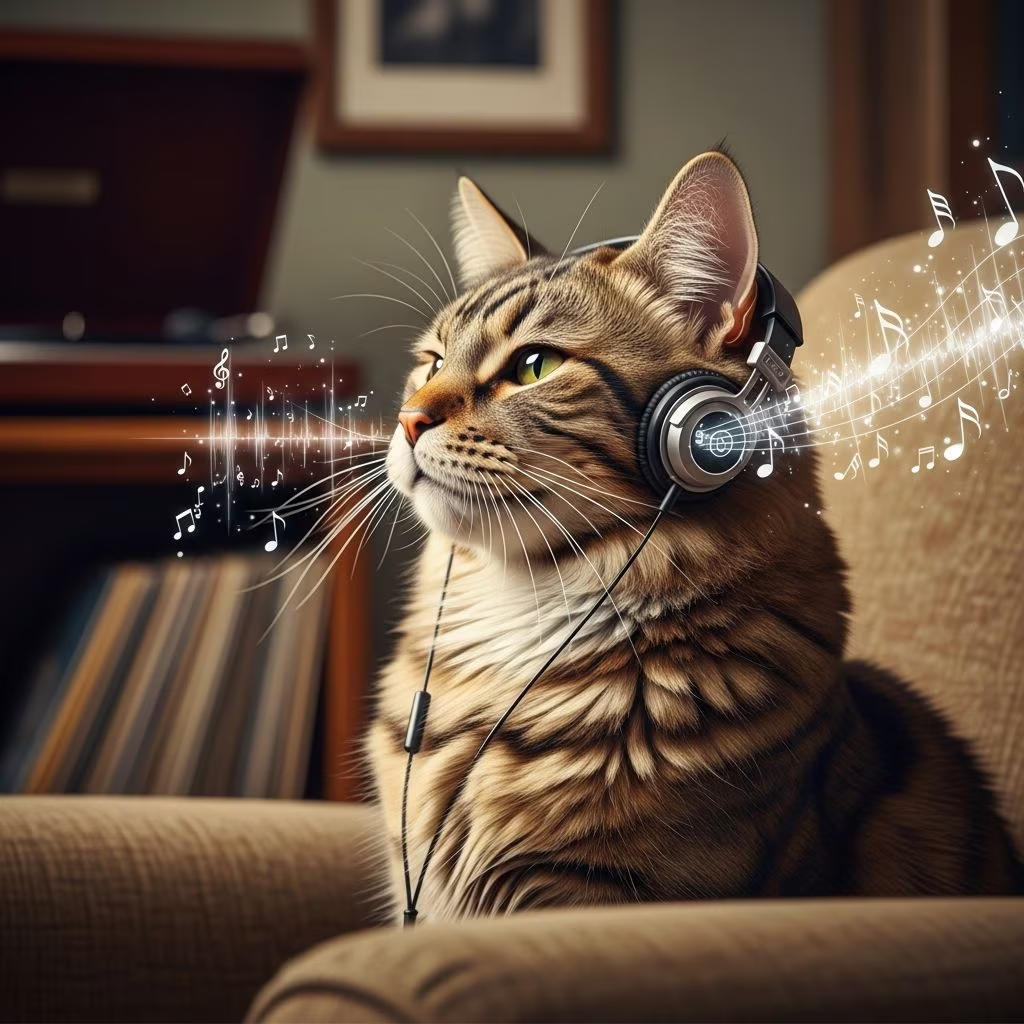
Cats demonstrate a clear preference for music composed with their sensory capabilities in mind, showing quicker positive reactions like purring and rubbing compared to human-centric tunes.
The Feline Ear: A Unique Soundscape
Cats possess superior hearing, detecting frequencies from 40Hz to 85,000Hz—far exceeding the human range of 20Hz to 20,000Hz. This acute sensitivity shapes how they process auditory stimuli, making certain pitches and tempos more appealing or calming.
Their vocalizations, often an octave higher than human speech, influence music design tailored for them. Researchers incorporate elements like purring tempos (around 25-150Hz) and nursing sounds to mimic familiar, soothing patterns.
Groundbreaking Research on Cat-Tailored Melodies
A pivotal University of Wisconsin-Madison study tested 47 domestic cats in home settings with four music pieces: two human classical selections and two cat-specific compositions. Positive behaviors—purring, approaching speakers, rubbing—increased significantly with cat music, starting after 110 seconds on average versus 171 seconds for human music.
Across 94 tests per music type, cats showed 141 positive responses to feline tunes (1.5 per cat) versus fewer for classics. Aversive reactions like hissing remained similar, indicating cat music uniquely boosts engagement without added negativity.
Biometric Proof of Calming Effects
A clinical trial with nine adult cats used PetPace smart collars to monitor pulse rates, heart rate variability (HRV), and activity over four days—half with feline-specific music, half without. Results revealed a calmer state: median pulse dropped 3.3% (148 vs. 153 bpm), with narrower distributions signaling stability.
| Metric | No Music | With Music | Change |
|---|---|---|---|
| Median Pulse (bpm) | 153 | 148 | -3.3% |
| HRV Median | 9.06 | 9.48 | +4.6% |
| Activity Levels | Higher | Lower | Reduced |
HRV, a marker of relaxation (higher in calm states, lower in fight-or-flight), rose across all cats. These shifts held regardless of age, sex, breed, neuter status, or indoor/outdoor lifestyle.
Music’s Role in Veterinary and Shelter Environments
In a study of 20 cats at a veterinary hospital, “cat music,” classical, and silence were played for 10 minutes pre-exam. Cat music yielded lower Cat Stress Scores (CSS: ~2, weakly relaxed) and Handling Scores versus others (~3, weakly tense). Effects lingered post-exam.
Though differences were modest (1-2 points), they were statistically significant. No notable neutrophil-to-lymphocyte ratio (NLR) changes occurred, possibly due to pre-arrival stress from car rides elevating baselines. Similar benefits appear in shelters, where cat tunes promote calmer demeanors over human music or quiet.
Designing Music That Resonates with Cats
Effective feline music prioritizes pitch (higher octave), tempo (purring/nursing rhythms), and timbre mimicking natural sounds. Silence periods between tracks allow habituation, preventing overload.
- Pitch: Matches cat vocal range for familiarity.
- Tempo: 25-150Hz purring base or sucking cadences.
- Volume: 60-80dB, within comfort zone without triggering vigilance.
- Timbre: Soft, species-relevant textures over sharp human instruments.
David Teie and Charles Snowdon’s work, starting with tamarins in 2009, extended to cats via Music for Cats, validating emotional induction across species using shared musical principles.
Practical Applications for Cat Owners
Play cat-specific tracks during alone time, vet visits, or thunderstorms to ease anxiety. Devices like Pet Acoustics speakers optimize delivery. Observe individual responses—some cats may approach speakers immediately, others gradually.
In multi-cat homes, species music fosters group relaxation without territorial spats induced by unfamiliar sounds. Combine with pheromones or familiar scents for amplified calm.
Comparing Feline and Canine Music Responses
| Aspect | Cats | Dogs (Noted Studies) |
|——–|——|———————-|
| Preferred Tempo | Purring (slow) | Panting/heartbeats (faster) |
| Frequency Range | 40-85kHz | Lower emphasis |
| Stress Reduction | HRV +4.6%, pulse -3.3% | Similar biometric drops |
| Setting Efficacy | Vets/shelters strong | Walks/training |
Limitations and Future Directions
Studies show small effect sizes in clinics, possibly masked by transport stress. Larger samples and wild felid tests could broaden insights. Ongoing research explores music’s neural impacts via fMRI.
No breed or lifestyle variances emerged, suggesting broad applicability, but personalize based on your cat’s cues.
Frequently Asked Questions
Can all cats enjoy music?
Most respond positively to species-specific tracks, but shy or stressed cats may take time. Monitor for purring or relaxation.
Is classical music useless for cats?
No significant positives over silence; cat music outperforms.
How loud should cat music be?
Aim for 60-80dB to stay soothing without startling.
Where to find cat music?
Sites like musicforcats.com offer scientifically backed albums.
Does music help multi-cat stress?
Yes, promotes collective calm in homes or shelters.
Everyday Tips for Musical Feline Bonding
- Start sessions post-feeding when relaxed.
- Use speakers at cat height for approachability.
- Rotate tracks to maintain interest.
- Pair with play for positive associations.
- Record your cat’s reactions to refine choices.
Integrating music enriches cat lives, leveraging their auditory prowess for welfare gains. From home lounging to clinical calm, these sounds bridge human efforts with feline instincts.
References
- Music for Cats — Wisconsin Academy of Sciences, Arts & Letters. 2016-01-01. https://www.wisconsinacademy.org/magazine/winter-2016/essay/music-cats
- Move over Mozart: Study shows cats prefer their own beat — University of Wisconsin-Madison News. 2015-10-15. https://news.wisc.edu/move-over-mozart-study-shows-cats-prefer-their-own-beat/
- Cats are picking up good vibrations from music created just for them — Maddie’s Fund. 2015-07-01. https://chewonthis.maddiesfund.org/2015/07/cats-are-picking-up-good-vibrations-from-music-created-just-for-them/
- Clinical Study Proves Benefits of Feline-Specific Music Through Biometric Data — Pet Acoustics. 2020-01-01. https://www.petacoustics.com/blog/clinical-study-proves-benefits-of-feline-specific-music-through-biometric-data
- Can Music Make Cats Less Stressed? — American Veterinary Society of Animal Behavior (AVSAB). 2018-01-01. https://avsab.org/can-music-make-cats-less-stressed/
- Dogs, Cats and Music. Ready to be Surprised? — Patricia McConnell Blog. 2015-11-01. https://www.patriciamcconnell.com/theotherendoftheleash/dogs-cats-and-music-ready-to-be-surprised/
- The Science — Music for Cats. 2023-01-01. https://www.musicforcats.com/the-science



