

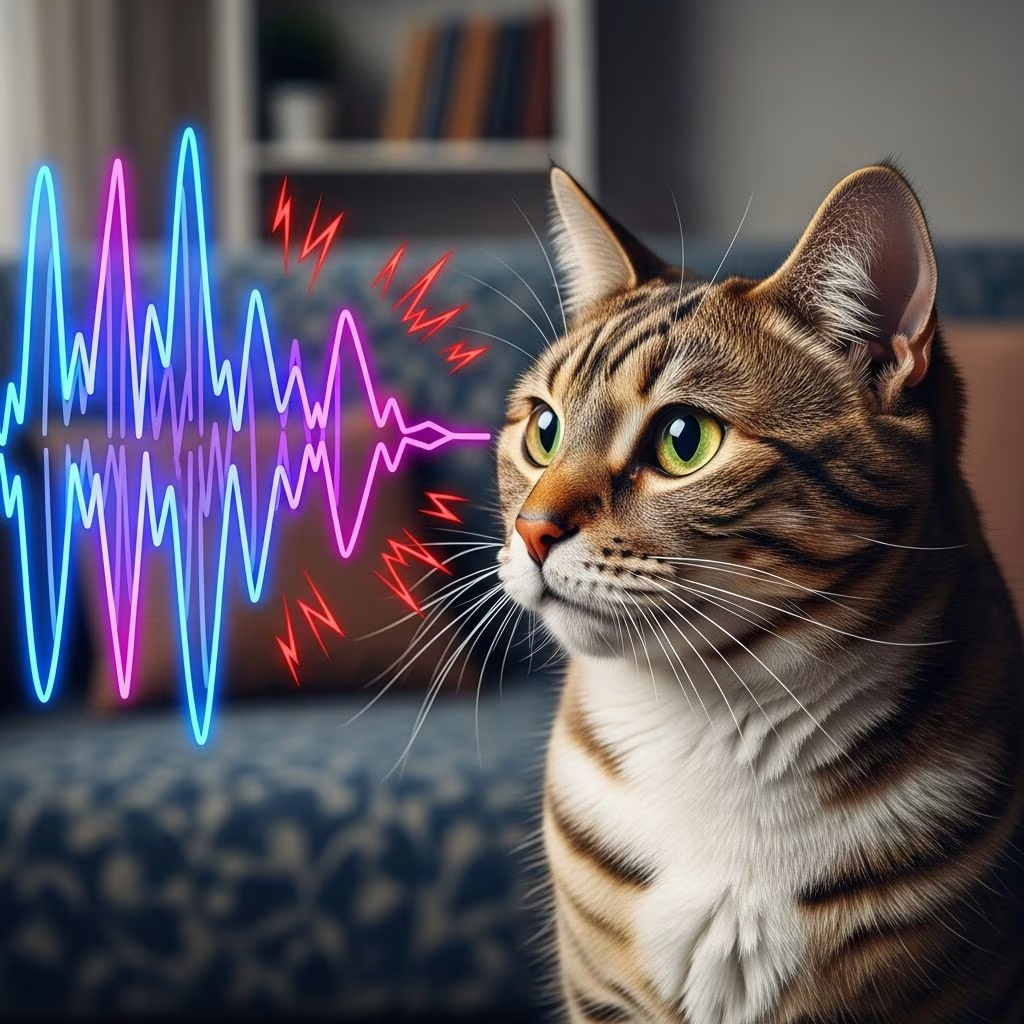
Cats possess extraordinary hearing capabilities that surpass human limits, making them particularly vulnerable to the effects of loud music. Prolonged exposure to high-decibel sounds can lead to auditory damage, chronic stress, and related health issues in felines.
The Superior Auditory World of Cats
Feline ears are engineered for survival in the wild, detecting faint rustles of prey or distant predator movements. Unlike humans, who perceive sounds from about 20 Hz to 20 kHz, cats register frequencies from roughly 45 Hz up to 64 kHz. This expanded range allows them to hear ultrasonic vocalizations from rodents and high-pitched calls from other cats.
The structure of a cat’s ear amplifies this sensitivity. The outer ear, or pinna, acts as a directional funnel, swiveling independently to pinpoint sound sources. Sound waves travel through the ear canal to the eardrum, vibrating tiny bones in the middle ear that transmit signals to the cochlea in the inner ear. This system provides acute localization, with cats able to detect sounds at intensities as low as -10 dB in optimal conditions.
- Frequency Range: 45 Hz–64 kHz (vs. human 20 Hz–20 kHz)
- Sound Localization: Pinnae rotate up to 180 degrees independently
- Sensitivity Threshold: Detects volumes 5–10 dB quieter than humans
This heightened perception serves hunting instincts but becomes a liability in modern homes filled with amplified audio.
Volume Thresholds: When Noise Becomes Hazardous
Decibel levels matter critically. Human guidelines from occupational health studies indicate that sounds exceeding 85 dB for extended periods risk permanent hearing loss. For cats, this threshold may be lower due to their anatomy. Household stereos often peak at 105–110 dB, far surpassing safe limits.
| Source | Average dB Level | Safe Exposure (Cats) |
|---|---|---|
| Normal Conversation | 60 dB | Unlimited |
| Vacuum Cleaner | 70–80 dB | Short bursts |
| Rock Concert/Stereo Max | 105–110 dB | Avoid prolonged |
| Threshold for Damage | 85+ dB | Minutes only |
Chronic exposure elevates cortisol levels, mimicking fight-or-flight responses. Veterinary observations link sustained noise to hypertension in confined animals. Cats cannot ‘turn off’ their ears, forcing passive endurance.
Observable Signs of Auditory Distress in Cats
Pet owners might overlook subtle cues. Stressed cats exhibit dilated pupils, flattened ears, tail flicking, hiding, or excessive vocalization. In severe cases, head shaking or pawing at ears signals discomfort. Long-term, partial deafness manifests as ignored calls, startling easily, or disorientation.
- Dilated pupils and crouched posture
- Excessive grooming or hiding
- Reduced appetite or sleep disruption
- Auditory changes: no response to soft sounds
Monitoring baseline behavior helps identify deviations promptly. Indoor cats, lacking escape options, suffer most during audio sessions.
Scientific Insights into Feline Audio Responses
Research validates these concerns. A study on shelter cats exposed to various genres during exams found ‘cat-specific music’—featuring purr-like frequencies (25–150 Hz) and suckling sounds—reduced stress scores significantly. Classical pieces lowered respiratory rates and pupil dilation compared to pop or heavy metal in anesthetized felines.
Another investigation measured handling ease and stress via scales (1–5 for tension). Cats with psychoacoustic ‘cat music’ averaged scores of 2 (relaxed) versus 3 (tense) for silence or classical. Neutrophil-to-lymphocyte ratios, a stress biomarker, showed minimal changes, suggesting subtle but positive effects.
Peer-reviewed data from veterinary journals emphasize genre matters. High-tempo, erratic sounds exacerbate anxiety, while tempo-matched feline communications promote calm.
Beneficial Sounds: Music That Soothes Cats
Not all audio harms; some heals. Cat-optimized tracks incorporate purrs, bird chirps, and 200–600 bpm tempos mimicking maternal heartbeats. Platforms offer playlists blending these with soft melodies.
Classical compositions like slow adagios reduce pacing and vocalizing in multi-cat homes. Avoid genres with bass drops or shrill highs:
- Recommended: Purring tracks, classical (e.g., Barber’s Adagio), nature sounds
- Avoid: Rock, metal, rap with abrupt changes, thunder simulations
Volume control is key: maintain under 70 dB, measured via smartphone apps.
Practical Strategies for Audio-Friendly Homes
Balance human enjoyment with cat welfare through simple adjustments. Headphones preserve peace entirely. For speakers, designate quiet zones with essentials: litter, food, water, perches.
- Observe reactions before full volume
- Provide multiple escape routes
- Use timers for sessions under 30 minutes
- Incorporate calming tracks during alone time
For multi-pet households, test individually. Elderly or anxious cats benefit most from interventions.
Long-Term Health Implications and Prevention
Beyond acute stress, cumulative exposure risks tinnitus-like symptoms or selective frequency loss, impairing hunting simulations via toys. Hypertension from ongoing arousal strains hearts, per animal welfare studies.
Preventive vets advocate annual ear exams, noting asymmetry or wax buildup as early flags. Holistic approaches pair low-noise environments with pheromone diffusers.
Frequently Asked Questions
Can cats go deaf from loud music?
Yes, sustained levels over 85 dB can cause irreversible cochlear damage, similar to human noise-induced hearing loss.
What volume is safe for cats?
Keep under 70–80 dB; use apps to monitor. Short exposures to higher are tolerable if escape is available.
Do all cats react the same to noise?
No, breed, age, and temperament vary responses. Siamese, with genetic sensitivities, may distress easier.
Is classical music always good for cats?
It helps more than pop/rock but ‘cat music’ outperforms in stress reduction studies.
How to test my cat’s hearing at home?
Use high-pitched toys or apps (16–20 kHz tones); no response warrants vet check.
Creating a Sensorially Balanced Living Space
Integrate these principles holistically. Zone your home: active audio in isolated areas, serene retreats elsewhere. Tech like noise-cancelling for pets or app-controlled volumes enhances compatibility.
Ultimately, empathy guides: felines thrive in predictable, moderate-sound worlds. Small changes yield profound welfare gains, fostering deeper bonds.
References
- Can Loud Music Harm a Cat? Vet-Reviewed Info — Catster. 2023. https://www.catster.com/cat-health-care/can-loud-music-harm-a-cat/
- Cats and Music: What Sounds Calm Them (and What to Avoid) — Union Lake Veterinary Hospital. 2024. https://unionlakeveterinaryhospital.com/blog/cats-and-music-what-sounds-calm-them-and-what-to-avoid
- Can Music Make Cats Less Stressed Out? — What Your Cat Wants. 2023. https://whatyourcatwants.com/can-music-make-cats-less-stressed-out
- Effects of Music on Cats During Veterinary Visits — Journal of Feline Medicine and Surgery (via PubMed). 2015-01-15. https://pubmed.ncbi.nlm.nih.gov/25595109/
- Noise Exposure and Auditory Health in Animals — National Institutes of Health (PMC). 2013-07-26. https://www.ncbi.nlm.nih.gov/pmc/articles/PMC3725606/



