

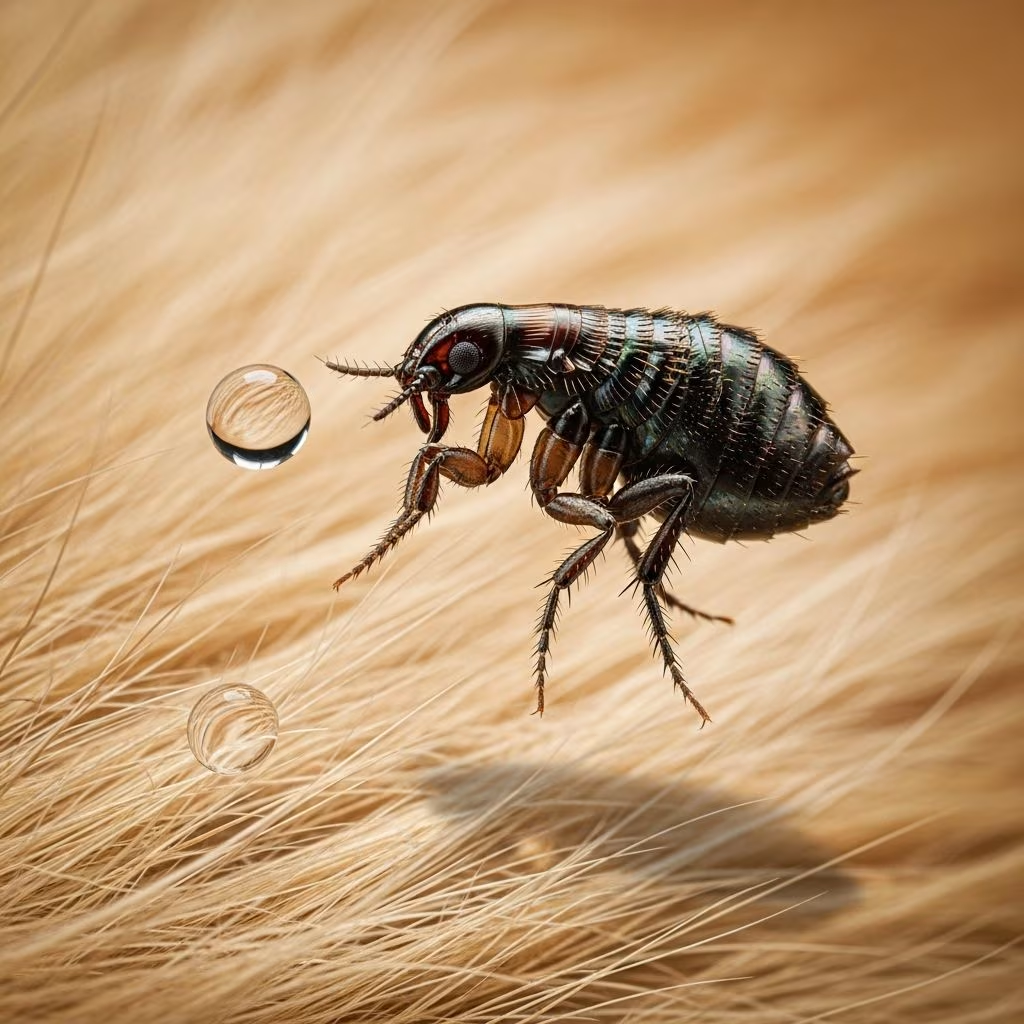
Frontline Plus is a widely used topical treatment that targets fleas, ticks, and related parasites on dogs and cats, demonstrating high efficacy in controlled studies with flea reductions reaching up to 100% over 30 days.
Understanding the Core Mechanism of Frontline Plus
This product operates through a contact-based system rather than requiring parasites to bite the pet. Upon application to the skin between the shoulder blades, the active ingredients spread across the pet’s body via natural oils, concentrating in hair follicles and sebaceous glands for sustained release over a month.
The dual active components—fipronil and (S)-methoprene—target different parasite life stages. Fipronil disrupts the insect nervous system, leading to paralysis and death in adult fleas and ticks within 24 to 48 hours. Meanwhile, (S)-methoprene acts as an insect growth regulator, inhibiting development of flea eggs, larvae, and pupae to break the reproductive cycle.
Proven Performance in Scientific Evaluations
Clinical trials have rigorously tested Frontline Plus under real-world infestation conditions. In one study on dogs, efficacy against fleas was 99.6% on day 2, 100% on days 8, 15, and 22, and 97.6% on day 29 post-treatment, measured by live flea counts 24 hours after re-infestation.
For cats, similar assessments showed 90.3% efficacy on day 2, rising to 99.6% on day 8, 98.8% on day 15, 93.3% on day 22, and 85.6% on day 29, confirming reliable protection throughout the monthly cycle.
These results highlight consistent performance even with repeated exposures, with statistical significance (p<0.01) over untreated controls, underscoring its role in preventing environmental re-infestation.
Specific Formulations for Dogs and Cats
Frontline Plus is species-specific due to tailored concentrations of active ingredients. The dog version contains 9.8% fipronil and 8.8% (S)-methoprene, with 81.4% inert carriers, optimized for canine physiology.
The cat formulation adjusts to 9.8% fipronil and 11.8% (S)-methoprene, with 78.4% inerts, accounting for felines’ heightened sensitivity. Cross-use is contraindicated, as mismatched dosing can cause adverse reactions in cats.
| Aspect | Dogs | Cats |
|---|---|---|
| Fipronil (%) | 9.8 | 9.8 |
| (S)-methoprene (%) | 8.8 | 11.8 |
| Inert Ingredients (%) | 81.4 | 78.4 |
| Minimum Age/Weight | 8 weeks / 5 lbs | 8 weeks / 1.5 lbs |
| Tick Species Covered | Brown dog, American dog, Lone Star, Deer | Brown dog, American dog, Lone Star, Deer |
This table illustrates key differences, emphasizing the need for precise product selection.
Ticks, Lice, and Broader Parasite Control
Beyond fleas, Frontline Plus safeguards against multiple tick species including brown dog ticks, American dog ticks, Lone Star ticks, and deer ticks on both dogs and cats. It also aids in managing chewing lice.
For dogs, additional benefits include support against sarcoptic mange in some formulations. Ticks perish on contact without feeding, reducing disease transmission risks like Lyme disease.
Application Guidelines for Maximum Effectiveness
Apply monthly by parting the fur at the base of the skull and squeezing the full pipette contents directly onto the skin. Avoid massaging or bathing the pet for 48 hours post-application to allow full absorption. The treatment remains waterproof thereafter, enduring swims or shampoos.
- Determine correct pipette size by pet weight: small, medium, large for dogs; single size for most cats.
- Administer to dry coat; reapply if visibly lost due to unusual circumstances.
- Separate multi-pet households during initial spread phase to prevent transfer.
Consistent use prevents 96.5% flea reductions on pets and 98.6% in homes after three applications, per long-term field data.
Addressing Common Concerns About Resistance
Despite decades of use since the 1990s, no confirmed fipronil resistance has emerged in fleas, based on ongoing surveillance. Its contact-kill mechanism—bypassing the need for ingestion—contributes to sustained potency, unlike some oral treatments vulnerable to metabolic bypass.
Reports of perceived failures often stem from environmental reservoirs, where 95% of fleas reside off-host in eggs/larvae stages. Integrated pest management, including home vacuuming and yard treatments, enhances outcomes.
Potential Side Effects and Safety Profile
Generally well-tolerated, mild reactions like temporary skin irritation or hyperactivity occur rarely. Cats exhibit greater sensitivity, hence species-specific dosing. Never apply dog products to cats or vice versa, nor use on rabbits due to toxicity risks.
Consult veterinarians for pregnant, nursing, or medicated pets. Overdosing from incorrect sizing can amplify risks, but approved use shows low incidence of severe events.
Comparing Frontline Plus to Other Options
Frontline Plus stands out for over-the-counter availability and broad-spectrum action without prescription needs for cats. Variants like Frontline Gold add pyriproxyfen for enhanced egg/larvae kill but maintain similar no-cross-species rules.
- Vs. Oral Preventives: Topical avoids systemic exposure; ideal for contact-sensitive pets.
- Vs. Collars: Monthly reapplications suit variable climates; no neck irritation.
- Vs. Sprays/Shampoos: Longer duration; targets full life cycle.
Integrating Frontline into a Comprehensive Parasite Plan
Pair with environmental controls: vacuum daily, wash bedding weekly, and treat yards with approved insecticides. Monitor for fleas via flea comb weekly. Annual vet check-ups ensure compatibility with heartworm or other preventives.
For heavy infestations, initial baths with flea shampoo followed by Frontline accelerate clearance without resistance induction.
Frequently Asked Questions
Can Frontline Plus for dogs be used on cats?
No, formulations differ in concentration, risking toxicity in cats. Use cat-specific versions only.
How quickly does Frontline Plus kill fleas?
Fleas die within 24 hours, ticks within 48 hours via contact.
Is Frontline Plus waterproof?
Yes, effective post-bathing or swimming after 48 hours settling.
What if my pet still has fleas after application?
New fleas from environment; continue monthly use and clean home thoroughly.
Minimum age for Frontline Plus?
8 weeks for puppies/kittens; weight minimums apply.
Key Takeaways for Pet Owners
Frontline Plus reliably controls fleas and ticks when used correctly, supported by robust efficacy data and a safe profile for approved species/ages. Species-specific application, environmental hygiene, and vet consultation maximize protection against parasite-borne diseases.
References
- Is It Safe To Use Frontline Plus for Dogs on Cats? — Pet Care Supplies. 2023. https://www.petcaresupplies.com/blog/is-it-safe-to-use-frontline-plus-for-dogs-on-cats/
- Frontline® for Dogs and Cats | Medication — PetMD. 2024-01-15. https://www.petmd.com/pet-medication/frontline
- Assessment of FRONTLINE® Plus Efficacy at 24-Hour Counts — Journal of the American Veterinary Medical Association (JARVM). 2018. https://jarvm.com/articles/Vol16Iss1/Vol16%20Iss1%20Carithers4.pdf
- Frequently Asked Questions (FAQ) About Frontline® Brand Products — Frontline.com. 2025. https://frontline.com/faq
- Does Frontline Plus Work? Our Vet Answers — Dogster. 2023-05-10. https://www.dogster.com/ask-the-vet/does-frontline-plus-work
- The Best Flea and Tick Treatments for Cats in 2026 — Business Insider. 2026-01-20. https://www.businessinsider.com/guides/pets/best-flea-prevention-cats
- Does Frontline Plus still work? — Protect My Pet. 2024. https://www.protect-mypet.com/blog/does-frontline-plus-still-work/



