

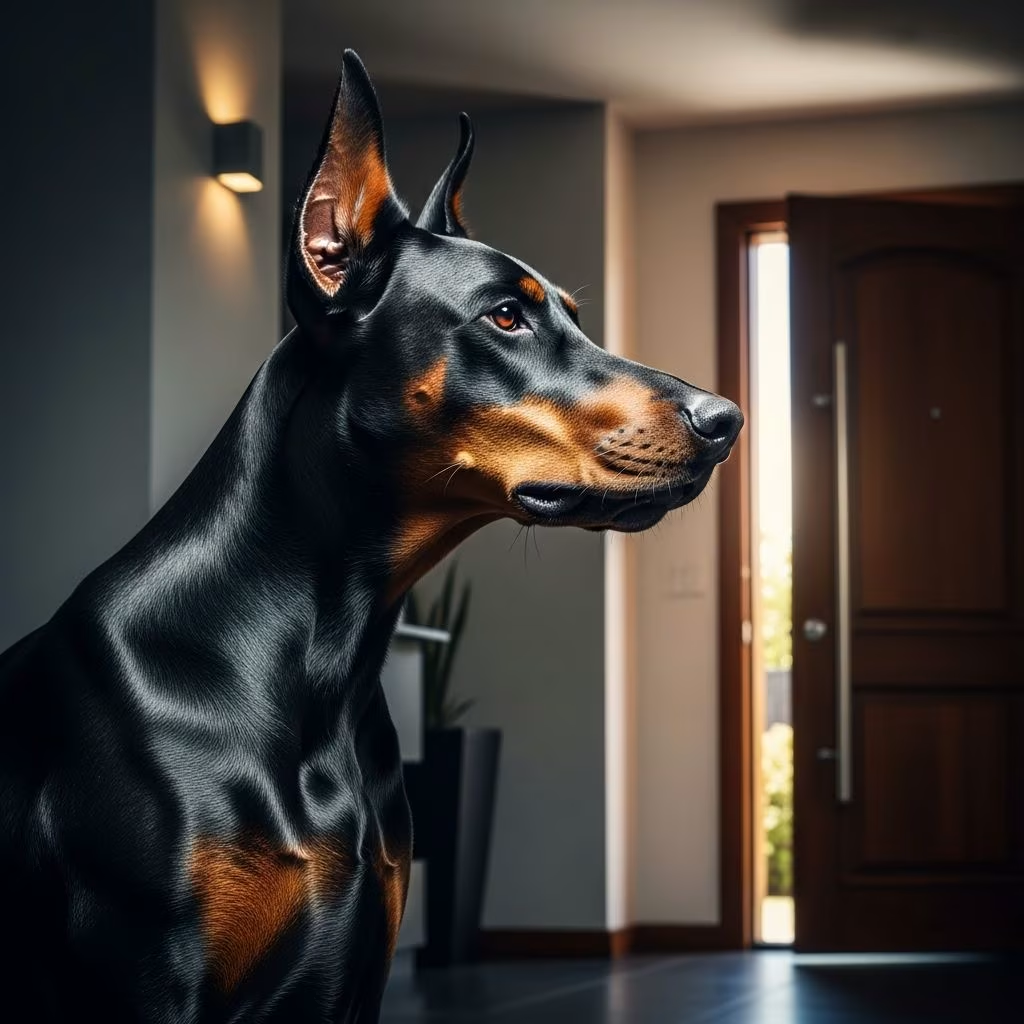
Doberman Pinschers possess innate protective qualities that often surpass many other breeds, driven by their breeding history and natural instincts for vigilance and loyalty.
The Origins Shaping Doberman Guardianship
Bred in the late 19th century by German tax collector Karl Friedrich Louis Dobermann, this breed emerged specifically to accompany and safeguard its owner during risky collections. This purposeful creation instilled a deep-seated drive to protect humans, setting Dobermans apart from breeds developed for herding, hunting, or mere companionship. Their ancestry traces to breeds like the German Pinscher, Rottweiler, and Greyhound, blending alertness, strength, and speed into a formidable protector.
Unlike many dogs selected for specific tasks such as retrieving or cattle driving, Dobermans were engineered for personal defense. This focus manifests in behaviors like instinctive threat assessment and family bonding, making them naturally attuned to human safety needs.
Innate Protective Behaviors Hardwired in Dobermans
Dobermans exhibit several untaught actions that mimic professional training, rooted in their genetics. One standout is the “invisible recall radius,” where they maintain proximity to owners while scanning surroundings, self-correcting distance without commands. This protective tracking keeps them close enough for defense yet positioned for environmental scouting.
Another key trait is instinctive threat filtering. Dobermans rapidly evaluate strangers, distinguishing neutral passersby from potential dangers through subtle cues like body language and intent. This precision prevents unnecessary aggression while ensuring readiness. They also employ protective body positioning, naturally inserting themselves between owners and perceived threats, creating a human shield effect purely on instinct.
- Check-in responses: Periodic glances toward owners during patrols confirm safety.
- Precision vocal alerts: Barking reserved for genuine threats, not every noise.
- Perimeter patrols: Silent sweeps of property boundaries, investigating anomalies with heightened alertness.
These behaviors contribute to owners feeling exceptionally secure, as Dobermans synchronize emotionally with family members, mirroring stress levels and responding accordingly.
Temperament: Loyalty Meets Discernment
Beyond raw instincts, Doberman temperament balances fierce protection with family affection. They form profound bonds, often described as “one-person dogs,” though proper socialization extends loyalty to the entire household. Alert, confident, and people-oriented, they remain gentle with loved ones while reserved toward outsiders—a discerning aloofness rather than fear-driven aggression.
Highly intelligent and trainable, Dobermans thrive on mental stimulation, excelling in obedience and protection sports. Their fearless, assertive nature suits experienced owners willing to provide structure. Without it, potential dominance or stranger suspicion can emerge, underscoring the need for early intervention.
Comparing Dobermans to Popular Guard Breeds
To assess if Dobermans exceed others in protectiveness, consider key rivals:
| Breed | Strengths | Doberman Edge |
|---|---|---|
| German Shepherd | Versatile working dog, police/military use, strong herding-protective drive. | Dobermans offer sleeker athleticism and faster response; less prone to hip issues long-term. |
| Rottweiler | Massive build, territorial guarding, intimidating presence. | Dobermans are more agile, owner-focused vs. property-focused; quicker speed for pursuit. |
| Bullmastiff | Powerful deterrent, historical gamekeeper role. | Dobermans surpass in endurance, intelligence for complex threat evaluation. |
| Belgian Malinois | High-drive, elite military applications. | Dobermans provide similar intensity with superior family companionship traits. |
Dobermans often edge out due to their blend of speed, smarts, and unwavering owner devotion, making them ideal for personal rather than solely territorial defense.
Male vs. Female: Tailoring Protection to Needs
Sex influences guarding style. Males, larger and more muscular, excel at property patrolling and territorial displays, deterring intruders through sheer size. Females mature faster, enabling earlier training, and focus intensely on individual owners, displaying agility ideal for personal escort duties. Females may show greater stranger aggression, enhancing close-quarters defense.
Choose based on scenario: males for expansive estates, females for singular human protection. Both sexes bond deeply but require socialization to temper instincts.
Training Essentials for Harnessing Instincts
Dobermans demand experienced handling to channel protection positively. Early, extensive socialization prevents shyness or over-aggression toward strangers and dogs. Consistent leadership—calm, firm boundaries without harshness—builds security and obedience.
Key training focuses:
- Obedience basics: Recall, heel, stay to reinforce control.
- Socialization: Exposures to diverse people, animals, environments from puppyhood.
- Protection sports: Schutzhund or IPO to refine instincts safely.
- Mental exercise: Puzzles, agility to curb boredom-driven issues.
Neglect leads to dominance or anxiety; proper guidance yields a reliable guardian.
Physical Traits Amplifying Protection
Sleek, muscular builds—males up to 100 lbs, females 65-90 lbs—grant explosive speed reaching 30 mph. Cropped ears (optional) and docked tails enhance alertness perception, though natural forms suffice. Their imposing silhouette alone deters, paired with athletic endurance for sustained vigilance.
Health and Lifestyle Considerations
Protective prowess requires maintenance. Lifespan averages 10-12 years; screen for hip dysplasia, von Willebrand’s disease, dilated cardiomyopathy. Daily 1-2 hour exercise—runs, hikes—matches high energy. Ample space suits them over apartments.
Nutrition: High-protein diets support muscle; mental jobs like scent work prevent destructiveness.
Real-World Protection Scenarios
Owners report Dobermans thwarting burglaries via alerts and positioning, or escorting children safely. Nighttime habits include door-facing sleep for entry guarding and vigilant neighborhood scans. These innate patterns make them proactive sentinels.
FAQs
Are Dobermans good with families?
Yes, with socialization, they adore children and integrate well, protectively shadowing them.
Do Dobermans attack unprovoked?
No, properly raised ones discriminate threats, avoiding needless violence.
Best age to start protection training?
Puppyhood for socialization; formal protection post-basic obedience, around 18 months.
Can novices own Dobermans?
Best for experienced owners due to intelligence and drive.
How do they fare with other pets?
Possible with intros; may dominate same-sex dogs.
Conclusion: Top-Tier Protectors with Responsibility
Dobermans stand out for instinctive, discerning protection surpassing many peers, but demand commitment to training and care. For vigilant families, they offer unmatched security and companionship.
References
- 7 Reasons Doberman Pinschers Are the Best Guard Dogs — A-Z Animals. 2023. https://a-z-animals.com/pets/dogs/doberman-pinscher/doberman-facts/doberman-guard-dogs/
- Doberman | History, Temperament & Lifespan — Pooch & Mutt. 2024-01-15. https://www.poochandmutt.co.uk/blogs/by-breed/doberman
- The Doberman Behaviors That LOOK Trained… But Are Pure Instinct — Doberman Planet (YouTube). 2025-12-28. https://www.youtube.com/watch?v=BgbDGRGlWAc
- Why Dobermans Make You Feel Safer Than Any Other Dog — Doberman Planet (YouTube). 2024. https://www.youtube.com/watch?v=lcPBWEqzoCY
- The Doberman Temperament: Here’s What to Expect — PetPlace.com. 2023-05-10. https://www.petplace.com/article/dogs/breeds/dog-breeds/doberman-temperament-heres-expect



