

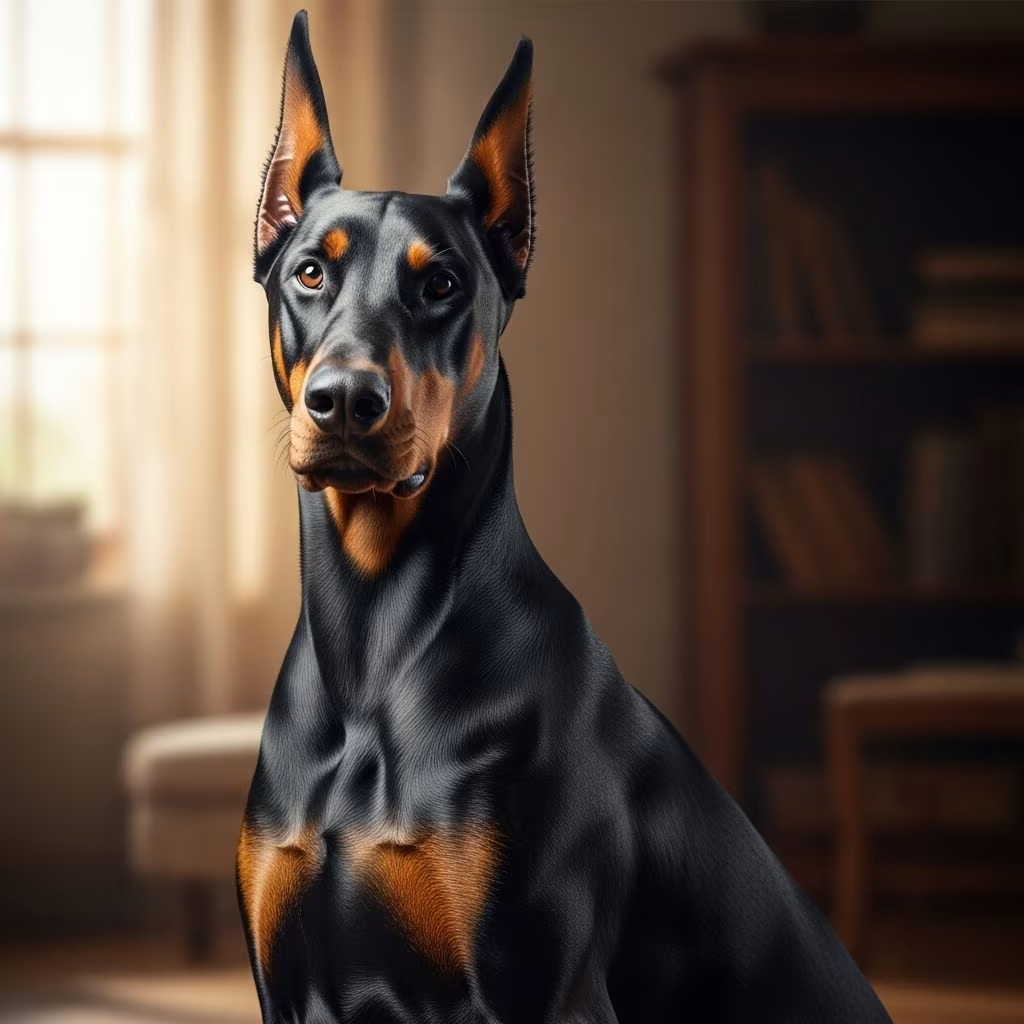
Doberman Pinscher Dog Breed: Complete Health and Care Guide
The Doberman Pinscher is a loyal dog known for being intelligent and alert. While often kept as a family dog, this breed is also commonly used for security, police work, and search and rescue operations. This comprehensive guide covers everything potential owners need to know about this remarkable working breed, including physical characteristics, temperament, health concerns, and proper care requirements.
Breed Characteristics and Physical Appearance
As a large dog breed, the Doberman Pinscher commands attention with its sleek, agile, and powerful appearance. The breed was developed in Germany around 1890 by Karl Friedrich Louis Dobermann, a tax collector, night watchman, and dogcatcher, who aimed to create the perfect working dog. Today’s Dobermans retain that purposeful, muscular build their creator envisioned.
Size and Build
Dobermans are substantial dogs with impressive physical dimensions. Dogs typically stand 24–28 inches tall at the shoulder, while females are slightly smaller. The breed weighs anywhere between 60–100 pounds, with males generally being more muscular and heavier than females. This size makes them ideal for protective work while maintaining the agility necessary for their roles in law enforcement and search and rescue.
Coat and Color Variations
Though many people immediately picture a tan and black Doberman Pinscher, colors can vary considerably. The breed comes in black, blue, fawn, and red colorations, with distinctive rust-colored markings present above the eyes, on the muzzle, on all legs, and below the tail. These markings are a breed hallmark that appears consistently across all color variations.
Dobermans have a short, smooth coat and are known to be moderate to heavy shedders. In rare cases, the breed can be white, though this is uncommon. White Dobermans are cream-colored with blue eyes and pink noses, paw pads, and eye rims. The first white Doberman was born in 1976, resulting from a partial deletion in the SLC45A2 gene.
Temperament and Personality
The Doberman Pinscher temperament is energetic, alert, and loyal. These dogs do well in an active home where they can use their intelligence and require mental and physical challenges throughout the day to prevent boredom and destructive behavior. The breed has earned its place as one of the most effective military dogs and family guardians among all breeds.
Key Personality Traits
Dobermans are alert but generally quiet, sounding an alarm only when needed. They are gifted students capable of learning complicated tasks and responding quickly to training. Though aloof toward strangers and tough toward those they perceive to be threatening, the dog is surprisingly sensitive and demonstrative toward family, friends, and handlers.
Despite their fearsome reputation, Dobermans are playful and very energetic companions. They get along well with other family pets but can be domineering toward strange dogs. The breed is known for fearlessness and intelligence, making them excellent candidates for advanced training and specialized work in security and law enforcement.
Common Health Issues
Prospective Doberman owners should be aware of several health conditions that affect this breed more frequently than others. Understanding these potential issues helps owners make informed decisions and work closely with veterinarians on preventive care.
Dilated Cardiomyopathy (DCM)
Dilated cardiomyopathy is one of the most serious health concerns affecting Doberman Pinschers. Research has shown that the breed is affected by an attenuated wavy fiber type of DCM that affects many other breeds, as well as an additional fatty infiltration-degenerative type that appears to be specific to Doberman Pinscher and Boxer breeds.
This serious disease is likely to be fatal in most Dobermans affected. Following a diagnosis, the average non-Doberman has an expected survival time of 8 months; for Doberman Pinschers, however, the expected survival time is less than two months. Although the causes for the disease are largely unknown, there is evidence that it is a familial disease inherited as an autosomal dominant trait.
Gastric Dilatation-Volvulus (Bloat)
The breed is susceptible to gastric dilatation-volvulus (GDV), a life-threatening condition in which the stomach twists within the body, cutting off the flow of food and water to the intestines and the flow of blood from the stomach back to the heart. The breed’s characteristically deep but narrow chest appears to inhibit some dogs’ ability to belch and thereby relieve gas pressure in the stomach.
A buildup of gas pressure can cause breathing difficulties, constrict blood flow, and even rupture the stomach wall, all of which may cause cell death in many tissues and send a dog into shock. This condition requires immediate veterinary attention and is often fatal if not treated promptly.
Von Willebrand Disease
Von Willebrand Disease (vWD) is a genetic blood disorder that is seen in Doberman Pinschers more than some other breeds. This disease causes a deficiency in a protein called the von Willebrand factor, which is necessary for platelets to stick together and form a clot.
In dogs that are deficient in this protein, the blood may have difficulty clotting, which can lead to bleeding from the nose, vulva, bladder, or gums. Additionally, dogs with this condition may bleed for a long time after trauma or surgery. Genetic testing can identify carriers, allowing responsible breeders to make informed breeding decisions.
Doberman Pinscher Grooming Guide
Grooming a Doberman Pinscher is relatively straightforward due to their short, smooth coat. However, regular maintenance is essential to keep their coat healthy and minimize shedding issues.
Coat Care
The short, smooth coat requires regular brushing to remove loose hair and reduce shedding around the home. A rubber curry brush or similar tool works well for this breed. Bathing should be done monthly or as needed, using a mild dog shampoo to maintain coat health and shine.
Additional Grooming Needs
Beyond coat care, Dobermans require regular ear cleaning, nail trimming, and dental care. Their ears should be checked weekly and cleaned as needed to prevent infections. Nails should be trimmed every three to four weeks, and teeth should be brushed regularly to maintain oral health.
Training and Exercise Requirements
Dobermans are very intelligent, learn easily, and respond quickly to training. However, they are very strong dogs and can become pushy without proper leadership and consistent training. Early socialization and obedience training are essential for this breed to ensure they develop into well-behaved family members.
The breed requires substantial daily exercise to maintain physical health and mental well-being. Without adequate activity, Dobermans can become destructive and develop behavioral problems. A combination of long walks, running, play sessions, and mental stimulation activities is necessary to keep them content and well-adjusted.
Comparison with Similar Breeds
| Breed | Height | Weight | Lifespan | Key Differences |
|---|---|---|---|---|
| Doberman Pinscher | 24-28 inches | 60-100 lbs | 10-13 years | Larger, longer snouts, sleeker appearance |
| German Pinscher | 17-20 inches | 25-45 lbs | Varies | Smaller, more compact, descended from German Pinscher breed |
| Miniature Pinscher | Toy size | Lightweight | 12-16 years | Toy breed, miniature version, longer living |
Doberman vs. German Pinscher
German Pinschers and Doberman Pinschers are both German breeds and look very similar. Dobermans are, in fact, descended from German Pinschers. However, the two related breeds do have their differences. Most notably, Dobermans are larger than German Pinschers, which stand only 17–20 inches and weigh 20–40 pounds. Dobermans are taller and leaner with longer snouts, while Pinschers are more compact and have shorter snouts.
Lifespan and Life Expectancy
The Doberman Pinscher has a typical lifespan of 10–13 years. This relatively moderate lifespan is influenced by their susceptibility to serious health conditions, particularly dilated cardiomyopathy. With proper care, regular veterinary checkups, and a healthy lifestyle, some Dobermans may live toward the upper end of this range.
Frequently Asked Questions
Q: Are Doberman Pinschers good family dogs?
A: Yes, Doberman Pinschers can be excellent family dogs. They are loyal, intelligent, and affectionate with family members. However, they require proper training, socialization, and an active lifestyle. They do best in homes where owners can provide consistent leadership and mental stimulation.
Q: How much exercise do Doberman Pinschers need daily?
A: Dobermans require substantial daily exercise, including long walks, running, and play sessions. They also need mental stimulation to prevent boredom and destructive behavior. At least one to two hours of activity daily is recommended.
Q: What is the biggest health concern for Doberman Pinschers?
A: Dilated cardiomyopathy (DCM) is the most serious health concern, as it is often fatal. Gastric dilatation-volvulus (bloat) is another life-threatening condition. Regular veterinary checkups and cardiac screening are recommended.
Q: Do Doberman Pinschers shed a lot?
A: Yes, Dobermans are moderate to heavy shedders despite their short coat. Regular brushing helps manage shedding and keeps their coat healthy.
Q: Are Doberman Pinschers aggressive?
A: Dobermans have a reputation for aggression, but studies show they rank as far less aggressive toward humans and show less aggression than many breeds without a reputation. Proper socialization and training significantly influence their behavior.
Q: What colors do Doberman Pinschers come in?
A: Dobermans come in black, blue, fawn, and red colorations with distinctive rust-colored markings. Rarely, they can be white. All variations have the characteristic markings above the eyes, on the muzzle, legs, and below the tail.
Conclusion
The Doberman Pinscher is a remarkable breed that combines intelligence, loyalty, and physical prowess. These dogs excel as family companions, guard dogs, and working animals in law enforcement and search and rescue. However, they require committed owners willing to provide proper training, socialization, exercise, and veterinary care. Understanding the breed’s health concerns, particularly dilated cardiomyopathy and bloat, allows owners to work with veterinarians on prevention and early detection strategies. With the right environment and care, Dobermans make devoted and energetic family members who bring joy and protection to their homes.
References
- Dobermann — Wikipedia. 2025. https://en.wikipedia.org/wiki/Dobermann
- Doberman Pinscher: Colors, Lifespan & Personality — Britannica. 2025. https://www.britannica.com/animal/Doberman-pinscher
- Doberman Pinscher Dog Breed Health and Care — PetMD. 2025. https://www.petmd.com/dog/breeds/doberman-pinscher
- Doberman Pinscher Dog Breed Information — American Kennel Club. 2025. https://www.akc.org/dog-breeds/doberman-pinscher/
- Doberman Pinscher: All the Facts — MetLife Pet Insurance. 2025. https://www.metlifepetinsurance.com/blog/breed-spotlights/doberman-pinscher/



