

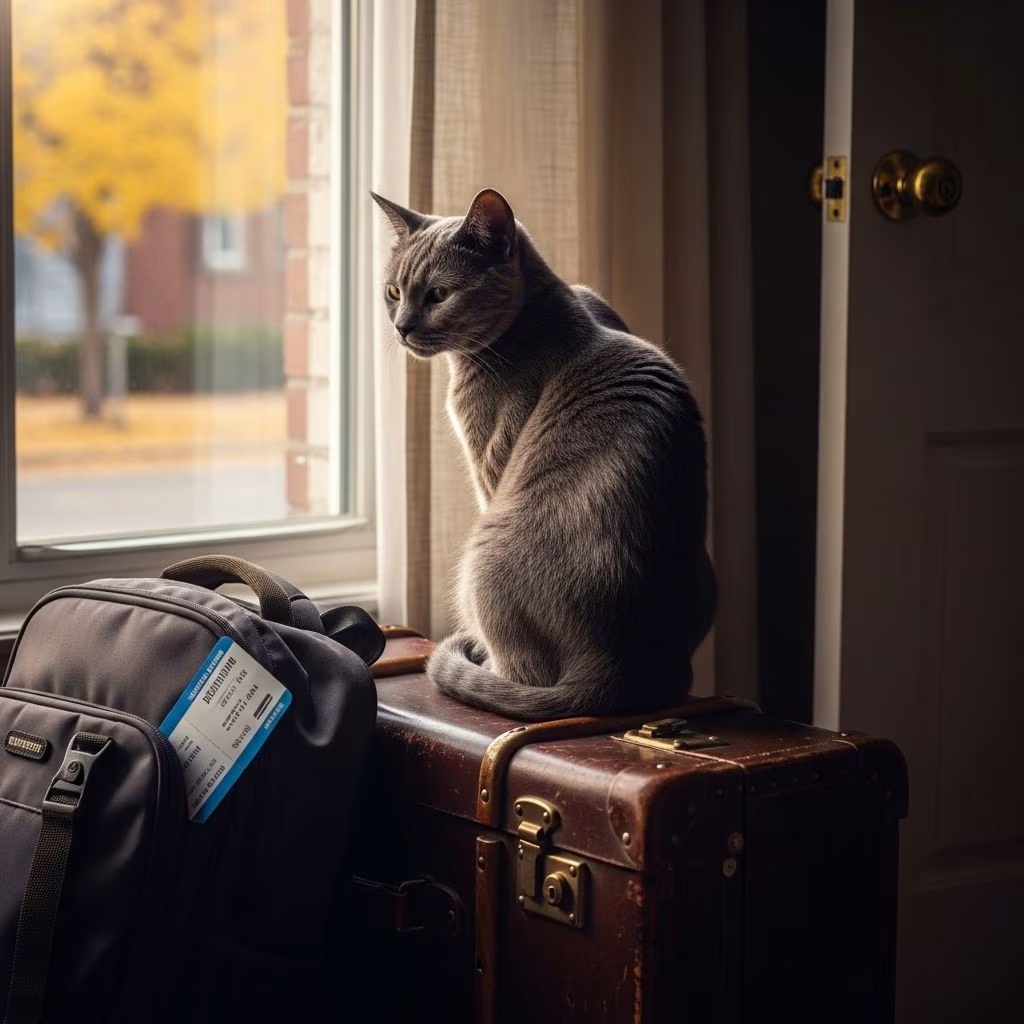
Cats are perceptive creatures, often picking up on subtle cues that signal their owner’s impending departure. Many cat owners notice their pets becoming unusually clingy, vocal, or destructive right before trips, raising the question: do cats truly know when you’re leaving town? Research and veterinary observations indicate that cats can indeed sense changes in routine, body language, and even scents associated with packing or travel preparation. This awareness stems from their acute senses and strong bond with owners, leading to behaviors linked to **separation anxiety** in some felines.
Understanding this phenomenon helps owners prepare better, reducing stress for both cat and human. Indoor cats, especially those living solo, are particularly prone to anxiety when left alone for extended periods, showing heightened sensitivity to their environment. This article delves into the science behind feline perception, common signs of distress, and practical solutions to ensure your cat thrives while you’re away.
How Do Cats Know You’re About to Leave?
Cats possess remarkable observational skills, detecting patterns in daily life that humans overlook. They notice the rustle of a suitcase, the jingle of keys, or even a change in your scent from packing toiletries. These cues trigger anticipatory behaviors because cats associate them with prolonged absences.
For instance, a cat might start following you more closely as you gather items, or exhibit stress through dilated pupils and tail flicking. Veterinary experts note that cats’ strong memory for routines means they quickly learn departure signals, much like how they anticipate mealtimes. Single indoor cats are especially attuned, as their world revolves around their primary caregiver.
- Visual cues: Watching you pack bags or shoes.
- Auditory cues: Sounds like zippers, suitcase wheels, or phone alarms.
- Olfactory cues: New smells from travel items or lotions.
- Behavioral shifts: Your rushed movements or reduced playtime.
These observations aren’t mere coincidence; they’re evolutionary adaptations from wild ancestors who relied on vigilance for survival. Modern house cats channel this into attachment to owners, sometimes manifesting as distress when sensing isolation ahead.
Signs Your Cat Knows You’re Leaving (and Doesn’t Like It)
If your cat suddenly becomes a shadow, meowing incessantly as you prepare to leave, it’s likely they’ve clocked your travel plans. Common indicators include:
- **Excessive vocalization:** Crying, yowling, or moaning, especially timed with your exit routine.
- **Clinginess or aggression:** Jumping on legs, attacking hands near bags, or extreme following.
- **Appetite changes:** Refusing food when you’re away or boarded.
Beyond immediate reactions, prolonged signs emerge via home cameras: pacing, trembling, overgrooming, or hiding. Destructive acts like scratching furniture or knocking items often correlate directly with absences, distinguishing separation anxiety from general mischief.
| Sign | Description | When It Occurs |
|---|---|---|
| Excessive Meowing | Loud crying or yowling | During departure or while alone |
| Litter Box Avoidance | Urinating outside box | Only when owner is away |
| Destructive Behavior | Scratching, knocking objects | Post-departure |
| Overgrooming | Excessive licking, hairballs | Alone time |
| Exuberant Reunions | Overly excited greetings | Upon return |
These symptoms vary by cat personality; independent felines might sleep through short trips (up to 18 hours daily sleep is normal), while bonded ones feel loneliness akin to dogs. Always rule out medical issues with a vet, as appetite loss or vomiting warrants checkups.
Do Cats Get Separation Anxiety When You Travel?
Yes, **separation anxiety in cats** is real, particularly during owner vacations. Unlike dogs, cats hide distress subtly, but indicators like withdrawal, excessive meowing, or clinginess reveal their upset. Solo indoor cats face higher risk, viewing owners as their sole social anchor.
Stress peaks in unfamiliar scenarios like boarding, where appetite drops and hiding increases. Even pet sitters may not fully alleviate it, as cats prefer familiar territory and scents. Depression-like symptoms, including lethargy, underscore the emotional toll of extended separations.
How to Help Your Cat Cope When You’re Away
Mitigating anxiety involves desensitization, enrichment, and routine maintenance. Start by minimizing departure cues: leave quietly without fanfare, varying your routine to blur patterns.
- Desensitize cues: Practice picking up keys or bags without leaving, rewarding calm behavior.
- Enrich environment: Provide puzzle feeders, window perches, and rotating toys to combat boredom.
- Use tech: Pet cameras for check-ins, automatic feeders, and pheromone diffusers like Feliway.
- Gradual alone time: Build tolerance with short absences, extending slowly.
For vacations, opt for in-home sitters over boarding to preserve territory comfort. Multi-cat homes soften isolation, as companions provide distraction.
FAQs: Cat Separation Anxiety and Travel
Do cats know when you’re packing to leave?
Yes, cats observe cues like suitcase sounds and your hurried pace, associating them with absence.
Can cats get depressed when owners travel?
Absolutely; signs include hiding, appetite loss, and lethargy, especially in bonded indoor cats.
How long can you leave a cat alone?
24-48 hours max with provisions; longer needs sitters to prevent anxiety escalation.
What if my cat pees outside the litter box when I’m gone?
This signals stress; use cameras to confirm, then address with enrichment and vet visit.
Do all cats suffer separation anxiety?
No, but single indoor cats are most susceptible; personality and history play roles.
Long-Term Strategies for Stress-Free Travel
Consistency breeds confidence. Maintain feeding/play schedules via automations. Consider calming supplements (vet-approved) or behaviorists for severe cases. Over time, cats adapt, viewing absences as temporary. Travel confidently knowing proactive steps keep your cat secure and content.
References
- Separation Anxiety – Indoor Pet Initiative — The Ohio State University. Accessed 2026. https://indoorpet.osu.edu/cats/problem-solving/separation-anxiety
- Cat Separation Issues: Understanding the Signs and How to Help — PAW CBD. Accessed 2026. https://www.pawcbd.com/blogs/posts/cat-separation-issues-understanding-the-signs-and-how-to-help
- Separation Anxiety in Cats – 7 Signs & 9 Ways to Help — Sploot Veterinary Care. Accessed 2026. https://www.splootvets.com/post/separation-anxiety-in-cats-signs-symptoms-ways-to-help
- Helping Your Cat with Being Left Alone & Separation Anxiety — Arm & Hammer. Accessed 2026. https://www.armandhammer.com/en/articles/tips-leaving-cat-alone-separation-anxiety
- What to Do for Cats When You Go on Vacation — Green Paws Chicago. Accessed 2026. https://greenpawschicago.com/what-to-do-for-cats-when-you-go-on-vacation/
- What Your Cat Thinks About When You’re Not Home — Comforted Kitty. Accessed 2026. https://comfortedkitty.com/what-your-cat-thinks-about/



