

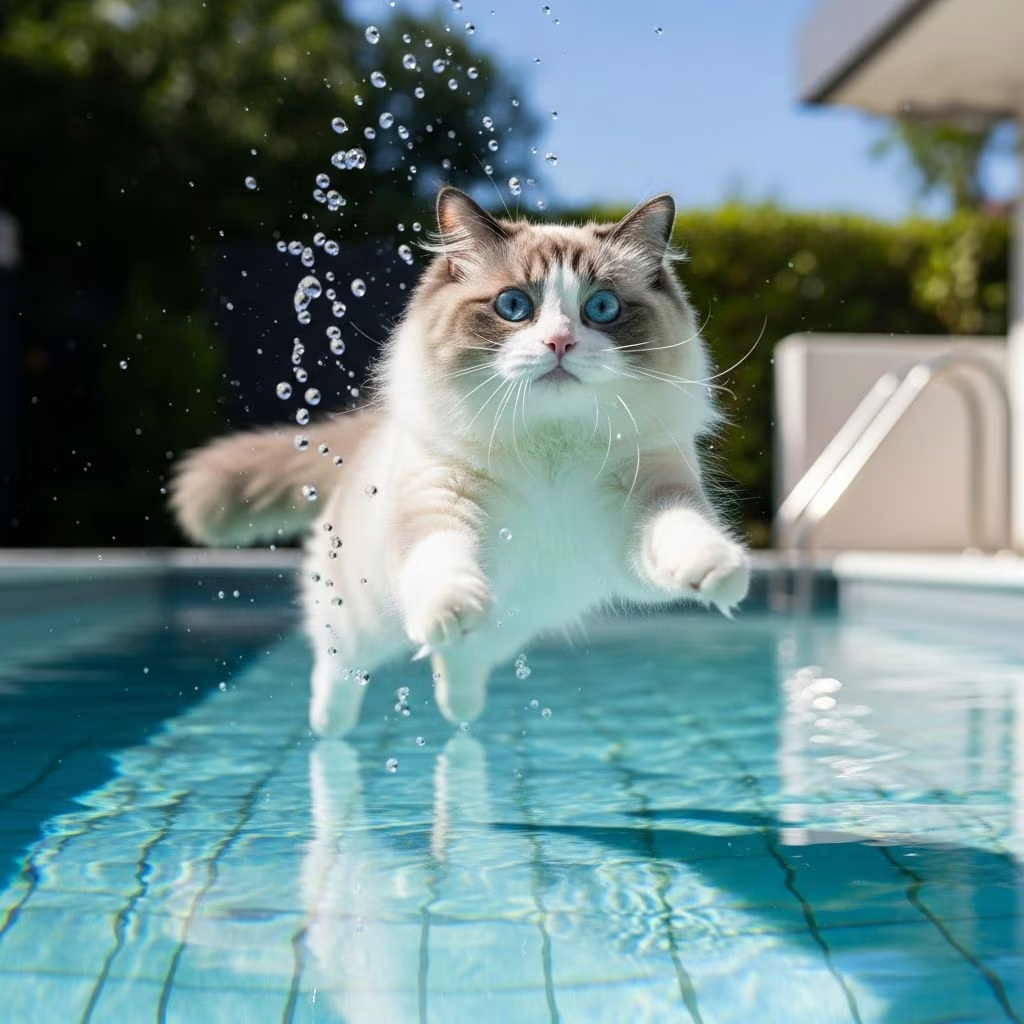
Ragdoll cats possess an innate ability to swim, making reflexive paddling motions to stay afloat when submerged, though most prefer shallow play over full immersion. Their muscular build supports effective movement in water, debunking myths about their long fur hindering swimming.
The Unique Appeal of Ragdoll Cats Around Water
Renowned for their striking blue eyes, plush semi-long coats, and affectionate personalities, Ragdoll cats stand out among felines for their relative tolerance of water compared to other breeds. Unlike many cats that flee at the sight of a puddle, Ragdolls often curiously paw at faucets or linger near running showers, showing intrigue rather than fear. This curiosity stems from their laid-back temperament, allowing them to approach novel experiences with less aversion.
However, individual preferences vary widely. Some Ragdolls splash joyfully in shallow basins, while others retreat from anything beyond a damp paw. Factors like early socialization play a key role; kittens gently exposed to water develop positive associations, whereas accidental slips into tubs can create lifelong wariness. Their thick fur, while beautiful, absorbs water heavily, leading to discomfort from added weight and prolonged drying times, which discourages prolonged exposure.
Instinctive Swimming Skills in Ragdolls
All cats, including Ragdolls, have a natural swimming reflex triggered upon submersion, enabling them to paddle to safety instinctively. Ragdolls excel in calm waters, handling light waves without issue due to their strong, muscular physiques beneath fluffy exteriors. Videos of these cats navigating pools demonstrate graceful strokes, though they typically aim for the nearest exit rather than leisurely laps.
In challenging conditions like strong currents or open seas, instinct drives avoidance, protecting them from exhaustion or hypothermia. Their larger size provides buoyancy advantages over smaller breeds, but unsupervised deep-water access remains risky, as fatigue can set in quickly with wet fur weighing them down.
| Aspect | Ragdoll Cats | Typical Domestic Cats |
|---|---|---|
| Water Curiosity | High; paws at streams | Low; often avoids |
| Swim Reflex | Strong; effective paddling | Present but variable |
| Fur Impact | Heavy absorption, slow dry | Less pronounced |
| Training Ease | Moderate to high | Low |
This comparison highlights Ragdolls’ edge in water tolerance, supported by owner observations.
Why Some Ragdolls Shun Water
Despite their capabilities, many Ragdolls dislike full-body immersion due to sensory overload from soaked fur and loss of scent markers essential for territorial communication. Maternal instincts reinforce this; queens shield kittens from baths or puddles, imprinting caution early. Negative incidents, like tumbling into a full sink, amplify fears, turning playful explorers into water avoiders.
Breed genetics contribute too. While not scientifically proven, theories suggest their calm demeanor fosters openness, yet the practical hassles of grooming post-swim deter enthusiasm. Owners report varied responses: some cats demand sink playtime, others hiss at shower proximity.
Safe Training Methods for Water Comfort
Gradual desensitization builds confidence without trauma. Begin with non-threatening exposures:
- Position a cat fountain nearby for constant trickling sounds and paw dips, associating water with hydration spots.
- Place shallow bowls in familiar lounging areas, encouraging voluntary contact.
- Gently wipe with warm, damp cloths during cuddle sessions, rewarding calm behavior with treats.
- Progress to supervised shallow tub time (10-15 cm warm water), speaking soothingly and offering post-session rewards.
Start young for best results; kittens adapt faster than adults, who may need weeks of patience. Always prioritize consent—forced baths erode trust. Positive reinforcement trumps coercion, fostering enjoyment over mere tolerance.
Water Safety Essentials for Ragdoll Owners
Prevention averts accidents. Secure gardens with pool cat-savers—floating ramps allowing self-exit—and cover rain barrels or ponds. Indoors, never leave tubs filling unattended, as curious Ragdolls may investigate edges perilously.
Supervised play mitigates risks like chemical irritation from pool treatments, hypothermia in cool water, or exhaustion in depths. Towel-dry promptly post-exposure to prevent chills, and monitor for stress signals like flattened ears or tail lashing. Even strong swimmers tire, so limit sessions to minutes initially.
Health Benefits and Considerations of Water Play
Controlled water interaction aids grooming for long-coated Ragdolls, loosening dirt without full baths. Low-impact ‘swims’ in shallow setups provide gentle exercise, supporting joint health in this large breed. Hydration encouragement via playful fountains combats urinary issues common in felines.
Yet, wet fur breeds skin infections if not dried thoroughly, and chlorine stings eyes. Consult vets for breed-specific advice, especially for seniors or those with mobility concerns. Over time, water-positive Ragdolls enjoy shared shower moments, strengthening bonds.
Real Owner Experiences with Ragdoll Water Adventures
Anecdotes abound of Ragdolls defying stereotypes: one owner shared pool videos where their cat paddled confidently before demanding a towel. Another described sink-splash marathons turning bath time into play. Contrasts exist too—traumatized adults requiring months to tolerate damp cloths. These stories underscore personalization; what delights one may dismay another.
Common Queries About Ragdolls and Water
Frequently Asked Questions
Are Ragdoll cats naturally good swimmers?
Yes, their muscular frames enable effective swimming in calm waters, though they prefer not to.
How do I get my adult Ragdoll to like baths?
Use gradual exposure with treats and warm cloths, progressing slowly to water.
Is it safe to let Ragdolls swim in pools?
Only supervised; provide exits and rinse off chemicals afterward.
Why does my Ragdoll play in the sink but hate baths?
Shallow splashing feels fun; full submersion overwhelms with wet fur weight.
Can water play help with Ragdoll grooming?
Yes, shallow dips loosen debris, easing coat maintenance.
These FAQs address top concerns, drawing from collective insights.
Comparing Ragdoll Water Affinity to Other Breeds
Ragdolls outpace aloof breeds like Siamese in water curiosity but trail Turkish Vans, famed ‘swimmers.’ Their docility aids training, unlike skittish orientations. Understanding this positions owners to nurture strengths safely.
References
- Do Ragdoll Cats Like Water? Can They Swim? — RagdollCatLife. 2023-05-15. https://ragdollcatlife.com/do-ragdoll-cats-like-water/
- Do Ragdoll Cats Like Water? Can They Swim? — Hepper. 2024-08-20. https://articles.hepper.com/do-ragdoll-cats-like-water/
- Ragdoll Cats Water Guide — PetsCare. 2024-03-10. https://www.petscare.com/news/post/ragdoll-cats-water-guide
- Do Ragdoll Cats Like Water? Fact Or A Myth — PetReveal. 2023-11-12. https://petreveal.com/do-ragdoll-cats-like-water-fact-or-a-myth/
- Ragdoll Cats Swimming — FloppyCats. 2022-07-05. https://www.floppycats.com/ragdoll-cats-swimming.html
- Do Cats Naturally Know How to Swim? — Cats.com. 2024-01-18. https://cats.com/can-cats-swim



