

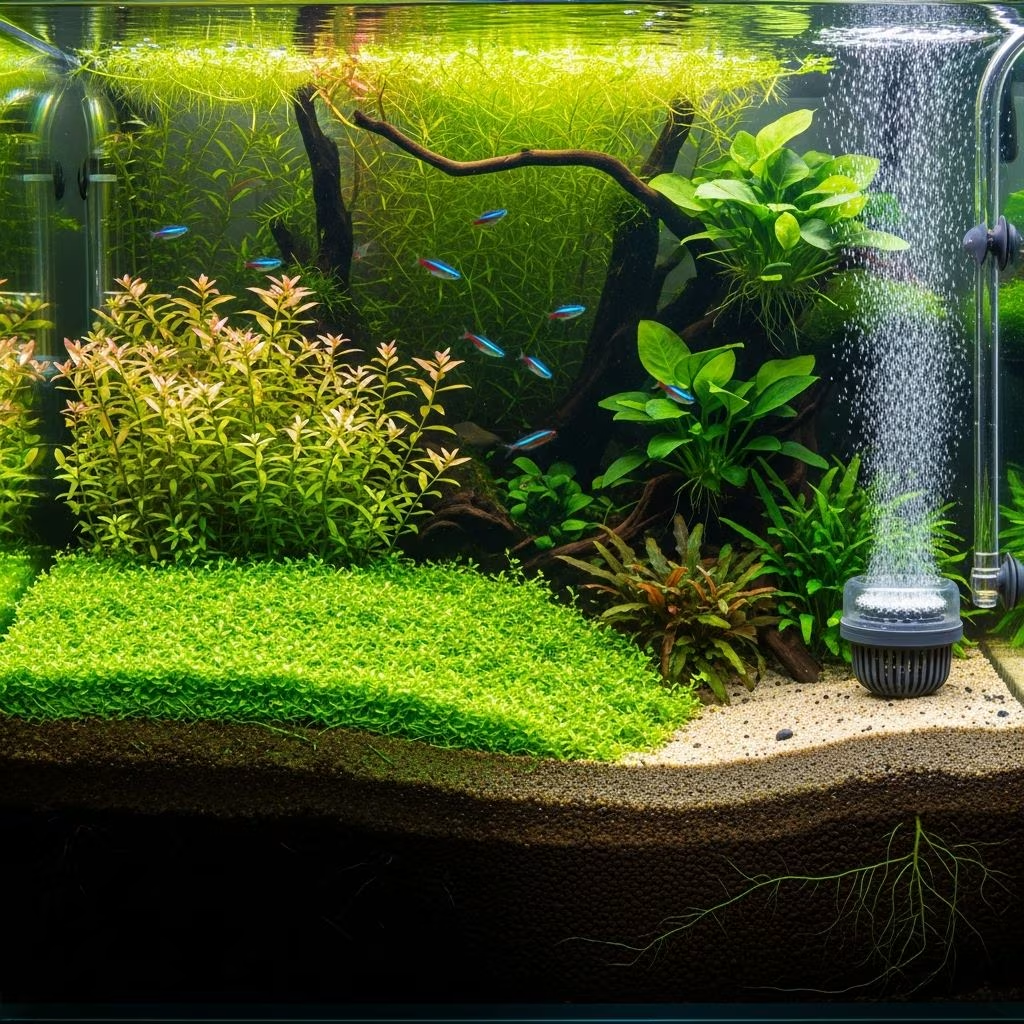
Do Planted Tanks Require CO2?
One of the most common questions among aquarium enthusiasts is whether planted tanks require carbon dioxide (CO2) supplementation. The straightforward answer is: it depends on your specific setup. Not all planted aquariums need CO2 injection, but many benefit significantly from it. Understanding the factors that influence this decision will help you create a thriving planted aquarium tailored to your needs and goals.
Plants are composed of approximately 50% carbon by dry weight, and submerged aquatic plants absorb carbon through dissolved CO2 in the water. While all aquarium plants can benefit from additional CO2, the necessity largely depends on your lighting conditions, plant species selection, and overall tank design.
Understanding CO2 Levels in Aquariums
Before determining whether your planted tank needs CO2, it’s important to understand the natural and supplemented CO2 levels in aquariums. In low-tech aquariums without CO2 injection, CO2 levels typically range from 2 to 10 parts per million (ppm), which is derived from natural sources like fish waste and the water itself. High-tech aquariums with pressurized CO2 systems aim for levels between 30 to 35 ppm for optimal plant growth.
The reason CO2 supplementation has such a dramatic effect on aquatic plants is that carbon acts as a limiting factor in low-tech aquariums. When you provide adequate light without sufficient CO2, photosynthesis becomes restricted, preventing plants from growing at their full potential and creating an environment where algae can thrive.
The Role of Lighting in CO2 Requirements
Lighting is the primary factor determining whether your planted tank needs CO2 supplementation. The relationship between light intensity and CO2 requirements is direct: higher light levels demand more CO2 to support increased photosynthesis rates.
Low-Light Aquariums
For aquariums with photosynthetically active radiation (PAR) levels between 20 to 30 μmols or less than 2 watts per gallon (WPG), CO2 supplementation is generally not necessary. At these low light levels, the natural CO2 present in your tank—around 6 ppm—is typically sufficient for plants to grow successfully without additional injection. The light intensity is simply too low to drive photosynthesis at rates that would consume all available carbon.
Medium-Light Aquariums
Medium-light aquariums with PAR output between 30 to 50 μmols or approximately 2 WPG may benefit from low-level CO2 supplementation. At these moderate light levels, plants initially grow well using natural CO2, but as they mature and become denser, they may eventually deplete the available carbon. A simple DIY CO2 system, such as a yeast-based or citric acid method, is often sufficient for medium-light setups.
High-Light Aquariums
High-light conditions with PAR output between 50 to 90 μmols or over 2 WPG require pressurized CO2 systems or hybrid approaches. When you expose plants to high-intensity lighting, they attempt to photosynthesize at maximum capacity. Without adequate CO2 supplementation, this creates a severe carbon limitation that stunts plant growth and allows algae to flourish. The high lighting essentially “drives” plants to consume more CO2 and nutrients than naturally available in the tank.
Plant Species and Growth Rates
Different plant species have varying CO2 requirements based on their natural growth rates and environmental demands. Understanding your plants’ needs is crucial for determining whether supplementation is necessary.
Low-Demand Plants
Certain plants, such as cryptocoryne species, are extremely adaptable and can thrive in low-tech setups without CO2 injection. These hardy plants are excellent choices for beginners and those who prefer simple, low-maintenance aquariums. Easy beginner plants often have slow to moderate growth rates and can survive in low light with minimal supplementation.
Medium-Demand Plants
Plants like scarlet temple can benefit from CO2 supplementation but don’t absolutely require it to survive. These plants will grow reasonably well in medium-light, low-tech setups but may show enhanced growth and coloration with additional CO2.
High-Demand Plants
Fast-growing stem plants, dwarf hairgrass, carpeting plants like dwarf baby tears, and *Blyxa japonica* have higher carbon demands and generally necessitate CO2 supplementation for the best results. These plants photosynthesize rapidly and consume carbon at rates that quickly deplete natural aquarium levels. Fast-growing plants are particularly problematic in heavily planted tanks, where their combined CO2 demand can rapidly create deficiencies.
Planting Density and Tank Composition
The density and arrangement of plants in your aquarium significantly impacts CO2 requirements. Heavily planted aquariums, where most of the substrate is covered with vegetation, experience higher overall CO2 consumption. When you fill an aquarium with numerous fast-growing species and continuously propagate them to maintain maximum density, the combined carbon demand becomes substantial.
In densely planted setups, CO2 deficiency can trigger several problems: plants stop growing, chlorophyll production decreases resulting in pale or white leaves, and algae blooms become persistent. These symptoms indicate that your tank has crossed the threshold where natural CO2 levels can no longer support your plant mass.
Signs Your Planted Tank Needs CO2
Several indicators suggest your planted aquarium would benefit from CO2 supplementation:
Stalled Plant Growth
Plants that initially grow well but then plateau or stop growing despite adequate light and nutrients are likely experiencing CO2 limitation. This slowdown typically occurs after several weeks as fast-growing plants consume available carbon and create a deficiency.
Algae Blooms
The primary cause of algae and poor plant health in low-tech aquariums is carbon deficiency. When light levels increase but plant growth stalls due to insufficient CO2, you create ideal conditions for algae. Algae thrives in tanks with abundant light and limited plant growth competing for nutrients.
Pale or Discolored Leaves
CO2 deficiency can restrict chlorophyll production, causing leaves to appear pale, white, or yellowish rather than displaying vibrant green coloration. This deficiency symptom usually appears in conjunction with slowed growth and increased algae.
Nutrient Accumulation
When plant growth is limited by CO2, plants cannot efficiently utilize available nutrients, causing them to accumulate in the water column. These excess nutrients further promote algae growth, creating a problematic cycle.
CO2 Injection Methods
If you determine that your planted tank needs CO2 supplementation, several methods are available, ranging from simple DIY approaches to sophisticated pressurized systems.
DIY CO2 Systems
DIY methods using yeast and sugar or citric acid and baking soda are inexpensive options suitable for low to medium-light aquariums. These systems produce CO2 through a chemical or fermentation reaction and are sufficient for many home aquarists. However, they provide inconsistent CO2 levels that can fluctuate throughout the day.
Pressurized CO2 Systems
Pressurized systems using CO2 cylinders offer precise control and consistent CO2 delivery. For a 40-gallon aquarium, a 5-pound cylinder will typically last 3 to 4 months at a good injection rate. Recommended cylinder sizes include a 2-pound cylinder for tanks 20 gallons or smaller, 5-pound for 25 to 40 gallons, and 10-pound for 55 gallons or larger. These professional-grade systems are ideal for high-light, heavily planted tanks.
Hybrid Systems
Some aquarists use hybrid approaches combining DIY and pressurized elements for cost-effective, medium-performance supplementation.
Maintaining Optimal CO2 Levels
If you add CO2 to your planted tank, maintaining consistent levels is crucial. Recommended CO2 levels are typically 25 to 35 ppm, and it’s important these levels remain relatively constant. Fluctuating CO2 levels are known to cause algae problems, so stable supplementation is preferable to inconsistent injection.
One indicator of adequate CO2 levels is the “pearling” effect—visible oxygen bubbles released from plant leaves during daytime photosynthesis. This occurs when plants produce so much oxygen from photosynthesis that it saturates the water and forms visible bubbles. However, don’t expect immediate results after adjusting CO2; it typically takes at least 24 hours to see effects, and three days is recommended before making further adjustments.
If you maintain over 2 WPG of lighting with stable CO2 levels between 20 to 35 ppm, plant growth will typically be rapid, especially with fast-growing stem plants. This rapid growth increases nutrient consumption, necessitating regular fertilizer additions to prevent nutrient deficiencies that would again limit growth and promote algae.
Decision-Making Framework
To determine whether your specific planted tank needs CO2, consider these factors in combination:
| Factor | No CO2 Needed | CO2 Beneficial | CO2 Essential |
|---|---|---|---|
| Lighting | <2 WPG or 20-30 PAR | 2 WPG or 30-50 PAR | >2 WPG or 50-90 PAR |
| Plant Types | Cryptocoryne, low-demand | Moderate growth species | Fast-growing, carpeting plants |
| Planting Density | Sparse to moderate | Moderately dense | Heavily planted |
| Growth Goals | Minimal, natural growth | Moderate, steady growth | Lush, rapid growth |
Frequently Asked Questions
Q: Can I keep a planted aquarium without CO2?
A: Yes, absolutely. With low lighting (less than 2 WPG), hardy plant species like cryptocoryne, and sparse to moderate planting density, planted aquariums can thrive without CO2 supplementation. Natural CO2 levels in the water are typically sufficient for these setups.
Q: What happens if I add CO2 to a low-light tank?
A: Adding CO2 to low-light aquariums provides minimal benefit since light, not carbon, is the limiting factor. The plants cannot photosynthesize faster without more light, so additional CO2 remains largely unused and wastes money on unnecessary supplementation.
Q: How do I know if my plants are CO2 deficient?
A: Signs include stalled growth despite adequate light and nutrients, pale or white leaves, persistent algae blooms, and leaves appearing less vibrant than expected. If your tank has moderate to high lighting but plants aren’t growing, CO2 limitation is likely the cause.
Q: Is pressurized CO2 always better than DIY systems?
A: Pressurized CO2 offers more consistent, precise control, making it superior for high-light setups. However, for low to medium-light tanks, DIY systems are cost-effective and sufficient. Choose based on your lighting intensity and growth goals.
Q: Can high CO2 levels harm my fish?
A: Yes, CO2 levels above 40 ppm can negatively affect fish behavior and health. Stick to recommended levels of 25 to 35 ppm and monitor fish behavior if adjusting CO2. Maintain proper aeration to prevent issues.
Q: Do all aquatic plants respond equally to CO2 addition?
A: No. Fast-growing stem plants and carpeting species show dramatic responses to CO2 supplementation, while hardy, slow-growing plants like cryptocoryne show minimal difference. Plant selection determines how much you benefit from added CO2.
Q: How long does a CO2 cylinder last?
A: Duration depends on cylinder size and injection rate. A 5-pound cylinder typically lasts 3 to 4 months on a 40-gallon tank at a good injection rate. Larger cylinders last proportionally longer.
References
- Carbon Dioxide Supplementation: What Plants Need It and What Plants Don’t — Aquatic Motiv. 2024. https://aquaticmotiv.com/blogs/news/carbon-dioxide-supplementation-what-plants-need-it-and-what-plants-don-t
- CO2 In the Planted Aquarium — UK Aquatic Plant Society. 2024. https://www.ukaps.org/forum/threads/co2-in-the-planted-aquarium.2270/
- How to Set Up a CO2 System for Planted Aquariums the Easy Way — Aquarium Coop. 2024. https://www.aquariumcoop.com/blogs/aquarium/aquarium-co2-system
- How to Set Up a CO2 System for the First Time — The 2Hr Aquarist. 2024. https://www.2hraquarist.com/blogs/choosing-co2-why/co2-system-101



