

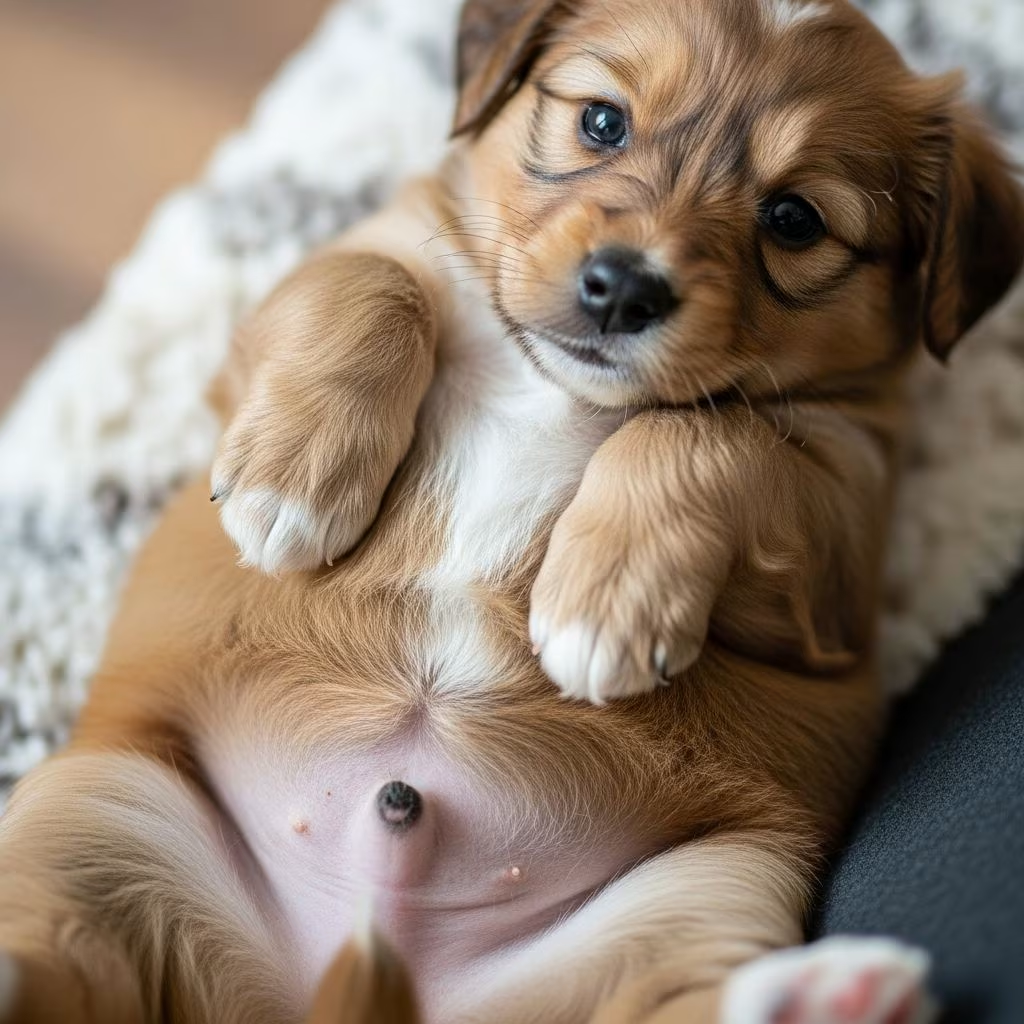
All mammals, including popular pets like dogs and cats, develop a belly button during gestation. This small scar forms after the umbilical cord detaches post-birth, serving as a remnant of fetal nourishment. Unlike the prominent human navel, pet versions are often tiny, flat, and concealed by fur, making them easy to overlook.
The Science Behind Pet Belly Buttons
The belly button, or umbilicus, connects a developing fetus to the placenta, delivering oxygen, nutrients, and removing waste like carbon dioxide. In dogs and cats, the mother typically chews through the cord after birth, leaving a stump that dries, falls off, and scars over within days. This process mirrors human birth but results in less visible marks due to differences in placental structure and healing.
Genetic factors and cord severance method influence the scar’s shape and size. Pets rarely show the ‘innie’ or ‘outie’ variations common in humans; instead, expect a faint line, wrinkle, or hairless spot. Veterinary experts note these scars have no function post-birth, becoming mere anatomical curiosities.
Finding Your Dog’s Belly Button
Dog belly buttons sit higher than expected, near the ribcage base on the abdomen’s midline, not low near the pelvis. Part the fur gently to reveal a small, flat scar—often pale, hairless, or surrounded by a fur swirl or cowlick. Short-haired breeds make spotting easier, while thick-coated ones may hide it completely unless shaved.
- Location: Mid-abdomen, just below ribs.
- Appearance: Flat scar, wrinkle, or oval mark; typically 1-2 cm.
- Visibility tips: Feel for a slight indentation; check newborns for scabs.
Newborn puppies show a visible stump or scab that vanishes quickly, evolving into the adult scar. Owners often discover it during grooming or belly rubs.
Spotting the Cat’s Hidden Navel
Cats share the same umbilical origin, with their belly button positioned centrally on the abdomen, below the ribcage. It’s a subtle scar, smaller and flatter than dogs’, blending seamlessly under fur. Veterinarians confirm: “Under all the fur, your cat does indeed have a belly button,” often requiring close inspection.
| Feature | Dogs | Cats |
|---|---|---|
| Location | Base of ribcage, midline | Center abdomen, below ribs |
| Typical Look | Flat scar, fur cowlick | Tiny indentation, hairless spot |
| Visibility | Moderate, varies by coat | Low, often fur-hidden |
Cat fur patterns can camouflage it further; light-colored bellies might reveal a pale scar. Mama cats’ chewing ensures minimal remnants.
Health Concerns Around the Umbilicus
While usually harmless, the umbilical site can signal issues. Watch for swelling, redness, discharge, or bulges in puppies and kittens—these indicate infection or hernia. Umbilical hernias occur if the abdominal opening fails to close promptly, trapping fat and forming an ‘outie’.
Hernias are rarer in cats than dogs but possible; small ones often resolve naturally, larger may need surgery. Infections arise from unclean stumps in newborns—keep dry and clean. Adult pets rarely face problems unless trauma exposes the area.
- Signs to vet-check: Bulge, pain, oozing, fever.
- Prevention: Monitor newborns; avoid rough play on bellies.
- Treatment: Antibiotics for infection; surgery for persistent hernias.
Comparing Pet and Human Belly Buttons
Human navels form similarly but heal with more tissue variation due to medical clamping. Pets’ natural severance yields shallower scars suited to agile bodies. No functional role persists in any mammal post-weaning. Birds and reptiles lack them, confirming mammal exclusivity.
Caring for Your Pet’s Abdominal Area
Routine grooming reveals the umbilicus; trim belly fur if needed for checks. Avoid lotions or piercings—unnecessary and risky. During spay/neuter, vets navigate around it safely. Teach kids gentle petting to prevent injury.
For brachycephalic breeds or obese pets, monitor for skin folds harboring bacteria near the site. Hydration and diet support overall skin health, indirectly aiding scar integrity.
Myths and Fun Facts About Pet Navels
Myth: Only humans have belly buttons. Fact: All mammals do.
Myth: Pet belly buttons serve a purpose. Fact: Purely vestigial.
Fun fact: Some dogs show ‘outies’ from minor hernias, resembling tiny buttons. Cowlicks mark the spot in many. Evolutionary holdover from placental mammals.
Frequently Asked Questions
Do all dogs and cats have belly buttons?
Yes, every placental mammal does, as a umbilical cord scar.
Why can’t I see my pet’s belly button?
Fur coverage and flat healing hide it; shave or part fur to locate.
Is an outie belly button dangerous in pets?
Usually a harmless hernia; consult vet if bulging or painful.
Can I clean my puppy’s umbilical stump?
Keep dry; vet advises if infected.
Do other pets like rabbits have them?
Yes, all mammals share this trait.
References
- Does a Cat Have a Belly Button? Exploring Feline Anatomy — Uahpet. 2023. https://www.uahpet.com/blogs/hydration-health/does-a-cat-have-a-belly-button
- Do Cats Have Belly Buttons? — PetMD. 2023-10-15. https://www.petmd.com/cat/general-health/do-cats-have-belly-buttons
- Do Dogs and Cats have Belly Buttons? — Hill’s Pet Nutrition. 2024. https://www.hillspet.ca/en-ca/pet-care/behavior-appearance/do-dogs-and-cats-have-belly-buttons
- Does Your Pet Have an Innie or an Outie? — Animal Medical Center of New York. 2012-01-16. https://www.amcny.org/blog/2012/01/16/does-your-pet-have-an-innie-or-an-outie/
- Do Dogs Have Belly Buttons? — PetMD. 2024. https://www.petmd.com/dog/general-health/do-dogs-have-belly-buttons



