

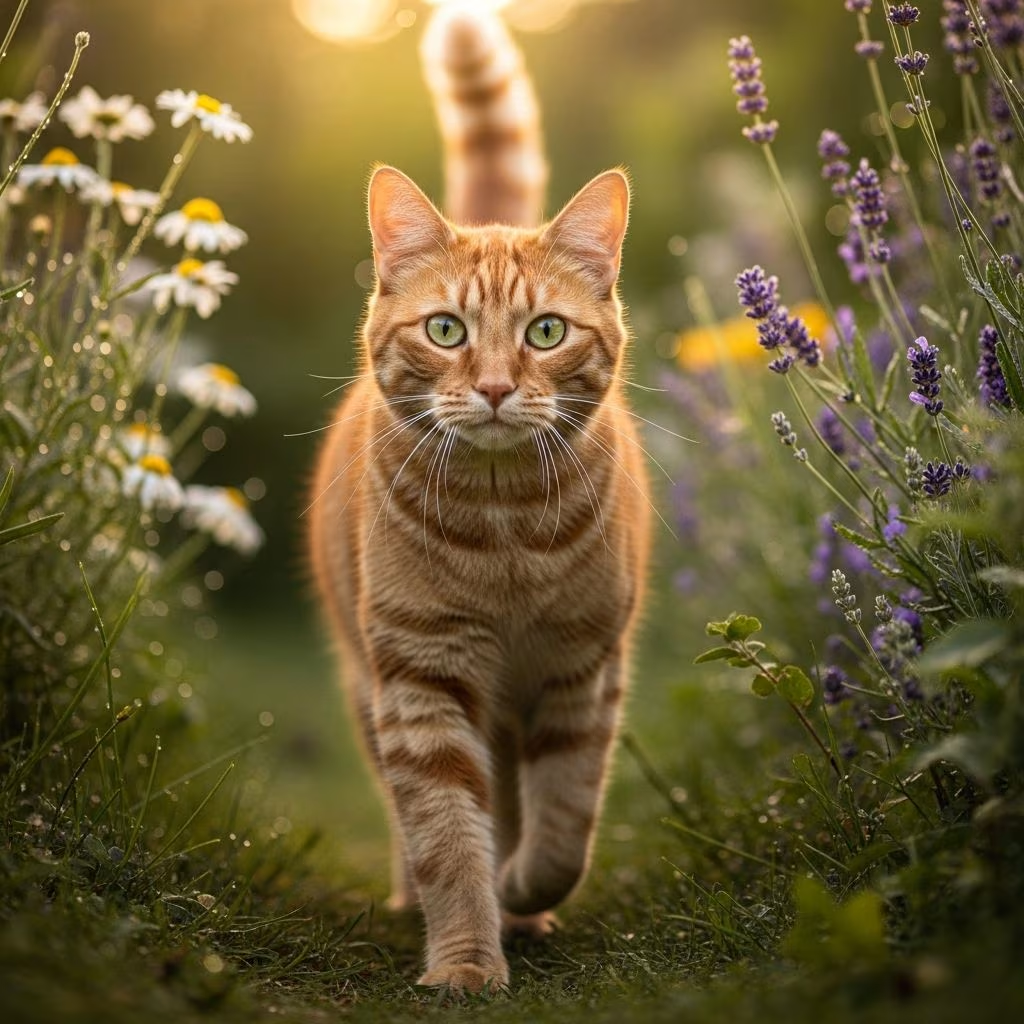
Male cats, or toms, do not undergo heat cycles like their female counterparts. Female cats experience distinct estrous phases driven by ovarian hormones, but males lack this physiology and instead react strongly to female pheromones with mating instincts. This distinction often confuses owners witnessing unusual behaviors in intact males.
The Biology of Feline Reproduction
Feline reproduction centers on the female estrous cycle, which males detect and respond to instinctively. Understanding this helps clarify why male behaviors mimic ‘heat’ but stem from different causes. Cats are induced ovulators, meaning females ovulate only after mating, influencing male persistence.
Males reach sexual maturity around 4-6 months, earlier than many expect, prompting sudden behavioral shifts without a personal heat phase. Indoor lighting can extend female cycles year-round, intensifying male responses even in controlled environments.
Key Differences: Female Heat vs. Male Reactions
Females cycle through proestrus, estrus (3-14 days of peak fertility), interestrus, and anestrus, triggered by lengthening days from February to October. Males, lacking ovaries, remain perpetually ready to mate but amplify actions near receptive queens.
| Aspect | Female Cats (Heat) | Male Cats (Response) |
|---|---|---|
| Physiological Driver | Ovarian estrogen surge | Testosterone and pheromones |
| Duration | 3-14 days per estrus | Ongoing until stimulus fades |
| Cycle Influence | Seasonal (long days) | Triggered by nearby females |
| Ovulation | Induced by mating | Not applicable |
This table highlights core contrasts, showing males as responders rather than cyclers.
Observable Behaviors in Intact Male Cats
When a female nearby enters estrus, males detect pheromones via the vomeronasal organ, even from urine traces days old. This sparks a cascade of actions owners often mislabel as ‘male heat’.
- Vocalizations: Loud yowling or calling to attract females, persisting at night.
- Spraying: Urine marking on vertical surfaces to signal territory and availability, strong odor involved.
- Restlessness: Pacing, door-scratching, escape attempts to reach the queen.
- Mounting: Thrusting on objects, other pets, or people due to frustration.
- Aggression: Fighting rival toms or heightened territorial displays.
These peak during female estrus seasons but can occur anytime with stimuli present.
Seasonal Patterns and Environmental Triggers
Cats breed seasonally as ‘long-day’ animals, with cycles ramping up in spring under 12+ hours of light. Indoor cats may cycle continuously due to artificial lights mimicking summer. Males mirror this, showing intensified behaviors from February peaks through fall.
Proestrus (1-2 days) sees males sniffing curiously; estrus brings full frenzy. Without mating, females re-enter heat every 2-3 weeks, prolonging male agitation.
Health Implications of Unchecked Male Behaviors
Persistent mating drives pose risks. Spraying leads to urinary tract issues from stress; escape attempts cause injuries or unwanted litters. Intact males face testicular cancer, prostate problems, and higher disease transmission risks from roaming.
Females risk repeated cycles exhausting them nutritionally, while males’ aggression can lead to abscesses from fights. Early maturity (as young as 4 months) amplifies these in kittens.
Management Strategies for Male Cats
Addressing behaviors requires proactive steps before they escalate.
- Neutering: Recommended by 4-6 months; removes testosterone source, curbing 90% of issues within weeks.
- Environmental Enrichment: Pheromone diffusers (Feliway), scratching posts, and play reduce stress.
- Isolation from Triggers: Keep indoors, block scents if neighborhood queens are cycling.
- Veterinary Consultation: Rule out medical causes like hyperthyroidism mimicking behaviors.
Neutering also extends lifespan by preventing roaming hazards.
Comparing Neutered vs. Intact Males
| Behavior | Intact Male | Neutered Male |
|---|---|---|
| Spraying | Frequent, pungent | Rare, minimal |
| Vocalizing | Excessive yowls | Normal meows |
| Roaming | High escape drive | Content indoors |
| Health Risks | Cancers, infections | Lower overall |
Data supports neutering’s transformative effects.
FAQs on Male Cat Reproduction
Can male cats get pregnant?
No, males cannot become pregnant; they impregnate females during estrus.
At what age do male cats start showing mating behaviors?
Around 4-9 months, aligning with puberty.
Does neutering stop all spraying?
It reduces it significantly in most cases, though stress can trigger some.
Why does my neutered male still yowl sometimes?
Residual habits or detecting distant pheromones; consult a vet.
How to tell if it’s heat response or illness?
Sudden changes with spraying/vocalizing suggest response; weight loss or lethargy signals health issues.
Long-Term Care for Feline Reproductive Health
Beyond immediate behaviors, monitor for cycle-related stress in multi-cat homes. Spaying females alongside neutering males prevents population booms— one unspayed female can produce 100+ kittens yearly via descendants. Regular vet checkups ensure hormone balances remain optimal post-procedure.
Educating on these cycles empowers owners to create harmonious homes. Recognizing males as pheromone-driven responders demystifies their actions, promoting timely interventions.
References
- Cats in Heat: How Long It Lasts and What To Do — PetMD. 2023-10-15. https://www.petmd.com/cat/general-health/cat-in-heat
- Do Male Cats Go into Heat? — WagWalking. 2024-02-20. https://wagwalking.com/wellness/do-male-cats-go-into-heat
- The Stages of a Heat Cycle in Cats: A Complete Guide — Heads Up For Tails. 2024-05-10. https://headsupfortails.com/blogs/cats/cat-in-heat-signs-stages-care
- Cat Heat Cycles — Revival Animal Health. 2023-11-05. https://www.revivalanimal.com/learning-center/feline-heat-cycle
- Understanding the Cat Heat Cycle — PrettyLitter. 2024-01-12. https://www.prettylitter.com/blog/cat-heat
- Cat Reproduction: Heat Cycles, Pregnancies, and More — Bond Vet. 2023-08-28. https://bondvet.com/blog/cat-reproduction



