

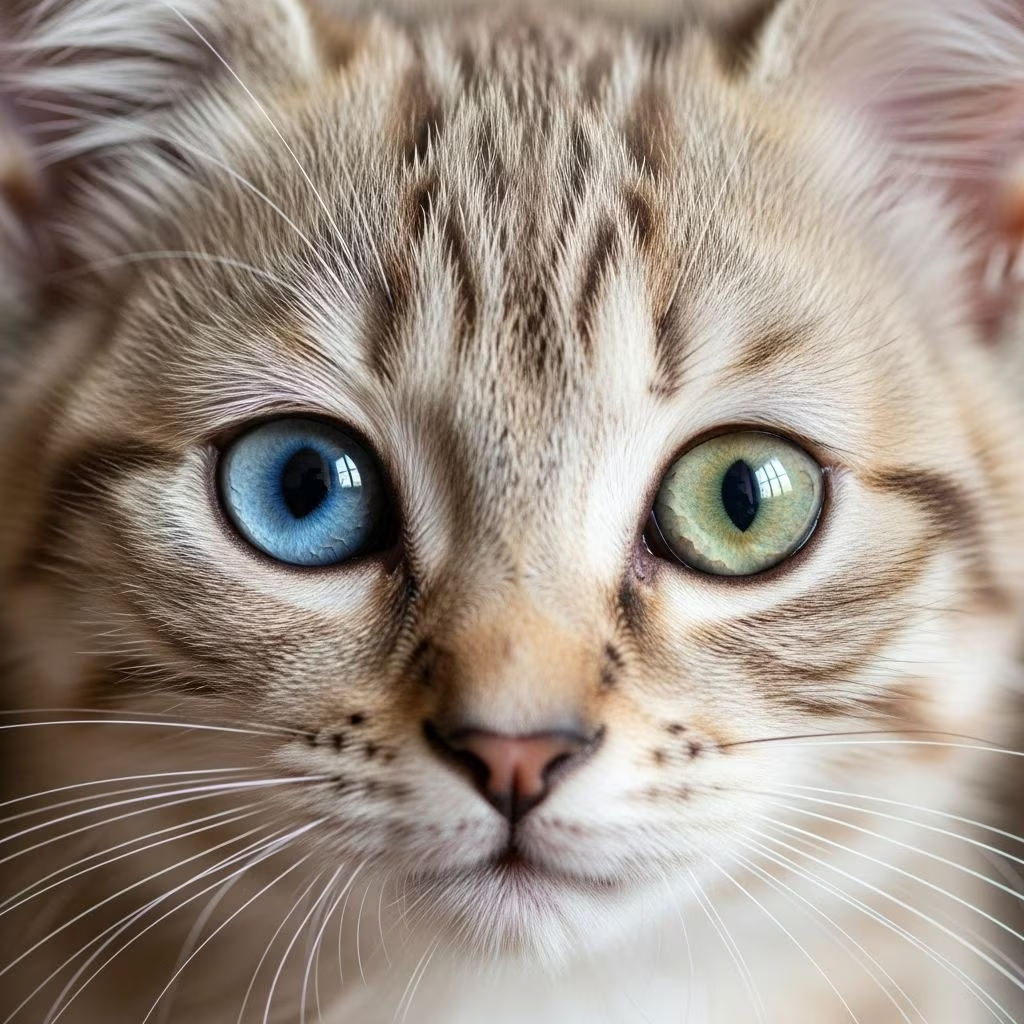
Do Kittens’ Eyes Change Color? A Guide to Feline Eye Development
One of the most enchanting aspects of raising a kitten is witnessing the gradual transformation of their appearance as they grow. Among the most noticeable changes is the evolution of their eye color. If you’ve ever held a newborn kitten or watched them develop over their first few months of life, you may have noticed that their eyes undergo a remarkable color shift. Understanding this natural process can help you appreciate your kitten’s development and know what to expect as they mature.
Why Do Kittens Start With Blue Eyes?
All kittens are born with blue eyes, regardless of their breed or the eye color they will eventually have as adults. This universal blue eye color at birth is not a permanent trait but rather a natural phase of feline development. The reason kittens have blue eyes when they’re born relates to the development of melanin in their irises.
Melanin is a pigment responsible for coloring the skin, fur, and eyes in both animals and humans. At birth, kittens have minimal amounts of melanin in their irises, which results in the characteristic blue eye color. The iris lacks sufficient pigmentation to produce other colors, so the shorter wavelengths of light that pass through the relatively clear iris appear blue to our eyes. This is similar to why the sky appears blue—it’s not that the iris is actually producing a blue pigment, but rather how light is scattered and reflected through the tissue.
When Do Kitten Eyes Start Changing Color?
The timeline for eye color change in kittens is fairly predictable, though it can vary slightly depending on individual genetics and breed characteristics. Understanding this timeline helps you track your kitten’s development and know when their permanent eye color should be established.
The Color Change Timeline
6 to 7 Weeks of Age: The eye color change process typically begins around six to seven weeks old. During this period, you may notice that your kitten’s bright blue eyes start to show hints of their adult color. The change may appear as a slight darkening or subtle color shift around the outer edges of the iris.
12 to 16 Weeks of Age: By the time your kitten reaches 12 to 16 weeks old, the color change process is largely complete. Most kittens will have settled into their permanent or near-permanent eye color by this age. However, some subtle variations can continue into early adulthood, and occasionally, very minor adjustments may occur throughout the first year of life.
8 Weeks of Age Milestone: Around eight weeks of age, the permanent eye color is generally established, though some breeds may take slightly longer. This is why many adoption agencies consider 12 weeks the ideal age for adopting kittens—not only are they more independent, but their permanent eye color has also been established, and you’ll know exactly what your kitten will look like as an adult.
What Colors Can Kitten Eyes Become?
While all kittens start with blue eyes, the range of adult eye colors is quite diverse. The specific color your kitten’s eyes will become depends primarily on their genetics and breed. Here are the most common eye colors you might see in adult cats:
Amber Eyes
Amber is one of the most common eye colors in adult cats. This warm, golden hue can range from a light yellowish tone to a deeper, richer gold. Amber eyes are frequently seen in breeds like the American Shorthair and Maine Coon. These eyes often catch light beautifully and give cats a striking, intelligent appearance.
Yellow Eyes
Yellow eyes are common in many domestic cats and typically develop in the early weeks of a kitten’s life. The shade can vary considerably, ranging from a soft lemon color to a more intense golden tone. Yellow eyes are particularly common in tabbies and many mixed-breed cats.
Green Eyes
Green eyes are another possibility for adult cats. If your kitten develops green eyes, they’ll likely have emerged by 7 weeks of age. Green eyes are often considered particularly striking and mysterious in appearance. Some cat breeds are more prone to developing green eyes than others.
Copper or Orange Eyes
Some cats, particularly certain breeds like Persians and Turkish Angoras, develop deep copper or orange-colored eyes. This rare eye color is often associated with cats that have darker fur, especially those with solid-colored or tabby coats. These warm, intense eye colors can be quite dramatic and beautiful.
Blue Eyes in Adult Cats
While blue is the common eye color in newborn kittens, it can remain in adult cats, especially in certain breeds. Some cats retain their blue eyes throughout their entire lives. Breeds known for maintaining blue eyes include Siamese, Ragdolls, and other point-colored breeds. Additionally, some cats with white coats may keep blue eyes due to specific genetic variations.
Factors That Influence Eye Color Change
Several factors play important roles in determining when and how a kitten’s eyes will change color. Understanding these factors can help you predict what eye color your kitten might develop.
Genetics and Heredity
Genetics is the most significant factor influencing a kitten’s eye color. The genes a kitten inherits from its parents play a major role in determining its eye color. Just as human eye color is inherited, so too is feline eye color. If you know the eye colors of a kitten’s parents, you can make a fairly educated guess about what color the kitten’s eyes will become.
Different breeds have characteristic eye colors. For example, Siamese cats are known for their striking blue eyes, while many American Shorthairs develop amber or yellow eyes. Some breeds like Persians are known for having a wider range of eye colors, including copper, gold, and green.
Breed Characteristics
Breed plays a significant role in determining eye color outcomes. Certain breeds have been selectively bred to develop specific eye colors. Turkish Vans and Birmans, for instance, often retain blue eyes into adulthood. The breed’s genetic heritage essentially programs when and how the melanin will develop in the kitten’s irises.
Overall Health
While less influential than genetics, a kitten’s overall health can affect the timing and appearance of eye color changes. Kittens that are well-nourished and healthy may experience more predictable color transitions. Conversely, kittens dealing with illness or nutritional deficiencies might have slightly delayed development, though this would be unusual.
When to Be Concerned About Eye Color Changes
In most cases, eye color changes in kittens follow a predictable pattern and are completely normal. However, there are some situations where you should consult a veterinarian.
If Eyes Don’t Change by 12-16 Weeks
If a kitten’s eyes remain bright blue well beyond 16 weeks of age, and the kitten is not from a breed known for retaining blue eyes, it may be worth discussing with your veterinarian. While this could simply be an outlier in terms of development or a genetic anomaly, a vet can rule out any underlying conditions.
Signs of Eye Problems
While color changes are normal, be alert for other eye-related issues:
- Swollen or crusty eyelids: This could indicate an infection like conjunctivitis.
- Excessive tearing or discharge: Clear or yellow discharge may signal irritation or illness.
- Red or inflamed eyes: This could be a sign of an eye infection or underlying health issue.
- Persistent eye closure: If a kitten hasn’t opened its eyes by day 16, a vet check may be needed.
Eye Color Development in Different Stages
Understanding the complete eye development process can help you better appreciate your kitten’s growth journey. Here’s what happens at each stage:
Newborn to One Week
Newborn kittens are born with their eyes closed. The eyelids remain fused shut to protect the developing eyes underneath. By around 7 days old, the eyes begin to open slightly.
One to Two Weeks
Between 8-12 days of age, kitten eyes slowly begin to open. Never attempt to pry open a kitten’s eyes; they will open naturally as the kitten develops. By two weeks of age, the eyes will be fully open and displaying that characteristic baby blue color. Vision is still developing at this stage and remains blurry.
Three to Four Weeks
Around weeks three through six, the blue eye color remains but may start to darken slightly. The kitten’s vision becomes clearer and they start to respond more to movement and light. During this period, the foundation for permanent eye color is being established.
Five to Six Weeks
During the fifth and sixth weeks, kittens’ eyesight becomes sharper, and they begin exploring their surroundings with confidence. The permanent eye color is beginning to emerge during this time.
Seven to Eight Weeks
By seven weeks of age, kittens with grey, green, or yellow eyes are likely showing their adult color. The transformation becomes much more obvious during this period. This is why eight weeks is considered the point at which permanent eye color is generally established.
Twelve Weeks and Beyond
By twelve weeks of age, eye color should have changed to the adult color. This is also an ideal time for adoption, as the kitten’s appearance has stabilized and you’ll have a clear picture of what they’ll look like as an adult cats.
Exceptions to the Rule
While most cats follow the typical pattern of eye color change, there are notable exceptions. Some cats, particularly those with white coats or specific genetic variations, may have blue eyes that never change. This is most common in breeds such as the Turkish Van or the Birman, where blue eyes are a breed standard.
Additionally, cats with certain genetic conditions might retain blue eyes into adulthood even if they’re not from a breed typically associated with blue eyes. These exceptions don’t indicate a problem; they’re simply variations in normal feline genetics.
The Science Behind the Color Change
The process of eye color change in kittens is rooted in biology and genetics. Understanding the mechanism can deepen your appreciation for this developmental transformation.
A cat’s eye color is determined by the amount and distribution of melanin in the iris. Melanin production increases as the kitten grows and matures. Cats with more melanin will develop amber, yellow, green, or brown eyes, while those with less melanin will have lighter-colored eyes. The specific combination of melanin levels and distribution patterns, determined by the cat’s genes, creates the unique eye color that will characterize that individual cat.
This process is gradual rather than sudden. The melanin doesn’t appear all at once; instead, it accumulates over the first several weeks of the kitten’s life, creating the gradual color shift from blue to the permanent adult color.
Frequently Asked Questions
Q: Will my blue-eyed kitten definitely get a different eye color?
A: Not necessarily. While most kittens’ eyes change color, some breeds like Siamese and Ragdolls retain blue eyes throughout their lives. If your kitten is from one of these breeds, their eyes may stay blue. If they’re a mixed breed or domestic shorthair and their eyes are still blue after 12 weeks, they will likely keep that color permanently.
Q: Can I predict what color my kitten’s eyes will be?
A: Genetics play the primary role, so if you know the parents’ eye colors, you can make an educated guess. Breed also influences eye color, as certain breeds are known for specific eye colors. However, individual variation is always possible, so you might be surprised.
Q: Is it normal for one eye to change color faster than the other?
A: Yes, slight variations in timing between the two eyes can be normal. However, if there’s a significant difference in color between the eyes that persists, or if the eyes look unusual, consult your veterinarian.
Q: Should I be worried if my kitten’s eyes seem cloudy during the color change?
A: Some cloudiness during the transition period can be normal as the eye develops and changes color. However, if the cloudiness persists or is accompanied by discharge or redness, contact your veterinarian.
Q: Do indoor and outdoor kittens have different eye color timelines?
A: The eye color change timeline is primarily determined by genetics and breed, not by whether a kitten is indoors or outdoors. However, good nutrition and health can support normal development, so well-cared-for kittens may follow the typical timeline more predictably.
References
- When Do Cats’ Eyes Change Color — WOpet. 2024. https://wopet.com/cats/when-do-cats-eyes-change-color/
- When Do Kittens Open Their Eyes? — Lane Veterinary. 2024. https://lanevet.com/blog/when-do-kittens-open-their-eyes/
- How to Determine a Kitten’s Age — Kitten Lady. http://www.kittenlady.org/age
- Kitten Age Progression — Whis-Purr Rescue. https://whis-purr.org/sites/default/files/resources/Kitten_Age_Progression.pdf



