

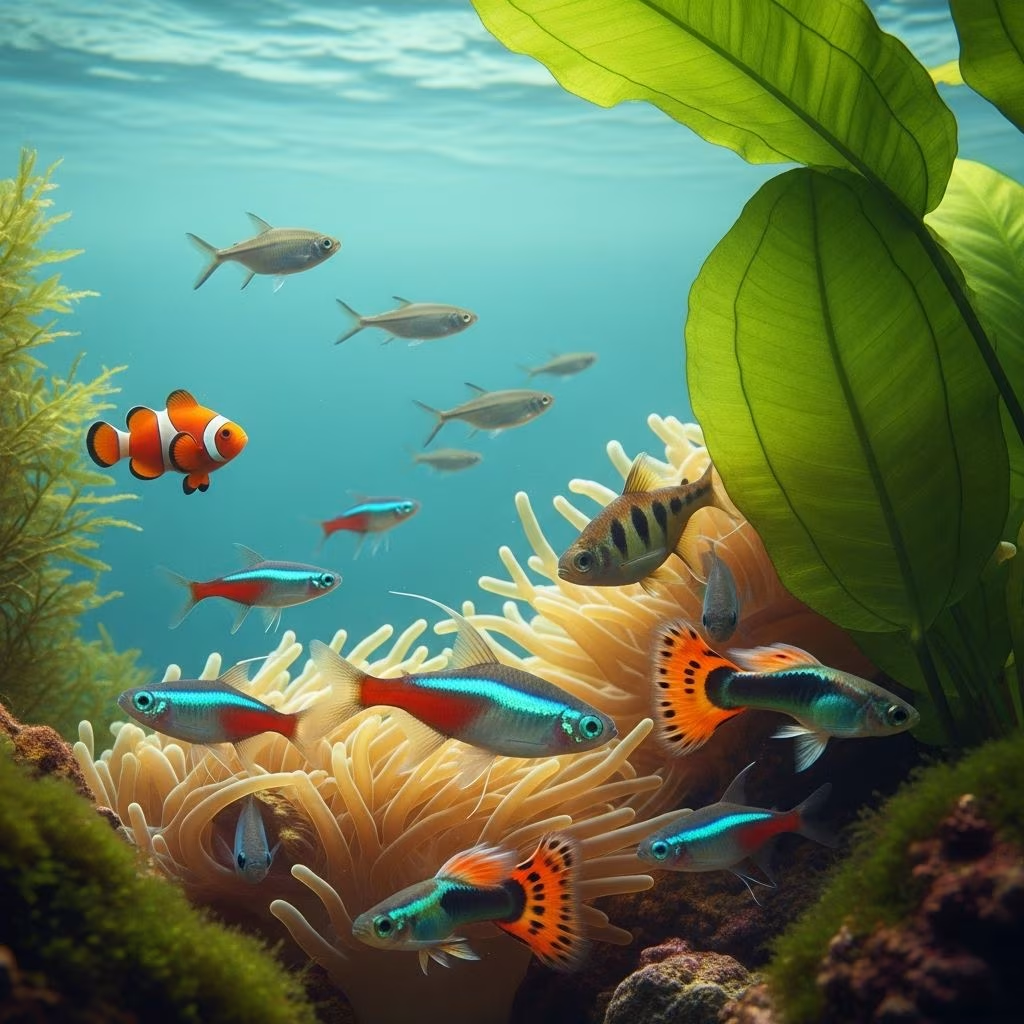
Do Fish Sleep? Unveiling the Mystery of Aquatic Rest
For decades, aquarium enthusiasts and scientists have wondered whether fish truly sleep. The answer is yes—fish do sleep, though their sleep is remarkably different from what we experience as humans. Unlike mammals that close their eyes and enter distinct sleep stages, fish possess unique physiological adaptations that allow them to rest while remaining vigilant to their environment. Research has demonstrated that fish experience reduced activity, lowered metabolism, and altered brain patterns consistent with sleep states, making it clear that rest is essential for their survival and health.
The discovery that fish sleep has profound implications for our understanding of vertebrate biology. Scientists studying zebrafish have revealed that these common aquarium inhabitants display neural sleep patterns strikingly similar to those found in humans and other mammals, suggesting that structured sleep emerged hundreds of millions of years ago in vertebrate evolution. This breakthrough has transformed our perception of fish from simple creatures that never rest to complex organisms with sophisticated sleep mechanisms.
How Fish Sleep Differs from Human Sleep
The most obvious difference between fish sleep and human sleep is the absence of eyelids in most fish species. While humans close their eyes during sleep as a protective mechanism, most fish lack eyelids entirely and therefore sleep with their eyes open. This unique adaptation means that fish cannot physically shut out their surroundings, requiring alternative strategies to maintain rest and avoid predation.
Beyond the lack of eyelids, fish sleep operates on fundamentally different neurological principles. Humans cycle through four distinct sleep stages, including periods of light sleep, deep slow-wave sleep, and REM (rapid eye movement) sleep controlled by the neocortex. Fish, lacking a neocortex, instead demonstrate reduced brain activity and altered responsiveness patterns that define their sleep state behaviorally. Rather than being defined by eye closure or specific brain structures, fish sleep is characterized by prolonged inactivity, typical resting postures, and significantly elevated thresholds for arousal—meaning they are much harder to wake during sleep than when awake.
Fish Sleep Stages and Brain Activity
Groundbreaking research on zebrafish has revealed that fish experience multiple sleep stages comparable to those in mammals. Scientists have documented two primary sleep stages in fish: slow-wave sleep and a stage resembling REM (paradoxical) sleep, despite the absence of eye movements due to missing eyelids. These discoveries suggest that multistage sleep may be a fundamental feature of vertebrate nervous systems that emerged at least 450 million years ago.
During slow-wave sleep, fish brain activity decreases significantly, and their gill and mouth movements reduce by almost half compared to waking hours. Their arousal threshold doubles, meaning they are twice as difficult to wake during this restful state. The presence of REM-like sleep stages in fish indicates that their brains undergo similar restorative processes as human brains, including memory consolidation and cognitive maintenance.
Sleep deprivation studies provide compelling evidence for the importance of fish sleep. When fish are prevented from sleeping during their normal rest periods, they exhibit a rebound effect—sleeping significantly longer and deeper during subsequent rest periods. Sleep-deprived fish also show reduced activity the following day and demonstrate decreased alertness, highlighting how essential sleep is for maintaining normal behavioral and physiological functions.
Circadian Rhythms in Fish
Most fish species maintain circadian rhythms that regulate their sleep-wake cycles, similar to the internal biological clocks found in humans and other animals. Many fish are diurnal, resting primarily at night and remaining active during daylight hours. However, other fish species have evolved nocturnal patterns, sleeping during the day and becoming active at night.
Circadian rhythm disruption can negatively impact fish health and behavior. Exposure to constant artificial light has been shown to disrupt these natural rhythms, potentially affecting melatonin production and overall well-being. Fish that experience irregular light cycles may suffer from compromised immune function, behavioral changes, and sleep disorders, underscoring the importance of maintaining proper lighting schedules in aquarium environments.
How Fish Avoid Drowning While They Sleep
A primary concern for fish rest is the constant need for oxygen extraction from water through gill ventilation. Fish have evolved multiple strategies to ensure continuous oxygen supply even while in a resting state. These adaptive mechanisms allow different species to sleep safely without the risk of suffocation.
Some fish species can rest in relatively stationary positions by facing water currents and using their fins to maintain minimal water movement across their gills. These fish extract oxygen efficiently through gentle gill pumping and fin movements, allowing them to achieve restful states without active swimming. Examples include many bottom-dwelling species that wedge into coral, sand, or mud during sleep.
Other fish, particularly pelagic species like certain sharks and tuna, require continuous swimming to move sufficient water across their gills in a process called ram ventilation. These fish have evolved unihemispheric sleep—where only one hemisphere of the brain rests at a time while the other remains alert and controls swimming. This remarkable adaptation allows them to sleep while maintaining the constant motion necessary for survival.
Some sharks use alternative breathing methods through spiracles (specialized gill openings) that allow them to rest stationary while maintaining oxygen intake. The Pacific sand lance employs a unique strategy by burrowing into sand during sleep, conserving energy while avoiding predation, all while resting in a protected location that reduces the need for active water circulation.
Where Fish Sleep and Resting Locations
Fish select diverse sleeping locations based on their species, environment, and safety requirements. Common resting spots include the bottom substrate, within coral formations, under rocks, and in open water depending on the species and habitat availability. Bottom-dwelling fish often wedge themselves into mud, sand, or coral crevices, gaining protection from predators and maintaining stable positions during sleep.
Reef-dwelling fish frequently select specific coral heads or rocky outcrops as their sleeping sites, returning to the same locations night after night. Pelagic fish that inhabit open ocean waters may sleep while floating in place or while maintaining minimal swimming movements in the water column. Some fish species demonstrate highly specific location preferences, with individual fish utilizing the same sleeping spot repeatedly throughout their lives.
Unique Fish Sleeping Habits and Species-Specific Behaviors
Different fish species have evolved fascinating and highly specialized sleeping behaviors that reflect their ecological niches and evolutionary history.
Parrotfish and Mucus Cocoons
Parrotfish produce a remarkable protective cocoon made of mucus secretions that surrounds their bodies during sleep. This unique adaptation may protect them from parasites and potential predators, creating a physical barrier between the fish and its environment. Scientists believe this behavior provides both parasitic protection and a chemical alarm system that alerts the fish if predators approach.
Sharks and Continuous Movement
Great white sharks and similar species must maintain constant swimming to ensure adequate water flow across their gills, meaning they never fully stop moving. These fish have evolved the ability to sleep unihemisperically, allowing them to rest portions of their brains while maintaining the muscle contractions necessary for continuous swimming. Other shark species may use spiracles to rest stationary while maintaining oxygen intake.
Zebrafish Sleep Patterns
Zebrafish, commonly used in laboratory research, display sleep behaviors that closely mirror human sleep patterns. These fish float in place during sleep, either horizontally or with their heads slightly elevated in the water column. Their mouth and gill movements decrease substantially during rest, and they become significantly less responsive to stimuli compared to their waking state.
Loaches and Stationary Floating
Loaches demonstrate unique sleeping behavior by floating motionless at the water’s surface during rest periods. This floating posture represents a distinct adaptation for shallow-water species that can extract sufficient oxygen from minimal water circulation.
Sleeping Habits Comparison Table
| Fish Species | Sleep Location | Unique Adaptation | Oxygen Maintenance |
|---|---|---|---|
| Parrotfish | Coral crevices | Mucus cocoon production | Gill pumping while stationary |
| Great White Shark | Open water | Continuous swimming | Ram ventilation |
| Zebrafish | Water column | Horizontal floating | Reduced gill movement |
| Loaches | Water surface | Stationary floating | Minimal fin movement |
| Pacific Sand Lance | Sand substrate | Burrowing behavior | Protected position |
The Importance of Sleep for Fish Health
Sleep plays a critical role in maintaining fish health, supporting essential physiological and behavioral functions. Well-rested fish demonstrate superior cognitive abilities, including better memory formation and information processing acquired during waking hours. The restorative functions of sleep extend to immune system maintenance, with sleep-deprived fish showing compromised disease resistance and increased susceptibility to infections.
Active, alert fish capable of avoiding predators and locating food efficiently depend on adequate sleep for maintaining peak cognitive performance. Studies on various fish species confirm that sleep deprivation impairs their ability to respond appropriately to environmental threats and opportunities. Additionally, sleep is believed to facilitate memory consolidation, allowing fish to process and retain information about their environment, food sources, and potential dangers.
Fish That May Not Sleep Traditionally
Some fish species present exceptions to typical sleep patterns. Certain pelagic species, including tunas and some sharks, maintain constant swimming and may not experience traditional sleep states. One compelling theory suggests that fish requiring less sleep are those with minimal visual input or environmental complexity. Species living in open ocean waters or blind cave fish that inhabit dark environments may require less sleep because their brains process less sensory information requiring consolidation.
Studies on blind cave fish have revealed that sightless species living in darkness do not demonstrate typical sleep behaviors, supporting the hypothesis that visual information processing drives sleep requirements. These findings suggest that sleep evolved partly as a mechanism for processing and consolidating the substantial sensory information—particularly visual data—that most fish encounter daily.
Sleep and Fish Care in Aquarium Settings
Understanding fish sleep is essential for providing optimal aquarium care. Maintaining consistent, appropriate lighting schedules that respect fish circadian rhythms is crucial for their health and well-being. Most aquarium fish benefit from 8-12 hours of daily light followed by complete darkness, allowing them to maintain natural sleep-wake cycles.
Tank design should incorporate appropriate sleeping locations suited to specific species, whether bottom substrate areas for burrowing species, plants and decorations for hiding, or open space for free-floating sleepers. Minimizing disturbances during nighttime hours helps fish achieve complete, undisturbed sleep essential for optimal health.
Frequently Asked Questions About Fish Sleep
Q: Do all fish sleep the same way?
A: No, different fish species have evolved unique sleeping strategies based on their habitat, oxygen requirements, and evolutionary history. Some rest stationary while others must swim continuously, and sleeping locations vary widely among species.
Q: Can fish see while they sleep?
A: Most fish sleep with their eyes open because they lack eyelids. However, their visual responsiveness is significantly reduced during sleep, and they are much harder to arouse by visual stimuli compared to their waking state.
Q: How long do fish sleep?
A: Sleep duration varies by species and environmental conditions. Most fish rest for several hours during their designated rest period, often at night, with total sleep time ranging from a few hours to several hours daily depending on the species.
Q: Do fish need darkness to sleep?
A: While many fish prefer darkness for sleep, it is not always strictly necessary. However, maintaining appropriate light-dark cycles helps fish maintain healthy circadian rhythms and promotes natural sleep patterns essential for their well-being.
Q: What happens if fish are sleep deprived?
A: Sleep-deprived fish show reduced activity, impaired cognitive function, decreased immune responsiveness, and increased susceptibility to disease. They also demonstrate a rebound effect, sleeping longer and deeper during subsequent rest periods.
Q: Can fish experience sleep disorders?
A: Yes, fish can experience sleep disruptions and disorders. Environmental stressors such as constant artificial lighting, temperature fluctuations, and tank disturbances can negatively impact fish sleep quality and circadian rhythms.
References
- Do Fish Sleep? The Surprising Truth About Underwater Rest — Top Shelf Aquatics. Accessed 2025-11-28. https://topshelfaquatics.com/blogs/news/do-fish-sleep
- Fish sleep like us, new research has found — Stanford Medicine. 2019-07. https://med.stanford.edu/news/insights/2019/07/fish-sleep-like-us-new-research-has-found.html
- Sleep in fish — PLoS Biology. 2012. https://journals.plos.org/plosbiology/
- Do Fish Sleep? — Live Science. Accessed 2025-11-28. https://www.livescience.com/32162-do-fish-sleep.html
- Do Fishes Sleep? — The Australian Museum. Accessed 2025-11-28. https://australian.museum/learn/animals/fishes/do-fishes-sleep/
- The interplay between sleep and ecophysiology, behaviour and ecology in fish — National Center for Biotechnology Information. 2024. https://pmc.ncbi.nlm.nih.gov/articles/PMC11213526/



