

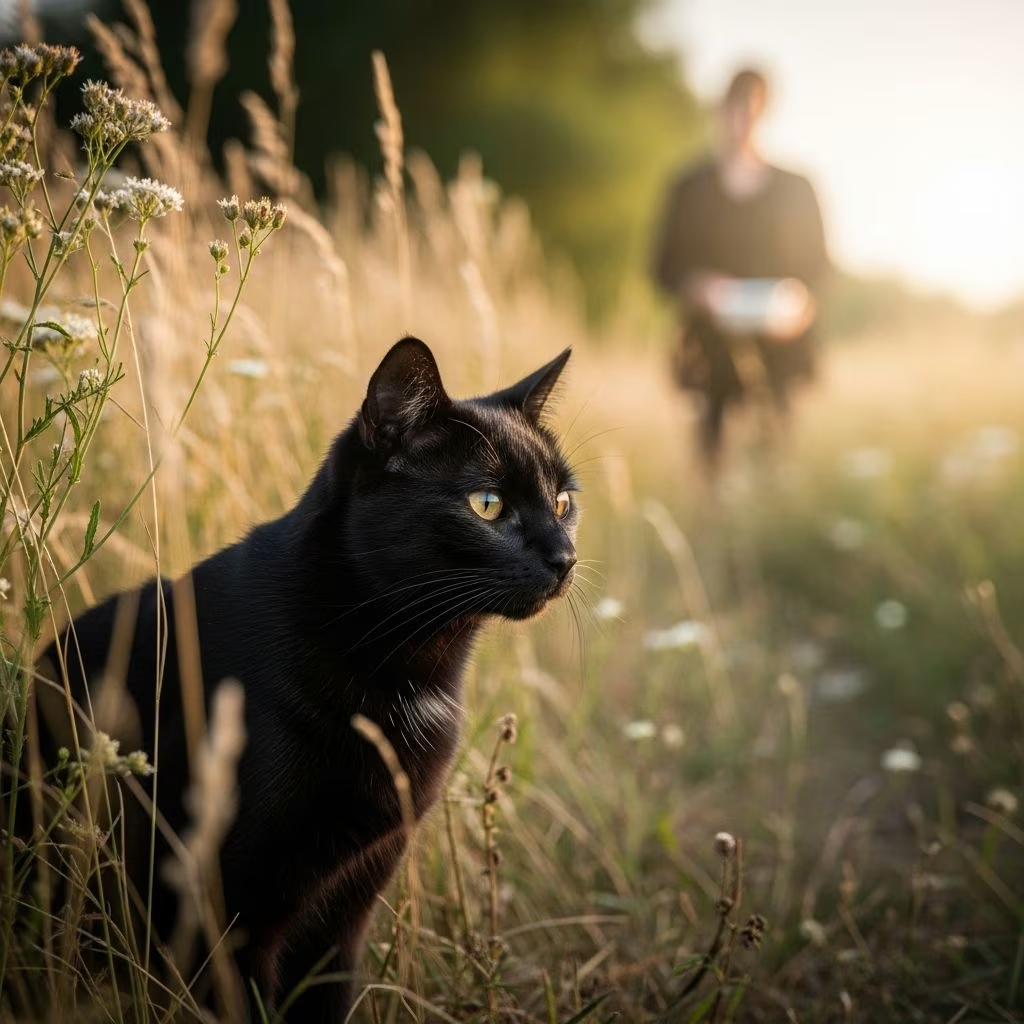
Feral cats, descendants of domesticated cats living independently in wild or urban environments, often form unique relationships with human caretakers who provide food, shelter, and medical care. A common question among these dedicated individuals is whether these wary felines truly remember them or if their interactions are purely instinctual responses to food sources. Scientific studies on cat cognition, including object permanence and behavioral responses to familiar humans, suggest that feral cats do possess the cognitive capacity to recognize and remember their caretakers over time.
Unlike fully wild animals, feral cats retain many domesticated traits, including advanced memory capabilities honed by thousands of years of selective breeding for human interaction. Research indicates that cats can distinguish between familiar and unfamiliar humans based on scent, voice, and visual cues, displaying more relaxed behaviors toward known caretakers. This recognition fosters tentative bonds that can last years, even in challenging outdoor conditions.
What Are Feral Cats?
Feral cats are not stray pets but populations of unowned cats born and raised without significant human socialization. They differ from stray cats, which were once pets and may seek human contact. Feral cats typically avoid direct touch but adapt to human presence near feeding stations.
- Socialization Window: Kittens socialized between 2-7 weeks become pets; after 8 weeks, they remain feral.
- Population Growth: Without intervention, colonies expand rapidly due to high reproduction rates.
- Health Challenges: Exposed to diseases, injuries, and predators, yet resilient through natural selection.
Feral cats thrive in colonies with matriarchal structures, where females nurse litters communally. Caretakers observe hierarchies where dominant cats eat first, mirroring wild pride dynamics but adapted to urban scraps.
Differences Between Feral, Stray, and Domestic Cats
| Type | Origin | Human Interaction | Behavior Toward Humans |
|---|---|---|---|
| Feral | Born wild, unsocialized | Avoidant, food-motivated | Wary, may approach for food only |
| Stray | Abandoned or lost pets | Seeks contact, touchable | Friendly, meows for attention |
| Domestic | Household pets | Fully socialized | Affectionate, bonds deeply |
These distinctions matter for management. Feral cats rarely transition to indoor life without early intervention, prioritizing survival instincts over affection.
How Good Is a Cat’s Memory?
Cats exhibit impressive long-term memory, recalling people, places, and events for years. Studies on domestic cats reveal they achieve advanced object permanence—understanding hidden objects still exist—up to Stage 6, involving invisible displacements. A 2024 PLOS One study tested 18 domestic cats at home, finding they searched correctly for hidden toys but showed nuanced responses influenced by familiarity.
In violation-of-expectation tasks, cats displayed surprise through prolonged gazes and exploration when events defied logic, indicating mental representations of absent objects. Feral cats, sharing genetics with domestics, likely possess similar faculties, using memory to map safe feeding zones and recognize reliable providers.
- Spatial Memory: Cats navigate vast territories, remembering cache locations months later.
- Social Memory: They differentiate familiar humans, showing less stress via reduced cortisol.
- Associative Learning: Linking specific people to food rewards strengthens bonds.
Do Cats Recognize Their Owners After Years?
Yes, cats recognize owners after long separations. Anecdotes abound of pets greeting returning owners with familiar rubs after years apart. Brain imaging shows cats process voices in the temporal lobe, akin to human face recognition, activating reward centers for known voices.
For ferals, this translates to greeting rituals: slow blinks, tail-up approaches, or vocalizations reserved for trusted humans. A study noted cats gaze longer at familiar faces, playing more with toys presented by owners versus strangers.
Do Feral Cats Recognize Their Caretakers?
Evidence points to yes. Caretakers report individual cats waiting at routine times, approaching only specific people. In Trap-Neuter-Return (TNR) programs, sterilized ferals become friendlier, spending less energy roaming and more interacting with feeders. A review in PMC highlights TNR benefits: improved body condition, reduced fighting, and increased caretaker tolerance.
Behavioral cues include:
- Rubbing against legs (scent-marking ownership).
- Chirps or trills (positive greetings).
- Exposing bellies (trust display, though rarely touchable).
Cognitive tests imply ferals track familiar humans via multi-sensory cues, remembering consistent providers amid colony chaos.
Signs a Feral Cat Remembers You
Observant caretakers spot these trust indicators:
- Routine Waiting: Appears at feeding times, scanning for you.
- Selective Approach: Ignores strangers but nears you calmly.
- Vocalizations: Unique meows or purrs signaling recognition.
- Body Language: Ears forward, tail relaxed, slow blinks.
- Gift-Giving: Leaving prey as reciprocity.
These evolve slowly; patience yields loyalty. One study found cats near apparatus gazed more at familiar manipulators, suggesting interest and memory.
Do Feral Cats Get Attached to Humans?
Feral attachments differ from pets’—pragmatic, food-rooted, yet emotional. TNR data shows neutered ferals interact more, with some becoming lap cats. Caretakers form bonds, devoting time despite scratches, driven by empathy. Proximity matters: closer cats show bolder behaviors toward known humans.
Tips for Building Trust with Feral Cats
- Consistency: Feed same time/place daily to build expectation.
- Slow Movement: Sit quietly, avoid eye contact initially.
- Scent Familiarity: Leave worn clothes near stations.
- No Forced Touch: Let them initiate contact.
- TNR Support: Sterilize via professionals for healthier bonds.
- Voice Cues: Use soft, repetitive talk; they remember tones.
Over months, wariness fades into wary companionship.
TNR Programs and Feral Cat Management
TNR stabilizes populations humanely. Florida campuses saw 85% reductions without culling. Sterilized cats live longer, roam less, recognizing caretakers who facilitate care. Challenges include abandonment, but education counters this.
Frequently Asked Questions (FAQs)
What is the difference between feral and stray cats?
Feral cats are born wild and unsocialized, avoiding humans except for food. Strays are former pets seeking affection and touch.
Can feral cats become pets?
Only young kittens (under 8 weeks); adults rarely fully socialize but can semi-tame.
How long does it take for a feral cat to trust a human?
Weeks to years, depending on consistency and individual temperament.
Do feral cats remember abuse?
Yes, via fear responses; avoid punishment to build positive memory.
Are TNR programs effective?
Yes, reducing populations 50-90% in committed efforts, improving welfare.
Do feral cats recognize voices?
Absolutely; they respond preferentially to familiar tones, per cognition studies.
References
- Object permanence in domestic cats (Felis catus) using violation-of-expectation tasks — PLOS One. 2024. https://journals.plos.org/plosone/article?id=10.1371/journal.pone.0312225
- A review of feral cat control — PMC / PubMed Central. 2004-01-15. https://pmc.ncbi.nlm.nih.gov/articles/PMC10832895/
- Feral Cats and the People Who Care for Them — University of South Florida Digital Commons. 2007. https://digitalcommons.usf.edu/etd/1663/



