

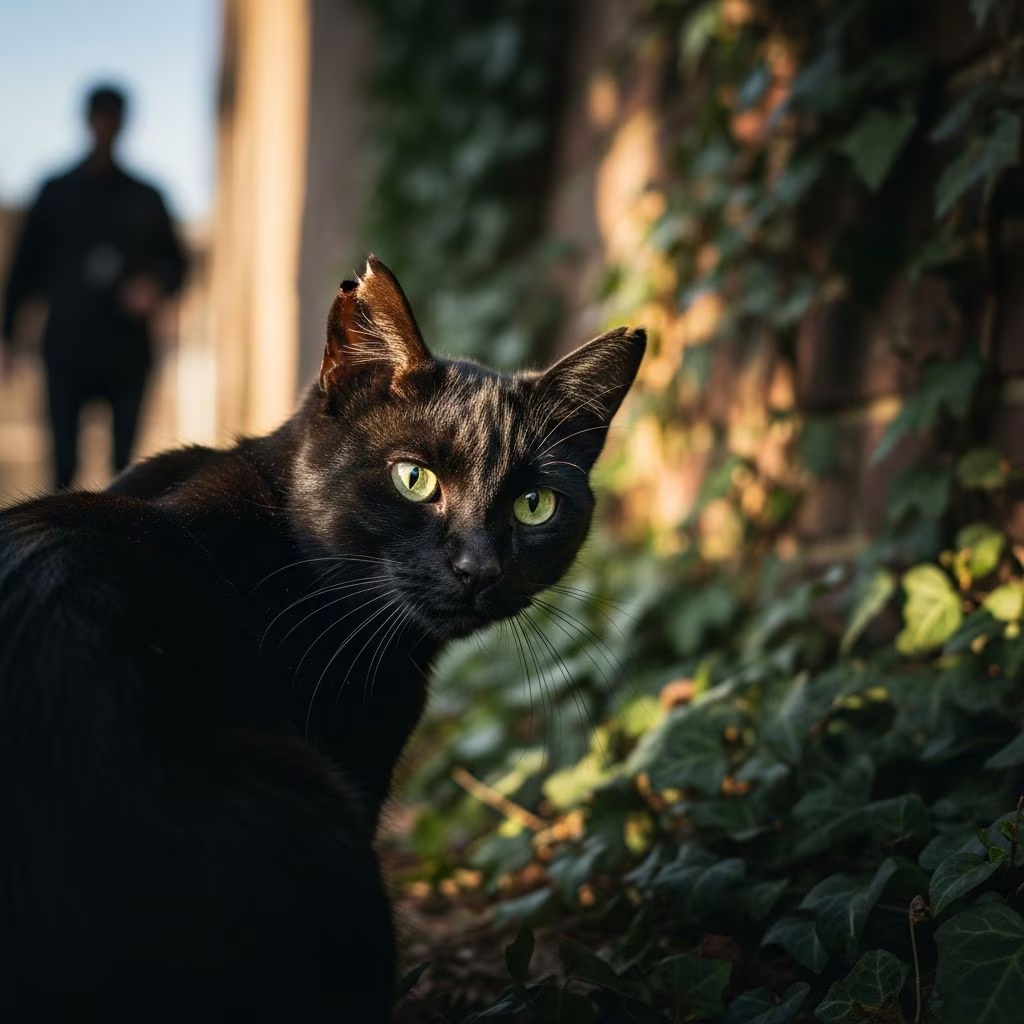
Feral cats, often seen as wild and independent, form complex relationships with the humans who feed and care for them. Research indicates that these cats can indeed remember their caretakers, recognizing them through scent, voice, and consistent presence, much like domestic cats do with owners.
Unlike fully domesticated pets, feral cats live outdoors in colonies, relying on caretaker-provided food while maintaining wariness toward strangers. This article examines the science of cat memory, attachment styles, differences between feral and stray cats, signs of recognition, and practical advice for building lasting bonds. Understanding these dynamics not only enhances caretaker-cat interactions but also supports effective feral cat management strategies like Trap-Neuter-Return (TNR).
What Are Feral Cats?
Feral cats are domestic cats that have lost contact with humans or were born in the wild, living in outdoor colonies. They differ from stray cats, which are socialized to people but lost or abandoned. Feral cats are typically unsocialized, avoiding human touch and preferring to observe from a distance.
These cats thrive in groups for survival, sharing resources like food from caretakers. Their wariness stems from lack of early human socialization, making them elusive but not aggressive unless threatened. Caretakers often report feral cats approaching at specific times for feeding, suggesting memory of routines and individuals.
Feral populations grow rapidly without intervention, leading to TNR programs that sterilize and return cats to reduce numbers humanely. Caretakers play a vital role, providing food, shelter, and veterinary access, fostering semi-ownership bonds despite the cats’ wild nature.
Cat Memory: How Long Do Cats Remember People?
Cats possess excellent long-term memory, capable of remembering people, places, and experiences for years. Studies show they recognize familiar humans even after extended separations, relying primarily on smell and sound rather than sight.
One key study tested kittens aged 3-8 months using the Secure Base Test (SBT), separating them from caregivers and observing reunion behaviors. About 64.3% formed secure attachments, reducing stress upon reunion and resuming exploration, while insecure ones remained stressed. This attachment persisted into adulthood, with 65.8% of cats over one year showing secure bonds, comparable to human children (65% secure) and dogs (58% secure).
Cats detect subtle voice changes directed at them, responding more to ‘cat-talk’ similar to baby talk. They associate names and sounds with rewards like food, learning through repetition. While they don’t conceptualize time like humans, their sensory memory ensures recognition upon return, even after months.
For feral cats, this translates to remembering consistent feeders. Caretakers note cats waiting at feeding spots, ignoring newcomers until trust builds, indicating selective memory based on positive associations.
Do Feral Cats Recognize Their Caretakers?
Yes, feral cats recognize their caretakers through consistent feeding and presence. They distinguish familiar humans from strangers, approaching trusted individuals while fleeing others. This recognition relies on olfactory cues—cats have 200 million scent receptors—and auditory familiarity.
Research on urban free-roaming cats reveals strong emotional bonds between caretakers and cats. Caregivers in sterilization programs reported improved cat welfare and personal well-being, describing deep attachments despite limited physical contact. Feral caretakers exhibit high personal efficacy, self-motivating to sustain colonies.
Unlike domestic cats, ferals may not seek affection but show recognition via behavioral cues: relaxed posture, slow blinking, or rubbing against legs. A study interviewing 15 caretakers found unique recruitment into the role, often starting with one cat and expanding, driven by compassion.
These bonds challenge the ‘feral’ label, as many are semi-owned, receiving regular care. Lethal management ignores these relationships, harming caretaker mental health.
Signs a Feral Cat Remembers You
- Routine Waiting: The cat appears at feeding times, anticipating your arrival.
- Relaxed Body Language: Ears forward, tail up, slow blinks signaling trust.
- Selective Approach: Greets you but hides from strangers.
- Vocalizations: Meows or chirps reserved for you, not others.
- Rubbing or Head Bunting: Marking you with scent glands as ‘safe’.
- Following at Distance: Trails you without close contact.
These signs build over time. Patience is key; forcing interaction erodes trust. Consistent routines reinforce memory links.
Feral vs. Stray Cats: Key Differences
| Aspect | Feral Cats | Stray Cats |
|---|---|---|
| Socialization | Unsociable, fear humans | Socialized, seek human contact |
| Behavior Toward People | Skittish, observe from afar | Approach for food/affection |
| Touch Tolerance | Resist petting | Allow stroking |
| Eye Contact | Avoid or stare challengingly | Comfortable gazing |
| Voice Response | Limited reaction | Meow back eagerly |
| Adoption Potential | Low, prefer outdoors | High, transition to homes |
Feral cats’ wariness protects them outdoors, while strays adapt from pet origins. Mislabeling leads to unnecessary euthanasia; shy ferals may acclimate in shelters.
How to Help a Feral Cat Remember and Trust You
Building trust requires patience and consistency. Start by feeding at fixed times/locations, avoiding sudden movements.
- Observe Quietly: Sit nearby without staring; let the cat approach.
- Use Food Lures: Offer smelly wet food from a distance, gradually closer.
- Speak Softly: Use a calm, high-pitched voice daily for recognition.
- Provide Shelter: Straw-filled boxes protect from elements, associating you with safety.
- Implement TNR: Sterilize via humane traps to stabilize health and population.
- Avoid Overhandling: Respect boundaries to prevent fear.
Track progress with a journal. Over weeks, bonds strengthen, improving welfare for both cat and caretaker.
Do Feral Cats Forget Their Caretakers?
Feral cats rarely forget long-term caretakers if interactions remain positive and regular. Their memory endures separations of months, triggered by familiar scents/voices. Inconsistent care or negative events (e.g., trapping scares) can erode trust, but rebuilding is possible.
Studies affirm stable attachments into adulthood, suggesting heritable traits influence bonds. Caretakers in TNR programs report cats returning post-procedure, recognizing them despite trauma.
Caretaker Experiences and Challenges
Caretakers form profound connections, often starting accidentally. Interviews reveal self-motivated individuals with strong efficacy, networking via clinics. Challenges include weather, complaints, and funding veterinary care.
Programs offering free sterilization boost quality of life, reducing stress from kitten overpopulation. Community support via TNR lowers impoundments and euthanasia.
Frequently Asked Questions (FAQs)
What is the difference between feral and stray cats?
Feral cats are unsocialized and wary of humans, while stray cats are socialized, lost or abandoned pets that seek human interaction.
Can feral cats form attachments to humans?
Yes, about two-thirds form secure attachments similar to domestic cats and dogs, shown through reduced stress upon reunion.
How do cats recognize their caretakers?
Primarily through smell and voice; they detect owner-specific scents and voice tones.
Will a feral cat forget me after a long absence?
Unlikely if bonded; they remember via senses, though time perception differs.
Is TNR effective for feral cats?
Yes, it stabilizes populations, improves health, and enhances caretaker well-being.
Can feral cats be domesticated?
Socialized kittens can, but adults rarely fully adapt, preferring outdoor life.
Do feral cats recognize their names?
They associate sounds with rewards, responding if trained consistently.
This comprehensive look reveals feral cats’ remarkable memory and capacity for bonds. Caretakers’ dedication, supported by science, transforms lives. Implement TNR and patient approaches for humane outcomes.
References
- Does Your Cat Really Care About You? Yes! — Faunalytics. 2023 (approx., based on study). https://faunalytics.org/does-your-cat-really-care-about-you-yes/
- Feral Cats and the People Who Care for Them — Loretta Sue Diamond, University of South Florida. 2014-01-01. https://digitalcommons.usf.edu/etd/1663/
- Do cats recognise their owners? — Cats Protection. 2023 (ongoing blog). https://www.cats.org.uk/cats-blog/do-cats-recognise-their-owners
- Solutions-Based Approach to Urban Cat Management — PMC (NCBI). 2023-11-01. https://pmc.ncbi.nlm.nih.gov/articles/PMC10648193/



