

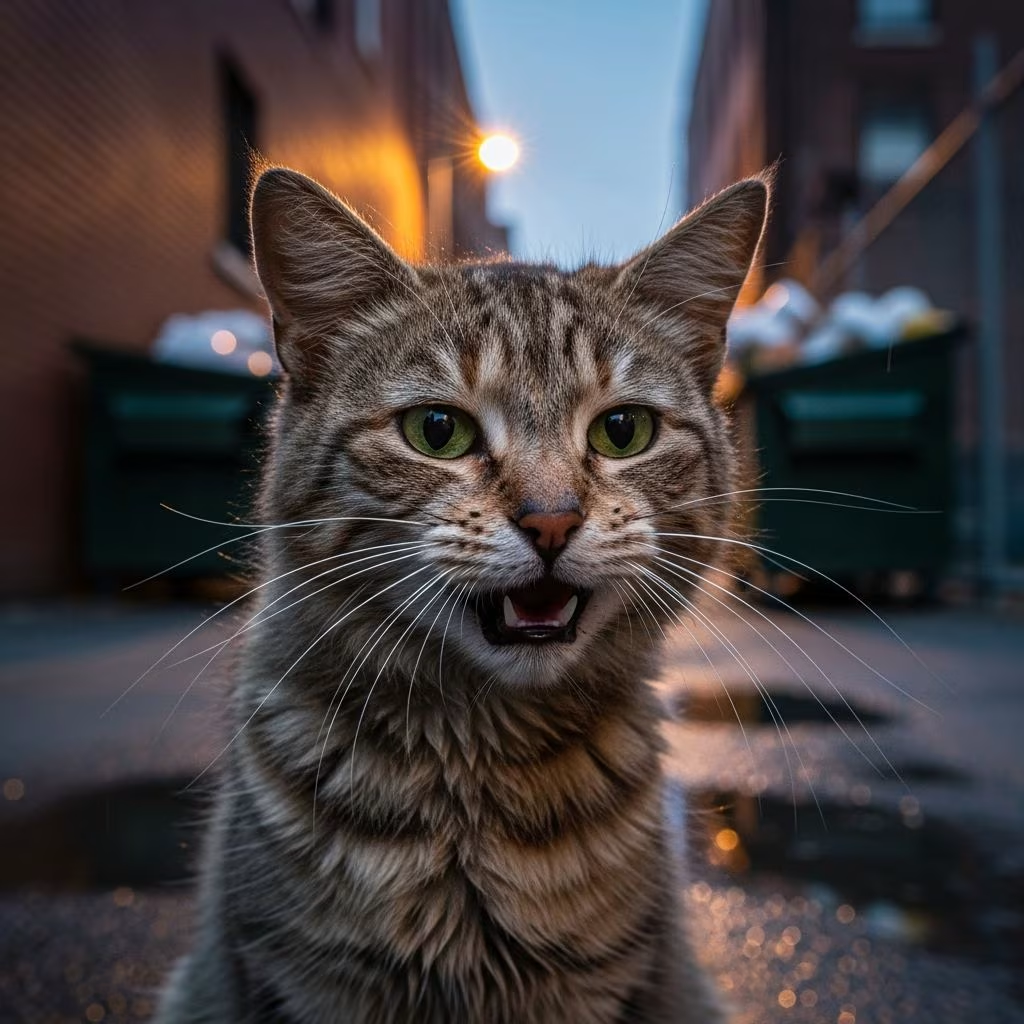
Feral cats possess the physical ability to meow, but they rarely do so in practice, especially toward humans. This vocalization, common in household pets, serves little purpose in their survival-driven world where silence often means safety.
The Roots of Feline Vocal Habits
Meowing originates as a kitten’s cry for maternal care, signaling hunger, cold, or distress. Adult domestic cats retain this habit exclusively for human interaction, having learned it elicits food, attention, or access. In contrast, feral cats, fully independent from human influence, abandon meowing among peers after weaning, favoring subtler exchanges to avoid detection by threats.
This shift underscores adaptation: domesticated cats exploit our responsiveness, while ferals prioritize stealth. Research from animal welfare groups confirms adult cats do not meow at each other in natural settings, reserving it for people they’ve socialized with.
Key Distinctions: Feral vs. Stray Cats
Many mistake stray cats for ferals, but their behaviors diverge sharply. Strays, once pets or raised near humans, meow freely to solicit aid, mirroring domestic patterns. Ferals, born and bred in wild colonies, view humans as predators and flee rather than vocalize.
| Aspect | Feral Cats | Stray Cats |
|---|---|---|
| Human Interaction | Avoids or flees | Approaches and meows |
| Meowing Frequency | Rare, if ever | Frequent for needs |
| Socialization | None with humans | Partial or full |
| Habitat | Wild colonies | Urban areas near people |
This table highlights observable traits aiding identification. A cat meowing nearby is almost certainly a stray seeking help.
Survival Strategies in Feral Communication
Feral cats thrive through non-vocal methods, honed for colony life and territory defense. These ensure messages transmit without compromising position.
Visual Signals and Posture
Body posture conveys volumes instantly. An upright tail signals friendship in familiar cats, while piloerection and crouching denote hostility. Ear angles reveal intent: forward for focus, back for unease. Such cues allow rapid assessment without noise.
- Tail positions: Vertical for greeting, thrashing for irritation.
- Ear cues: Swiveling for alertness, flat for defense.
- Back arch: Defensive posture against larger foes.
Olfactory Messaging
Scent glands on face, flanks, and paws deposit pheromones, marking boundaries invisibly. Rubbing against landmarks advertises presence, status, and fertility to colony mates or rivals, persisting long after departure. This silent network prevents unnecessary clashes.
Alternative Sounds for Urgency
When vocalization occurs, it’s purposeful and low-risk. Hisses ward off intruders, growls assert dominance, and yowls announce mating availability—loud but directional. Purring, rare among ferals, may bond mothers with kittens but seldom appears in adults.
These sounds differ from meows’ soft, varied tones tuned for humans. Excess domestic meowing can signal distress, hunger, or heat cycles, but ferals suppress such displays.
Interpreting Rare Meows from Wild Cats
A meow from a seeming feral often indicates socialization. Truly wild cats emit chirps or trills sparingly, perhaps in extreme distress or kitten-mother bonds, but never routinely at people. If one approaches meowing, it likely endured human contact previously, blurring lines toward stray status.
Breeds like Siamese vocalize more innately, but feral lineages mute this trait swiftly across generations. Elderly ferals might yowl from confusion, akin to cognitive decline in pets, though observation remains challenging.
Human Encounters and Safety
Ferals avoid humans to evade traps or vehicles, rendering meowing counterproductive. Approaching one risks stress-induced aggression. Observe from afar: feeding stations draw colonies without direct contact, supporting Trap-Neuter-Return programs.
Strays benefit from gradual socialization; their meows invite intervention. Distinguish via persistence: ferals bolt, strays persist.
Broader Implications for Cat Welfare
Understanding these patterns aids management. Domestic cats’ meowing fosters bonds but can escalate to nuisances if unaddressed, like door demands or night choruses. Spaying curbs heat-related yowls, reducing feral populations humanely.
Feral colonies self-regulate via hierarchies signaled non-verbally, minimizing conflict. Human aid amplifies survival without domestication.
Frequently Asked Questions
Can feral cats ever learn to meow at humans?
Rarely; early isolation cements wild patterns. Kittens hand-raised may adapt, becoming semi-socialized.
Why do my indoor cats meow constantly?
Attention, food, or access requests; intact cats yowl in heat.
How to tell if a cat is feral or stray?
Ferals flee humans; strays approach boldly, often meowing.
Do feral cats purr?
Primarily mothers with kittens; adults less so.
Is excessive meowing a health issue?
Possibly pain or cognitive problems in seniors; vet check advised.
Practical Tips for Community Cats
- Provide sheltered feeding away from homes.
- Support TNR to control numbers.
- Avoid direct handling unless injured.
- Monitor for illness via behavior shifts.
These steps balance compassion with ecology, respecting feral autonomy.
References
- Do Feral Cats Meow? Vet Reviewed Facts – Catster — Catster. 2023. https://www.catster.com/cat-behavior/do-feral-cats-meow/
- Meowing and Yowling | ASPCA — ASPCA. 2023. https://www.aspca.org/pet-care/cat-care/common-cat-behavior-issues/meowing-and-yowling
- When Meowing Goes from Cute to Excessive – Cat Town — Cat Town Oakland. 2023. https://www.cattownoakland.org/cat-town-blog/excessive-meowing
- Meowing and Yowling – Alley Cat Rescue — Alley Cat Rescue. 2023. https://www.saveacat.org/meowing-and-yowling.html



