

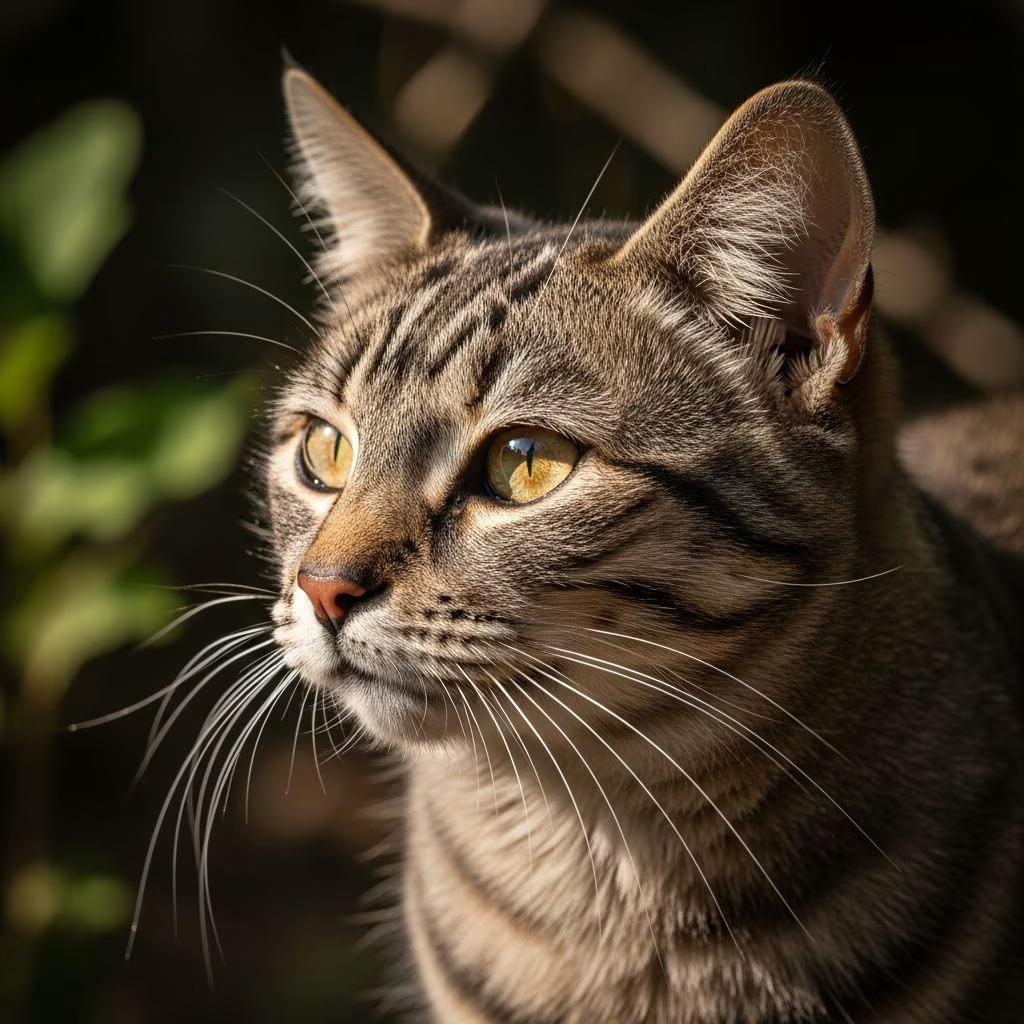
Feral cats, the wild counterparts to our domestic companions, exhibit many similar behaviors but often in adapted forms for survival. One intriguing question is whether these independent felines purr like their housebound relatives. While domestic cats purr frequently to communicate contentment, affection, or even solicit food, feral cats may purr less visibly due to their solitary lifestyles and survival instincts.
Scientific evidence confirms that feral cats possess the physiological ability to purr, rooted in the same laryngeal mechanisms as domestic cats. However, observations suggest they purr far less often, particularly around humans, as purring in the wild serves more discreet purposes like kitten-mother bonding or self-soothing during stress. Recent genetic studies further illuminate why some cats, including those with feral backgrounds, may purr more than others, linking purring propensity to variations in the androgen receptor gene.
How Do Cats Purr?
The purring mechanism in cats is a remarkable physiological process originating in the brain and involving rapid contractions of the laryngeal muscles, or voice box. As the cat inhales and exhales, these muscles tighten and loosen at a frequency of 25 to 150 Hertz, producing the characteristic rumble. This vibration is not unique to domestic cats; all felids in the Felidae family, including wild species, share this capability, though the exact triggers vary.
Unlike meowing, which domesticated cats refined primarily for human interaction, purring is an ancient trait predating domestication. Kittens begin purring within days of birth, blind and deaf, using it to signal location and needs to their mother through vibrations felt on her body. In feral litters, this function remains critical for survival, as mothers discourage excessive purring in older kittens to avoid attracting predators.
Why Do Cats Purr?
Cat purring serves multiple purposes beyond simple happiness, acting as a versatile communication tool, healing mechanism, and bonding signal. Common reasons include:
- Contentment and Bonding: The most recognized role, where cats purr during petting or close contact to express pleasure and strengthen social bonds.
- Solicitation: Cats often purr to request food, using a ‘solicitation purr’ embedded with a cry-like element that humans find hard to ignore, potentially as a manipulative tool honed through domestication.
- Healing and Pain Relief: Purring frequencies (25-150 Hz) align with ranges that promote tissue repair, reduce swelling, ease breathing, and even heal bones, suggesting a self-soothing function during injury or stress.
- Maternal Care: Mother cats purr to lull kittens and guide them to warmth and milk via vibrations.
- Muscle Maintenance: During rest, purring stimulates muscles and bones, aiding energy conservation in cats’ sedentary lifestyles.
Research shows purring occurs not only in positive contexts but also during feeding requests or distress, challenging the ‘happy purr’ stereotype.
Do Feral Cats Purr?
Yes, feral cats can and do purr, but far less frequently and openly than domestic cats, especially in human presence. Feral mothers purr to their kittens for nursing and comfort, but as kittens mature, this behavior is suppressed to minimize noise that could alert predators. Adult ferals primarily purr in private contexts, such as self-healing when injured or during rare intraspecies bonding.
Observations of feral colonies reveal purring during grooming or nursing but rarely during Trap-Neuter-Return (TNR) operations or human encounters. Domesticated cats, conversely, have more developed vocal cords adapted for purring and meowing to humans, a divergence driven by thousands of years of selective living. Rescued former ferals often ‘learn’ to purr more post-adoption, suggesting behavioral plasticity rather than inability.
The Science Behind Purring in Feral vs. Domestic Cats
Recent genetic research provides profound insights into purring variations. A 2025 study by Kyoto University’s Wildlife Research Center analyzed 280 spayed/neutered mixed-breed domestic cats, many former strays, correlating purring with the androgen receptor (AR) gene. Cats with the short-type AR gene showed significantly higher purring scores and vocalizations toward humans, while long-type carriers purred less.
This genetic polymorphism appears tied to domestication: wild relatives like leopard and fishing cats possess only short-type genes, whereas domestic cats exhibit longer variants absent in wild Felidae. Mixed-breed rescues, often carrying short-types, meow and purr more, implying feral backgrounds favor vocal wild traits. Purebreds, bred for human companionship, trend toward long-types with subdued vocalizations.
| Genetic Type | Purring Frequency | Vocalization to Humans | Common in |
|————–|——————|———————–|————|
| Short AR Gene | High | High (males) | Feral/res cue backgrounds, wild Felidae |
| Long AR Gene | Low | Low | Purebred domestic cats |
These findings suggest purring is genetically influenced, with feral cats retaining ‘wild-type’ short genes promoting survival-oriented vocalizations. Further, peer-reviewed analysis confirms purring in positive valence situations like snack rewards, even in shelter cats, but notes its subtlety may lead to under-detection.
Genetic Factors Influencing Purring
The androgen receptor gene’s role extends beyond purring: short-type females displayed higher stranger-directed aggression, while males vocalized more. This ties into feral survival strategies, where vocal communication aids hunting or territory defense but is muted around threats.
Domestication likely selected for long-type genes, reducing overt purring in favor of human-readable signals like meowing. The Kyoto study, involving rapid recruitment of 265 owners, underscores public fascination and potential for genetic testing to predict behaviors, enhancing welfare for ferals and pets alike. Future expansions to wild Felidae could clarify purring’s evolutionary path.
Myths and Facts About Feral Cat Purring
- Myth: Feral cats never purr. Fact: They do, but discreetly for survival.
- Myth: Purring always means happiness. Fact: It signals varied states, including pain or hunger.
- Myth: Only domestic cats purr. Fact: All small Felidae purr; big cats ‘chuff’ similarly.
- Myth: Rescues can’t learn to purr. Fact: Many increase purring with socialization.
How to Encourage Purring in Rescued Feral Cats
Rescuing a feral? Patience unlocks their purr:
- Slow Socialization: Use feeding routines with soft talk to build trust.
- Comfort Zones: Provide hiding spots and pheromone diffusers for stress reduction.
- Gentle Touch: Start with chin scratches; purrs emerge as bonds form.
- Health Checks: Rule out pain inhibiting purring.
- Genetic Insight: Short-gene carriers may purr sooner.
Many former ferals become avid purrers, blending wild instincts with domestic affection.
Frequently Asked Questions (FAQs)
Do all feral cats purr?
Physiologically yes, but feral cats purr infrequently and mostly in private, unlike domestic cats.
Why don’t feral cats purr around humans?
Survival instinct: Purring could attract predators, so it’s reserved for safe, kin contexts.
Can a feral cat learn to purr like a house cat?
Yes, with socialization, many rescued ferals purr frequently, revealing genetic predispositions.
Is purring genetic?
Recent studies link purring rates to androgen receptor gene variants, more common in feral lineages.
What if my cat doesn’t purr?
It may indicate stress, pain, or genetic factors; consult a vet. Some cats are ‘silent purrers’.
References
- Genetic basis of purring in cats — ScienceDaily (Kyoto University Wildlife Research Center). 2025-05-29. https://www.sciencedaily.com/releases/2025/05/250529124402.htm
- The purrfect gene: Study shows genetic links between cat purring — Phys.org. 2025-05. https://phys.org/news/2025-05-purrfect-gene-genetic-links-cat.html
- Why Do Cats Purr? — Pumpkin Pet Insurance. Accessed 2026. https://www.pumpkin.care/post/why-do-cats-purr
- The purrfect gene — Kyoto University. 2025-05-29. https://www.kyoto-u.ac.jp/en/research-news/2025-05-29
- Only When It Feels Good: Specific Cat Vocalizations Other Than Meowing Are Used To Communicate Positive Emotions — PMC (Peer-reviewed). 2019-12-11. https://pmc.ncbi.nlm.nih.gov/articles/PMC6912413/



