

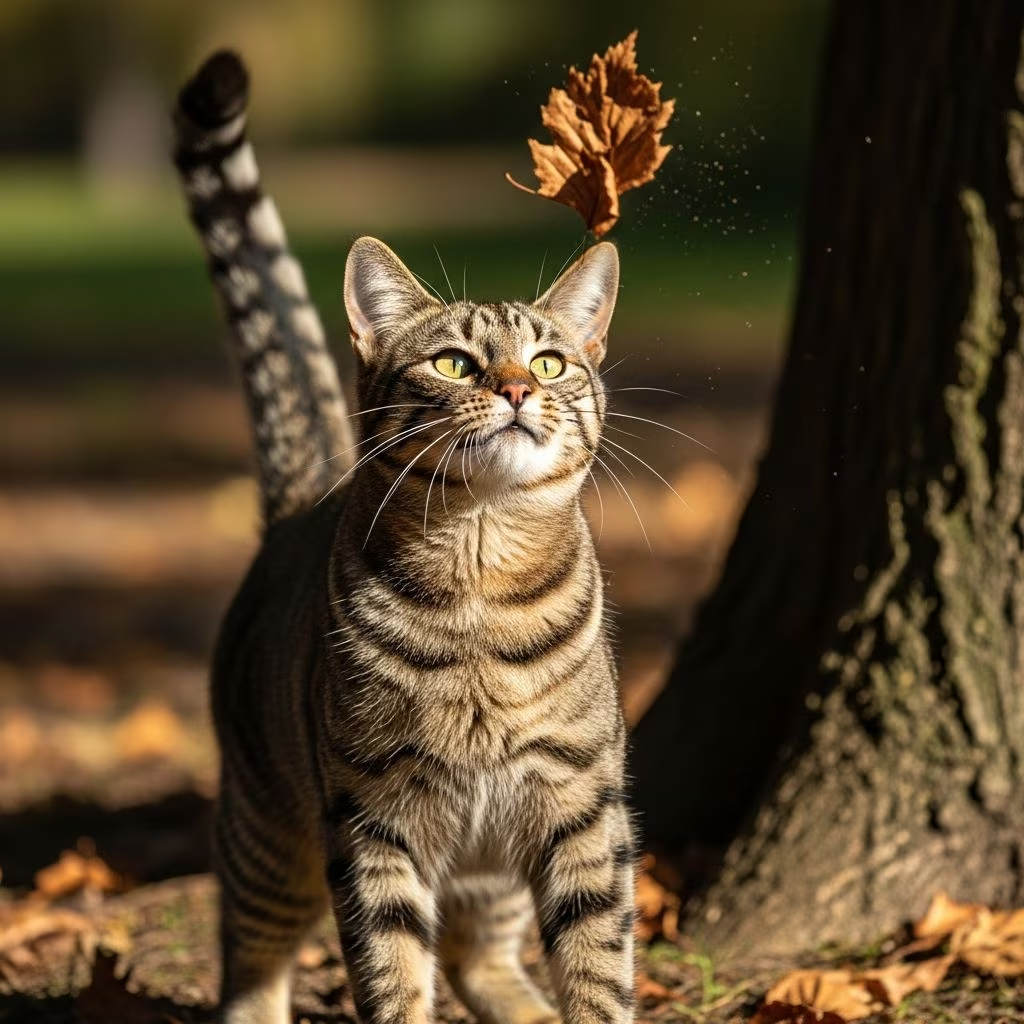
Feral cats do engage in play, primarily through hunting simulations, social interactions within colonies, and kitten development activities that mimic survival skills. This behavior strengthens social bonds, hones predatory instincts, and supports colony harmony, differing from the more human-oriented play of domestic cats.
Defining Feral Cats and Their World
Feral cats are domestic cats that live independently of humans, often born in the wild or abandoned early in life, developing a strong aversion to human contact. Unlike stray cats, which may seek human interaction and exhibit friendly signals like meowing or tail-up postures, feral cats prioritize avoidance, crouching low, avoiding eye contact, and remaining silent to evade threats.
In colonies, these cats form loose social groups, especially among related females, engaging in mutual grooming and rubbing to reinforce group scents and identities. Males typically maintain larger territories but may show tolerance or protective behaviors toward colony kittens, occasionally sharing food or intervening in squabbles.
| Behavior | Feral Cats | Stray Cats |
|---|---|---|
| Human Approach | Avoid, hide, no eye contact | May approach, tail up, meow |
| Activity Pattern | Nocturnal, low to ground | Diurnal, housecat-like walk |
| Socialization | Colony bonds, no human purr | Seeks human contact, vocal |
| Stress Response | Aggressive if cornered | Hiss/growl but tolerates touch |
This table highlights key distinctions, helping identify feral cats even in stressful settings like traps, where strays might temporarily act feral but relax over time.
The Role of Play in Feral Cat Survival
Play in feral cats serves practical purposes beyond recreation, acting as training for essential survival skills. Kittens begin with object play, pouncing on leaves or insects, progressing to mock hunts that build coordination, agility, and predatory techniques. These sessions sharpen reflexes needed for capturing real prey, ensuring young cats can contribute to their own sustenance.
Adult feral cats continue playful pursuits, often solitary hunting simulations like stalking shadows or batting at moving debris. Such activities maintain peak physical condition, crucial in varying habitats where prey availability fluctuates seasonally. Studies note feral cats as adept hunters, shifting locations to optimize food sources, with play reinforcing these adaptable strategies.
- Hunting Practice: Chasing windblown items or colony mates mimics real pursuits.
- Physical Fitness: Leaping and twisting prevent muscle atrophy in harsh environments.
- Mental Stimulation: Solves boredom, reduces stress in resource-scarce colonies.
Social Play and Colony Dynamics
Within colonies, play fosters cohesion. Related females and their offspring engage in gentle chasing or wrestling, strengthening alliances and minimizing conflicts. Neutered males, with smaller territories, participate more in neutral zones, grooming or playfully batting at kittens, which dominant intact males might also do protectively.
Allorubbing—rubbing bodies to exchange scents—and allogrooming sessions often transition into light play, like mutual chasing. These interactions are rare among unrelated adults to avoid fights but common in bonded subgroups, enhancing group stability. Aggression spikes mainly with intruders or maturing males, but play helps diffuse tensions among familiars.
Feral cats rarely play with humans, viewing them as threats. Caregivers feeding colonies might observe semi-tolerant behaviors like tail-up greetings after months of consistent interaction, but true play remains intra-colony.
Kitten Play: Foundations of Feral Life
Feral kittens exhibit the most overt play, essential during their critical socialization window up to 8 weeks. Littermates tumble, ambush each other, and compete for food mockingly, learning boundaries and hierarchy. Mother cats join briefly, teaching through controlled pounces, preparing offspring for independence.
Without human exposure, this play instills wariness; kittens practice evasion drills, hiding and stalking peers. Orphaned or isolated kittens show diminished play, leading to poorer hunting skills later, underscoring play’s developmental role.
Play isn’t frivolity for feral kittens—it’s rigorous training where every swat and leap forges a survivor.
Myths About Feral Cat Behavior and Play
Myth 1: Feral Cats Are Always Aggressive
Feral cats avoid confrontation, fleeing unless cornered. Their “feral” label stems from unsocialization, not meanness; aggression is defensive, with ears back and dilated pupils signaling retreat urges.
Myth 2: They Never Interact Socially
Colonies thrive on subtle bonds—grooming, shared resting spots. Playful interventions by toms in kitten fights demonstrate care, countering solitary predator stereotypes.
Myth 3: Feral Cats Don’t Hunt or Play Hunt
Excellent nocturnal hunters, they seasonally adapt, with play sustaining skills. Unlike pets, their play aligns with colder, darker activity peaks.
Myth 4: All Community Cats Play with Humans
Strays might, but ferals shun it. TNR programs respect this, returning them to colonies post-care.
Observing Feral Play Safely
To witness feral play without disruption, maintain distance. Provide shelters or feeding stations in colonies via TNR (Trap-Neuter-Return), observing from afar. Signs include kittens wrestling at dawn/dusk or adults batting insects. Avoid direct intervention to prevent stress-induced fights.
Interactive toys for semi-ferals (those showing caregiver familiarity) can encourage play indirectly—wands mimicking prey from a distance build cautious trust.
Supporting Feral Colonies Through Play Awareness
Understanding play aids humane management. Stable colonies with ample resources see less aggression, more play-driven harmony. Volunteer for TNR to curb overpopulation, ensuring kittens learn survival play without exponential growth pressures.
Seasonal feeding supplements prey hunts, freeing energy for social play. Monitor for injuries from roughhousing, common in maturing males.
FAQs
Can feral cats be tamed through play?
Rarely; adults remain wary, but kittens under 8 weeks respond to gentle, prey-like toys in safe spaces. Patience yields tolerance, not full domestication.
Why do feral cats play more at night?
Nocturnal hunters, they align play with peak activity, avoiding diurnal human threats.
Do feral cats play-fight like domestic ones?
Yes, but briefly and territorially; it reinforces bonds without injury in familiar groups.
Is play a sign a feral cat wants adoption?
No—play is intra-species. Tail-up to feeders indicates familiarity, not pet suitability.
How does neutering affect feral play?
Reduces territorial fights, allowing more social play in overlapping areas.
References
- Feral and Stray Cats: An Important Difference — Alley Cat Allies. 2023. https://www.alleycat.org/resources/feral-and-stray-cats-an-important-difference/
- Life in a Feral Cat Colony — Cats on Broadway Veterinary Hospital. 2023. https://www.catsonbroadwayhospital.com/life-feral-cat-colony/
- Why are some cats FERAL? — YouTube (Video). 2023. https://www.youtube.com/watch?v=1Xff1gAc0WY
- Feral Cat Behavior: 6 Common Misconceptions — Chewy. 2023. https://www.chewy.com/education/cat/training-and-behavior/feral-cat-behavior
- Feral or Stray – An Important Difference — Feral Cat Focus. 2023. https://feralcatfocus.org/feral-or-stray/
- Socializing Feral Cats — Cattitude Adjustment. 2023. https://www.cattitude-adjustment.com/blog/socializing-feral-cats-1



