

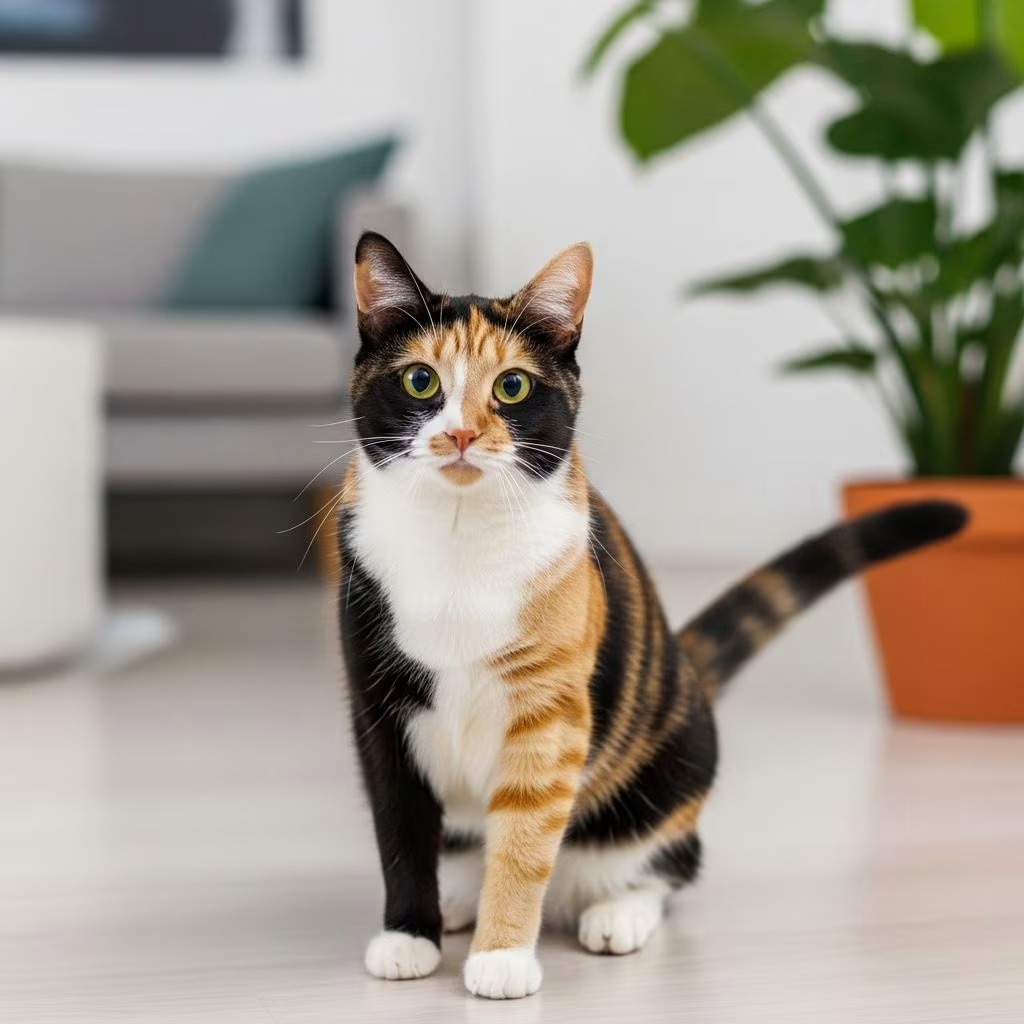
Female cats do spray urine, though it’s less common than in males, often driven by territorial instincts, stress, or unspayed heat cycles. Understanding this behavior helps cat owners address underlying issues effectively.
What Is Cat Spraying?
Cat spraying, also known as urine marking, involves a cat backing up to a vertical surface like a wall, furniture, or curtain, raising its tail, and releasing a small amount of urine while often twitching the tail tip. This differs from regular urination, where cats squat to eliminate larger volumes in a litter box. Spraying serves as a communication tool, depositing pheromones to mark territory or signal messages to other cats.
Both male and female cats spray, but intact (unspayed or unneutered) cats are more prone due to hormonal influences. Spayed females can still spray under stress or environmental triggers, making it a widespread issue in multi-cat homes or during changes.
Do Female Cats Spray?
Yes, female cats spray, particularly unspayed ones in heat to attract mates via pheromones in urine, but spayed females spray too due to stress, territory disputes, or medical issues. Studies and veterinary observations confirm spraying peaks around sexual maturity (6 months), with females more likely during estrus cycles accompanied by yowling or rubbing.
In multi-pet households or near outdoor cats, females assert dominance by spraying windows or doors. Even solitary indoor females may spray if anxious, proving it’s not gender-exclusive but context-driven.
Why Do Female Cats Spray?
Female cats spray for behavioral, hormonal, and medical reasons. Key triggers include:
- Territorial Marking: To claim space against perceived intruders like neighborhood cats seen through windows.
- Stress and Anxiety: From moves, new pets, furniture shifts, or routine changes.
- Mating Signals: Unspayed females release pheromones during heat.
- Multi-Cat Conflicts: Resource competition in households.
- Medical Conditions: UTIs, cystitis, bladder stones, or age-related cognitive decline.
Spraying reinforces security via familiar scents, especially if a cat feels vulnerable.
Spraying vs. Urinary Accidents: Key Differences
| Aspect | Spraying (Marking) | Urinary Accidents |
|---|---|---|
| Posture | Stands/backed up, tail raised | Squats like normal elimination |
| Amount | Small mist/spray | Large puddle |
| Location | Vertical surfaces (walls, furniture) | Horizontal (floor, bed) |
| Odor | Strong, pungent pheromone scent | Typical urine smell |
| Litter Box Use | Often avoids box for spraying | May use box inconsistently |
Distinguishing these guides solutions: spraying signals communication needs, while accidents point to litter issues or health problems.
Health Issues That Cause Spraying in Female Cats
Medical causes mimic spraying:
- Urinary Tract Infections (UTIs)/Cystitis: Pain leads to inappropriate elimination.
- Bladder Stones/Kidney Disease: Discomfort triggers marking.
- Diabetes/Thyroid Issues: Increased urination volume.
- Cognitive Dysfunction: In senior cats, confusion causes spraying.
Vets recommend exams, urinalysis, and bloodwork first to rule out issues, as untreated conditions worsen behavior.
Why Is My Spayed Female Cat Spraying?
Spaying reduces but doesn’t eliminate spraying in 5-10% of females if habits formed pre-surgery or due to ongoing stress/territory issues. Ovarian remnants can cause hormone persistence; vets may ultrasound to check. Environmental factors like new pets or conflicts persist post-spay.
How Can I Stop My Female Cat from Spraying?
Comprehensive strategies include:
- Vet Check: Rule out medical causes with full exam.
- Spay if Intact: Dramatically reduces hormonal spraying.
- Reduce Stress: Use pheromone diffusers (Feliway), maintain routines, provide hiding spots.
- Optimize Litter Boxes: One per cat +1, scooped daily, in quiet spots.
- Environmental Enrichment: Vertical spaces, toys, play to ease anxiety.
- Block Views: Curtains over windows to hide outdoor cats.
- Cleaning: Enzymatic cleaners to remove scents.
- Professional Help: Behaviorists for persistent cases; meds rarely needed.
Success rates improve with early intervention; multi-cat intros via scent swapping help.
Cleaning Up Cat Spray
Spray stains fabrics/walls; use enzymatic cleaners (Nature’s Miracle) to break pheromones—regular cleaners fail, encouraging re-marking. Blot, don’t rub; ventilate; for fabrics, test first. Persistent odors may need pros.
Preventing Female Cat Spraying
Proactive steps:
- Spay before 6 months.
- Multiple resources in multi-cat homes.
- Slow new pet/people introductions.
- Consistent routines.
- Regular vet checkups.
These minimize triggers effectively.
Frequently Asked Questions (FAQs)
Do female cats spray?
Yes, female cats spray, especially unspayed ones in heat, but spayed females do too from stress or territory needs.
Why is my female cat spraying all of a sudden?
Sudden spraying signals stress (new changes), medical issues (UTIs), or intruders; vet visit first.
Will spaying stop my female cat from spraying?
Spaying stops most hormonal spraying, but pre-existing habits or stress may persist in some.
How do I clean cat spray?
Use enzymatic cleaners to neutralize pheromones; avoid ammonia-based products.
Can stress cause spraying in female cats?
Yes, common trigger; address with enrichment and pheromone therapy.
References
- Do Female Cats Spray? — Whitney Veterinary Hospital. 2023. https://whitneyvet.com/do-female-cats-spray/
- How To Stop Cat Spraying (And Why Cats Do It in the First Place) — Chewy.com. 2024-01-15. https://www.chewy.com/education/cat/health-and-wellness/cat-spraying
- Cat Spraying: Why Cats Do It and How to Stop It — PetMD. 2024. https://www.petmd.com/cat/general-health/cat-spraying-why-cats-do-it-and-how-to-stop-it
- Stop Cat Spraying in House — Best Friends Animal Society. 2023-05-10. https://bestfriends.org/pet-care-resources/why-my-cat-spraying-house-and-how-do-i-stop-it
- Cat Behavior Problems – Marking and Spraying Behavior — VCA Animal Hospitals. 2024. https://vcahospitals.com/know-your-pet/cat-behavior-problems-marking-and-spraying-behavior



