

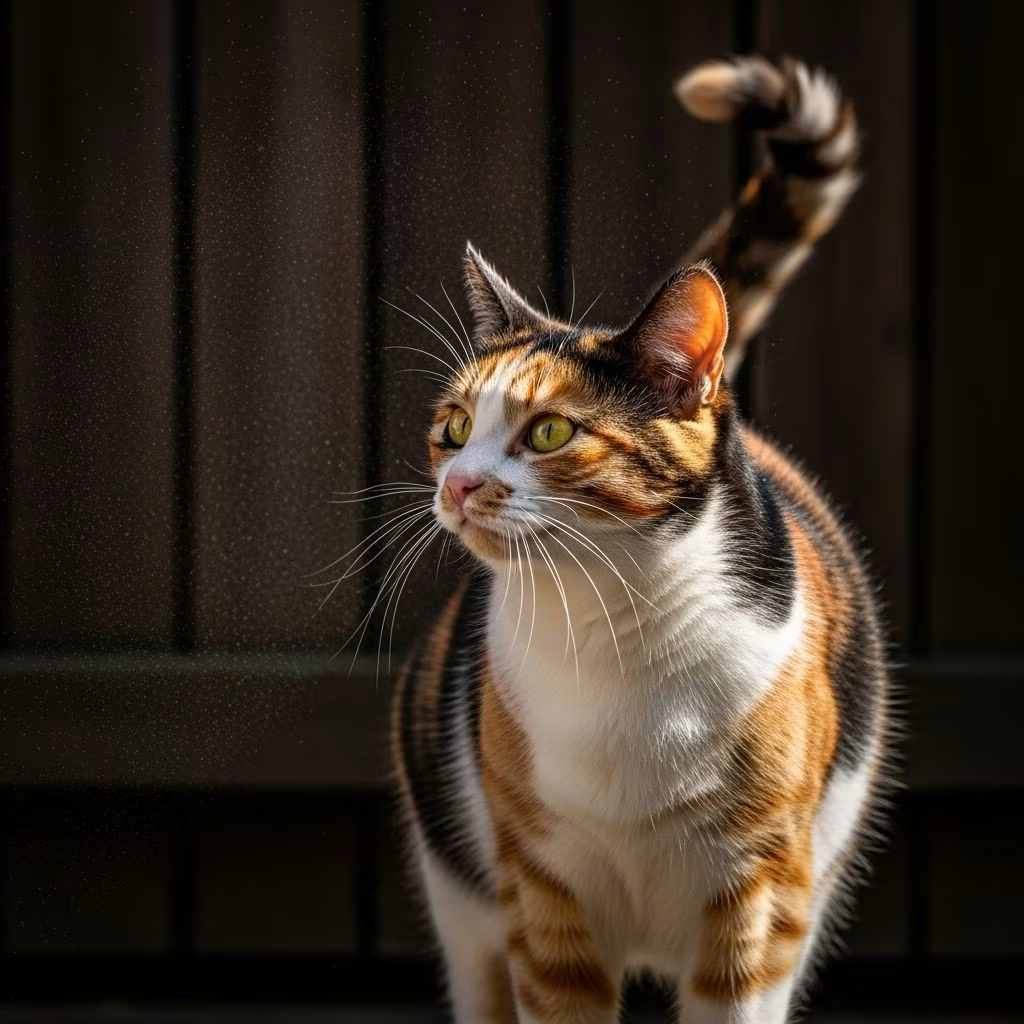
Female cats spray urine as a natural communication method, though less frequently than males, primarily to mark territory, signal mating availability, or respond to stress. This behavior involves propelling a small amount of urine onto vertical surfaces with a distinctive posture, distinguishing it from regular elimination.
Recognizing Cat Spraying Behavior
Spraying occurs when a cat backs up to a vertical object like a wall or furniture, raises its tail which quivers, and releases a mist of urine while treading with hind feet. The urine carries potent pheromones from anal glands, creating a stronger, muskier odor than typical cat pee. Unlike puddles from urination on horizontal spots, spray leaves streaks or spots higher up, often at nose level for other cats.
Both intact and spayed females exhibit this, peaking around sexual maturity at 6 months. Indoor cats may target windows or doors upon spotting outdoor felines, interpreting them as intruders.
Primary Reasons Female Cats Spray
Understanding triggers helps address the root cause. Cats spray to convey messages via scent, a survival instinct from their solitary wild ancestors.
Territorial Claims in Multi-Cat Homes
In households with multiple cats, spraying asserts dominance over shared spaces like litter areas or resting spots. A female may mark if she senses competition for resources, even without overt fights. Neighborhood cats visible through windows provoke similar responses, as the indoor cat defends its domain.
Mating Signals and Hormonal Drives
Unspayed females spray more during estrus to attract males, releasing pheromones that signal fertility. Intact males do this routinely, but females’ spraying aligns with heat cycles. Spaying reduces this by 90-95% in females, altering urine chemistry and diminishing the urge.
- Spray contains sex, age, and health info for other cats.
- Estrous females’ marks elicit flehmen response in males.
- Neutering curbs hormone-driven marking effectively.
Stress and Environmental Disruptions
Changes like new pets, furniture rearrangements, or routine shifts heighten anxiety, prompting spraying for security via familiar scents. Frustration from empty bowls or blocked doors also triggers it near the issue source. Medical pains like urinary infections mimic or exacerbate behavioral spraying.
How Spraying Differs from Normal Urination
Distinguishing prevents misdiagnosis. Use this table for quick comparison:
| Aspect | Spraying | Urination |
|---|---|---|
| Posture | Vertical target, raised quivering tail, treading feet | Squatting on horizontal surface |
| Amount | Small mist or streak | Large puddle |
| Location | Walls, furniture, curtains (vertical) | Floor, litter box |
| Odor | Pungent, musky pheromones | Standard ammonia smell |
| Frequency | Targeted spots, repeated | Routine elimination |
Sudden increases warrant vet checks for issues like FLUTS or bladder stones, which cause discomfort mimicking spraying.
Health Issues Mimicking Spraying
Rule out medical causes first. Urinary tract infections, crystals, or idiopathic cystitis lead to inappropriate elimination. Metabolic or neurological conditions heighten stress, indirectly promoting sprays. Vets recommend urinalysis; even behaviorally spraying cats benefit from exams, as 10% of neutered males and 5% of spayed females persist due to unresolved health factors.
Effective Strategies to Stop Spraying
Combine medical, behavioral, and environmental fixes. Success rates exceed 90% with consistent application.
Surgical Interventions
Spay females before 6 months to prevent onset; it resolves most cases. For ongoing issues post-spay, consult behaviorists.
Stress Reduction Techniques
- Enrich environment: Add vertical spaces, scratching posts, interactive toys.
- Maintain routines: Consistent feeding, play, litter access.
- Block outdoor views: Cover windows, use deterrents like motion-activated sprays.
- Pheromone diffusers: Synthetic feline pheromones calm anxiety.
Cleaning and Deterrence
Enzymatic cleaners neutralize pheromones; avoid ammonia products mimicking urine. Place food bowls or citrus peels on targets—cats avoid spraying near eating areas. Double-sided tape on surfaces discourages approach.
Multi-Cat Household Management
Provide ample resources: One litter box per cat plus one extra, separated locations. Feed separately, offer individual perches. Slow introductions for new pets prevent rivalry.
Long-Term Prevention Tips
Monitor for triggers like neighborhood cats or renovations. Regular vet visits catch issues early. Behavioral training via positive reinforcement builds litter habits. If persistent, feline behaviorists use tailored plans, often resolving in weeks.
Frequently Asked Questions
Will my spayed female cat still spray?
Most stop post-spay, but 5% continue due to stress or habit. Address environment for full resolution.
How do I clean cat spray effectively?
Use enzymatic cleaners designed for pet urine to break down pheromones completely.
Can outdoor cats cause indoor spraying?
Yes, visual or olfactory contact triggers territorial responses. Limit exposure.
Is spraying a sign of aggression?
Not always; it’s communication. Rarely escalates if managed early.
What if spraying suddenly starts in an older cat?
Seek vet care immediately for potential urinary or age-related issues.
Case Studies: Real-World Resolutions
Owners report success: One reduced spraying 100% via spaying and pheromone plugs after multi-cat tension. Another used litter box multipliers and window films, eliminating door sprays in days.
References
- Cat Spraying: Why Cats Do It and How to Stop It — PetMD. 2023. https://www.petmd.com/cat/general-health/cat-spraying-why-cats-do-it-and-how-to-stop-it
- Cat Behavior Problems – Marking and Spraying Behavior — VCA Animal Hospitals. 2024. https://vcahospitals.com/know-your-pet/cat-behavior-problems-marking-and-spraying-behavior
- Common feline problem behaviors: Urine spraying — PMC – NIH (Peer-reviewed). 2024-09-15. https://pmc.ncbi.nlm.nih.gov/articles/PMC11373755/
- Urine Marking in Cats — ASPCA. 2023. https://www.aspca.org/pet-care/cat-care/common-cat-behavior-issues/urine-marking-cats
- Why Cats Spray & How to Control It — Purina (Updated). 2026-01-27. https://www.purina.com/articles/cat/behavior/understanding-cats/why-do-cats-spray



