Do Dogs Watch TV? Science Explains Canine Screen Time
Discover how your dog's personality shapes their TV habits, from barking at animals to ignoring humans—backed by recent research.
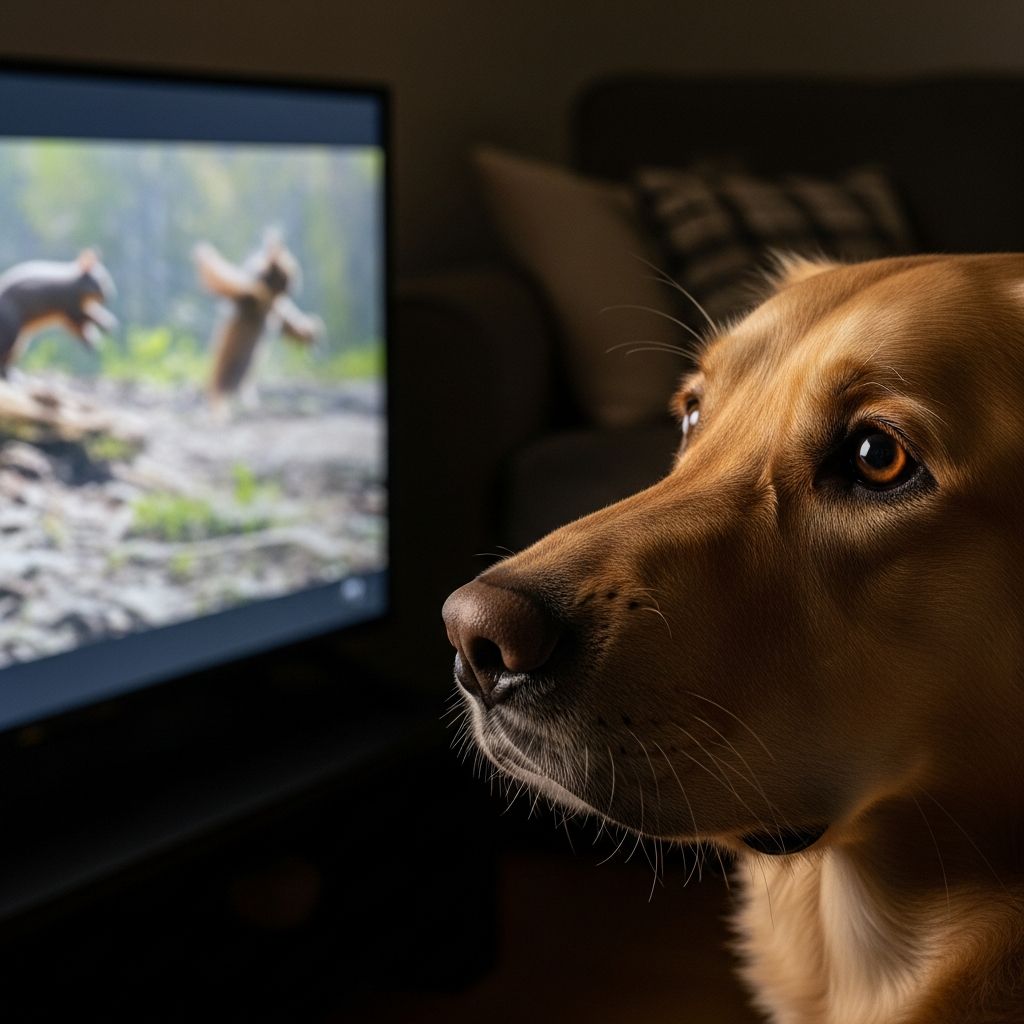
Dogs perceive and react to television in ways shaped by their unique visual and auditory senses, with recent studies showing that about half of them engage with screen content, particularly animals and familiar sounds. Personality traits like excitability and fearfulness significantly influence these reactions, as revealed in a 2025 Auburn University survey of 453 dog owners.
The Science of Canine Vision and Screen Perception
Dogs see the world differently from humans due to their dichromatic vision, which emphasizes blues and yellows over reds and greens. This affects how they process 2D TV images, yet research confirms they distinguish on-screen dogs from other animals, responding more to moving animal figures than static or human-centric content.
A principal component analysis of owner reports highlighted two key factors: stimulus type (animals vs. objects) and behavioral responses (following action vs. stationary watching). Dogs treat TV animals as quasi-real, often tracking them off-screen, suggesting some 3D-like mental representation despite the flat screen.
Key Findings from the Dog Television Viewing Scale (DTVS)
Developed by researchers Lane Montgomery and team, the DTVS questionnaire assessed reactions to visual and auditory stimuli across categories: dogs, other pets, wildlife, humans, and objects. Respondents rated frequency from ‘never’ to ‘always’ for behaviors like barking, tail-wagging, pawing, or looking behind the TV.
- Animal stimuli dominance: 45% of dogs always reacted to dog barks or howls, far outpacing responses to humans or cars.
- Average attention span: Dogs focused for about 14 minutes and 8 seconds per session, influenced by content relevance.
- Multi-sensory engagement: Both visuals and sounds drove reactions, with audio like animal noises eliciting strong vocalizations.
These patterns indicate dogs actively ‘watch’ TV when it mimics real-world encounters, providing mental stimulation akin to environmental enrichment.
How Personality Traits Shape TV Reactions
Excitable dogs, rated high on impulsivity scales, frequently pawed at screens or searched behind TVs, treating on-screen movement as tangible prey or playmates. Conversely, fearful or anxious dogs reacted more to non-animal cues like doorbells or car horns, potentially triggering stress responses.
| Trait | TV Reaction Type | Example Behaviors |
|---|---|---|
| Excitable | Follows animals/objects | Pawing, scanning behind screen, chasing motion |
| Fearful/Anxious | Non-animal stimuli | Barking at doorbells, hiding from loud noises |
| Calm/Neutral | Stationary observation | Quiet watching, mild tail wags |
Temperament assessments, including standardized impulsivity and reactivity scales, predicted DTVS scores, underscoring individualized viewing profiles. Owners of high-energy breeds like herding dogs reported more dynamic interactions.
Practical Tips for Dog-Friendly TV Viewing
To leverage TV as enrichment, select content with fast-moving animals, nature documentaries, or dog-specific channels. Limit sessions to avoid overstimulation, especially for reactive pups.
- Position the TV at dog-eye level for optimal viewing.
- Use volume moderately to enhance audio cues without startling.
- Monitor for stress signs like pacing or whining, pausing if needed.
- Combine with interactive toys for balanced stimulation.
Previous surveys, like the 2021 Center for Canine Behavior Studies (50% reaction rate among 708 dogs), align with these findings, suggesting TV can reduce boredom in homes or shelters.
Potential Benefits and Welfare Implications
Engaging TV time offers cognitive enrichment, mimicking social or predatory scenarios safely. For shelter dogs, tailored videos could alleviate isolation, as explored by veterinary vision researchers like Freya Mowat.
However, limitations exist: the study sample biased toward TV-exposed dogs, potentially overlooking non-viewers. Future work might test breed differences or age effects, with ongoing surveys seeking global data.
Comparing Dog TV Preferences Across Studies
| Study | Sample Size | Key Insight | Publication |
|---|---|---|---|
| Auburn University (DTVS) | 453 dogs | Personality predicts reactions; animals > objects | 2025, Scientific Reports |
| Center for Canine Behavior | 708 dogs | 50% react to TV content | 2021 |
| UW-Madison Vision Study | Ongoing survey | Content for vision testing/enrichment | In progress |
FAQs: Dogs and Television
Why do some dogs ignore TV? Less reactive temperaments or unfamiliarity with screens; gradual exposure helps.
Is TV harmful for dogs? Generally safe in moderation; watch for anxiety triggers like loud non-animal sounds.
What channels do dogs prefer? Animal-focused: nature shows, dog videos over human dramas.
Can TV help anxious dogs? Possibly, with calming content; consult trainers for reactivity.
How long should dogs watch TV? 10-20 minutes sessions, aligned with attention spans.
Future Research Directions
Emerging studies aim to create dog-optimized videos for vision assessments, potentially aiding eye health diagnostics. Global participation in surveys like Mowat’s could refine preferences by breed, age, and region. Integrating TV into behavior training might desensitize over-reactions, enhancing welfare.
References
- What Do Dogs Like to Watch on TV? This Scientist Tried to Find Out — The Farmer’s Dog. 2025-07. https://www.thefarmersdog.com/digest/what-do-dogs-like-to-watch-on-tv-this-scientist-tried-to-find-out/
- Science reveals dogs’ favorite type of TV — Popular Science. 2025-07-17. https://www.popsci.com/environment/what-dogs-like-on-tv/
- Dogs’ TV viewing habits vary by personality — Phys.org. 2025-07. https://phys.org/news/2025-07-dogs-tv-viewing-habits-vary.html
- Characterizing TV viewing habits in companion dogs — PubMed/Scientific Reports (DOI: 10.1038/s41598-025-06580-y). 2025. https://pubmed.ncbi.nlm.nih.gov/40676046/
- What Kind of TV Programs Do Dogs Like Best? — Psychology Today. 2025-07. https://www.psychologytoday.com/us/blog/canine-corner/202507/what-kind-of-tv-programs-do-dogs-like-best
- Canine TV Preferences Could Lead To Answers in Protecting Dogs’ Eyesight — University of Wisconsin School of Veterinary Medicine (.edu). N/D. https://www.vetmed.wisc.edu/canine-tv-preferences-could-lead-to-answers-in-protecting-dogs-eyesight/
Similar Articles








Read full bio of medha deb