

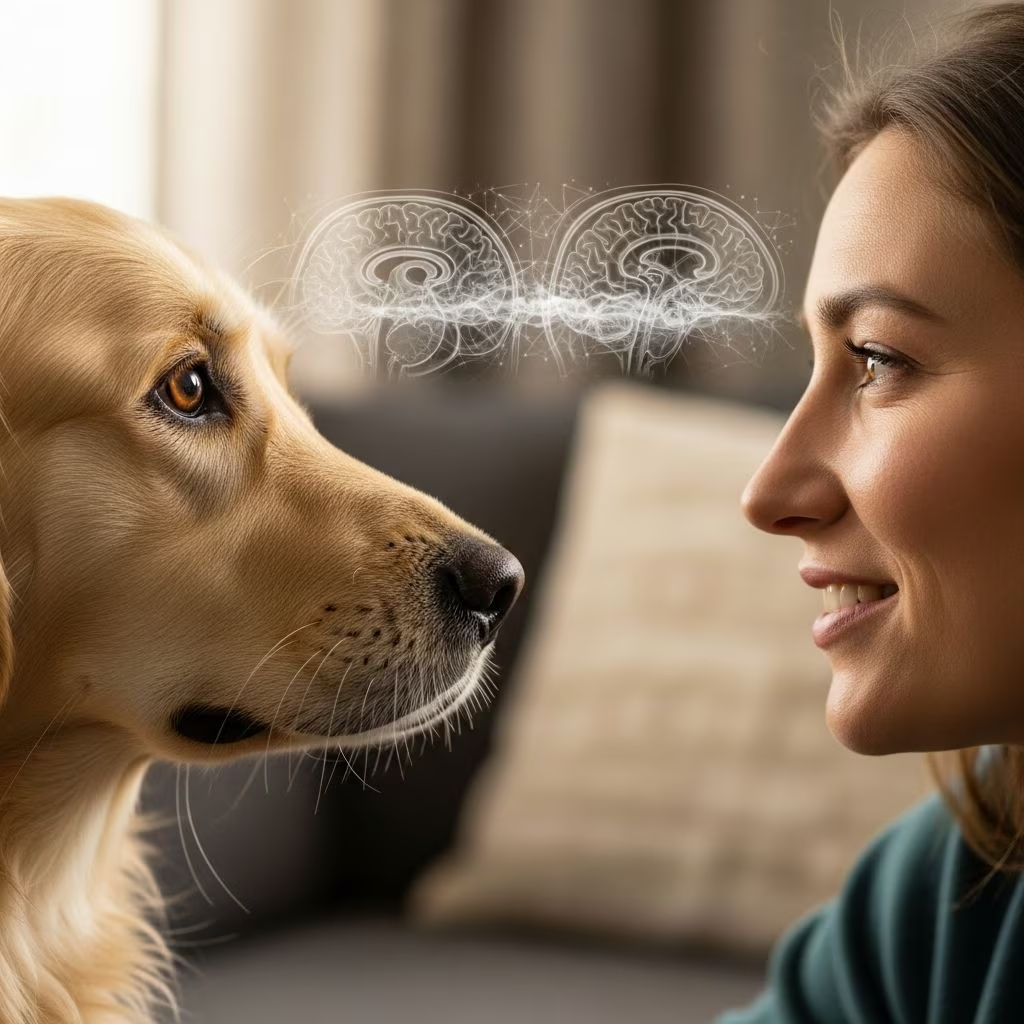
For centuries, dog owners have wondered whether their canine companions truly understand them. The answer is more complex and fascinating than a simple yes or no. Modern scientific research demonstrates that dogs have evolved remarkable abilities to understand human emotions, communication, and behavior in ways that are distinctly different from other animals. This unique capacity developed through thousands of years of domestication and represents one of the most compelling examples of interspecies communication in the animal kingdom.
The Science of Dog-Human Understanding
Dogs have coexisted with humans for more than 30,000 years, fundamentally shaping how both species interact and communicate. During this extended period of domestication, dogs underwent significant evolutionary changes that enhanced their ability to comprehend human behavior and emotion. Unlike wolves, their wild ancestors, dogs developed what researchers call human-like communication skills as a byproduct of mutations in their stress response endocrine system. This neurobiological shift allowed dogs to form deep bonds with humans through oxytocin, the same bonding hormone that strengthens connections between human mothers and infants.
The transformation of dogs from wild animals to human companions represents a remarkable example of convergent evolution, where two different species develop similar traits through their shared environment. This process, termed “co-becoming,” reveals that both humans and dogs have gained similar characteristics through their intertwined history. Dogs now possess social skills that rival those of humans in many respects, particularly in their ability to read and respond to human social cues.
How Dogs Read Human Communication
One of the most striking abilities dogs have developed is their capacity to interpret human communication across multiple channels. Research shows that dogs have high sensitivity to human gaze direction and attention status, meaning they constantly monitor where humans are looking and what they are focusing on. This attentiveness allows dogs to understand human intentions and anticipate human actions.
Dogs are also keen observers of human reactions and behaviors. They have evolved a predisposed ability to inspect human faces for critical information, seeking reassurance and guidance from their owners. This facial recognition ability extends beyond simple observation—dogs can actually pick out meaningful words from a stream of human speech, even without the special intonation patterns that people typically use when addressing their pets. In one study, dogs consistently recognized their own names and responded differently to meaningful commands compared to neutral phrases, demonstrating a sophisticated understanding of human language.
Beyond verbal communication, dogs frequently display behavioral synchronization with humans. They often naturally behave similarly to humans and prefer humans who synchronize with them. Dogs can copy human actions at various levels, ranging from simple mimicry to selective imitation and even over-imitation, all of which indicate a sophisticated sensitivity to human behavior.
Emotional Recognition and Empathy
Perhaps one of the most moving demonstrations of dog understanding is their ability to recognize and respond to human emotions. Scientific evidence strongly suggests that dogs may have evolved specifically to understand human emotional states, particularly negative emotions like sadness. A groundbreaking study published in Animal Behaviour compared how dogs and domesticated pigs responded to human crying versus human humming. The results were striking: dogs showed distinct signs of stress, including shaking and whining, far more frequently when hearing human crying compared to any other stimulus.
The research went further to demonstrate that dogs didn’t simply learn emotional recognition through proximity to humans. By comparing dogs raised with humans to pigs also raised with humans, scientists determined that dogs have a genetic component to their emotional understanding abilities. This suggests that during domestication, dogs were naturally selected for traits that made them more responsive to human emotional displays.
Dogs also respond to crying by physically comforting their owners, touching them more frequently when they detect signs of distress. Additionally, previous research has documented that dogs are more likely to approach a crying stranger than their own guardian, and their stress hormone cortisol levels actually increase after hearing human infants cry. These behaviors demonstrate genuine empathetic responses rather than simple conditioned reactions.
Dog-Human Bonding and Attachment
The bond between humans and dogs operates at a neurochemical level that mirrors human-infant attachment. Dogs are known to form attachments to humans that are similar in structure and function to the attachments human infants form with caregiving adults. This attachment system depends on the same oxytocin-based bonding mechanism found in close human relationships.
An interesting aspect of dog understanding relates to how they prioritize human input over that of other dogs. Research has found that dogs refer more to information from their owners than from other dogs living in the same household. This preference for human guidance over conspecific (same-species) interaction represents a fundamental shift in how dogs navigate their social environment compared to wolves. In cooperative tasks, wolves typically initiate interactions with humans and lead the exchange, while dogs characteristically wait for humans to initiate actions and then follow their lead. This behavioral difference reflects dogs’ deep evolutionary adaptation to human guidance.
How Experience Shapes Understanding
The degree to which dogs understand humans is also influenced by their personal experience and familiarity with specific people. Dogs who have more contact with humans develop enhanced abilities to read human behavior and emotion. This suggests that while dogs have an innate predisposition to understand humans, their skills are refined and strengthened through regular interaction.
In experimental settings, researchers have found that dogs’ choice behavior reflects their weighting of personal relationships against broader group dynamics. When presented with two groups of different sizes—one containing familiar people and one containing only strangers—dogs demonstrated a preference for the group containing people they already knew, even if that group was smaller. This finding reveals that dogs value their existing relationships with specific humans more than simply following the majority, suggesting a sophisticated understanding of individual human relationships.
Communication: A Two-Way Street
Understanding flows in both directions in the human-dog relationship. The human-dog partnership benefits both species by enabling large-scale collaboration and providing survival advantages. From an evolutionary perspective, humans sacrificed their acute sense of smell to develop the physical capabilities necessary for complex spoken communication. Dogs, with their superior olfactory abilities, essentially provide humans with a sensory capability we lost, creating an interdependent relationship where each species contributes unique strengths.
Dogs’ human-like aspects of communication serve specific purposes in facilitating human-dog collaboration. Whether working as service animals, therapy dogs, or beloved family companions, dogs use their understanding of human behavior to coordinate effectively with humans in ways other animals cannot achieve.
The Broader Implications of Canine Understanding
The recognition that dogs genuinely understand humans raises important philosophical and ethical questions about our responsibilities toward them. Kinship—defined as a sharing of characteristics or origins—takes on profound meaning when we recognize how deeply intertwined human and dog evolution has become. We must consider what our treatment of canine companions reveals about our values and what moral obligations we have toward beings that have evolved alongside us and developed such sophisticated abilities to understand our needs and emotions.
Key Takeaways
- Dogs have evolved specialized abilities to understand human emotions, communication, and behavior over 30,000 years of cohabitation
- Dogs read human facial expressions, gaze direction, and can recognize meaningful words in human speech
- Dogs have a genetic predisposition to respond to human emotional distress, showing distinct responses to crying versus other sounds
- Dog-human bonding operates through the oxytocin system, similar to human parent-infant attachment
- Dogs prioritize information from their owners and familiar humans over other dogs in their decision-making
- Experience with humans refines and strengthens dogs’ ability to understand human behavior and emotion
Frequently Asked Questions
Q: Can dogs really understand what we’re saying?
A: Yes, dogs can recognize and respond to meaningful words in human speech, including their own names and common commands, even when spoken in a neutral tone without special intonation. However, they understand through learned associations and context rather than language comprehension like humans.
Q: Do dogs understand human emotions?
A: Scientific research confirms that dogs have evolved to recognize and respond to human emotions, particularly negative emotions like sadness. They show distinct stress responses to human crying and often physically comfort distressed owners.
Q: How does a dog’s understanding compare to other animals?
A: Dogs show superior abilities to understand human emotions and communication compared to other domesticated animals like pigs. This difference appears to be genetically based rather than learned solely through proximity to humans.
Q: Do dogs prefer their owners’ guidance over other dogs?
A: Yes, research demonstrates that dogs refer more to information from their owners than from other dogs in the same household. Dogs have evolved to prioritize human guidance over interaction with other dogs.
Q: How did dogs develop the ability to understand humans?
A: Dogs developed human-understanding abilities as a byproduct of domestication, specifically through mutations in their stress response endocrine system that allowed them to bond with humans through oxytocin.
References
- Familiarity with humans affect dogs’ tendencies to follow — National Institutes of Health (NIH/PMC). 2020-04-16. https://pmc.ncbi.nlm.nih.gov/articles/PMC7188858/
- Co-Becoming: The Human-Dog Kinship — Coonoor & Co. 2024. https://coonoorandco.com/journal/co-becoming-the-human-dog-kinship
- Understanding Our Kinship with Animals: Input for Health Care Professionals Interested in the Human-Animal Bond — Veterinary Key. 2023. https://veteriankey.com/understanding-our-kinship-with-animals-input-for-health-care-professionals-interested-in-the-humananimal-bond/
- Dogs Eavesdrop on Humans, New Study Finds — Kinship. 2024. https://www.kinship.com/news/dogs-eavesdrop-study
- Dogs May Have Evolved To Understand Human Emotions — Kinship. 2024. https://www.kinship.com/dog-behavior/dogs-read-human-emotions-study-news



