

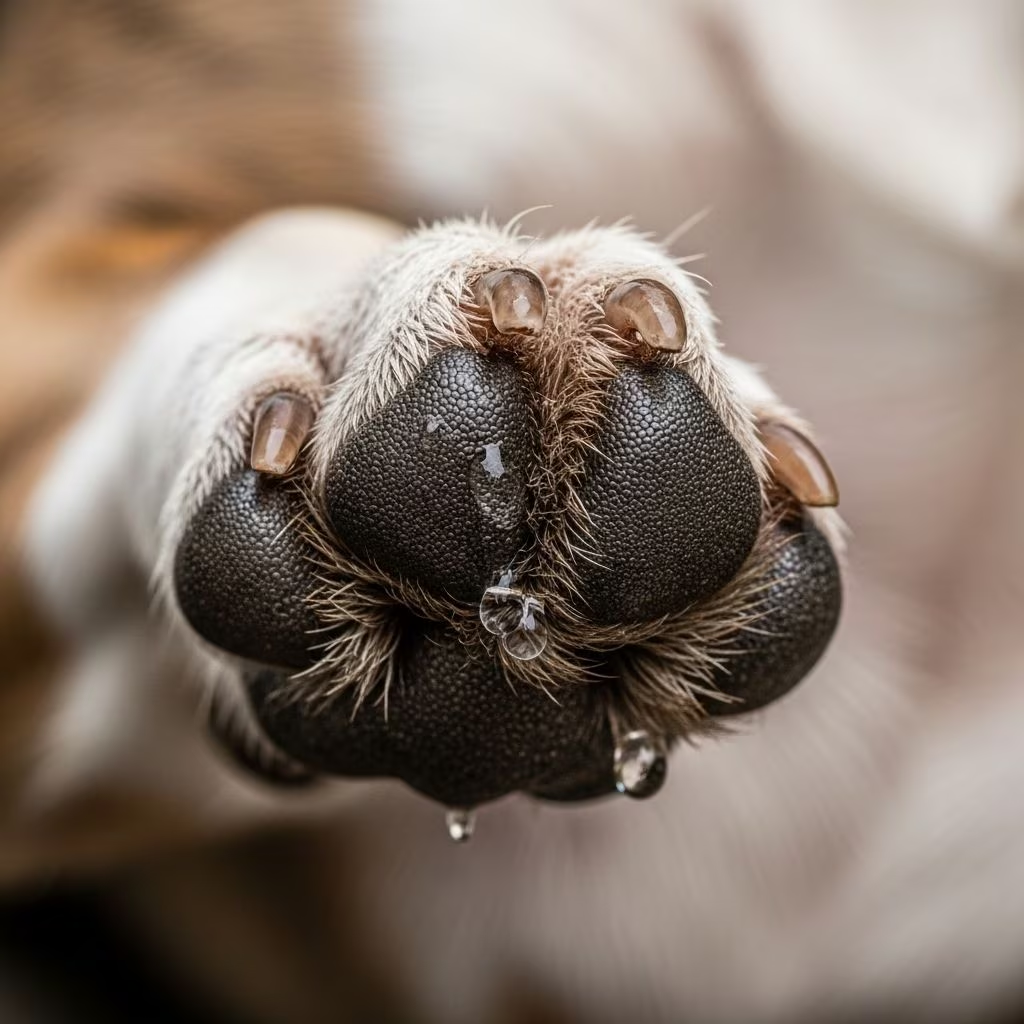
Dogs possess sweat glands, but unlike humans, they do not rely on widespread sweating for cooling. Their primary thermoregulation occurs through panting, with limited sweat production mainly from paw pads serving auxiliary roles.
The Science of Canine Thermoregulation
Canine bodies generate heat through metabolism and exercise, where up to 80% of muscle energy converts to thermal output that must be dissipated. Effective cooling prevents overheating, as dogs lack the extensive eccrine glands humans use for evaporative cooling across the skin.
Dogs feature two sweat gland types: merocrine and apocrine. Merocrine glands, akin to human eccrine glands, concentrate in paw pads and noses, secreting watery sweat that evaporates on hairless surfaces for minor heat loss. Apocrine glands, distributed body-wide near hair follicles, produce secretions rich in pheromones rather than aiding whole-body cooling; they protect localized skin from burns.
Where and Why Dogs Sweat
Sweat glands cluster in paw pads to maximize evaporation efficiency, unhindered by fur. On hot days, owners may observe damp footprints on floors, indicating active merocrine glands responding to heat or stress. Paw sweat also enhances traction during running or climbing by increasing friction on surfaces, as demonstrated in studies blocking sweat with atropine, which reduced paw grip.
- Merocrine glands: Paw pads and nose; produce evaporative sweat for slight cooling and grip.
- Apocrine glands: Body-wide; secrete pheromones for scent communication, minor local protection.
This setup contrasts with humans’ fur-free skin optimized for sweat evaporation, explaining dogs’ limited reliance on perspiration.
Primary Cooling Mechanism: Panting Explained
Panting dominates canine cooling, involving rapid breathing over moist mouth and lung surfaces to accelerate evaporation. This convection mimics a breeze enhancing human sweat evaporation post-shower. Dogs also employ vasodilation, expanding blood vessels in ears and face to radiate heat.
| Cooling Method | Description | Effectiveness |
|---|---|---|
| Panting | Rapid airflow evaporates moisture from tongue, mouth, lungs | Primary; highly efficient |
| Paw Sweating | Evaporation from pads | Minimal; supplementary |
| Vasodilation | Blood vessel expansion in extremities | Supports heat radiation |
| Behavioral | Seeking shade, water | Essential prevention |
Signs Your Dog Is Overheating
Recognizing heat stress early saves lives. Excessive panting progresses to drooling, bright red gums, weakness, vomiting, or collapse signaling heatstroke.
- Heavy, rapid panting beyond normal
- Struggling to breathe or stand
- Hot, dry nose and gums
- Lethargy or disorientation
- Seizures in severe cases
Brachycephalic breeds like Bulldogs face higher risks due to airway restrictions impairing panting. Active or overweight dogs overheat faster during exercise.
Breed Variations in Cooling Ability
Coat length influences sweat gland development; long-haired breeds have more developed glands, though still ineffective for major cooling. Thick-coated Northern breeds like Huskies pant vigorously but struggle in humidity where evaporation slows.
Short-nosed breeds pant less efficiently, elevating heatstroke risks. Horses, for comparison, sweat profusely via apocrine glands producing protein-rich lather for evaporation through fur, unlike dogs.
Practical Tips to Help Dogs Beat the Heat
Preventive strategies outperform treatment. Provide constant fresh water, shade, and avoid midday walks.
- Schedule exercise for cooler mornings or evenings.
- Use cooling mats or damp towels on paws and belly.
- Never leave dogs in cars, even briefly.
- Groom regularly to thin heavy coats (avoid shaving double coats).
- Monitor high-risk breeds closely.
For hot days, frozen treats like broth-filled toys encourage licking, aiding evaporative cooling. Fans or air conditioning enhance panting efficiency.
Debunking Myths About Dog Sweating
Myth: Dogs don’t sweat at all. Reality: They do, but minimally via paws.
Myth: Shaving fur cools dogs. Reality: Fur insulates against heat; shaving exposes skin to burns without improving cooling.
Myth: Wetting dogs cools them like sweat. Reality: External water evaporates too quickly without internal moisture replenishment.
Health Implications of Poor Thermoregulation
Chronic overheating strains hearts and organs. Heatstroke mortality reaches 50% without intervention; survivors risk kidney damage or neurological issues. Regular vet checks for obese or senior dogs mitigate risks.
Exercise in heat produces excessive metabolic heat, underscoring panting’s necessity. Humidity compounds dangers by impeding evaporation from mouth and paws alike.
FAQs
Do dogs sweat through their tongue?
No, dogs do not sweat from their tongue. Tongues facilitate panting-induced evaporation, not sweat production.
Why do dogs’ paws smell when sweaty?
Paw sweat mixes with bacteria, producing odor. Regular cleaning prevents infections.
Can dogs get heatstroke from walking on hot pavement?
Yes, paw pad burns and systemic overheating occur rapidly on surfaces above 120°F.
How much paw sweat is normal?
Damp prints during heat or stress; excessive indicates distress.
Do puppies sweat differently?
Puppies pant and sweat similarly but overheat faster due to immature regulation.
Understanding canine cooling empowers owners to safeguard pets year-round, especially in warming climates where heat events intensify.
References
- Why don’t dogs sweat? — C. Baird, West Texas A&M University. 2013-10-09. https://www.wtamu.edu/~cbaird/sq/2013/10/09/why-dont-dogs-sweat/
- Do Dogs Sweat? — PetMD. Recent (post-2024 update inferred). https://www.petmd.com/dog/general-health/do-dogs-sweat
- How Do Animals Keep Cool? — Science Friday. Recent. https://www.sciencefriday.com/articles/animals-keep-cool/
- Do Dogs Sweat? — American Kennel Club. Recent. https://www.akc.org/expert-advice/health/do-dogs-sweat/
- Do Dogs Sweat? How Your Dog Keeps Their Cool — Hill’s Pet Nutrition. Recent. https://www.hillspet.com/dog-care/behavior-appearance/do-dogs-sweat
- How Do Dogs Regulate Their Body Temperature — Ask Animal Web. Recent. https://askanimalweb.com/how-do-dogs-regulate-their-body-temperature-and-is-sweating-important/
- Sweating on paws and palms: what is its function? — PubMed (NCBI, peer-reviewed). 1975. https://pubmed.ncbi.nlm.nih.gov/1200160/ (Classic study on paw sweat function, remains authoritative).



