

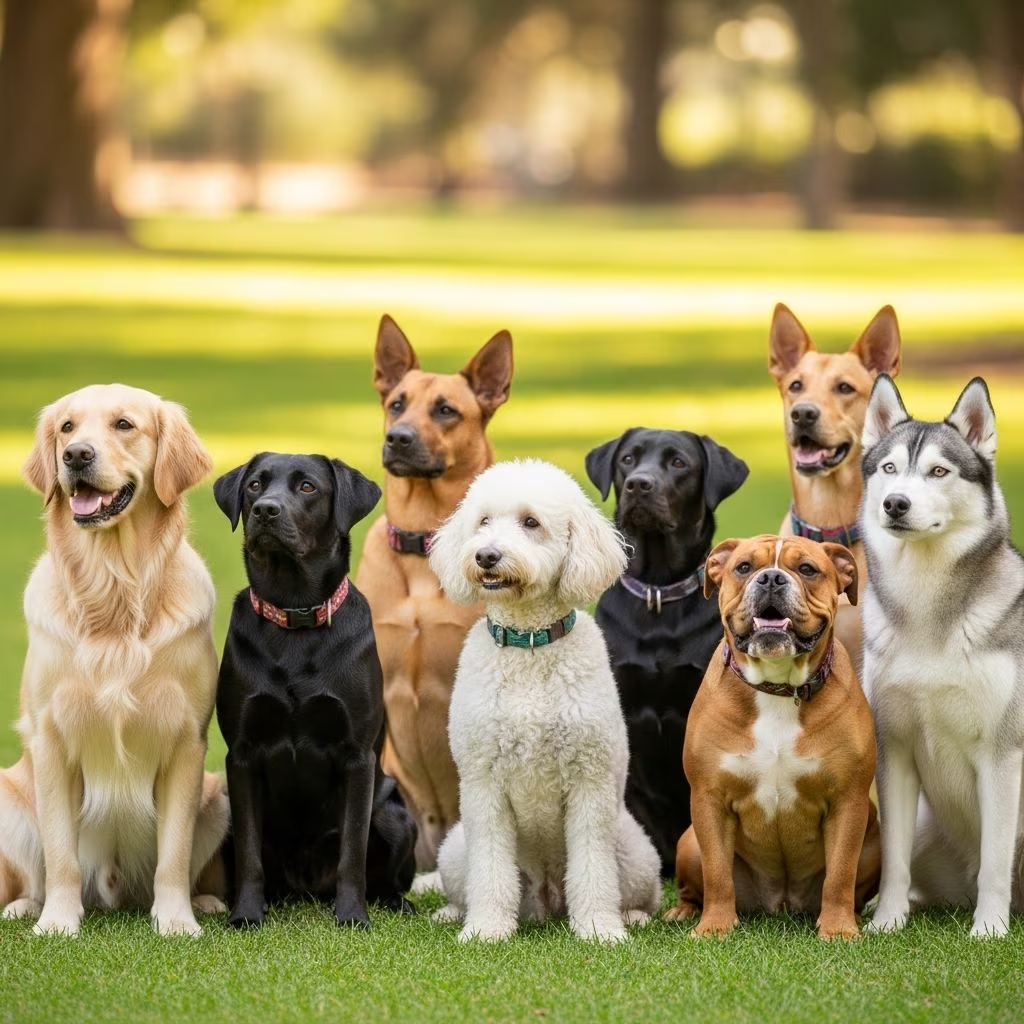
Dogs, often called man’s best friend, form strong bonds with humans but may display behaviors resembling racial bias toward strangers. Scientific studies reveal that some dogs react differently to people based on skin color, largely mirroring their owners’ attitudes and socialization experiences.
Understanding Canine Reactions to Human Diversity
Dogs perceive the world through senses like smell and sight, but their responses to humans are heavily shaped by early experiences. When encountering unfamiliar people, dogs might wag tails enthusiastically at some while growling at others. Research suggests these differences can correlate with the perceived race of individuals, prompting questions about innate prejudice or learned behavior.
Owners frequently report their pets behaving more warmly toward people who share their own racial background. This pattern emerges not from canine genetics but from daily interactions and emotional cues picked up from humans.
Scientific Evidence from Owner Surveys
Large-scale surveys of dog owners provide key insights. In one study involving over 2,600 participants, primarily White owners noted their dogs showed positive reactions—like approaching or playing—more often toward White strangers than Black ones. The reverse held for Black owners, though with smaller sample sizes yielding less statistical power.
These observations tied directly to owners’ own biases. Explicit preferences, where owners rated one race over another, predicted dog behaviors strongly. Implicit biases, measured through rapid association tasks linking faces to positive or negative words, showed similar correlations. Dogs of owners with stronger pro-White leanings displayed heightened wariness around Black people.
| Owner Race | Reported Dog Behavior Toward Same Race | Toward Other Race | Correlation with Owner Bias |
|---|---|---|---|
| White | More positive (e.g., tail wagging, approaching) | More negative (e.g., barking, avoidance) | Strong positive |
| Black | More positive | Less positive | Moderate positive |
This table summarizes findings, highlighting how dog reactions align with owner demographics and attitudes.
The Role of Owner Attitudes in Shaping Dog Behavior
Dogs are keen observers of human emotions. They read facial expressions, body language, and tone, adjusting their responses accordingly. If an owner tenses up around certain people, the dog may interpret this as a threat signal, leading to defensive postures.
Studies confirm this mirroring effect. Owners with negative implicit associations toward a racial group reported dogs that mirrored those sentiments. Conversely, those without strong biases saw more neutral dog responses. This suggests dogs do not hold independent prejudices but adopt their humans’ views.
- Dogs mimic owner emotional cues during encounters.
- Explicit bias (stated preferences) strongly predicts dog reactions.
- Implicit bias (unconscious associations) also influences outcomes.
Socialization: The Key to Neutral Reactions
Early and diverse socialization prevents biased behaviors. Owners who regularly expose their dogs to people of various races report fewer discriminatory reactions. One study measured interracial contact frequency and found it inversely related to reported pro-same-race dog behaviors. More interactions meant less bias.
Puppies have a critical window—up to 12-16 weeks—when exposures shape lifelong attitudes. Introducing calm, positive meetings with diverse individuals builds confidence. Lack of such exposure, especially if owners avoid interracial settings due to their own biases, limits the dog’s worldview.
Breed Stereotypes and Human Prejudice Overlaps
Human biases extend to dog breeds, complicating perceptions. Pit bulls, often linked to Black communities in public view, face prejudice tied to anti-Black attitudes. Surveys show people with negative views of African Americans rate pit bulls lower than breeds like Labradors, even controlling for other factors.
This racialization mirrors broader societal patterns. Stereotypes portray certain breeds as aggressive, influenced by owner demographics rather than inherent traits. Genomic studies challenge breed-based behavior predictions, showing individual variation trumps ancestry.
- Anti-Black sentiment predicts lower pit bull favorability.
- Breeds associated with minorities suffer policy discrimination.
- Behavior stems more from environment than genetics.
How Dogs Learn Bias: A Developmental Perspective
Like children, dogs learn social norms from caregivers. Limited exposure reinforces ‘us vs. them’ mentalities. White owners with infrequent Black contacts report dogs unused to those features, leading to fear responses mistaken for racism.
Positive reinforcement training counters this. Reward calm behavior around diverse people, gradually desensitizing fears. Consistency matters—mixed signals from anxious owners undermine progress.
Practical Steps for Owners to Reduce Bias
Proactive measures foster inclusive canine attitudes:
- Start Early: Socialize puppies with supervised playdates across races.
- Model Calmness: Stay relaxed during introductions to signal safety.
- Seek Diversity: Visit multicultural parks or events.
- Train Positively: Use treats for friendly interactions.
- Monitor Yourself: Reflect on personal biases affecting your dog.
These steps, backed by behavioral science, build well-rounded dogs comfortable with all humans.
Debunking Myths: Dogs Aren’t Inherently Prejudiced
No evidence supports genetic racial bias in dogs. Veterinary insights note breed stereotypes persist despite data showing environment drives most behaviors. Historical canine stereotyping links breeds to marginalized groups, amplifying human prejudices onto animals.
Claims of ‘racist dogs’ often reflect owner shortcomings in socialization, not canine flaws. Comprehensive training addresses root causes effectively.
FAQs on Canine Bias and Socialization
Can my dog really be racist?
No, dogs lack human-like prejudice. Observed biases stem from learned fear or unfamiliarity, mirroring owner cues.
How do I know if my dog shows bias?
Watch for differential reactions: excitement vs. fear toward similar strangers differing by race.
Does breed matter for bias?
Little—individual experience overrides breed tendencies.
Can I fix an adult dog’s bias?
Yes, with patient counter-conditioning and diverse exposures.
What if my dog fears one race specifically?
Consult a trainer for tailored desensitization programs.
Broader Implications for Human-Animal Bonds
Dog behaviors spotlight human prejudices, urging self-reflection. By addressing our biases, we create equitable environments for pets. Studies underscore dogs as emotional barometers, reflecting societal divides.
In multicultural societies, inclusive socialization ensures dogs thrive alongside diverse humans. Owners investing in this yield confident, unbiased companions.
References
- Can Dogs Be Racist? — Psychology Today, Stanley Coren. 2019-09-25. https://www.psychologytoday.com/us/blog/canine-corner/201909/can-dogs-be-racist
- The racialization of pit bulls: What dogs can teach us about racial politics — PMC (PMC11213322). 2024. https://pmc.ncbi.nlm.nih.gov/articles/PMC11213322/
- Rover, Racism and Nativism: A Comparison of Eras of Canine Stereotyping — Harvard DASH. 2020-05. https://dash.harvard.edu/bitstreams/4177054c-3122-4979-be32-3c10f9661e35/download
- Human caregivers perceive racial bias in their pet dogs — SAGE Journals. 2019. https://journals.sagepub.com/doi/10.1177/1368430218824656
- Ancestry-inclusive dog genomics challenges popular breed stereotypes — Science.org. 2022. https://www.science.org/doi/10.1126/science.abk0639
- Veterinary education and experience shape beliefs about dog behavior — PMC (PMC10449930). 2023. https://pmc.ncbi.nlm.nih.gov/articles/PMC10449930/



