

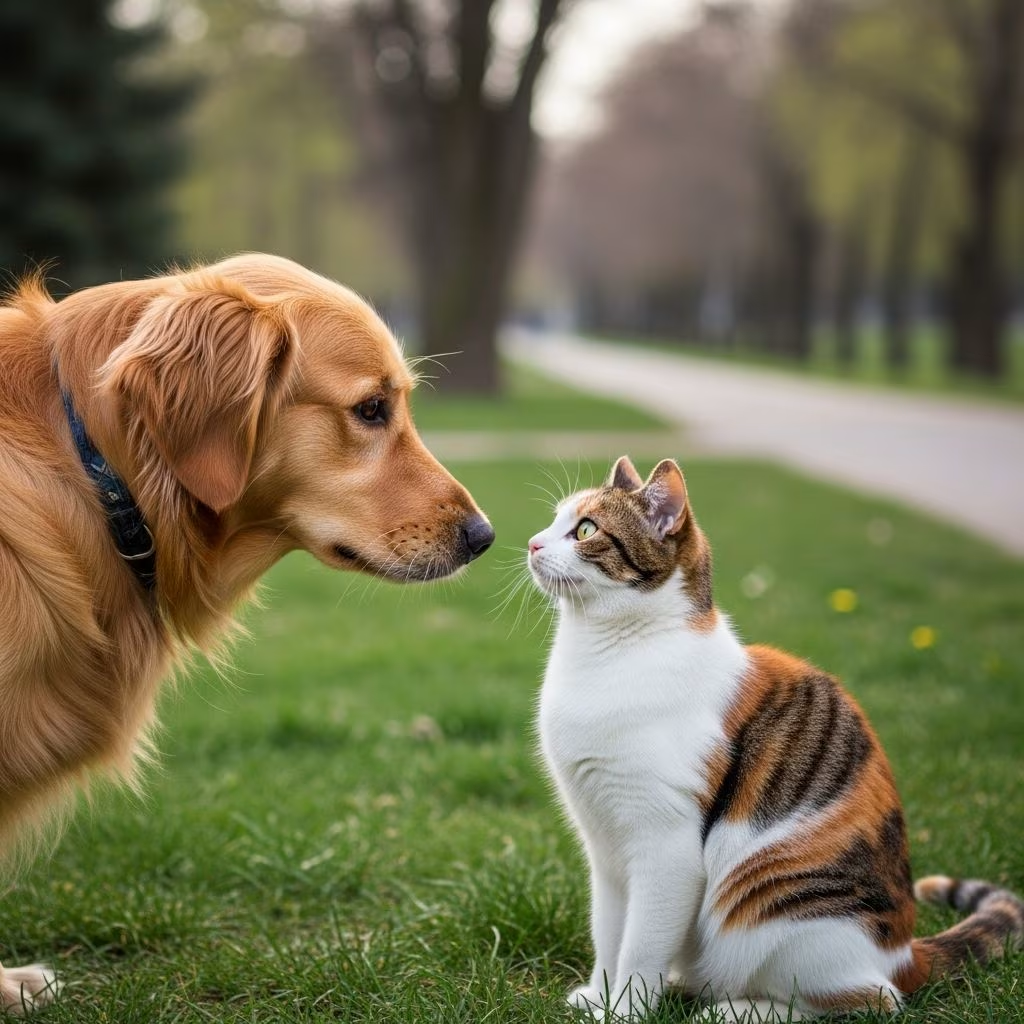
Dogs do not literally think cats are dogs in a cognitive sense, but they can adopt cat-like behaviors through close association and socialization, leading owners to wonder about their pets’ self-perception.
The Foundations of Canine Cognition
Canine brains process the world differently from humans, relying heavily on scent, movement, and social cues rather than abstract categorization like species labels. Dogs categorize animals based on familiarity and past experiences rather than strict taxonomic lines. Early socialization plays a pivotal role; puppies exposed primarily to cats during critical developmental windows may integrate feline traits into their behavioral repertoire.
Research indicates that dogs are highly impressionable, especially in multi-pet households where cats dominate interactions. This mimicry arises from observational learning, where dogs replicate actions they observe, such as digging in litter boxes or squeezing into small spaces, without understanding species boundaries.
Behavioral Mimicry: When Dogs Act Feline
In homes with more cats than dogs, canines often display adopted feline mannerisms. Common examples include:
- Attempting to use cat litter boxes for elimination, mimicking observed digging and covering behaviors.
- Curling up in tight spaces or boxes, imitating cats’ love for confined areas.
- Engaging in mutual chasing games that reverse roles, with dogs sometimes fleeing playfully like cats.
- Adopting grooming postures or aloof sitting positions during rest.
These actions stem from environmental influence rather than identity confusion. Dogs view these as normal household activities, copying companions for social bonding or play.
Communication Barriers Between Dogs and Cats
Misunderstandings frequently arise due to divergent body language signals. Understanding these can clarify why dogs might not distinguish cats as separate species initially.
| Signal | Dog Meaning | Cat Meaning | Potential Misinterpretation |
|---|---|---|---|
| Tail Movement | Loose wag = friendly | Whipping = agitation | Dog sees cat as playful; cat views dog as threat |
| Greeting Style | Nose to rear | Nose to nose | Each finds the other’s rude or invasive |
| Ear Position | Back/flat = fear; forward = alert/aggression | Forward/side = fear; back/flat = aggression | Dog mistakes cat aggression for fear |
| Body Roll | Submission/peace | Prep for attack | Dog invites play; cat prepares defense |
| Eye Contact | Stare = challenge | Stare = threat; soft blink = friendly | Shared understanding of threat or peace |
Despite differences, universal signals like growls, yelps, whale-eye (showing eye whites in fear), and mutual grooming foster bonds when animals learn each other’s cues.
Socialization Strategies for Multi-Pet Harmony
Proper introduction prevents antagonism rooted in instincts—dogs chase fleeing prey, cats hiss and arch defensively. Key steps include:
- Early Exposure: Introduce puppies to cats before 12 weeks for optimal imprinting.
- Controlled Meetings: Use leashes and barriers to monitor reactions without chase opportunities.
- Positive Reinforcement: Reward calm interactions with treats to associate the other species positively.
- Resource Separation: Provide individual food, water, and rest areas to avoid competition.
- Supervised Play: Interrupt escalating roughhousing to prevent injury.
Well-socialized dogs raised with cats often prefer feline company over other dogs, forming secure attachments that transcend species differences.
Instincts vs. Learned Behaviors
Dogs’ prey drive activates upon seeing fast-moving cats, triggering chase regardless of perception. However, familiarity overrides this; household dogs ignore or gently engage resident cats. Cats scratched or bitten early may develop lasting fear, while patient integration yields friendships.
Historical rivalry stems from territorial instincts, but modern homes normalize coexistence. Dogs in cat-heavy environments learn feline norms, blurring behavioral lines without altering core identity.
Benefits and Drawbacks of Cross-Species Mimicry
Owners appreciate certain cat-like dog traits, such as litter box usage for travel convenience or independent lounging. However, unwanted habits like aloofness or box-cramming can frustrate. Balance comes from training to reinforce canine norms alongside tolerance for harmless quirks.
Scientific Insights into Interspecies Bonds
Studies affirm dogs’ adaptability; those without dog peers default to cat-influenced playstyles. Vocalizations like hisses repel dogs instinctively, aiding safety, while shared pain yelps build empathy. Allogrooming—mutual licking—signals peak friendship, releasing bonding hormones in both.
FAQs
Can a dog fully become like a cat?
No, genetic and anatomical differences prevent full transformation, but behaviors can mimic extensively through imitation.
Why does my dog chase the cat but not others?
Familiarity reduces chase drive; novel cats trigger prey instincts via movement cues.
How long for dogs and cats to get along?
Weeks to months with proper methods; early socialization accelerates to days.
Is tail wagging always friendly between species?
No—dogs wag loosely for joy, cats swish stiffly for irritation, causing frequent mix-ups.
Should I discourage cat-like dog behaviors?
Only if problematic, like litter raids; otherwise, they enrich personality without harm.
Real-World Examples of Successful Coexistence
Many households report dogs napping atop cats or participating in synchronized grooming sessions. Viral stories highlight puppies nursed by cats exhibiting permanent purring responses to pets, showcasing profound behavioral fusion.
References
- Can Dogs Think They are Cats? — WagWalking. 2023-05-15. https://wagwalking.com/sense/can-dogs-think-they-are-cats
- How Cats And Dogs Communicate — Rover Time. 2022-11-20. https://www.rover-time.com/how-cats-and-dogs-communicate/
- Why Do Dogs React to Cats? — Psychology Today. 2017-03-10. https://www.psychologytoday.com/us/blog/canine-corner/201703/why-do-dogs-react-to-cats



