

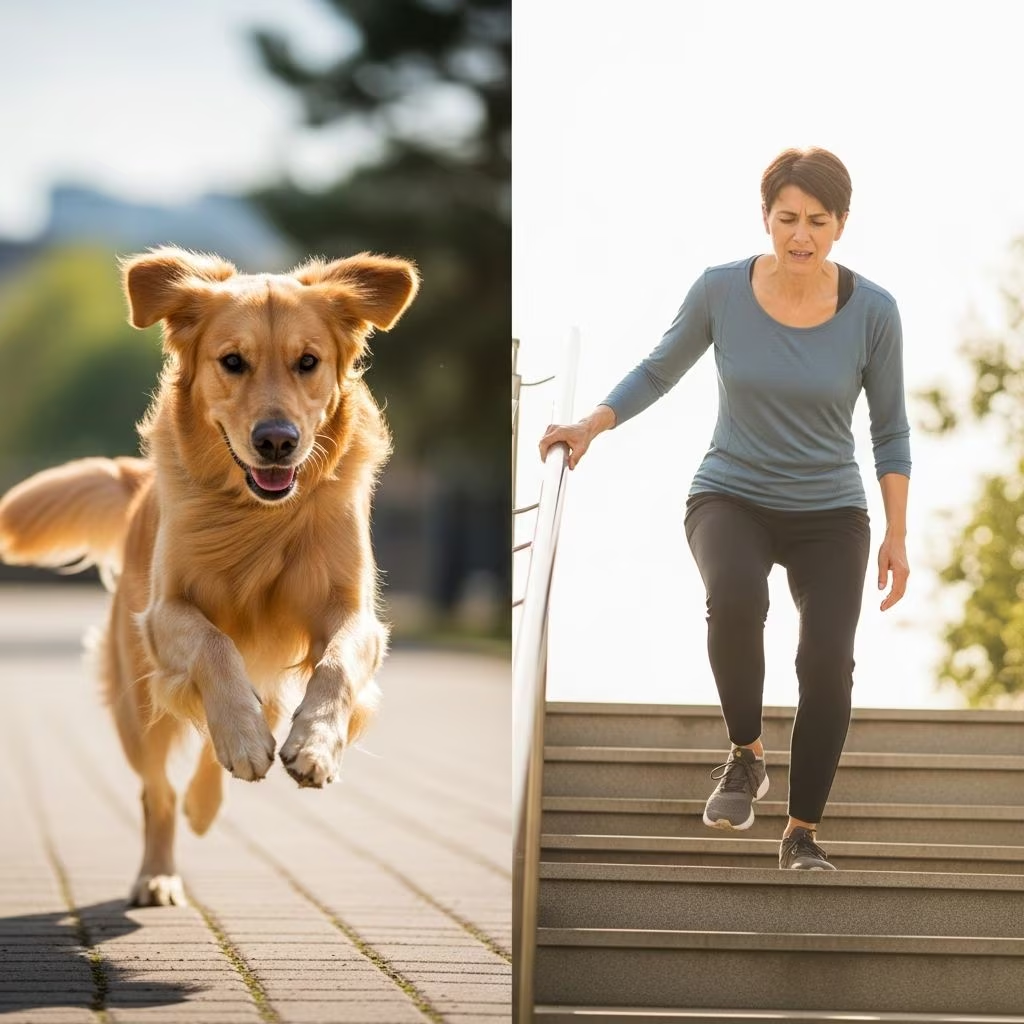
Many pet owners notice their dogs resuming normal activities shortly after injuries or surgeries, leading to the widespread belief that canines possess superior healing abilities compared to humans. However, scientific evidence indicates that the actual biological timelines for wound closure and tissue repair are largely comparable between the two species, with dogs often seeming faster due to behavioral and physiological traits.
The Core Mechanisms of Tissue Repair in Canines and Humans
Wound healing follows a conserved sequence across mammals, divided into distinct phases that ensure proper tissue restoration. Both dogs and humans initiate recovery with an inflammatory phase, where blood vessels constrict to minimize bleeding, platelets form clots, and immune cells flood the area to combat infection. This stage typically lasts 1-3 days in uncomplicated cases for both species.
Next comes the proliferative phase, involving fibroblast activity to produce collagen, angiogenesis for new blood vessel growth, and epithelial cell migration to cover the wound. In dogs, this phase benefits from their skin’s looser structure on the trunk, which facilitates contraction, potentially speeding superficial closure. Humans, with tighter skin, rely more on epithelialization, but timelines overlap at 4-21 days for primary intention healing like surgical incisions.
The remodeling phase strengthens scar tissue over months to years, reorganizing collagen fibers for tensile strength. Dogs achieve about 80% of original tissue strength within weeks, mirroring human patterns where full maturation can take up to two years.
Skin Anatomy: A Key Differentiator in Perceived Speed
Dogs’ skin differs significantly from human epidermis. Canine integument is thinner yet more elastic, especially on the body, allowing wounds to contract via myofibroblasts—specialized cells that pull edges together. This mechanism dominates in dogs healing by secondary intention, reducing healing time for open wounds compared to human re-epithelialization-dominant repair.
| Aspect | Dogs | Humans |
|---|---|---|
| Skin Thickness | Thinner, looser on trunk | Thicker, tighter overall |
| Primary Healing Method | Contraction + epithelialization | Epithelialization |
| Surgical Incision Time | 10-14 days | ~2 weeks |
| Open Wound Median | 53 days (range 25-179) | Similar, variable by size |
These anatomical variances explain why a dog’s laceration might visibly close sooner, though deeper tissue regeneration proceeds at equivalent rates.
Behavioral Factors Masking True Recovery Progress
Dogs exhibit remarkable resilience in displaying discomfort. Evolutionary instincts compel them to conceal weakness from predators, resulting in tail wagging, playful demeanor, and mobility despite pain. Humans, conversely, vocalize distress and limit movement, prolonging perceived downtime.
- Pain Tolerance: Canines endure discomfort silently, continuing light activity that promotes circulation without risking re-injury.
- Activity Levels: Unlike sedentary human recovery, dogs’ natural movement aids lymphatic drainage and reduces stiffness.
- Emotional Resilience: Absent of anticipatory anxiety or past trauma rumination, dogs focus on the present, potentially enhancing immune function via reduced stress hormones.
This stoicism creates an optical illusion of accelerated recovery, even as cellular processes align with human benchmarks.
Influences on Healing Efficiency Across Species
Age and Physiological Condition
Juvenile dogs mend swifter than seniors due to robust hormone levels, vigorous collagen synthesis, and peak immune responses—paralleling human youth advantages. Chronic conditions like diabetes or immunosuppression delay repair in both, emphasizing holistic health maintenance.
Injury Characteristics
Clean, small wounds in vascular-rich zones (e.g., limbs) resolve faster than infected, avulsive injuries. Dogs’ fur can complicate hygiene, necessitating vigilant cleaning to match human sterile protocols.
Nutritional and Environmental Support
Protein-rich diets fuel amino acids for collagen; omega-3s curb excess inflammation. Adequate hydration and rest optimize outcomes, with veterinary interventions like antibiotics preventing setbacks.
Scientific Data on Comparative Healing Rates
Research quantifies these dynamics precisely. A study on inter-species wound closure measured canine rates at approximately 0.75 mm/day, contrasting human 0.25 mm/day—yet non-primate mammals vary widely, with dogs outperforming humans in contraction speed but not overall regeneration.1 Clinical veterinary data reports 93.5% of secondary intention dog wounds fully healed by 53 days median, akin to human open wound trajectories.2
Veterinarians note surgical sites like spays heal in 10-14 days for dogs, matching uncomplicated human incisions.3 These findings debunk blanket superiority claims, highlighting contextual nuances.
Optimizing Canine Recovery: Practical Strategies
Pet guardians play pivotal roles in expediting safe healing.
- Immediate Veterinary Assessment: Professional evaluation rules out fractures or infections.
- Wound Management: Clean with saline, apply vet-recommended topicals, and use e-collars to deter licking.
- Restricted Exercise: Leash walks only for 7-14 days post-injury.
- Nutrition Boost: High-quality kibble with added supplements for zinc, vitamin A, and proteins.
- Monitoring Vigilance: Watch for swelling, discharge, or lethargy signaling complications.
Adhering to these protocols minimizes secondary issues, leveraging dogs’ inherent efficiencies.
Psychological Dimensions of Healing
Beyond biology, mindset influences recovery. Dogs’ present-focused existence sidesteps nocebo effects plaguing humans—negative expectations slowing repair via elevated cortisol. Emulating canine equanimity through mindfulness could benefit human patients, as placebo-enhanced beliefs demonstrably accelerate tissue repair in clinical settings.
Common Misconceptions Debunked
- Dogs heal twice as fast biologically: False; timelines align, perception differs.
- All wounds close identically: No; type and care dictate variance.
- Less monitoring needed: Incorrect; complications arise swiftly without oversight.
Frequently Asked Questions
Can dogs really heal surgical wounds in under two weeks?
Yes, uncomplicated incisions typically close in 10-14 days via primary intention, comparable to humans.
Why do some dog wounds take months?
Large, contaminated open wounds heal by secondary intention, averaging 53 days median due to granulation and contraction needs.
Does breed affect healing speed?
Indirectly; brachycephalic breeds face respiratory healing challenges, while active breeds benefit from fitness.
How to tell if a dog’s injury is healing properly?
Look for reduced swelling, no pus, closing edges, and normal appetite/behavior; consult vets for doubts.
Are supplements safe for speeding dog recovery?
Vet-approved ones like glucosamine aid, but excess can harm; prioritize balanced diets.
Conclusion: Bridging Species Insights for Better Care
While dogs do not inherently outpace humans in cellular healing, their anatomical adaptations, pain masking, and activity tolerance foster perceptions of rapidity. Armed with this knowledge, owners can tailor support to harness these strengths, ensuring robust recoveries. Future research may refine inter-species models, benefiting veterinary and human medicine alike.
References
- Inter-species differences in wound-healing rate: a comparative study — PMC/NCBI. 2024. https://pmc.ncbi.nlm.nih.gov/articles/PMC12040475/
- Do Dogs Heal Faster than Humans? Vet Answer — Hepper Articles. 2023-10-15. https://articles.hepper.com/do-dogs-heal-faster-than-humans-vet-answer/
- Do Dogs Heal Faster Than Humans? The Science of Canine Recovery — PetsCare. 2024. https://www.petscare.com/news/post/do-dogs-heal-faster-than-humans
- Small Animal Wound Management — Veterinary Clinics of North America (via referenced study). 2014. https://doi.org/10.1016/j.cvsm.2014.09.001
- Comparative Wound Healing in Mammals — Journal of Investigative Dermatology (summarized in PMC). 2023. https://pmc.ncbi.nlm.nih.gov/articles/PMC12040475/



