

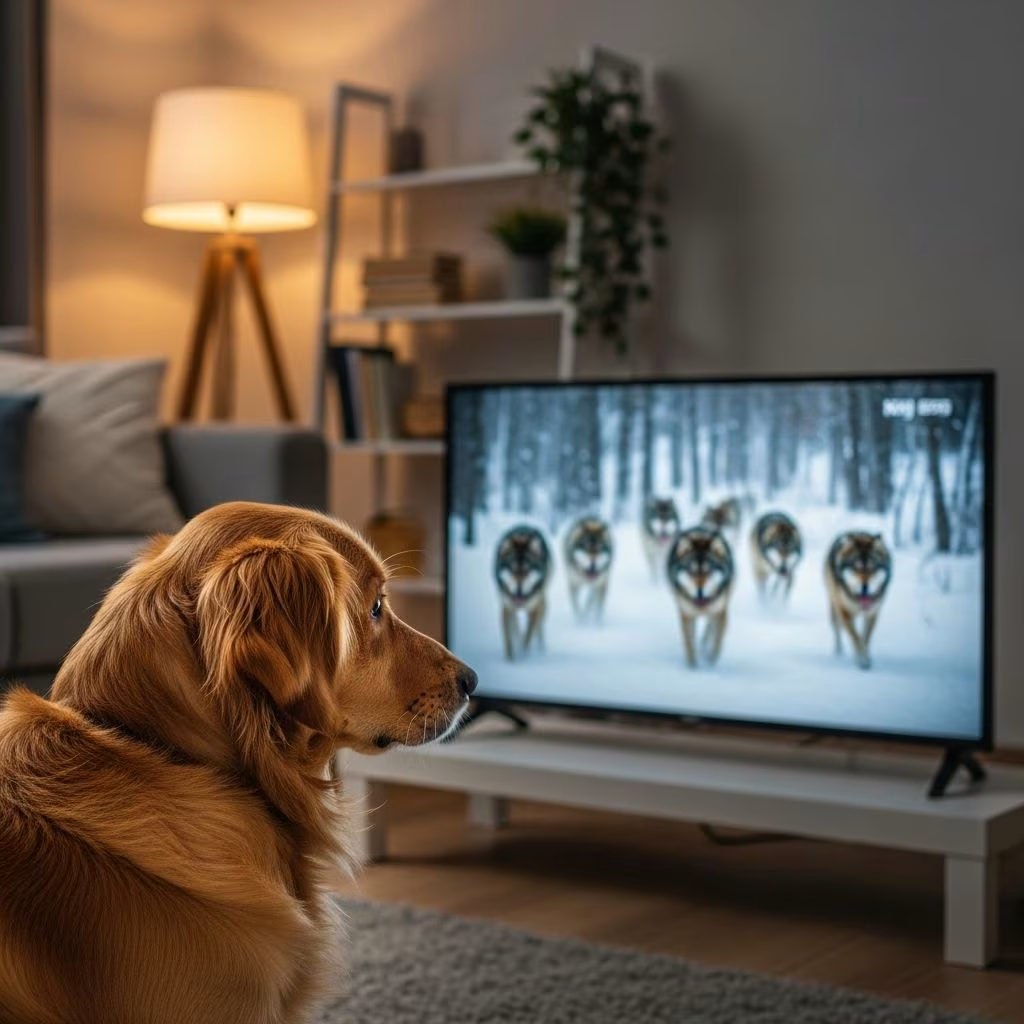
Dogs perceive and interact with television in ways shaped by their distinct visual and auditory capabilities, often showing engagement with on-screen animals and sounds.
The Science Behind Canine Vision and Screen Perception
Dogs possess vision optimized for motion detection rather than fine detail, with more rod cells in their retinas enhancing low-light sensitivity and sensitivity to flickering images. Modern high-resolution LED screens refresh at rates exceeding 75 hertz, allowing dogs to view smooth motion unlike older CRT displays where they might see disjointed stills. Their dichromatic color vision limits perception to blues and yellows, missing reds and greens fully.
Research indicates dogs track fast-moving objects on screens more readily than humans, with excitable personalities correlating to treating virtual stimuli as real. A 2024 Auburn University study surveyed 453 dog owners, finding age, breed, and sex minimally influence engagement, but personality traits like anxiety prompt reactions to non-animal elements such as doorbells.
How Dogs Respond to TV Stimuli
Survey data reveals dogs react strongest to animal visuals and sounds, with 206 of 453 always responding to dog noises. Auditory cues transmit across species, eliciting barks or chases even without scent confirmation that images are two-dimensional.
- Visual Engagement: Motion-heavy scenes draw focus; dogs follow prey-like movements.
- Auditory Triggers: Familiar barks or whines provoke alert postures or vocalizations.
- Personality Variations: Bold dogs pursue screen action; timid ones startle at abstract noises.
University of Wisconsin research confirms short attention spans, with sessions lasting 1-5 minutes typically.
Factors Influencing TV Interest Among Dogs
Not all dogs fixate on screens equally. Vision acuity varies by breed—sighthounds like Greyhounds discern details better than scent-focused breeds. Individual temperament overrides breed; extraverted dogs engage more.
| Factor | Impact on Engagement | Example |
|---|---|---|
| Personality | High influence | Excitable dogs chase screen animals |
| Breed/Vision | Moderate | Herding breeds track motion well |
| Age | Low | Puppies and seniors similar |
| Experience | Low | Prior exposure doesn’t boost |
Owners report nearly half of dogs show interest, per AKC-IAMS surveys.
Preferred Content for Canine Viewers
Dogs favor nature channels featuring animals over human-centric programming. Discovery or Animal Planet equivalents elicit prolonged gazes due to wildlife footage and herd scenes. Westerns appeal via horses and livestock.
Specialized channels like DOGTV incorporate research-backed elements: motion at dog-visible speeds, calming frequencies, and dichromatic-friendly palettes to reduce anxiety. Studies with Tufts and Purdue validate enrichment benefits, even for non-visual listeners.
Benefits of TV as Enrichment for Dogs
Screen time alleviates boredom, especially for home-alone pets or shelter residents. Low-volume playback provides auditory stimulation mimicking companionship, shortening perceived isolation.
Peer-reviewed findings link tailored programming to stress reduction, with over 60 studies supporting music and video impacts. Veterinarians note potential vision assessments via reaction monitoring.
Potential Risks and Observation Tips
Not all content suits every dog; distress cries or aggression may heighten anxiety. Test reactions: wagging tails signal joy; growls indicate aversion.
- Start low volume to avoid overload.
- Observe body language for stress (ears back, pacing).
- Ensure escape options from screen area.
- Prioritize real interaction over passive viewing.
Excessive TV shouldn’t replace exercise or socialization.
Enhancing Your Dog’s TV Experience
Curate playlists with animal documentaries. Position screens at nose level for optimal viewing. Combine with toys for hybrid enrichment.
For anxious dogs, select soothing tracks; bold ones thrive on action.
Common Myths About Dogs and Television
- Myth: Dogs see TV in black and white. Reality: Dichromatic vision, not monochrome.
- Myth: All dogs ignore screens. Reality: 50% engage variably.
- Myth: TV harms eyes. Reality: No evidence; safe at moderate volumes.
FAQs
Can all dogs see modern TVs clearly?
Yes, LED refresh rates match canine flicker fusion rates above 75 Hz.
Why does my dog bark at the TV?
Sound cues trigger instinctual responses, mistaking them for real threats or playmates.
Is DOGTV scientifically proven?
Yes, backed by 60+ studies and university collaborations for anxiety reduction.
Should I leave TV on when away?
Low volume is fine for stimulation if dog enjoys it and has space to retreat.
Do puppies watch TV like adults?
Similar engagement levels across ages.
Expert Insights on Future Research
Ongoing studies aim to refine dog-specific programming, potentially aiding welfare in kennels. Veterinary ophthalmologists praise survey rigor for credibility.
References
- How Do Dogs Watch TV? That Might Depend on Their Personalities, New Research Suggests — Smithsonian Magazine. 2024-10-17. https://www.smithsonianmag.com/smart-news/how-do-dogs-watch-tv-that-might-depend-on-their-personalities-new-research-suggests-180987014/
- What Do Dogs See When They Watch TV? — PetMD (veterinary source). 2023-05-15. https://www.petmd.com/dog/general-health/can-dogs-see-tv
- Scientifically Designed Television for Dogs — DOGTV (research collaborations with Tufts, Purdue). 2024-01-01. https://www.dogtv.com/science/
- What Kind of TV Programs Do Dogs Like Best? — Psychology Today. 2025-07-01. https://www.psychologytoday.com/us/blog/canine-corner/202507/what-kind-of-tv-programs-do-dogs-like-best
- Knowing What Dogs Like to Watch Could Help Veterinarians Assess Their Vision — University of Wisconsin School of Veterinary Medicine. 2023-11-20. https://www.vetmed.wisc.edu/knowing-what-dogs-like-to-watch-could-help-veterinarians-assess-their-vision/



