

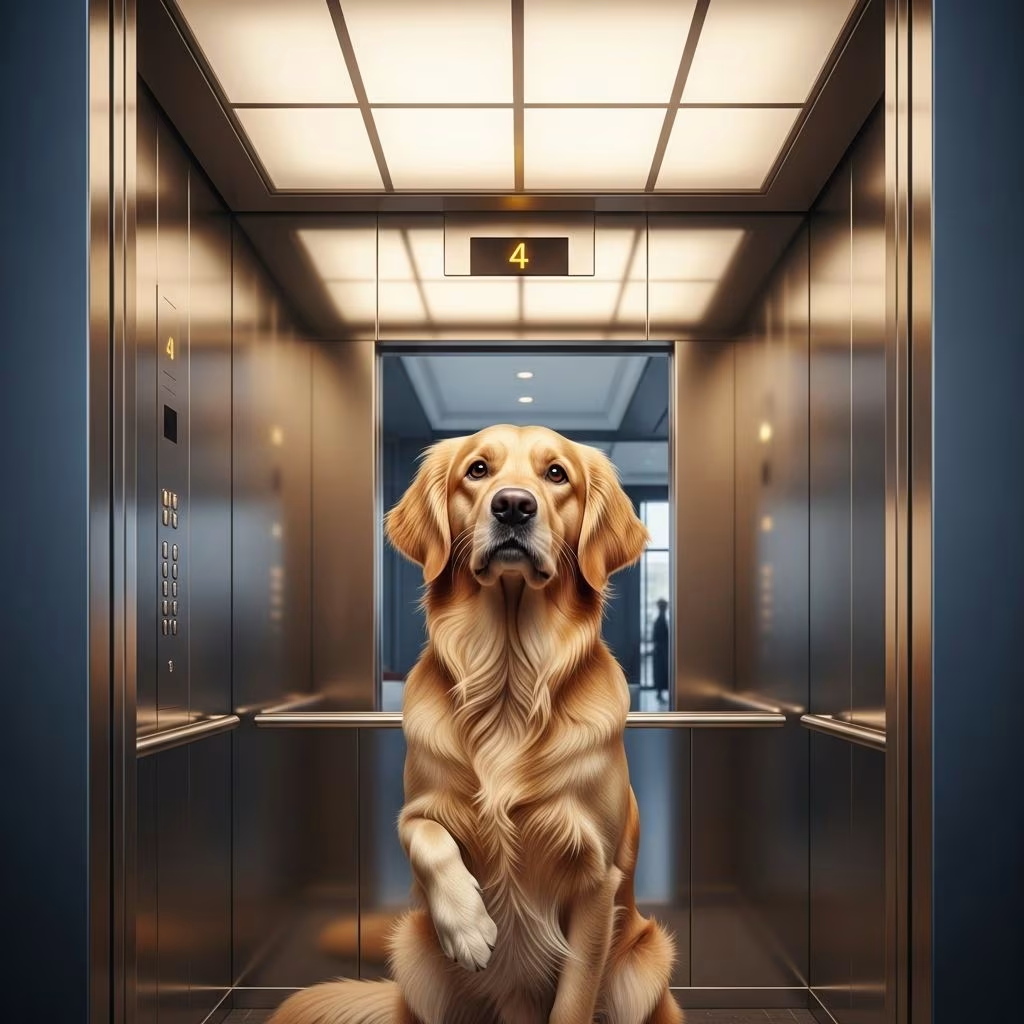
To humans, an elevator is a straightforward machine that moves us between floors. To a dog, though, this small, moving box with sliding doors, strange sounds, and shifting sensations can be confusing, fascinating, or downright scary. Understanding how dogs experience elevators can help you keep them safe, reduce their stress, and even turn rides into pleasant routines.
Current evidence suggests that dogs do not understand the mechanical or spatial logic of elevators the way humans do, though they can learn predictable patterns and associations linked to elevator rides. Instead of grasping cables, floors, and vertical travel, they mostly rely on sensory cues, routine, and emotional memories to decide how they feel about elevators.
Do Dogs Really Understand Elevators?
From an engineering or spatial perspective, dogs almost certainly do not understand that an elevator is a machine moving them vertically between stacked floors. Their brains are optimized for ground-level navigation, using scent, landmarks, and paths rather than abstract floor plans.
However, dogs are excellent at noticing patterns and outcomes. Over time, they can learn:
- That entering this noisy box often leads to walks, parks, or familiar hallways.
- That a ding or chime means the doors will open to a new environment.
- That certain smells or people are often associated with elevator areas.
Research on canine spatial learning in multilevel buildings suggests dogs may mentally “overlap” floors in their internal maps, struggling to connect the elevator as a conduit between distinct locations rather than simply linking cues near a reward. In other words, your dog may recognize the lobby and your apartment hallway as separate places, but not fully grasp the invisible vertical route that connects them.
How Dogs Perceive an Elevator Ride
Even if they do not understand the mechanics, dogs are very aware of the sensory world inside an elevator. Several factors shape how they experience each ride:
- Sound: Dings, buzzing doors, mechanical hums, and echoes in a confined metal box.
- Movement: A subtle sinking or rising feeling, changes in balance, and pressure shifts.
- Space: Tight quarters, reduced escape routes, and close proximity to strangers.
- Smell: Concentrated scents from people, other animals, cleaning products, or food.
- Vibration: Floor vibrations under their paws as the elevator starts or stops.
Dogs with confident temperaments or lots of urban experience may accept these sensations easily. Others, especially dogs who are noise-sensitive, under-socialized, or prone to anxiety, can find this combination of unfamiliar stimuli very challenging.
Common Dog Reactions to Elevators
Just as people differ in their comfort with elevators, dogs show a wide range of reactions. Many will fall into one of the following broad patterns:
| Reaction Type | Typical Behaviors | What It Often Means |
|---|---|---|
| Relaxed & Curious | Sniffing, loose body, neutral tail, may calmly watch doors. | Dog feels safe, likely has positive past experiences or neutral associations. |
| Mildly Alert | Ears perked, some scanning, stands close to guardian but not tense. | Dog notices novelty but is coping; could go either way with future experiences. |
| Anxious or Fearful | Trembling, crouching, tail tucked, panting, trying to exit. | Dog feels trapped or threatened; needs careful training and support. |
| Overexcited | Jumping, pulling on leash, vocalizing, intense anticipation. | Dog expects an exciting outcome (like a walk) and struggles with impulse control. |
Why Some Dogs Are Afraid of Elevators
Elevator fear and anxiety are not uncommon, especially for dogs that did not grow up in multi-story buildings. Several overlapping reasons may be involved:
- Confinement and lack of escape: Elevators are small, closed spaces. For a prey animal by ancestry, having no easy exit route can be scary.
- Strange movement: Many dogs are sensitive to motion or changes in balance. Sudden vertical motion is unlike their normal experiences and can feel unsafe.
- Noise sensitivity: Dogs hear a wider range of frequencies than humans and may find elevator sounds particularly loud or sharp.
- Negative past experiences: A single frightening event, such as a loud bang, a crowded ride, or a leash incident at the doors, can leave a strong memory.
- Lack of early socialization: Dogs not exposed to elevators or similar environments when young may be less adaptable later in life.
Signs that your dog is fearful of elevators may include refusing to enter, digging in, shaking, yawning, lip-licking, or even stress urination once inside. Persistent fear can contribute to overall anxiety and reduced welfare if not addressed.
Safety First: Essential Elevator Rules for Dogs
Safety is the top priority each time you step into an elevator with your dog. Simple habits can prevent accidents and keep everyone comfortable.
Use Safe, Secure Handling Equipment
Choosing the right equipment can make a major difference in emergencies:
- Prefer a well-fitted harness over attaching the leash to a collar. If a leash gets caught between closing doors, pressure on a harness is less likely to injure the neck or trachea.
- Use a standard, non-retractable leash. Retractable leashes can leave too much slack, increasing the chance of the cord getting trapped.
- Keep the leash short but loose. A comfortable, short lead helps keep your dog fully inside the elevator threshold.
Control the Doors and Threshold
The door area is where most elevator-related incidents occur. Practical precautions include:
- Standing between the closing doors or pressing the “door open” button until both you and your dog are safely in or out.
- Guiding your dog fully inside before allowing them to sniff near the gap or corners.
- Checking that your dog’s tail, paws, and leash are clear of the door track.
Reports from veterinary emergency clinicians and animal safety organizations describe severe injuries when dogs are caught in doors or leashes are trapped while the car moves, making attentive handling crucial.
Stay Focused—Put the Phone Away
Scrolling your phone for the duration of the ride increases the risk that you miss early signs of distress or an unsafe situation at the doors. Remaining attentive allows you to:
- Monitor your dog’s body language.
- Respond quickly if another dog or nervous person enters.
- Prevent your dog from bolting in or out as soon as the doors open.
Respect Other Passengers
Not everyone is comfortable sharing a small, enclosed space with a dog. Good elevator etiquette includes:
- Asking, when possible, if others are okay riding with your dog.
- Stepping back and waiting for the next car if someone looks uneasy or declines.
- Keeping your dog close at your side and discouraging jumping, licking, or sniffing strangers.
These habits help your dog be a welcome neighbor and prevent complaints or conflicts in your building.
Helping a Dog Who Fears Elevators
If your dog panics around elevators, forcing them inside is likely to make things worse. Modern behavioral science strongly supports desensitization and counterconditioning—gradual exposure paired with positive outcomes—to help dogs overcome specific fears.
Principles of Gentle Elevator Training
Before starting, gather plenty of high-value treats (tiny pieces of cooked meat, cheese, or a favorite commercial treat) and choose calm times of day when the elevator is less busy.
- Build comfort near the elevator doors (not riding yet).
Stand at a distance where your dog notices the elevator but remains calm. Each time your dog looks at the doors or hears the chime without reacting fearfully, calmly reward them with a treat. - Pair elevator sounds with rewards.
When the elevator “dings” or the doors slide open/closed, immediately deliver a treat. This teaches your dog that these previously scary sounds predict something positive. - Encourage voluntary approach.
Over multiple short sessions, use treats or a favorite toy to encourage your dog to walk closer to the doors at their own pace. Reward any brave steps or calm investigation. - Introduce the interior with the doors held open.
Step into the elevator with your dog, keep the doors from closing, and feed several treats while your dog stands or sits calmly inside. Exit before the doors move. - Practice short door-close moments without moving.
Allow the doors to close for a second or two while feeding treats, then press the button to reopen and step out. Slowly extend the duration as your dog relaxes. - Take very short rides.
Start with a one-floor trip, continuously rewarding calm behavior. Keep sessions brief and end on a positive note. - Gradually normalize full rides in daily life.
As your dog becomes more relaxed, reduce the rate of treats but continue to offer praise and occasional rewards.
Progress should be guided by your dog’s comfort level. If they begin to pant, tremble, or try to flee, you are likely moving too fast. Return to an easier step where your dog felt safe and build from there.
When to Seek Professional Help
For dogs with severe elevator phobia or broader anxiety issues, consider consulting a:
- Veterinary behaviorist (a veterinarian with advanced behavior training), or
- Certified professional dog trainer specializing in force-free, reward-based methods.
Professional guidance can help tailor a plan that respects your dog’s health, age, and history. In some cases, veterinarians may recommend medication as part of a comprehensive treatment for intense anxiety.
Can Dogs Learn Elevator Routines?
Even if dogs do not grasp the abstract idea of vertical travel, they are highly capable of learning routines associated with elevator use. Research on canine cognition shows that dogs excel at predicting repeated sequences in their environment and linking specific cues to outcomes.
With consistent practice, many dogs can learn:
- To sit and wait before entering or exiting when doors open.
- To stand calmly at the back or side of the car during the ride.
- That an elevator trip usually precedes a walk, a visit, or returning home.
One study on dogs’ spatial learning in multilevel environments suggested that cues near rewards (such as the exit area leading to a walk) are more strongly remembered than cues farther away (like the elevator lobby), which may explain why dogs focus on immediate outcomes rather than the elevator itself.
Elevators vs. Stairs: What’s Better for Dogs?
Whether to use stairs or elevators with your dog depends on health, safety, and environment. Veterinary and orthopedic guidelines generally advise caution with repetitive stair use in dogs with joint disease, mobility issues, or certain breeds prone to orthopedic problems.
| Option | Potential Benefits | Potential Drawbacks |
|---|---|---|
| Elevators | Low impact on joints, suitable for older or arthritic dogs; avoids slipping on stairs; convenient for high floors. | May cause anxiety; requires careful leash management; exposure to crowded, noisy spaces. |
| Stairs | Moderate exercise for healthy adult dogs; avoids elevator-specific fears; more space than a crowded car. | High impact for dogs with hip, knee, or spinal issues; risk of falling; may be unsafe for small puppies or very senior dogs. |
If your veterinarian has recommended limiting stair use due to orthopedic conditions such as hip dysplasia, cruciate ligament disease, or intervertebral disc disease, elevator training may be especially important for your dog’s long-term comfort and safety.
Frequently Asked Questions (FAQs)
Q: Do dogs know they are going up or down in an elevator?
Dogs can likely feel subtle changes in motion and balance, but there is no evidence that they consciously understand vertical travel in the way humans do. They mostly learn that the elevator predicts certain destinations rather than grasping how they moved between floors.
Q: Is it cruel to take a fearful dog in an elevator?
Routinely forcing a clearly terrified dog into an elevator without training can harm their welfare and may worsen their anxiety. A kinder approach is gradual, reward-based desensitization and, where needed, guidance from a qualified behavior professional.
Q: How long does it take to train a dog to use an elevator calmly?
Timelines vary widely. Some dogs relax within a few sessions, while others with strong fears may need weeks or months of slow, structured practice. Consistency, short sessions, and careful attention to your dog’s comfort speed progress.
Q: Are elevators safe for puppies and senior dogs?
Elevators can be physically easier on joints than stairs for both puppies and seniors, but their safety depends on calm handling, secure equipment, and gentle socialization. Always supervise closely, keep the leash short but loose, and avoid crowded or chaotic rides, especially early in training.
Q: Can my dog ride the elevator alone?
Allowing a dog to ride unsupervised is strongly discouraged. There is significant risk of doors closing on leashes or body parts, unintended exits on wrong floors, or frightening interactions with unfamiliar people. A responsible adult should always accompany the dog.
References
- Dog Emotion and Cognition — Alexandra Horowitz, in Current Directions in Psychological Science. 2016-04-01. https://doi.org/10.1177/0963721416631607
- The Elevator Effect: Spatial Learning and Memory in Dogs Confound Different Floors in Multilevel Environments — Alex Bäcker. 2022-08-01. https://doi.org/10.2139/ssrn.4178809
- Noise Sensitivities in Dogs: A Review — Stefanie Riemer. 2021-06-01. https://doi.org/10.3390/vetsci8060114
- Orthopedic Conditions in Dogs — American College of Veterinary Surgeons (ACVS). 2023-01-15. https://www.acvs.org/small-animal
- Fear, Anxiety, and Phobias in Dogs — American Veterinary Medical Association (AVMA). 2022-05-10. https://www.avma.org/resources/pet-owners/petcare/fear-anxiety-and-phobias-dogs



