

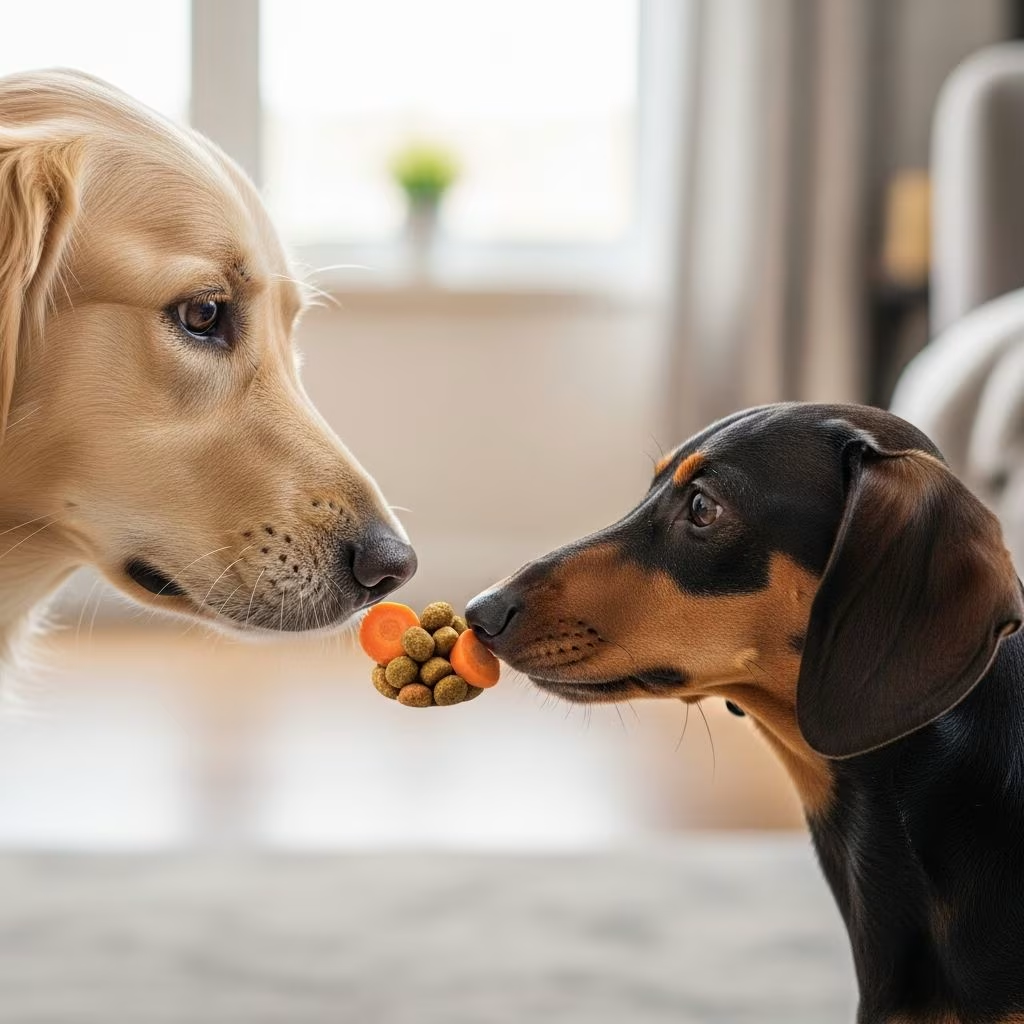
If you live with more than one dog, you might feel confident that dogs never share food. One gulps meals in seconds while the other hovers hopefully on the sidelines. Yet controlled behavioral studies show that dogs can make generous choices around food in the right situations, especially when another dog they know and like is involved.
This article explores what researchers have discovered about food sharing in dogs, what prosocial behavior means, why relationships matter, and how this knowledge applies to everyday life in multi-dog homes.
What Does “Sharing” Mean for Dogs?
When people think of sharing, they often imagine splitting something in half or giving up part of their own portion. In scientific studies of dog behavior, sharing is defined a bit differently.
Researchers studying dogs often look at prosocial behavior—voluntary actions that benefit another individual, without requiring an immediate reward in return. In food-related experiments, this may mean that a dog chooses an option that gives food to another dog while not necessarily losing any food themselves.
In other words, a dog can be considered “sharing” food when they act in a way that allows another dog to get food, even if the sharer does not give up their own ration. This is different from resource guarding or direct competition over a single bowl.
Prosocial Behavior in Dogs
Prosocial behavior is important because it helps us understand whether dogs are capable of acting in ways that support others rather than just themselves. Studies on domesticated dogs suggest that:
- Dogs can learn to perform actions that provide food for another dog.
- They do this more often for dogs they know or live with than for unfamiliar dogs.
- The social context—who is present and how they are related—strongly affects these choices.
This kind of behavior helps explain why some dogs appear especially bonded and tolerant with canine housemates, while being less generous with strangers.
How Researchers Study Food Sharing in Dogs
A well-known approach to studying food sharing in dogs uses a controlled experimental setup often called a prosocial choice task. There are variations, but the core idea is similar across studies.
The Token-Exchange Style Experiment
In one type of study, dogs are trained to perform a simple action—such as touching a token or panel with their nose—to trigger food delivery.
- One token or panel delivers food into a separate enclosure where another dog is waiting.
- A different token or panel does nothing (no food for anyone).
- The dog making the choice does not receive food in either case; the benefit goes solely to the dog in the enclosure.
By measuring how often the dog chooses the option that gives food to another dog, researchers can estimate how willing that dog is to act generously.
Varying the Social Context
To understand what affects sharing, scientists systematically change who is present and how the dogs are related. For example:
- Sometimes the enclosure contains a familiar dog, such as a housemate.
- Sometimes it holds an unfamiliar dog that the subject has never met.
- Occasionally the enclosure is empty, so no one can receive food.
- In some trials, a third dog is placed near the dog making choices, providing social company without being the recipient.
This design allows researchers to see how familiarity, social bonds, and the presence of other dogs influence a dog’s decision to share.
What the Studies Found About Dogs Sharing Food
Results from controlled studies paint a more nuanced picture than the chaos many owners see around food bowls. Several patterns emerge when dogs face prosocial choice tasks.
1. Dogs Are More Generous With Dogs They Know
Research shows that dogs are significantly more likely to deliver food to a dog they live with or have an affiliative relationship with, compared with an unfamiliar dog. This mirrors findings from other social animals, where strong bonds and friendship-like relationships increase tolerance and sharing around food.
In wolves and dogs, for instance, dyadic tests (pairs of animals) show that partners with strong affiliative bonds display higher food tolerance and more sharing. Friendship, not just kinship, plays a major role in who gets access to food in these close interactions.
2. Familiar Company Makes Dogs More Generous
Having another dog physically present near the dog making the choice can also increase generosity. When a companion is nearby, dogs are often more likely to choose the option that provides food to another dog than when they are alone.
This effect may stem from social facilitation—dogs are influenced by the presence and behavior of others, which can increase prosocial actions in some contexts.
3. Rank and Status Matter in Group Feeding
While dyads highlight the importance of close relationships, studies of wolves and dogs eating in groups reveal another influential factor: social rank. In group carcass-feeding tests, higher-ranking animals tended to control access to food.
Interestingly, research suggests that rank may be even more important in groups of domestic dogs than in wolves. In some dog groups, dominant dogs monopolized food, while wolves in a pack showed more equal access to a shared carcass.
This indicates that the context—two animals versus a group—shifts which social forces dominate: friendship and affiliation in pairs, and rank and competition in larger groups.
| Context | Main Factor in Sharing | Typical Pattern |
|---|---|---|
| Two animals (dyad) | Affiliative relationship | More sharing between bonded individuals |
| Group feeding | Rank and dominance | Higher-ranking animals control food access |
4. Sharing Without Personal Loss Is Easier
In many laboratory tasks, the dog making the choice does not lose any of its own food by acting generously. This is a key distinction from what owners observe at home, where sharing often means giving up part of a meal or allowing another dog into a valued space like a bowl.
It is much simpler for a dog to share when the cost is low or non-existent. As soon as sharing requires giving up their own food, competitive and protective behaviors are more likely to appear, especially if dogs are hungry or the food is particularly valuable.
Why Do Dogs Share? Understanding the Motivation
Even when there is no immediate reward, why might a dog act in a way that benefits another dog? There is no single answer, but several mechanisms may play a role.
Social Bonds and Emotional Attachment
Dogs form strong social bonds with both humans and other dogs, and research suggests many dogs show attachment-like behavior toward familiar companions. When a dog repeatedly experiences positive interactions with another dog—play, resting together, cooperative behaviors—this bond may encourage more tolerance and generosity around resources.
In wolves and dogs, food tolerance is strongly linked to the quality of the social relationship, especially in two-animal settings. The closer the relationship, the more likely one animal is to allow the other to feed or receive food.
Learning and Reinforcement
Dogs are excellent learners. Over time, they may discover that allowing another dog access to food does not always decrease their own access—particularly in households where resources are relatively abundant and the owner manages feeding calmly and consistently.
In some situations, dogs might also be indirectly rewarded for prosocial behavior. For example:
- The owner praises or rewards calm behavior around another dog’s food.
- Conflict is reduced when both dogs eat peacefully, lowering stress over time.
- Feeding routines are predictable, so no dog learns that aggression is necessary to get enough to eat.
Reduced Competition in Domesticated Settings
Modern pet dogs depend on people for food and do not typically rely on scavenging or hunting in groups. A study on feeding routines found that owner-controlled schedules and consistent feeding practices significantly shape dogs’ food-related behavior. In stable environments with reliable meals, there is often less need for constant competition, which can create more room for tolerant, cooperative behaviors.
Food Sharing vs. Food Aggression at Home
The findings from controlled studies are encouraging, but they do not mean that all dogs are naturally inclined to calmly share bowls and treats. Home environments bring additional variables—emotions, history, hunger, and household dynamics.
Resource Guarding and Aggression
Food aggression and resource guarding occur when a dog becomes defensive or aggressive in order to protect food or valued items. These behaviors can include growling, stiffening, snapping, or biting. Research on feeding routines has linked certain household practices to increased risk of food-related aggression, including situations where multiple dogs feed together without clear structure.
Contributors may include:
- Unpredictable feeding times, creating anxiety about access to food.
- Feeding multiple dogs from the same bowl, increasing competition.
- Allowing dogs to invade one another’s space at mealtimes.
- History of scarcity or conflict around food.
Why Sharing a Bowl Is Not the Same as Sharing in a Lab
In study settings, the dog providing food does not lose any. At home, when two dogs push their heads into one bowl, each may feel pressure to eat faster or defend what’s there. Veterinary experts generally advise against feeding multiple dogs from the same food bowl, noting that it can increase stress, make it hard to track portions, and contribute to food aggression.
Separate bowls and structured feeding routines respect dogs’ natural tendencies while still allowing for safe, positive interactions around food.
Supporting Healthy, Peaceful Feeding in Multi-Dog Homes
Understanding that dogs can act generously under certain conditions gives owners tools to encourage calm, cooperative behavior while minimizing conflict.
Best Practices Around Food for Multiple Dogs
- Feed dogs in separate bowls, and ideally with some physical space between them.
- Use consistent feeding schedules so that each dog learns food arrives regularly and predictably.
- Avoid “free-for-all” feeding from a single shared bowl, which can increase competition and stress.
- Monitor body condition and portions individually, since each dog has unique caloric and medical needs.
- Teach basic cues like “wait” and “okay” to help structure mealtimes and reduce rushing or pushing.
Recognizing When to Seek Help
If one or more dogs show signs of guarding food—growling, stiff body, hard staring, or snapping when another dog or person approaches food—consulting a veterinarian or qualified behavior professional is recommended. Aggression around food can be modified, but it should be addressed carefully and safely.
What This Tells Us About Dogs as Social Animals
Research on food sharing highlights a central feature of dogs’ social lives: their behavior is deeply shaped by relationships, context, and history. Under controlled conditions, many dogs will choose actions that benefit another dog, especially a familiar companion. In home environments, generous tendencies may be overshadowed by competition, anxiety, or learned habits.
By creating predictable routines and respecting individual space around food, owners can help dogs feel more secure—making it easier for prosocial behaviors, including tolerance and even forms of sharing, to emerge in safe, structured ways.
Frequently Asked Questions (FAQs)
Q: Do dogs naturally share food with each other?
A: In controlled studies, many dogs chose actions that provided food to another dog, especially a familiar one, even when they did not benefit themselves. At home, however, sharing is less common because it often means giving up part of their own meal, which can trigger competition or guarding.
Q: Are dogs more likely to share with siblings or housemates?
A: Yes. Dogs are generally more prosocial toward dogs they know and have an affiliative relationship with, such as housemates, compared with unfamiliar dogs. Strong social bonds are associated with greater food tolerance in both wolves and dogs.
Q: Is it safe to let my dogs eat from the same bowl?
A: Veterinary experts advise against feeding multiple dogs from the same food bowl because it can create competition, increase stress, and raise the risk of food aggression. Separate bowls and, where needed, separate feeding areas are recommended.
Q: Can training help dogs be calmer around food?
A: Structured routines, clear feeding rules, and training basic cues like “wait” can reduce tension at mealtimes. Over time, predictable and fair feeding practices can lower anxiety and make cooperative behavior more likely.
Q: Why does my dog let one dog eat from their bowl but not another?
A: Dogs often show more tolerance toward individuals they are strongly bonded with. Affiliation and social relationship quality can influence how much a dog is willing to share or tolerate another dog near valued resources.
References
- The influence of social relationship on food tolerance in wolves and dogs — Friederike Range et al., Behavioral Ecology and Sociobiology. 2017-05-31. https://doi.org/10.1007/s00265-017-2339-8
- The relationship between feeding routines of dog owners in the UK and their dogs’ behaviour — Nicola C. Rooney et al., IAABC Foundation Journal. 2019-01-01. https://journal.iaabcfoundation.org/feeding-behaviour/
- Should You Let Your Dogs Share Bowls? — Kinship / expert veterinary commentary. 2022-08-01 (approx.). https://www.kinship.com/dog-health/can-dogs-share-bowls
- Dogs As Family, People As Packs — Patricia McConnell, PhD. 2017-02-20. https://www.patriciamcconnell.com/theotherendoftheleash/dogs-as-family-people-as-packs/



