

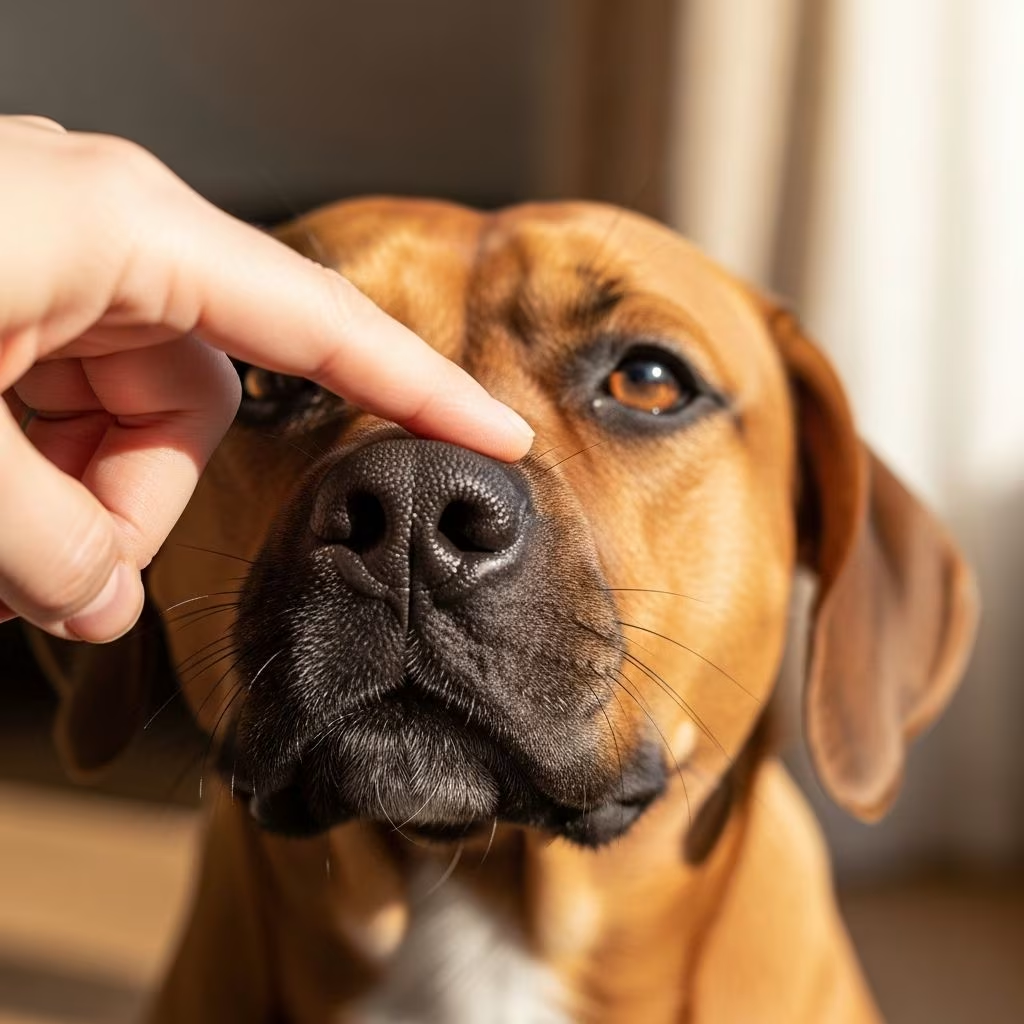
“Booping” a dog—lightly tapping or touching their nose while playfully saying boop—has become a popular way for people to show affection. But while it looks cute in photos and videos, not every dog actually enjoys this kind of interaction. Understanding how a dog’s nose works, how dogs communicate, and how to read their body language helps you decide whether nose boops are fun for your dog—or just for you.
What Is a Dog Boop, Exactly?
A dog boop is usually a gentle, brief touch to a dog’s nose or muzzle, often accompanied by a playful sound or word. Some people use a fingertip, others use the tip of their own nose, and some dogs even boop each other during play. At its best, it is a light, affectionate gesture that does not cause discomfort or surprise.
- A very light tap or touch to the nose or muzzle
- Done slowly and predictably, not as a sudden poke
- Often part of cuddling, greeting, or play routines
- Should never be painful, forceful, or used as correction
Although many people think of boops as harmless fun, the nose is one of the most sensitive parts of a dog’s body, so how you do it—and whether your dog consents—matters a great deal.
How Sensitive Is a Dog’s Nose?
Dogs experience the world through their nose far more intensely than humans do. Research indicates that dogs have up to an estimated 220 million or more olfactory receptors compared with about 5–6 million in humans, and the area of the brain devoted to smell is proportionally much larger in dogs than in people. This makes the nose both incredibly powerful and highly sensitive to touch and irritation.
Studies using imaging and behavioral tests have also suggested that parts of the canine nose and surrounding tissues can detect very subtle signals such as thermal radiation from warm bodies, which may help dogs locate prey or humans. Their noses are not just smelling; they are constantly processing complex sensory information.
| Feature | Dogs | Humans |
|---|---|---|
| Approximate olfactory receptors | Up to ~220 million+ | ~5–6 million |
| Brain area for smell | Much larger proportionally | Relatively small |
| Scent detection ability | Can detect odors at parts per trillion | Far less sensitive |
Because of this sensitivity, repeated or rough tapping on the nose can be uncomfortable, confusing, or even painful—especially if a dog has any existing irritation or injury around the nose or muzzle.
Do Dogs Emotionally Enjoy Boops?
Whether a dog likes being booped depends less on the gesture itself and more on three key factors:
- Individual temperament (outgoing vs. cautious)
- Past experiences with hands near the face
- How the boop is delivered (gentle vs. sudden, predictable vs. startling)
Some dogs appear to enjoy gentle boops as part of their bonding routine with trusted humans. Close, affectionate contact can increase oxytocin—the so‑called “bonding hormone”—in both dogs and humans during positive interactions such as petting and eye contact. If a boop is simply another calm, enjoyable touch in that context, a well-socialized dog may happily accept it or even seek it out.
Other dogs, however, find hands approaching their face threatening or uncomfortable, especially if they have a history of rough handling or punishment involving their muzzle. For these dogs, nose boops may feel more like pressure than play.
Reading Your Dog’s Body Language During a Boop
The most reliable way to know if your dog likes being booped is to watch their body language before, during, and after the touch. Subtle changes can signal whether they are enjoying the interaction or merely tolerating—or actively disliking—it.
Signs Your Dog Is Enjoying or Accepting Boops
- Relaxed body and loose posture
- Soft, blinking eyes rather than a hard stare
- Gentle wagging tail at mid-height or lower
- Leaning into you or moving closer
- Returning for more contact when you pause
Signs Your Dog Is Uncomfortable With Boops
- Turning or pulling the head away as your hand approaches
- Lip licking, yawning, or sudden sniffing of the ground (subtle stress signals)
- Freezing or stiffening the body
- Whale eye (you see the whites of the eyes)
- Backing away, ducking, or lowering the body
- Growling, snarling, or snapping if the interaction continues
These signals often appear before a dog growls or snaps. Learning to recognize early signs of stress and giving the dog space when they appear is critical for preventing conflict.
Why Some Dogs Dislike Nose Boops
There are several reasons a dog might not appreciate being booped on the nose, even if they are otherwise friendly and affectionate.
- Face and nose are vulnerable areas: In canine body language, reaching for the face can feel like a direct challenge or threat if the dog is unsure of your intentions.
- Past negative experiences: Dogs who have been punished by having their muzzle grabbed or tapped may associate any hand near the nose with something unpleasant.
- Sensory sensitivity: Because the nose is highly sensitive, even a light tap might feel intense to some dogs.
- Pain or medical issues: Any irritation, dental pain, or nasal condition can make facial touch uncomfortable; unexpected contact might provoke a defensive response.
If a dog shows clear discomfort or tries to avoid nose boops, respecting their boundaries helps protect both their wellbeing and your relationship with them.
Can Nose Boops Affect a Dog’s Sense of Smell?
A gentle, occasional boop is unlikely to damage a healthy dog’s sense of smell. However, repeated hard tapping, poking, or hitting the nose could potentially cause irritation or injury. The tissues inside the nose are delicate, and the external nose is closely connected to structures that support smelling and breathing.
Research on working dogs, such as those trained to detect explosives, narcotics, or medical conditions, emphasizes protecting the nose from trauma and environmental hazards because of its crucial role in performance and welfare. Similarly, in medical detection research—where dogs identify disease-related odor compounds (volatile organic compounds)—maintaining nasal health and comfort is considered essential.
In everyday life, this simply means that boops should never be rough, frequent, or used near any existing injury or irritation. If your dog sneezes, paws at their face, or seems bothered after contact with the nose, stop and consult a veterinarian if the behavior continues.
Safe and Respectful Ways to Boop Your Dog
If your dog’s body language suggests they are open to face contact and you want to include boops in your interactions, follow these guidelines to keep it safe and pleasant.
- Ask with your body language: Move your hand slowly toward the dog and pause; if they lean in or clearly invite touch, proceed gently.
- Use feather-light pressure: Think of a brief, soft touch rather than a tap. Avoid poking or pressing.
- Aim for short, predictable interactions: One or two quick boops during cuddling is enough; avoid repeated tapping.
- Avoid surprising the dog: Do not boop a sleeping dog or one that is highly focused on something else (eating, guarding, or working).
- Stop immediately if they withdraw: If the dog turns away, backs up, or stiffens, respect that as a “no thanks.”
Always remember that affection is for the dog’s benefit, not just because it looks cute on camera. If they prefer chest scratches, ear rubs, or chin strokes instead of nose touches, choose those.
Should Children Boop Dogs?
Children are often drawn to dogs’ faces and may want to boop noses because it seems funny or sweet. However, children—especially very young ones—can struggle with impulse control and reading canine body language. Many bites to children occur around the face and head when they approach a dog too closely or touch sensitive areas roughly.
Guidelines for Kids and Dog Boops
- Very young children (babies and toddlers): They should not boop a dog’s nose. At this stage, they cannot reliably understand or respond to warning signals from the dog.
- Older children: Teach them to ask an adult first, and then to pet the dog gently on safer areas such as the chest, shoulders, or back instead of the face.
- Hand-over-hand guidance: If you demonstrate a very gentle touch, place your hand over the child’s so they can feel how soft it should be.
- Supervision: Always supervise interactions between kids and dogs, and step in if the dog shows any sign of stress or if the child becomes overly excited.
Prioritizing safe, respectful handling teaches children to interact kindly with animals and helps prevent miscommunication or injury.
Alternatives to Booping That Many Dogs Prefer
If your dog does not seem thrilled about nose boops—or if you want safer, more universally comfortable ways to show affection—try these alternatives:
- Gentle chest rubs between the front legs
- Shoulder or side strokes in slow, predictable motions
- Scratches at the base of the tail (if your dog enjoys it)
- Calm verbal praise in a soft, friendly tone
- Interactive play with toys that your dog loves
These options keep your hands away from the most sensitive, potentially threatening zones (face, ears, tail) and are often more reliably enjoyed by a wider range of dogs.
Quick Do & Don’t Guide to Dog Boops
| Do | Don’t |
|---|---|
| Watch your dog’s body language for signs of relaxation | Boop a dog that is stiff, backing away, or avoiding eye contact |
| Use very light, brief touches | Poke, tap hard, or grab the muzzle |
| Let the dog approach you first | Lean over or corner a dog to reach their face |
| Stop immediately if the dog moves away | Continue after a dog has tried to retreat |
| Teach children safer ways to show affection | Allow unsupervised face-to-face contact between kids and dogs |
Frequently Asked Questions (FAQs)
Q: Do dogs understand that a boop means affection?
Dogs do not understand the word “boop” itself, but they can learn that certain kinds of touch from trusted people are associated with positive experiences. If nose boops are always gentle, predictable, and paired with a calm, positive atmosphere, some dogs may interpret them as part of affectionate interaction. If they are rough, startling, or linked to stress, dogs are more likely to view them negatively.
Q: Is it ever okay to boop a dog you do not know?
No. For unfamiliar dogs, especially in public or shelter settings, reaching toward the face can be perceived as threatening. Ask the guardian’s permission before touching the dog at all, and if allowed, pet their side or chest first rather than going straight for the nose or head.
Q: Can booping a dog’s nose cause long-term damage?
A very gentle, occasional touch is unlikely to cause long-term harm in a healthy dog. However, repeated rough tapping, hitting, or poking the nose can cause pain, swelling, or fear, and may damage trust. Any sign of bleeding, persistent pawing at the nose, or sudden behavior change around facial touch should be evaluated by a veterinarian.
Q: My dog used to enjoy boops but now pulls away. Why?
Changes in response to touch can be linked to new discomfort or pain, such as dental issues, nasal irritation, or other health problems, as well as changes in emotional state or past experiences. If your dog suddenly resists boops or other contact, schedule a veterinary check to rule out medical causes, and avoid face touches until you understand what has changed.
Q: Are some breeds more tolerant of nose boops than others?
Tolerance for boops is shaped more by individual personality, socialization, and learning history than by breed alone. That said, dogs bred for close work with humans and extensive handling may be somewhat more accepting of face touch if they have had positive experiences. Regardless of breed, you should always judge by the specific dog’s body language and comfort level.
References
- Canine Olfaction: Scent, Sign, and Situation — Horowitz A. In: Horowitz A (ed.), Domestic Dog Cognition and Behavior. Springer. 2014-01-01. https://doi.org/10.1007/978-3-642-53994-7_4
- Dogs can sense weak thermal radiation — Czerniak J, Mehinagic E, et al. Scientific Reports (Nature Publishing Group). 2020-02-28. https://www.nature.com/articles/s41598-020-60439-y
- Dog–Human Social Interaction Increases Oxytocin Levels — Nagasawa M, Kikusui T, et al. Science. 2015-04-17. https://www.science.org/doi/10.1126/science.1261022
- Scent detection dogs in the diagnosis of disease — Johnen D, Heuwieser W, Fischer-Tenhagen C. Veterinary Journal. 2013-12-01. https://doi.org/10.1016/j.tvjl.2013.08.024
- Dog bites: epidemiology, prevention, and interventions — Centers for Disease Control and Prevention (CDC). 2019-06-15. https://www.cdc.gov/healthypets/pets/dogs.html



