

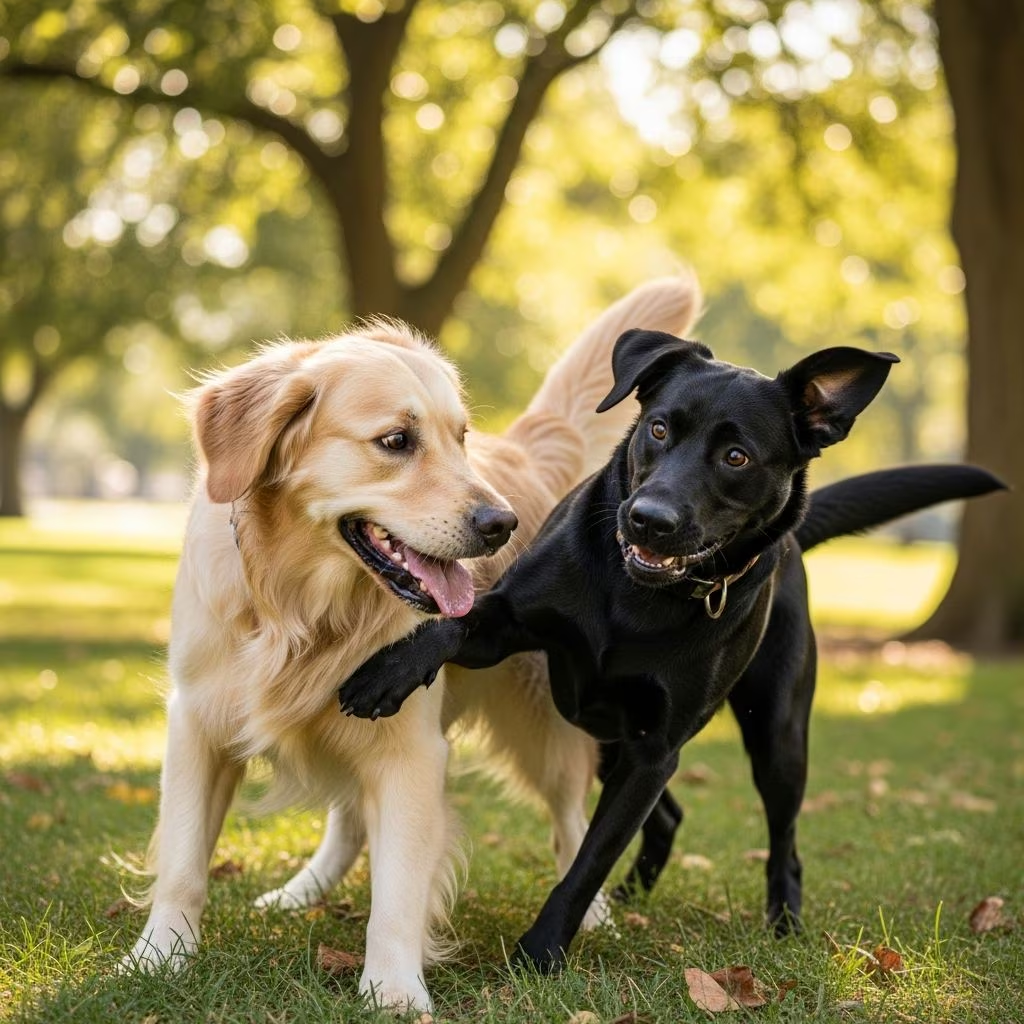
Dogs often look like they are teasing, provoking, or messing with each other, but what you see on the surface is usually part of a complex social language. Understanding this language can help you decide when to let dogs keep playing and when it is time to gently step in.
This guide explains why dogs interact the way they do, what healthy play looks like, when rough play can cross a line, and how you can support safe, positive relationships between dogs.
Why Dogs Mess With Each Other
Dogs are highly social animals that evolved to live in groups, communicate closely, and cooperate with one another. Their play is not random chaos; it helps them practice social skills, burn energy, and manage relationships.
- Practice for real life: Play-fighting and chasing help dogs rehearse hunting, self-defense, and conflict-resolution behaviors in a low-stakes way.
- Stress relief and bonding: Positive social interactions and play are linked with fewer stress- and fear-related behaviors in dogs and better long-term welfare.
- Learning boundaries: Dogs use play to learn when to back off, share space, or change tactics in response to another dog’s signals.
- Social preferences: Not all dogs are equally social; many learn what kinds of other dogs they enjoy and which ones they prefer to avoid as they mature.
To an observer, this can look like teasing or nagging: one dog may repeatedly poke another with a paw, steal toys, bump shoulders, or initiate chase over and over. In many cases, this is normal dog behavior—as long as both dogs are comfortable and able to opt in or out.
How Dogs Communicate With Each Other
Dogs rely heavily on body language to communicate with each other and with humans. When you learn to read these signals, you can usually tell if dogs are truly playing, feeling anxious, or about to start a conflict.
Key Communication Signals Between Dogs
- Body posture: Relaxed, loose bodies suggest comfort; stiff, upright bodies with muscles tensed can indicate arousal or threat.
- Eyes: Soft, blinking or averting eyes are polite; hard, intense stares or visible “whale eye” (white of the eye showing) signal discomfort or challenge.
- Tail: A mid-level, relaxed tail with a broad wag is friendly; a high, tight, or frozen tail can show tension or possible aggression.
- Ears: Neutral or gently forward ears can be curious or relaxed; tightly pinned-back ears often show fear or stress.
- Movement: Curved approaches and slow, loose motion are polite; direct, frontal approaches and rushing can be rude or risky.
- Vocalizations: Brief barks or playful growls may be part of fun, but prolonged deep growls or snarls usually show serious discomfort.
Dogs typically combine many of these signals at once. A safe interaction is not about one single sign, but the overall pattern.
Healthy Dog Play vs. Problematic Interactions
One of the hardest parts of watching dogs “mess with” each other is deciding whether what you see is harmless fun or the start of a fight. The table below compares common features of healthy play and interactions that may be risky.
| Feature | Healthy Dog Play | Potentially Problematic Interaction |
|---|---|---|
| Body Language | Loose, wiggly bodies; curved approaches; soft eyes. | Stiff posture; squared, frontal stance; prolonged hard stare. |
| Movement | Back-and-forth chasing, switching positions, frequent pauses. | One dog constantly chases or pins the other; little role reversal. |
| Communication | Two-way: both dogs respond to each other’s pauses and cues. | One-sided: one dog ignores signals to stop and keeps pushing. |
| Breaks in Play | Frequent short breaks; dogs check in, sniff, or shake off. | Continuous escalation without pauses; rising tension over time. |
| Dog Emotions | Both appear interested, relaxed, and willing to re-engage. | One dog tries to escape, hides, freezes, or seeks human help. |
Signs of Healthy, Low-Risk Play
Play is generally considered safe and appropriate when you see:
- Curved or sideways approaches instead of head-on, confrontational stances.
- Play bows (front end lowered, rear end up) that say, “I’m just playing!”
- Frequent self-interruptions, where dogs pause to sniff, shake off, or wander briefly before returning to play.
- Role reversals such as switching who chases, who is on top, and who holds the toy.
- Self-handicapping, where a stronger or larger dog plays more gently to match a weaker or smaller dog’s abilities.
- Loose facial expressions with soft mouths and neutral ears, rather than tight lips or wrinkled muzzles.
In this kind of play, dogs may bark, growl lightly, or tumble around, but the mood stays bouncy and flexible. When one dog says “enough,” the other backs off, and both can re-engage voluntarily.
Warning Signs That Play Is Going Wrong
When dogs are harassing or bullying each other rather than playing, you may notice:
- Direct, frontal alignment with stiff bodies, raised hackles, or a high, rigid tail.
- Intense, prolonged eye contact or hard stares lasting longer than a brief glance.
- Very fast, escalating movement with no pauses or cool-down moments.
- One-sided interaction where one dog keeps chasing, mounting, or body-slamming while the other consistently tries to get away.
- Subtle stress signals from the overwhelmed dog, such as lip-licking, turning the head away, crouching, or sudden stillness.
- Growls or snaps that do not quickly de-escalate play but cause further tension.
If these signs persist, it is wise to step in calmly, redirect attention, or call the dogs away instead of waiting for a fight to break out.
Different Types of Dog Social Behavior
Dogs do not all enjoy socializing in the same way. Behavior professionals often group dog-to-dog sociability into broad categories, though individual dogs may shift over time.
- Dog-social: Enjoys meeting and playing with many other dogs, including some that are a bit rude. This is common in puppies but becomes less typical in adults.
- Dog-tolerant: Comfortable around most dogs, even if they do not want to play all the time. They may set gentle boundaries with overly pushy dogs.
- Dog-selective: Likes some dogs but not others, often based on specific play styles, sizes, or personalities. They may need carefully chosen friends and managed introductions.
- Dog-reactive or dog-averse: Frequently barks, lunges, or tries to avoid other dogs, especially on leash or in tight spaces. These dogs may feel unsafe and benefit from training and professional guidance.
Seeing your dog “mess with” others can look very different depending on which of these types they most resemble. A dog-social individual might constantly invite play, while a dog-selective dog may appear to provoke only the few dogs they really enjoy wrestling or chasing.
How Socialization Shapes Dog Interactions
Early and ongoing social experiences help dogs learn how to interact appropriately with other dogs and people.
- Critical early period: Between about 3 and 8 weeks of age, puppies are especially sensitive to social experiences with other dogs and can learn important canine communication skills.
- Positive exposure: Gentle, varied exposure to friendly dogs helps puppies and adults become more comfortable and flexible around others.
- Long-term benefits: Dogs with more positive social contact tend to show fewer fear-related and stress behaviors, and they often cope better in group settings.
Good socialization is not about forcing dogs into crowded dog parks; it is about giving them structured opportunities to meet well-matched companions, at their own pace, with your support.
How to Support Safe Dog-to-Dog Interactions
Your role is to act as a calm, observant advocate for all dogs involved. You do not need to micromanage every interaction, but you should be ready to intervene if things start to go wrong.
Before Dogs Interact
- Match energy and size when possible: Dogs with similar play styles and sizes often find it easier to communicate and keep things fair.
- Choose neutral spaces: For first meetings, use an open, neutral area like a sidewalk walk together instead of a cramped, resource-rich home environment.
- Look for polite body language: Sideways, arcing approaches, soft eyes, and loose movement from both dogs suggest a good start.
During Interactions
- Keep initial greetings short: Let dogs sniff briefly, then cheerfully call them away and reward them, repeating short successes before allowing longer interactions.
- Watch both dogs, not just one: Make sure each dog has room to move away, shake off, or pause when they need a break.
- Encourage breaks: Call for quick “time-outs” if play is getting too intense, then allow dogs to re-engage only if both choose to return.
- Protect resources: Avoid throwing high-value toys or food into new group situations, which can trigger competition or guarding.
When to Step In
Interrupt or redirect interactions if you notice:
- One dog consistently trying to escape, hide, or cling to you.
- Stiff bodies, fixed stares, or repeated mounting despite clear resistance.
- Escalating vocalizations: growls that deepen, barks that shift from sharp to frantic, or shrieks of distress.
- Any lunge, snap, or bite, even if it does not break the skin.
Calmly call each dog away, reward them for coming, and give them space to reset. If concerning behavior continues or worsens, consult a qualified trainer, behaviorist, or veterinarian.
Why Some Dogs Seem to Tease or Pester Others
From a human point of view, some dogs look like they are constantly provoking or “messing with” their companions. This can stem from several normal factors:
- High play drive: Energetic, young, or social dogs may repeatedly try to initiate play with less interested dogs by bowing, nudging, or dropping toys at their feet.
- Immature communication: Adolescent dogs often struggle to read subtle “no thanks” signals and keep pushing for interaction until a clearer correction occurs.
- Learned habits: If a dog has often been rewarded—by attention, chase, or excitement—for pestering others, they may keep using those strategies.
- Social mismatch: A dog-selective or dog-tolerant dog may simply want more personal space than a dog-social playmate is willing to give.
Your job is to help both dogs succeed: give the more persistent dog alternative outlets for their energy and protect the more sensitive dog’s right to say “no.”
Frequently Asked Questions (FAQs)
Q: How can I tell if my dog is playing or being aggressive?
Look at the whole picture: loose, bouncy movement, curved approaches, frequent breaks, and role reversals usually signal play, while stiff bodies, hard stares, and one dog trying to escape suggest aggression or bullying.
Q: Is rough play between dogs always bad?
No. Many dogs enjoy wrestling and chasing as long as both dogs appear relaxed, switch roles, and can take breaks. Step in if one dog looks overwhelmed, stressed, or unable to get away.
Q: Why does my dog only like playing with certain dogs?
This is common. Many adult dogs are dog-tolerant or dog-selective rather than universally dog-social; they prefer specific sizes, play styles, or personalities and may be uneasy with others.
Q: Can I improve my dog’s manners with other dogs?
Yes. Gradual, positive socialization with well-matched, calm dogs, combined with training basic cues like “come” and “leave it,” can help many dogs interact more politely and feel safer.
Q: When should I seek professional help for my dog’s interactions?
Talk to a veterinarian or qualified behavior professional if your dog frequently growls, snaps, or lunges at other dogs, seems very fearful, or has caused injury. Early guidance can prevent problems from worsening.
References
- Normal Social Behavior in Dogs — Merck Veterinary Manual. 2021-05-01. https://www.merckvetmanual.com/dog-owners/behavior-of-dogs/normal-social-behavior-in-dogs
- Social Interactions — Canine Welfare Science, Purdue University. 2022-03-10. https://caninewelfare.centers.purdue.edu/behavior/social-interactions/
- Dog-to-Dog Introductions — Wisconsin Humane Society. 2020-08-15. https://www.wihumane.org/dog-to-dog-intros
- Reading Dog Body Language to Socialize Your Dog — AKC Pet Insurance. 2021-09-30. https://www.akcpetinsurance.com/blog/reading-dogdog-body-language-during-or-before-greetings
- Socializing Your Dog — Animal Humane Society. 2022-06-01. https://www.animalhumanesociety.org/resource/socializing-your-dog
- Understanding Dog-Dog Sociability — Paws Abilities. 2017-02-16. https://paws4udogs.wordpress.com/2017/02/16/understanding-dog-dog-sociability/
- Dog-To-Dog Interactions: Differences in Dog Social Behaviors — Pasadena Humane. 2021-04-20. https://pasadenahumane.org/dog-to-dog-interactions-differences-in-dog-social-behaviors/



