

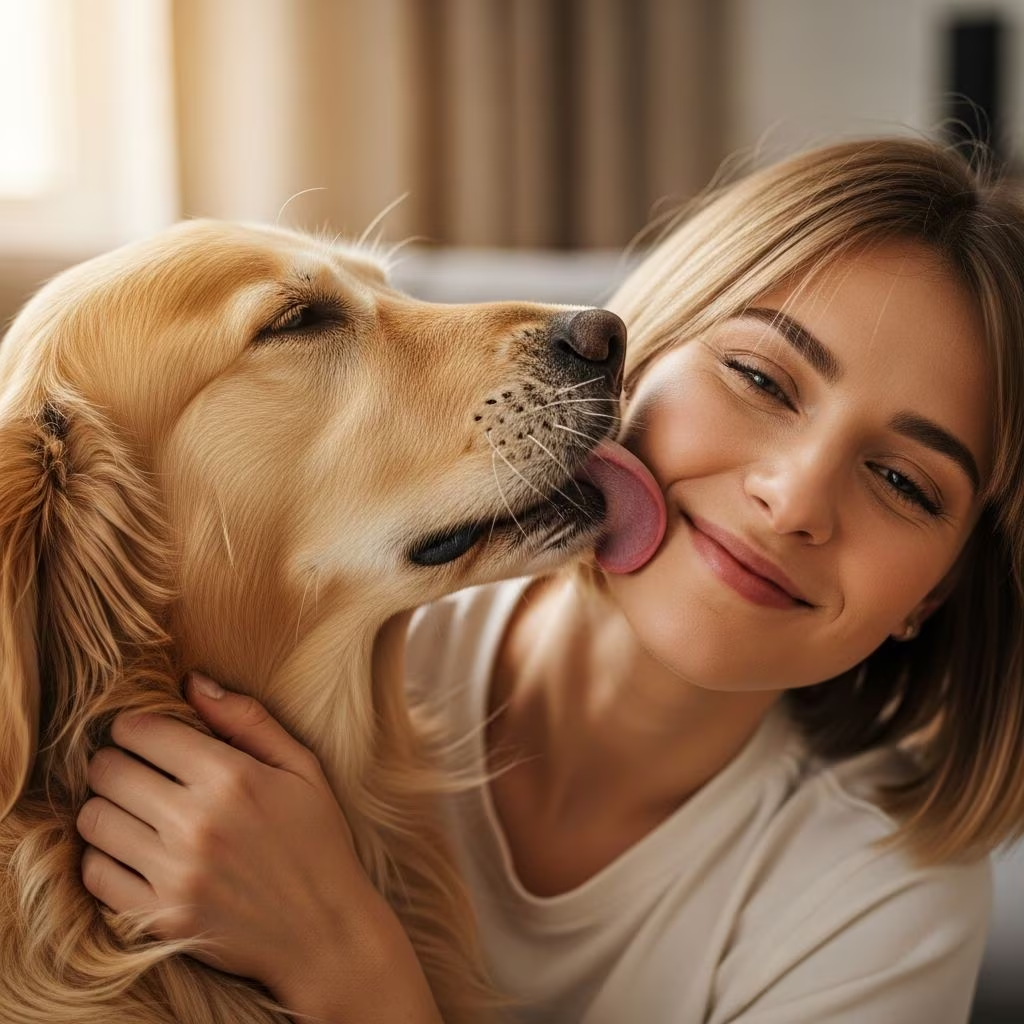
Dogs exhibit profound affection toward their human companions, demonstrated through evolutionary co-adaptation, hormonal responses like oxytocin release, and attachment behaviors akin to parent-child bonds. Scientific studies confirm dogs form secure attachments to humans, seeking comfort and showing loyalty that rivals familial love.
How Long Have Dogs and Humans Been Together?
Dogs and humans have shared a symbiotic relationship for at least 12,000 to 40,000 years, evolving together from wolves into domesticated companions. This co-evolution shaped dogs’ social skills, making them attuned to human cues, emotions, and gestures, fostering deep loyalty. Humans provided food and shelter, while dogs offered protection, hunting aid, and companionship, creating a mutually beneficial partnership that enhanced dogs’ communication abilities.
Genetic evidence suggests dogs diverged from wolves around 20,000–40,000 years ago, selectively bred for traits like sociability. Archaeological finds, such as 14,700-year-old dog burials with humans, underscore this ancient bond. Today, this history explains why dogs excel at reading human faces and voices, outperforming even chimpanzees in some empathy tests.
The Science Behind Dog Loyalty to Humans
Oxytocin, the ‘love hormone,’ surges in both dogs and humans during interactions like petting or eye contact, mirroring bonds between human parents and infants. Studies show mutual gazing increases oxytocin levels by up to 300% in dogs and 130% in owners, strengthening attachment. Other hormones—endorphins, dopamine, and serotonin—also rise, promoting happiness and pleasure, solidifying loyalty.
Brain imaging reveals dogs process human voices in reward centers, activated more by praise than food in some cases. This neurochemical response explains their eagerness to please and distress when separated from owners, akin to separation anxiety in children. A landmark study from Emory University used fMRI to show dogs recognize familiar scents and voices, lighting up positive neural pathways.
Do Dogs See Us as Parents or Pack Leaders?
Dogs perceive humans through a blend of parental attachment and pack dynamics, forming secure bonds where owners serve as safe bases, much like caregivers in Ainsworth’s attachment theory. Experiments demonstrate dogs seek proximity to owners during stress, preferring them over strangers, indicating a parent-like role.
Unlike wild packs, domestic dogs view multi-species families as their ‘pack,’ with humans as leaders providing security. However, neoteny—retained puppy-like traits—makes adult dogs behave dependently, eliciting nurturing from owners. Research from Eötvös Loránd University notes dogs fulfill nurturing drives similar to parenting but with less demand, offering companionship without full child-rearing commitments.
Owners often describe dogs as family members—siblings, partners, or ‘fur children’—rather than strictly pack subordinates. Surveys show most reject full anthropomorphism but acknowledge deep emotional ties.
Signs Your Dog Loves You Like Family
- Eye contact and tail wags: Prolonged gazing releases oxytocin, while enthusiastic wags signal joy upon your return.
- Leaning and cuddling: Physical contact seeks comfort, exposing vulnerable bellies as trust signs.
- Following you everywhere: ‘Velcro dogs’ shadow owners for security, preferring them in strange environments.
- Bringing toys or gifts: Sharing possessions demonstrates inclusion in their world.
- Sleeping close or on you: Choosing your space over others shows ultimate trust and affection.
- Excitement at reunions: Joyful greetings after short absences highlight separation distress relief.
These behaviors stem from selective breeding for sociability, reinforced by positive interactions.
How Dogs’ Brains Are Wired for Love
Dogs’ caudate nucleus—the brain’s reward center—activates strongly to owner scents and voices, more than toys or food. fMRI studies confirm personalized responses: your dog’s brain ‘lights up’ uniquely for you.
This wiring evolved via domestication, reducing fear responses and amplifying social rewards. Puppies separated early show lifelong loyalty deficits, emphasizing early bonding. Hormonal cascades during play or petting further embed these pathways, making humans central to their emotional world.
Canine Attachment Styles: Like Human Infants
Dogs display four attachment styles in Strange Situation tests, paralleling human infants: secure (75% seek/return to owner), insecure-avoidant (ignore owner), insecure-resistant (clingy but upset), and disorganized (conflicted). Secure dogs view owners as reliable parents, exploring confidently then returning for reassurance.
Factors like consistent training and socialization promote secure attachments. Rescue dogs often start insecure but shift with trust-building. This framework explains why some dogs thrive in families while others need targeted behavioral support.
| Attachment Style | Dog Behavior | Prevalence | How to Foster Security |
|---|---|---|---|
| Secure | Explores, returns happily | 65-75% | Consistent routines, positive reinforcement |
| Avoidant | Avoids owner post-stress | 20% | Gradual trust-building, avoid punishment |
| Resistant | Clings, hard to soothe | 10-15% | Calm responses, independence training |
| Disorganized | Confused, fearful | Rare | Professional behaviorist intervention |
Why Relationships with Dogs Are Often More Satisfying Than Human Ones
Dogs provide unconditional support with minimal conflict, offering companionship surpassing most human ties except parent-child bonds. A Eötvös Loránd University study in Scientific Reports found owners rate dog relationships higher for positivity and control, complementing human networks.
Dogs deliver nurturing opportunities, social support, and purpose without drama, thriving on asymmetric dynamics where owners lead. This uniqueness enhances life satisfaction, especially amid rising loneliness.
Do Dogs Get Jealous of Our Other Relationships?
Yes, dogs experience jealousy, blocking owners interacting with rivals like other dogs or babies, per UC San Diego studies. Resource-guarding behaviors—pushing in, attention-seeking—mirror human jealousy, motivated by bond threats.
Mitigate with training: reward calm behavior, ensure individual attention. Jealousy underscores their deep investment in the relationship.
Building a Stronger Bond with Your Dog
- Daily positive interactions: Petting, play boosts oxytocin.
- Training with rewards: Strengthens trust and communication.
- Exercise together: Shared activities deepen partnership.
- Respect their needs: Provide species-appropriate care.
- Quality time: Eye contact, calm petting fosters attachment.
Consistency yields loyalty mirroring familial love.
Frequently Asked Questions (FAQs)
Do dogs really love their owners?
Yes, evidenced by oxytocin release, secure attachments, and behaviors like joyful reunions.
Is a dog’s bond with humans like parent-child?
Similar in attachment and nurturing, but unique due to interspecies dynamics.
Why are dogs so loyal?
Evolution, hormones, and domestication wired them for human partnership.
Can dogs feel jealousy?
Yes, they guard relationships against perceived rivals.
How can I tell if my dog loves me?
Look for leaning, following, eye contact, and excitement.
References
- Why Dogs Loyal To Humans: Expert Advice for Pet Parents — Figo Pet Insurance. 2023. https://figopetinsurance.com/blog/why-dogs-loyal-to-humans
- Dogs can fulfill our need to nurture — Popular Science. 2025-05-22. https://www.popsci.com/environment/dog-ownership-parenting/
- This Is Why Relationships With Dogs Are More Satisfying — Kinship. 2023. https://www.kinship.com/news/relationships-with-dogs-vs-humans-study
- Dogs As Family, People As Packs — Patricia McConnell, The Other End of the Leash. 2023. https://www.patriciamcconnell.com/theotherendoftheleash/dogs-as-family-people-as-packs/
- Inside the Human-Dog Love Affair — Psychology Today. 2023-10. https://www.psychologytoday.com/us/blog/the-baby-scientist/202310/for-the-love-of-a-dog



