

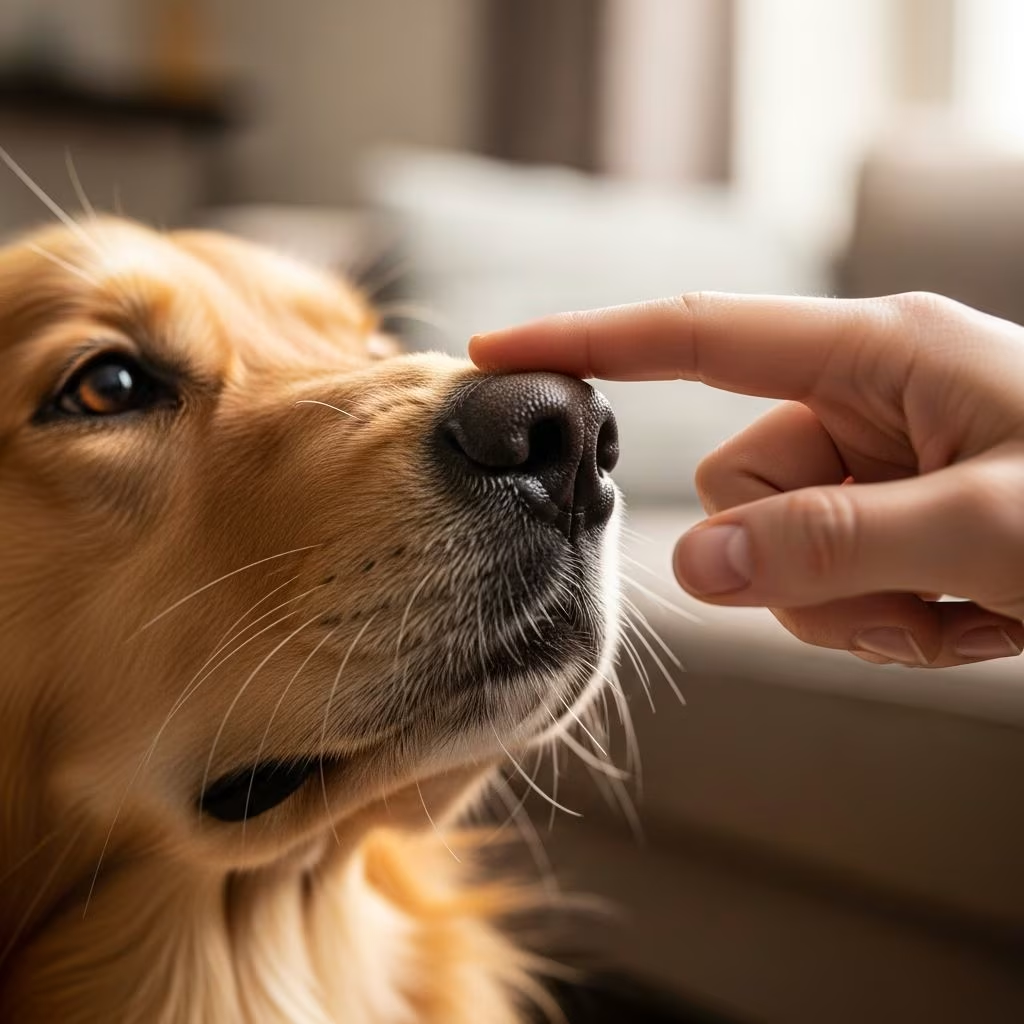
The gentle tap on a dog’s nose, affectionately known as a “boop,” has captured hearts across the internet and in homes worldwide. But do dogs actually enjoy this playful gesture? While many dogs respond with wagging tails and bright eyes, the answer depends on the individual dog, their mood, and how the boop is delivered. A well-executed boop can strengthen the bond between you and your furry friend, mimicking the affectionate nose touches dogs share with each other.
Dogs communicate through body language, and nose contact is a natural part of their social interactions. However, their noses are highly sensitive organs equipped with the rhinarium—a moist, hairless area surrounding the nostrils—that plays a crucial role in their sensory world. Understanding this sensitivity is key to determining if booping delights or disturbs your dog.
What Is a Boop?
A boop is a light, playful touch on a dog’s nose, often accompanied by the verbal cue “boop!” It’s a fun way to greet your dog or express affection, similar to how dogs nuzzle each other. This gesture isn’t just for show; it can foster a deeper emotional connection. Research shows that physical touch, including nose boops, can trigger oxytocin release in both dogs and humans, much like interacting with a baby, enhancing feelings of bonding and trust.
In dog packs, nose-to-nose contact serves as a greeting or reconciliation signal. When you boop your dog gently, you’re participating in this innate canine ritual. However, the pressure must be minimal to avoid discomfort, as the dog’s nose contains thousands of nerve endings designed for detecting scents and even subtle temperature changes.
The Anatomy of a Dog’s Nose: Why Booping Matters
A dog’s nose is a marvel of evolution, far surpassing human capabilities. The rhinarium, that shiny black or pink tip, is packed with over 250 million olfactory receptors—compared to our mere 5 million. This allows dogs to detect scents at concentrations as low as a teaspoon of sugar in two Olympic-sized swimming pools.
Beyond smell, recent studies reveal dogs can sense weak thermal radiation through their rhinaria. Using fMRI scans and behavioral tests, researchers found that dogs detect heat signatures from objects up to 1.6 meters away, even in darkness. This infrared sensitivity helps them locate warm prey or navigate environments. When you boop this area, you’re touching a highly specialized sensory organ, so gentleness is paramount.
Dogs also use their noses for emotional bonding. Brain scans show familiar human scents activate reward centers in a dog’s brain, similar to romantic interactions. Booping can tap into this if done respectfully.
Do Dogs Actually Like Boops?
Most dogs enjoy boops when they’re in the mood and trust the person delivering it. Signs of enjoyment include relaxed ears, soft eyes, tail wags, or leaning into the touch. Some dogs even solicit boops by pushing their nose toward your hand. Oxytocin surges from nose contact reinforce this positive association.
However, not all dogs love it. Puppies and highly social breeds like Labradors often adore boops, while more independent breeds like Shiba Inus may tolerate but not seek them. Watch for aversion signals: lip licking, yawning, turning away, or tucking the tail. Over-booping can lead to annoyance, as repetition might overwhelm their sensitive nose.
- Positive responses: Play bow, happy pant, nose nudge back.
- Negative responses: Head shake, paw lift, avoidance.
- Neutral: No reaction—try again later.
Signs Your Dog Enjoys or Dislikes Being Booped
To gauge your dog’s preference, observe body language closely. Happy dogs will maintain eye contact, relax their mouth into a loose “smile,” and possibly expose their belly afterward. Disinterested dogs might freeze, whale-eye (whites visible), or snap lightly as a warning.
| Enjoyment Signs | Dislike Signs |
|---|---|
| Relaxed body | Tense muscles |
| Tail wag/mid-level wag | Tail tuck or stiff wag |
| Leaning in | Pulling away |
| Playful bounce | Frozen stance |
Individual temperament plays a role. Rescue dogs or those with past trauma may need time to warm up to face touches. Always let the dog initiate contact first.
How to Boop a Dog Safely
Safety starts with consent. Approach from the side, not above, to avoid startling them. Extend your finger slowly, let them sniff, then deliver a feather-light tap. Say “boop” in a cheerful voice to associate it positively. Limit to 1-2 boops per session, spaced out.
- Observe mood: Is the dog calm and engaged?
- Let them sniff your hand first.
- Gently tap the rhinarium—think butterfly kiss.
- Follow with praise or pets elsewhere.
- Stop if they show discomfort.
Avoid booping sleeping, eating, or stressed dogs. Never force it on unfamiliar dogs.
Should Children Boop Dogs?
Children love booping, but supervision is essential. Kids under 5 lack impulse control and may poke too hard or persist too long. Train them first: Demonstrate gentle petting, use your hand over theirs for boops, and teach reading dog signals.
- Very young kids (babies/toddlers): No booping—risk of grabs or squeezes.
- School-age: Supervised only until proficient.
- Older kids: Fine with reminders.
Teach rules: No sudden moves, respect “no,” never near food/toys. This builds safe interspecies friendships.
Dog Nose Facts Beyond the Boop
Dogs’ noses are scent powerhouses. Breeds vary: Bloodhounds excel at tracking, Beagles find mice in minutes, Cockers detect drugs. They smell emotions, diseases like cancer/COVID, seizures, and differentiate identical twins by diet.
Environmental factors affect sniffing: Humidity boosts, heat/coconut oil hinders. Health issues like diabetes impair it. Blind dogs rely on nose navigation.
- 250 million scent receptors vs. human 5 million.
- Detect 1/1000th human scent days later.
- Separate soup ingredients or explosives in debris.
Booping Across Breeds: Does It Differ?
Short-nosed (brachycephalic) breeds like Pugs have less sensitive rhinaria but still dislike rough handling. Scent hounds crave nose attention; sight breeds less so. Tailor to breed traits.
Fun Boop Alternatives If They Dislike It
Not into boops? Try chin scratches, ear rubs, or belly pats. Some prefer play bows or toy tosses for bonding.
Frequently Asked Questions (FAQs)
Do all dogs like nose boops?
No, preferences vary by personality, breed, and past experiences. Always check body language.
Can booping hurt my dog?
Gentle boops won’t, but hard pokes can irritate the sensitive rhinarium.
Why do dogs push their nose into my hand?
They’re soliciting affection or scent-marking you as part of their pack.
Is booping the same for puppies?
Puppies often love it more but tire quickly—keep sessions short.
Can cats boop dogs?
Yes, interspecies boops happen as friendly greetings.
References
- Dogs can sense weak thermal radiation — PNAS (via Austin Lim summary). 2021-05-17. https://www.austinlim.com/media/dog-fmri-scan-rhinarium-educational-youtube-series
- Dog Boops! Does Your Dog Actually Enjoy Them? — Hill’s Pet Nutrition. 2023-08-15. https://www.hillspet.com/dog-care/play-exercise/do-dogs-like-dog-boops
- Dog’s nose | Curious facts beyond the boop — Perfect Cocker Spaniel (citing Scott & Fuller 1965). 2021-11-09. https://perfectcockerspaniel.com/2021/11/09/dogs-nose-curious-facts-beyond-the-boop/
- Dog Nose Senses Heat — Popular Mechanics. 2020-04-02. https://www.popularmechanics.com/science/animals/a31155225/dog-nose-senses-heat/



