

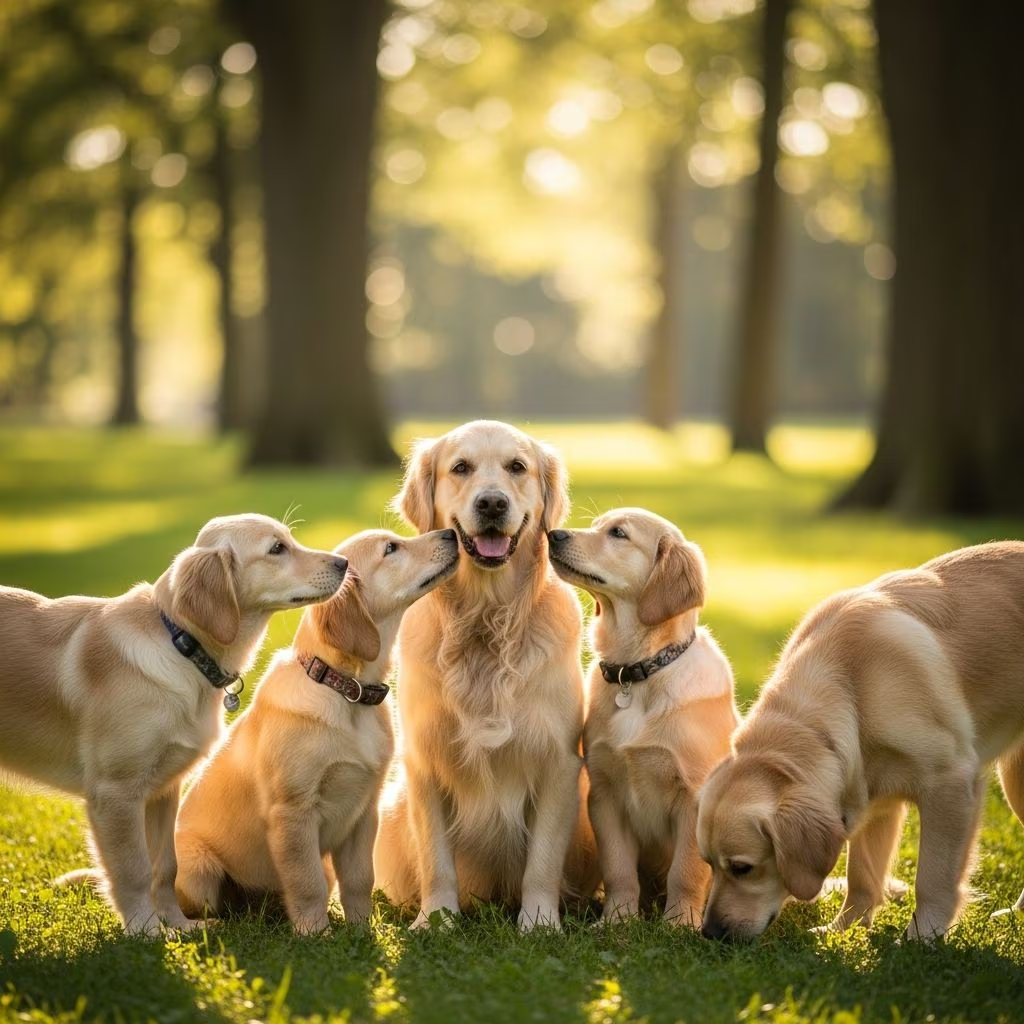
Do Dogs Know Their Siblings? Understanding Canine Family Recognition
One of the most touching moments in the pet world is witnessing a dog reunion with a long-lost sibling. But the real question remains: do dogs actually recognize their littermates after years of separation? The answer is more nuanced than a simple yes or no. Research shows that dogs possess remarkable abilities to recognize their siblings and family members during early development, but whether they maintain these memories long-term depends on several critical factors.
How Puppies Recognize Their Siblings
Puppies develop the ability to recognize their littermates remarkably early in life. Between 4 and 5.5 weeks of age, puppies can identify their family members with impressive accuracy, primarily using their powerful sense of smell. Research demonstrates that more than two-thirds of puppies consistently choose their siblings over unrelated puppies of the same age and breed when given the option. This recognition rate increases to over 80% when identifying their mother, showing the strength of early family bonds.
This early recognition ability is rooted in one of the dog’s most sophisticated biological systems: their olfactory sense. A dog’s nose contains approximately 300 million olfactory receptors, making it about 10,000 times more sensitive than a human’s nose. This extraordinary sensitivity allows puppies to detect unique scent markers that distinguish their family members from unrelated dogs.
The Critical Role of Scent in Family Recognition
Scent plays an absolutely fundamental role in how dogs recognize their family members. Unlike humans, who rely heavily on visual identification, dogs use their powerful sense of smell as their primary means of identification. This olfactory recognition system is so sophisticated that puppies can identify their siblings and mother through scent-enriched items alone, without any visual or auditory cues.
Research has demonstrated that dogs can detect unique family scent markers that help them distinguish between related and unrelated dogs. These scent signatures are particularly strong between mothers and their offspring, contributing to longer-lasting recognition between them. The scent markers appear to contain information about kinship, allowing dogs to identify biological relationships through smell alone.
How Scent Recognition Works
When dogs encounter each other, they engage in extensive sniffing behaviors. During this process, they’re gathering chemical information about the other dog’s identity, health status, diet, and possibly genetic relatedness. Puppies learn their littermates’ unique scent profiles during their first weeks of life, and this olfactory memory becomes deeply embedded in their developing brains. This explains why a dog might react differently to a sibling—sniffing more intently, appearing more calm and comfortable, showing alert interest in the other dog’s presence, compared to how they would greet an unfamiliar canine.
Long-Term Recognition and Memory Retention
While puppies can recognize their siblings early on, the ability to maintain this recognition over time largely depends on continued contact. The picture becomes more complex as dogs age. Mother-offspring recognition can persist for up to two years after separation, but sibling recognition typically fades unless the dogs maintain regular contact. Dogs separated from their littermates at the standard age of 8-12 weeks generally don’t maintain long-term recognition of their siblings, particularly if they have no subsequent contact.
Research reveals a fascinating distinction between how dogs remember their mothers versus their siblings. Two years after puppies left the litter at 12 weeks of age, dogs could recognize their mothers and the mothers recognized their offspring. However, the offspring could not recognize their siblings unless they had been living together. This suggests that mother-offspring recognition and sibling recognition operate through different mechanisms.
Why Mother Recognition is Stronger
The stronger, more durable memory of mothers compared to siblings likely relates to evolutionary survival mechanisms. Dogs are altricial animals, meaning their young are relatively underdeveloped at birth and depend heavily on parental care for survival. Recognition of the mother is crucial for an altricial species’ survival, so dogs appear to be biologically wired to maintain mother-recognition stronger and longer than sibling recognition. This evolutionary advantage has shaped how canine brains process and retain kinship information.
Factors Affecting Sibling Recognition
Several key factors influence whether dogs can recognize their siblings later in life:
- Length of time spent together during early development
- Frequency of contact after separation
- Individual differences in scent memory capabilities
- The strength of early social bonds during the critical socialization period
- Environmental factors and living conditions
- Sex of the dogs in question
The Importance of the Critical Socialization Period
The critical socialization period for puppies extends from birth to approximately 16 weeks of age. Puppies who spent this entire period with their siblings are more likely to maintain some ability to recognize them later in life compared to puppies separated at 6-8 weeks. The longer puppies remain together during this crucial developmental window, the stronger their mutual recognition abilities appear to be.
Gender Differences in Sibling Recognition
Research has uncovered interesting sex-based differences in how dogs recognize their siblings. Female dogs showed a preference for both male and female siblings, while male dogs showed a preference for male siblings but preferred non-kin females. This pattern likely relates to reproductive strategies in dogs, with male dogs naturally seeking unrelated females for mating as they reach sexual maturity. This innate drive may override their recognition and preference for female littermates.
What Happens When Separated Littermates Reunite?
The moment when separated siblings reunite can be touching, but reactions vary considerably based on how long they’ve been apart and their individual characteristics. When dogs that have lived apart meet, they may or may not recognize each other. Signs that a dog might recognize a sibling include more intense sniffing, apparent relaxation and comfort with the other dog, alert and keen interest in the dog’s presence, and behavioral cues suggesting familiarity.
However, it’s equally common for separated siblings to show no particular recognition of each other beyond standard dog-to-dog greeting behaviors. If dogs were separated at the typical age of 8-12 weeks and have had no contact since, they likely won’t recognize each other as family members. Instead, they’ll greet each other as they would any unfamiliar dog of similar age and breed.
Creating Positive Reunion Experiences
Whether or not dogs recognize their siblings, reunions can still be positive experiences. Introduce separated littermates on neutral ground to prevent territorial behavior. Allow them to greet naturally through sniffing. Watch for play signals, relaxed body language, and compatible play styles. Even if they don’t recognize each other as siblings, many unrelated dogs can form new bonds and enjoy each other’s company if properly introduced.
The Science Behind Kinship Recognition
Some researchers theorize that genetic factors may play a role in sibling recognition. Dogs possess DNA just like humans, and evolutionary theory suggests all living animals are pre-programmed to avoid breeding with family members, which would require some ability to recognize kin. This inbreeding avoidance mechanism could theoretically allow dogs to recognize siblings at a genetic level.
However, current evidence suggests this genetic recognition, if it exists, requires initial contact and interaction during early development. There is no scientific evidence suggesting that dogs can recognize unknown siblings purely through genetic connection alone. Recognition appears to require direct contact and the establishment of scent-based memories during the critical development period.
Frequently Asked Questions
Q: Can adult dogs recognize their siblings after being separated at a young age?
A: Adult dogs typically don’t recognize siblings if they’ve been separated since puppyhood at 8-12 weeks. Without ongoing contact, the ability to recognize siblings generally fades over time, especially after two years of separation. However, dogs separated from a sibling they lived with continuously may still recognize that specific sibling.
Q: How long do dogs remember their mother and littermates?
A: Dogs can remember their mother’s scent for up to two years after separation. However, littermate recognition through scent usually diminishes unless siblings continue living together or maintain regular contact. Mother-offspring recognition is stronger and more durable than sibling-to-sibling recognition.
Q: What role does scent play in a dog’s ability to recognize family members?
A: Scent is the primary method dogs use to recognize family members. Their powerful sense of smell allows them to detect unique scent markers that identify related individuals, making olfaction more important than visual or auditory cues. Dogs can identify family members through scent-enriched items alone.
Q: Do dogs show different recognition behaviors toward siblings if they have lived apart versus together?
A: Yes, dogs that have lived together continuously show stronger recognition behaviors and preferences for their siblings’ scent, while those separated early typically don’t display these same recognition patterns. The length and recency of contact directly impact recognition ability.
Q: Can dogs recognize siblings they have never met?
A: No, there is no scientific evidence suggesting that dogs can recognize unknown siblings purely through genetic connection. Recognition appears to require direct contact and interaction during early development to establish scent-based memories.
Q: What’s the best age to separate puppies from their littermates?
A: Most puppies are separated from their littermates at 8-12 weeks of age, which is considered appropriate for weaning and socialization with humans. However, puppies that remain with littermates until 16 weeks may have stronger recognition abilities later in life.
Understanding Your Dog’s Social Nature
The research into canine sibling recognition reveals the complex social nature of our dogs. While they may not maintain lifelong memories of littermates separated early in life, the bonds formed during puppyhood shape their social development and behavior patterns. Understanding these recognition patterns helps pet owners better appreciate the importance of early socialization and the lasting impact of a dog’s formative weeks with littermates and mother.
The next time you witness a dog reunion video online, remember that whether the dogs recognize each other or not, these moments capture something fundamental about canine nature: their capacity for social bonding, their reliance on scent to navigate their world, and the ways evolution has shaped their ability to form and maintain family connections.
References
- Long-term retention of kinship recognition established during puppyhood — PubMed Central/National Institutes of Health. 1994. https://pubmed.ncbi.nlm.nih.gov/24925236/
- Can Dogs Remember Their Siblings? — Wag! Walking. https://wagwalking.com/sense/can-dogs-remember-their-siblings
- Can dogs recognize their relatives? — Wisdom Panel. https://www.wisdompanel.com/en-us/blog/can-dogs-recognize-their-relatives
- Do Dogs Recognize Their Siblings? Exploring Canine Bonds — PetsCare. https://www.petscare.com/news/post/do-dogs-recognize-siblings
- Littermates For Life: Do Puppies Remember Their Siblings? — Rover. https://www.rover.com/blog/do-puppies-remember-siblings/



