

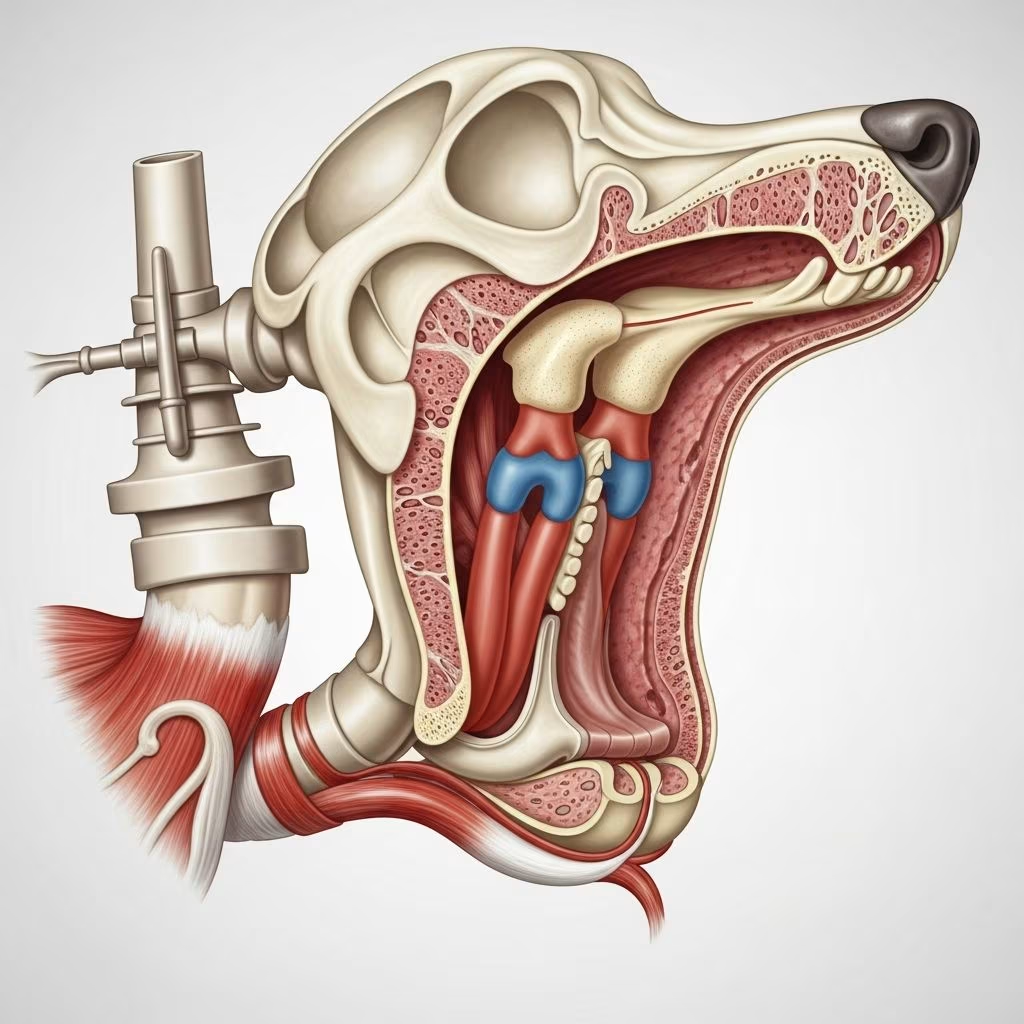
Dogs indeed have vocal cords, known scientifically as vocal folds, located within the larynx or voice box. These structures allow canines to produce a diverse array of sounds essential for communication, from joyful barks to warning growls.
The Anatomy of Canine Vocal Production
The canine larynx serves multiple critical roles: protecting the airway during swallowing, regulating airflow for breathing, and generating vocalizations. Composed of cartilages, muscles, and nerves, it sits at the entrance to the trachea, suspended by the hyoid apparatus.
Central to sound production are the **vocal folds**, elastic ligaments stretching between the arytenoid cartilages and the laryngeal floor. These folds, slightly stiffer than surrounding tissues, are encased in mucous-secreting membranes and supported laterally by the vocalis muscle, surrounded by fat. Air from the lungs passes through the glottis—the space between the folds—causing them to vibrate when tensed by laryngeal muscles.
Innervation comes from the vagus nerve’s branches: the cranial and caudal laryngeal nerves. The dorsal cricoarytenoid muscle, controlled by the caudal laryngeal nerve, abducts the vocal processes to open the glottis during inspiration. Other muscles like the arytenoideus adjust tension for phonation.
How Dogs Generate Different Sounds
Dogs create sounds by modulating vocal fold tension and airflow. Barking involves rapid glottal pulses from quick fold adduction and abduction. Growls stem from sustained low-frequency vibrations, while whines use higher pitches via increased tension.
The vocal tract—extending from larynx to mouth—shapes these vibrations into formants, acoustic resonances conveying information like body size. Studies show vocal tract length correlates with body mass across breeds, from tiny Yorkshire Terriers (2.5 kg) to large German Shepherds (50 kg), influencing formant dispersion. Larger dogs have longer tracts, producing deeper formants that signal greater size.
- Barks: Sharp, repetitive pulses for alerting or play.
- Growls: Low, continuous vibrations indicating threat.
- Whines/Howls: Prolonged high-frequency tones for distress or territory marking.
- Pants: Non-vocal airflow modulation for cooling, though some breeds vocalize during panting.
Comparing Canine and Human Vocal Structures
Canine vocal folds closely resemble human ones biomechanically. Research measuring Young’s modulus—a gauge of elastic stiffness—reveals nearly identical values between dog and human cover layers (superficial lamina propria and epithelium). This similarity validates dogs as models for human voice studies.
Both species follow the body-cover model: the ‘body’ (thyroarytenoid muscle and deep collagen) provides support, while the ‘cover’ oscillates for phonation. Dogs achieve fundamental frequencies from 80 Hz to 776 Hz, spanning human speech and song ranges. Minor differences include less developed interarytenoid muscles and more prominent cartilaginous glottis in dogs, plus subtle lamina propria variations.
| Feature | Dogs | Humans |
|---|---|---|
| Young’s Modulus (Cover Layer) | Similar stiffness | Similar stiffness |
| Vocal Fold Layers | Superficial LP: elastin-rich; Deep: ground substance/collagen | Superficial LP: elastin-rich; Deep: collagen-dominant |
| Frequency Range | 80-776 Hz | Speech/song overlap |
| Glottis Structure | More cartilaginous | Less prominent cartilage |
Breed Variations in Vocal Abilities
Selective breeding has diversified dog skull shapes and sizes, impacting vocal tracts. Brachycephalic breeds (e.g., Bulldogs, Pugs) have shorter tracts due to compact heads, leading to higher-pitched, snorter barks and breathing challenges. Dolichocephalic breeds (e.g., Greyhounds) possess longer tracts for deeper howls.
Body mass strongly predicts tract length and formant patterns, aiding inter-breed communication. A German Shepherd’s growl carries low formants signaling size, unlike a Chihuahua’s yip. These adaptations influence not just sound but respiratory efficiency.
Common Laryngeal Disorders in Dogs
Laryngeal issues can impair vocalization and breathing. **Laryngeal paralysis** is prevalent in older large breeds like Labrador Retrievers, where nerves fail, causing vocal folds to paralyze in a midline position. This restricts airflow, producing noisy breathing (stridor) and weak barks. During inspiration, folds should abduct; paralysis prevents this.
Symptoms include voice changes, coughing, exercise intolerance, and collapse. Diagnosis via laryngoscopy reveals immobile arytenoids. Treatment ranges from conservative management to surgical tie-back procedures.
Other conditions:
- Laryngitis: Inflammation from infection or irritants, causing hoarseness.
- Tumors: Rare, but laryngeal neoplasia affects voice and swallowing.
- Trauma: From choking or accidents, damaging folds.
Understanding Your Dog’s Vocal Communication
Dogs vocalize to express emotions, needs, and social cues. High-pitched whines signal submission or pain; rapid barks invite play. Context matters—tail wags with barks mean joy, stiff posture with growls means caution.
Owners can interpret via pitch, duration, and volume. Deep, slow growls warn; short, sharp barks alert. Excessive vocalizing may indicate anxiety, pain, or boredom—consult vets for underlying issues.
Caring for Your Dog’s Vocal Health
Maintain laryngeal health through:
- Weight Management: Obesity exacerbates breathing in short-nosed breeds.
- Regular Check-ups: Early detection of paralysis in seniors.
- Avoid Irritants: Smoke, allergens inflame the larynx.
- Hydration and Diet: Supports mucous membrane health.
- Exercise: Strengthens respiratory muscles without overexertion.
For brachycephalics, cool environments prevent heat stress on airways. Surgical interventions restore function in severe cases.
FAQs
Can dogs lose their voice?
Yes, from laryngitis, paralysis, or overuse, leading to hoarse or silent barks. Rest and vet care usually resolve it.
Why do some dogs bark more than others?
Breed traits, personality, training, and environment influence barking. Herding breeds vocalize to work.
Do puppies have fully developed vocal cords?
Puppies’ larynxes mature post-weaning, starting with squeaks evolving to adult barks.
Is howling a sign of pain?
Not always—it’s often territorial or responsive to sirens, but persistent howling warrants a vet visit.
How does age affect dog vocalizations?
Older dogs may develop raspier voices from laryngeal changes or paralysis.
Advancements in Canine Laryngeal Research
Ongoing studies leverage canine models for human phonation insights, given anatomical parallels. Radiographic analyses refine vocal tract understanding, aiding breed-specific care. Future therapies may target nerve regeneration for paralysis.
References
- Young’s Modulus of Canine Vocal Fold Cover Layers — Alipour F, Jaiswal S, Vigmostad S. 2004-10-15. https://pmc.ncbi.nlm.nih.gov/articles/PMC4058419/
- Vocal tract length and acoustics of vocalization in the domestic dog — Raine A, et al. 1999-09-01. https://pubmed.ncbi.nlm.nih.gov/10504322/
- Larynx – Anatomy & Physiology — WikiVet. 2023. https://en.wikivet.net/Larynx_-_Anatomy_&_Physiology
- Do Dogs Have Vocal Cords? — Pet Honesty. 2023. https://www.pethonesty.com/blogs/blog/do-dogs-have-vocal-cords
- Larynx — Veterian Key. 2016-11-22. https://veteriankey.com/larynx/
- Pharynx In Dogs & Cats — Safari Vet. 2023. https://www.safarivet.com/care-topics/dogs-and-cats/pharynx/



