

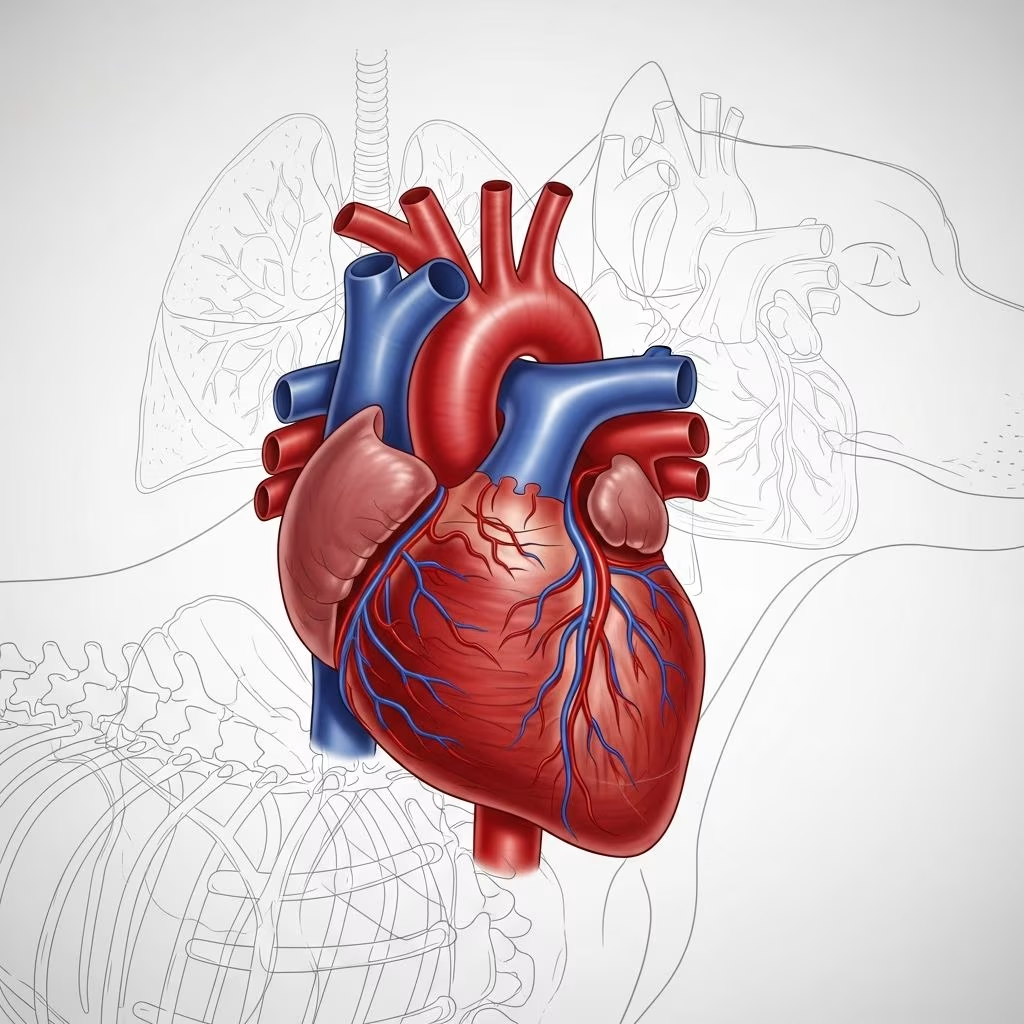
Dogs possess a single, robust heart that serves as the powerhouse of their circulatory system. This four-chambered muscular organ efficiently pumps oxygenated blood throughout the body while managing deoxygenated blood flow to the lungs.
The Essential Role of the Canine Heart in Circulation
The heart in dogs is a cone-shaped structure positioned obliquely in the thoracic cavity, ensuring optimal space-sharing with the lungs. It beats rhythmically, approximately 60 to 120 times per minute at rest, to deliver oxygen and nutrients to tissues while removing waste products. This vital organ, encased in a protective pericardial sac, extends from the third to the sixth rib, facilitating efficient blood propulsion across the entire body.
Understanding this singular heart’s capabilities debunks myths and highlights its evolutionary adaptations for an active lifestyle. Unlike some invertebrates with multiple hearts, mammals including dogs rely on one highly specialized pump divided into right and left sides by a muscular septum, preventing oxygen-rich and oxygen-poor blood from mixing.
Detailed Anatomy of the Dog’s Four-Chambered Heart
The canine heart comprises four distinct chambers: two atria and two ventricles, each with specific roles in the cardiac cycle. The right atrium receives deoxygenated blood from the body via the venae cavae, passing it through the tricuspid valve to the right ventricle. This ventricle then propels the blood into the pulmonary artery for oxygenation in the lungs.
On the left side, oxygenated blood returns from the lungs through pulmonary veins into the left atrium, flows past the mitral valve into the left ventricle—the heart’s strongest chamber—and is pumped into the aorta for systemic distribution. The left ventricular walls are notably thicker to generate the high pressure needed for this task.
- Right Atrium: Collects deoxygenated blood from superior and inferior vena cavae.
- Right Ventricle: Pumps blood to lungs via pulmonary artery; thinner walls suit lower pressure pulmonary circuit.
- Left Atrium: Receives oxygenated blood from pulmonary veins.
- Left Ventricle: Distributes oxygenated blood body-wide; muscular hypertrophy supports forceful ejection.
A fibrous skeleton of rings and trigones anchors the valves, preventing backflow and maintaining unidirectional blood flow. The interventricular septum, partly muscular and membranous, divides the ventricles robustly.
Electrical Conduction: The Heart’s Natural Pacemaker System
The dog’s heartbeat originates from the sinoatrial (SA) node in the right atrium, acting as the primary pacemaker with rhythmic electrical discharges. These impulses travel to the atrioventricular (AV) node, then via the bundle of His and Purkinje fibers to coordinate atrial and ventricular contractions.
This system ensures systole (contraction) and diastole (relaxation) occur in sequence. From SA node firing to ventricular systole takes about 0.22 seconds, vital for the heart’s 2-beats-per-second pace in active dogs. Disruptions here can lead to arrhythmias, underscoring the precision of this intrinsic network.
Blood Flow Pathway Through the Canine Cardiovascular Network
Blood circulation in dogs follows a double-loop path: pulmonary for lung oxygenation and systemic for body nourishment. Deoxygenated blood enters the right heart, gains oxygen in lungs, and returns to the left heart for redistribution.
| Step | Chamber/Vessel | Action |
|---|---|---|
| 1 | Venae Cavae → Right Atrium | Deoxygenated blood collection |
| 2 | Right Atrium → Tricuspid Valve → Right Ventricle | Filling lower right chamber |
| 3 | Right Ventricle → Pulmonary Valve → Pulmonary Artery | To lungs for gas exchange |
| 4 | Pulmonary Veins → Left Atrium | Oxygenated blood return |
| 5 | Left Atrium → Mitral Valve → Left Ventricle | Systemic pump preparation |
| 6 | Left Ventricle → Aortic Valve → Aorta | Body-wide distribution |
Valves like the aortic and pulmonary ensure one-way traffic, with heart sounds reflecting their closure: first (S1) for AV valves, second (S2) for semilunar valves.
Coronary Arteries: Fueling the Heart Muscle Itself
The myocardium demands constant oxygen, supplied by coronary arteries branching from the aorta. In dogs, the left coronary artery predominantly nourishes the heart, with septal branches providing collateral flow to ventricles. This setup supports the heart’s nonstop activity, as cardiac muscle never fully rests.
Common Heart Conditions Affecting Dogs
Despite its resilience, the canine heart faces diseases like dilated cardiomyopathy (DCM), where chambers enlarge and weaken, or hypertrophic cardiomyopathy (HCM), rare in dogs, featuring thickened walls that impede flow. Congenital defects, valve insufficiencies, and pericardial issues also occur.
- Dilated Cardiomyopathy: Enlarged, flaccid heart reduces pumping efficiency; common in large breeds.
- Valve Disease: Mitral regurgitation leads to left atrial enlargement.
- Arrhythmias: Irregular rhythms from conduction flaws.
- Pericardial Effusion: Fluid buildup compresses the heart.
Breeds like Boxers, Dobermans, and Great Danes are predisposed to certain cardiomyopathies.
Signs of Heart Trouble in Your Dog
Early detection saves lives. Watch for coughing, lethargy, rapid breathing, fainting, bluish gums, or abdominal distension from fluid buildup. Routine veterinary exams with auscultation, radiographs, and echocardiography aid diagnosis.
Preventive Strategies for Canine Cardiac Wellness
Maintain ideal weight, provide balanced diet rich in taurine and omega-3s, ensure regular exercise, and avoid stressors like extreme heat. Annual check-ups catch issues early. Supplements may help at-risk breeds, but consult vets first.
Advanced Diagnostics and Treatments
Echocardiograms visualize structure and function; ECGs monitor rhythms. Treatments include medications (diuretics, ACE inhibitors), diet changes, or surgery for congenital defects. Pacemakers address bradyarrhythmias.
FAQs on Dog Heart Health
How many hearts does a dog really have?
Dogs have one heart, divided into four chambers for efficient circulation.
Why is the left ventricle thicker in dogs?
It generates high pressure to pump blood systemically, unlike the lower-pressure right side.
Can dogs live long with heart disease?
Yes, with early intervention and management, many enjoy quality years.
What diet supports dog heart health?
Low-sodium, taurine-rich foods; consult vets for breed-specific needs.
How often should I check my dog’s heart?
Annually, or more for seniors/at-risk breeds.
References
- Structure and Function of the Cardiovascular System in Dogs — PetPlace. Accessed 2026. https://www.petplace.com/article/dogs/pet-health/structure-and-function-of-the-cardiovascular-system-in-dogs
- The Heart and Arteries — Veterian Key. 2016-01-29. https://veteriankey.com/the-heart-and-arteries/
- Dog and Cat Heart Anatomy and Physiology — Long Beach Animal Hospital. Accessed 2026. https://lbah.com/heart-anatomy-physiology/
- Introduction to Heart and Blood Vessel Disorders in Dogs — MSD Veterinary Manual. Accessed 2026. https://www.msdvetmanual.com/dog-owners/heart-and-blood-vessel-disorders-of-dogs/introduction-to-heart-and-blood-vessel-disorders-in-dogs
- The Cardiovascular System in Animals — Merck Veterinary Manual. Accessed 2026. https://www.merckvetmanual.com/circulatory-system/cardiovascular-system-introduction/the-cardiovascular-system-in-animals
- Comparative Anatomy Tutorial – Coronaries — University of Minnesota VHLab. Accessed 2026. https://www.vhlab.umn.edu/atlas/comparative-anatomy-tutorial/coronary-vasculature.shtml



